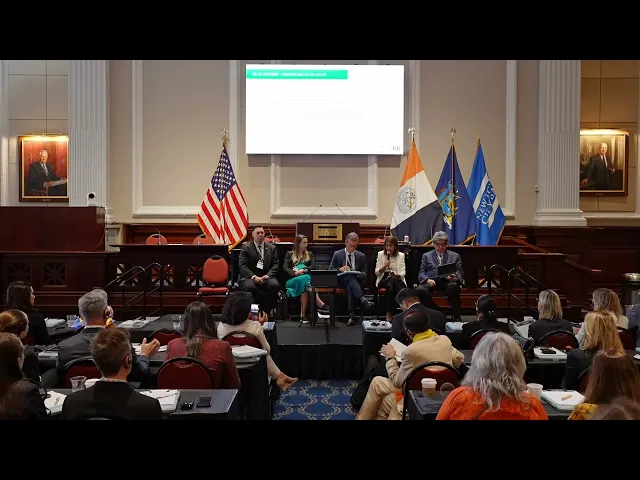
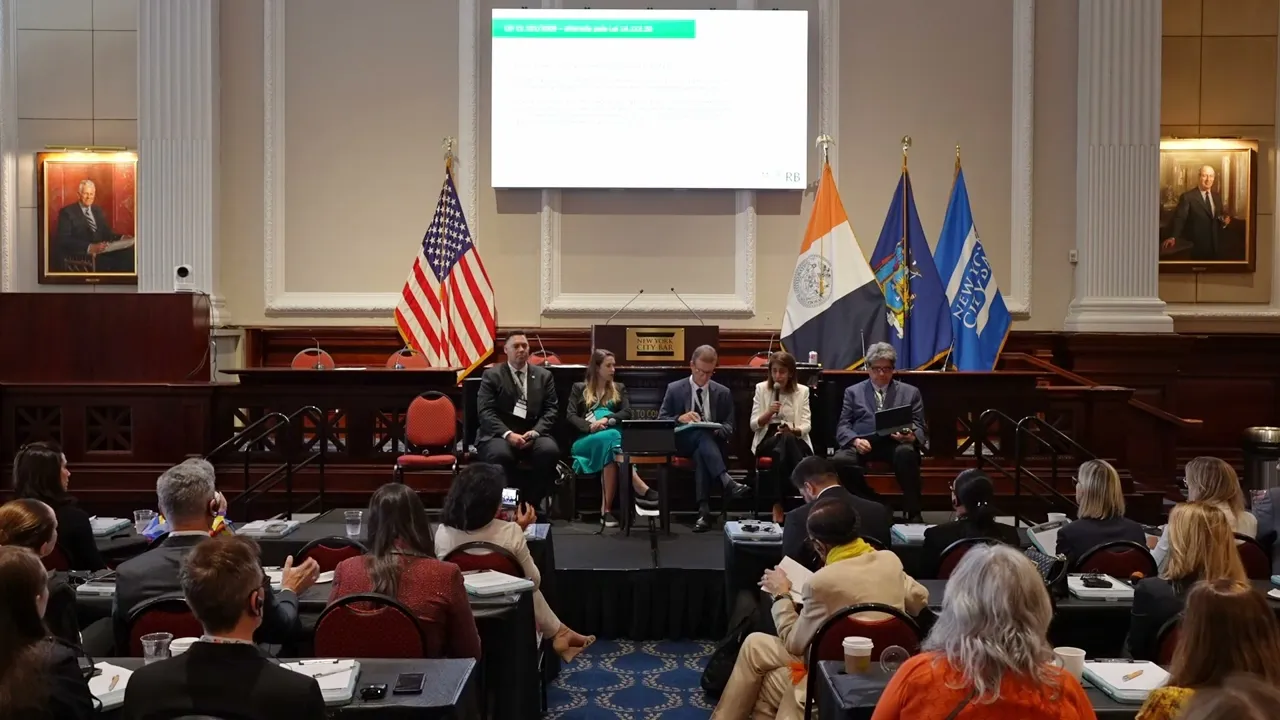
[Music] hello Bonia good morning okay so let's get it started the first panel of the day after those brilliant presentations that came before us my name is Mauricio gum I am a from Brazil actually from kurich Chiba I've been in in Miami in the United States for the last 17 years and I am a full-time arbitrator and mediator mostly AR trator I'm honored to be here today to moderate this very interesting in live panel with ADR providers but I I shall we start with one personal comment when I was listening to Philip Goldstein about the
special room that remind me in 1997 when I came here to to this special room that moment Brazil had just enacted the Brazilian arbitration bill and I was here in order to talk about arbitration in Brazil one year after the enactment of the Brazilian arbitration uh bill was a very challenging moment but as we could see from that time on Brazil has developed a lot in terms of arbitration and I should say also in terms of mediation because sometimes it's not things do not happen the way we want it things have their time of maturity
so I'd like to uh congratulate lucana Diaz Philipe goo Marcus Schwartz and Roberto basar for putting together this amazing program I would like also to if Philipe allows me you have mentioned and I took some notes Here Philippe has mentioned uh one expression that I think it's very appropriated be careful watch when you transplant institutions institution when Philippe was saying this was mediation arbitration but be careful when we trans transplant those examples abroad I am an avid tennis player I love playing tennis why Czech Republic is on top of tennis player in the world check
why not Brazil why not even the United States although you you struggle to be there but because there are many things other than tennis courts in the Czech Republic so when we are here today and tomorrow in order to discuss comparative lessons we also have to understand our own scenario and see how can we adopt how can we adapt what is good in order to be implemented in our own country jurisdiction or backyard so um our uh panel today will address the role of the arbitration and mediation providers arbitral or mediation institutions we have here
with us and I'm going to start from the left Luis Martinez he is the vice president of the icdr which is the international division of the American Arbitration Association also Livia Mubarak who is also the chair of a relatively new but vibrant institution ADR provider in Brazil mad ARB RB and RB stands for recovery business we also have here Mia who oh my God as we as you all know Mia in her boy is soon coming to light so we are very thankful to have Mia here in that very specific and special moment and last
but not least Matthew oh Mia is the vice president of CPR and Matthew York is the vice president of uh jams so our topic is according to Luciana the role of ADR providers in USA past present and future of the American Market in dispute resolution appropriate dispute resolution Lessons Learned impacts on the Judiciary legal profession and Corporation it is so it's almost like Mom's heart everything fits in so we can talk about just about everything because everything is there but we have to comply with the time issue so I kind of um prepare some questions
some of them I Shar with them some of them I didn't share with them but what is interesting is to learn and to hear from them what their institutions do today that's a good start so that we can understand where they who they are what they do and how we can communicate with them their services and products Etc so I'm going to start with Livia who is going to share with us the experience with mad ARB ARB Livia the floor is yours good morning everyone and thank my colleagues of this panel say that it's an
honor to be with you and uh as the most of the audience I speaks Portuguese so I'll give my words in Portuguese um I would like to [Music] uh for [Music] for for [Music] [Music] spe [Music] per for for for [Music] for for for [Music] for for [Music] [Music] Sol for for dispute boards for [Music] excellent excellent um very interesting comments uh uh and uh using um Bruce Edwards words paraphrasing Martin Luther King so we can see amount of dispair but we can see here a stone of hope so um uh what Leia has shared
with us is one specific sector one a specific issue that is doing extremely extremely well based on the numbers you've just shared with us I I have some questions there but I'm going to leave for uh after the um uh presentation of our um our uh colleagues here so why don't we move on then and ask Mia levie to tell us a little bit about CPR liia Mia the floor is yours thank you very much um good morning is it still morning yes good morning everyone uh my name is Mia Levy I am the vice
president of cpr's dispute resolution Services um as you're going to learn a little bit today and then again um with your visit to Whit and case CPR which is the international institute for conflict prevention and resolution is made up of two sides so we have on one hand our uh CPR Institute which is our Think Tank and then on our other side we have our dispute resolution service provider which is cpr's dispute resolution Services CPR was founded in 1977 as uh an organization bringing together corporations and law firms and legal councel who wanted to find
better ways to resolve disputes so that they would not have to go to court and spend the costly and lengthy process of having their their disp Utes go through the judicial process since then um we have been working through our Think Tank side um and through our dispute resolution service provider side to bring that mission to fruition um so you will learn more about the Institute side um with uh my colleague canar nahikian um and also Helena Tavaris Erikson on I think it is Thursday um so I'm not going to go too much into what
that side of the uh organization does but I will just mention that it is our Think Tank um and it brings together thought leadership which creates various work products um brings together committees to discuss best practices um and we do have a Brazilian Advisory Group which my colleague canar um is um the the liaison for for our organization um all of the great resources and thought leadership that comes out of the Institute side is able to come over to our dispute resolution Services side which is really one of the great benefits of CPR so on
our dispute resolution Services side we do three things primarily we do more than that I think everybody does does a lot in this field but we have three primary remits the first is our case Administration Services um which involve our our rules and protocols um and the administration of the matters that come to CPR the second is our panel of distinguished neutrals uh and the third one is our training and education programming so to to start with our our first remit which is the um case services in the case Administration um we are very fortunate
to have the connection with our Think Tank um so that all of those arbitration rules uh mediation procedures they're all the product of those users who are on the think tank side who are the end user of the dispute resolution process so rather than you know a group of academics or somebody who is maybe not in the in the trenches in the in the process in the proceedings we have our membership side and and that end user working on creating rules and protocols um as well as best practices that are very relevant to what the
users of alternative dispute resolution need um we started out doing only non-administered rules with which is sort of a a unique aspect uh of CPR uh what I mean by non-administered rules is that it is a a a self-run process by the parties and by the neutral so if two parties to a dispute um get along uh they're able to run the process entirely themselves um they will jointly appoint the neutrals um the neutrals will manage the process uh the award gets issued and that that's the end of the matter um but if there are
any issues such as difficulties in appointing the neutral the parties cannot agree um there's a a challenge to a neutral for um a conflict of interest maybe uh if the neutral needs assistance in managing the the fund holding that is holding the the funds um or if parties want any additional assistance those rules do allow them to come to CPR for assistance and this is different from what um administered rules do wherein parties come file their case with the organization with the institution and then the in institution assists through every step of the way so
helping the parties get the neutral appointed um if there are any challenges managing the funds as well as um assisting the neutral in any way that they might need assistance you know throughout the scheduling um through the review of the final award our administered rules were introduced in 2013 so up until 2013 we really really were working mostly with the parties to help the neutrals get appointed and provide the non-administered services um some of you may be familiar with the uncitral rules we also which is also a set of non-administered rules essentially um and so
alongside our non-administered rules we also did appointing services for the UN Central rules as well since then and thanks to our our CPR Institute we also come forward with various other rule sets that we you know have have heard from the ADR community that are needed um so of course in addition to our and we have both domestic and international administered and non-administered rules um as well as our mediation procedures we've also been working to create additional types of rules that are we think needed by the ADR community um so most recently uh we have
put together and released a set of rules for dispute prevention and dispute management um dispute prevention is one of the things that we've been working very hard on as an organization on both sides of the organization both on our dispute resolution services and on our Institute side um to help essentially you can't prevent any dispute from arising but it's to help the parties when smaller disputes do arise uh address them before they become huge conflicts that need to go to arbitration that need to go to court um so we have created a set of rules
that is very similar to what um you might see in the construction industry which is the dispute resolu um the dispute resolution boards um where there is a relationship facilitator who can help the parties work together throughout the life of the project rather than waiting until the the project ends and then having a an arbitration or a court proceeding um our second remit our panel of distinguished neutrals is um a panel of about 600 neutrals uh located all around the world about 20% of the neutrals are Global and the remainder the 80% are located within
the United States um we do have a strong panel of neutrals located in Brazil um and that is partly due to our relationship with our Brazilian Advisory Board there's also um an accelerated Pathway to being on our roster of neutrals through the Brazilian Advisory Board where you can get letters of recommendation from them to to join our panel um and of course Mauricio is one of our distinguished neutrals as well uh our roster is also includes specialty panels so uh in addition to being The General commercial panel or The General commercial roster of of approximately
600 neutrals they're also broken down into specialty areas such as construction um banking accounting and finance technology um and admission to our roster of neutrals is a involved and slightly rigorous process um in that we do want to make sure that all of our neutrals can issue enforcable Awards um because they might be selected for some of those non-administered or self-administered cases um and just as a additional note our roster of neutrals is available on our website and is open to the public um and then just finally training and education we do offer skills-based trainings
um which is usually for Advocates um we also for our neutrals offer some trainings um we do ask our neutrals to take trainings every year in cyber security and in um uh in D diversity equity and inclusion and so we do offer those trainings for our neutrals as well um and so that th that is what brings together our dispute resolution Services side of CPR thank you thank you thank you very much thank you for such a very uh interesting um as you say in French vazo flights bird about the work of uh CPR why
don't we move to um icdr triaa Lis Martinez the floor is yours thank you Mauricio and uh thank you to the organizers it's a pleasure to see you all here and I'm looking forward to seeing you later as you visit our facilities uh for me it's very interesting to be able to share with you some of our perspectives I think it's very appropriate that we are here in New York and so glad you came to visit but New York played a major role in the development of the federal arbitration act in fact the law that
New York had passed in 1920 was actually used as the basis for the federal arbitration act and that particular law was designed to reverse judicial hostility to arbitration so New York has always been at the Forefront of arbitration laws International arbitration as well so uh very happy to be at this facility a little bit about the American Arbitration Association we were started in 1926 we are approaching our 100th anniversary uh for example in terms of some statistics last year we surpassed for the first time 500,000 cases in one year uh since 1926 we've administered over
8 million cases internationally we administered 848 International cases uh internationally we have our own set of rules that are available in various languages including Portuguese you can find everything I'm referencing really on our website at icr.org um and since we started the international division we've administered over 20,000 cases since uh 1996 now the American Arbitration Association is divided into divisions it is a not for-profit Corporation I have only focused on our international division and the international work which is the icdr the International Center for dispute resolution but we have various divisions from construction to commercial
to insurance and they all specialize on the dispute resolution mechanisms for those particular sectors we have advisory groups users uh from those sectors that constantly provide feedback on our administrative processes systems rules so we do try to be extremely responsive to the needs of the particular sectors that use our services now in terms of parties we are very active globally uh last year we had parties from 95 different countries use our services our top countries that use our services last year were China Canada United Kingdom Ukraine Germany Mexico Switzerland really we had cases from every
region we had 118 cases involving parties from Latin America including from Brazil we have a very developed panel International Panel uh comprised of Brazilian arbitrators and we also have a Brazilian advisory committee of which Mauricio is one of the chairs uh we've been active in Brazil going back for a number of years doing uh annual arbitration programs uh we think it's an important Market um the pandemic sort of slowed us down a little bit but we're looking forward to reactivating our annual event that we've done uh for many years we worked a great deal with
the amcham in sou Paulo so in terms of international Case Trends what we're seeing in top sectors is international construction is a big sector of using our services technology Financial Services real estate mediation is very important to us our current rules which were revised in 2021 had some really interesting components built into it we'd always offered mediation in every single one of our cases but with our last revision we actually made the mediation step uh compulsory meaning that the parties will go to mediation unless they actually opt out and uh we feel that this was
very helpful because as you know one of the resistance uh that you may hear to mediation when the parties come to us eventually for arbitration they feel perhaps they've done all they can they've had their negotiations or perhaps a party is afraid to appear weak if they agree to a mediation process we addressed all that and all those concerns by making the process a mandatory step and it is growing it was up to 12% of our cases uh that uh the international cases that are now resorting to mediation and we're seeing a higher success rate
of settlement so I think that's very important uh one of the things that we do at the end of all our cases is we sent a client survey to our users to obtain feedback feedback regarding the institution the administrator the arbitrators and the process we asked them quite frankly would you use our services again and uh fortunately the answer is yes most often but when there is a concern we try to dive down deeper and understand what transpired during the process um and so that that's an important factor that we use in in our administrative
systems and considering our future I think I'm flagged for out of time over there okay thank you thank you Louise thank you very much um so let's move on um straight to Matthew so what about jams great well thank you it is a distinct honor and pleasure to be here um really appreciate all of your time today um and your ears for listening but but please please spend time talking to us too because we need to learn so much more um and so we so we welcome that um and today I can tell you a
little bit about jams but what I think I'd like to do um after that is and maybe we just talk a little bit more about sort of the mission and what our charge here is and and so jams itself much like uh my colleagues here we've been around for almost 45 years now here in the States but I guess our difference is that we are for-profit and private so if you will some folks will say it's similar to a a law firm set up but I I think it's very very different um we have close
to 30 some Offices here in the states uh and we do a few hundred cases um what we term is internationally uh however here in the states we do more than about 20,000 or so cases a far cry from what Louis's numbers are but um uh that that's part of I think the point I want to make here today uh is that our our cases and we have in our our con constitution of our panel is that we have folks that come to us to work full-time to do dispute resolution work and so they will
do anything under the umbrella of dispute resolution mediation arbitration facilitation you name it uh they will do it and they don't work principally just in their local they work all over the world and they are busy all the time and so what we try to do is we try to find individuals that either leave from the US court system uh or from an international court system or individuals that are practitioners that have developed their practice um so much so that they are looking to leave advocacy work and come to do full-time neutral work uh with
us and the way we look at that is that that is part and parcel to sort of the bigger mechanism the bigger machine of dispute resolution um here in the states and elsewhere the point of this and I think if part of that mission for us to get across to you is that there's not one way to do it and so Livia hearing your stats wonderful to hear about the rise right and and and how things are developing there is opportunity there um here in the states we have established that to some degree right but
that opportunity is not just for jams or for CPR for any individual organization it's spread out across and all of it and and I I know this because my colleagues I see their businesses every day we interact all the time um all of this is in service to two things in service to the Judiciary and in service to the enduser and our clients and that's it's it if we look at that and we think of that in that scope um it has helped everybody because dispute resolution continues to grow you know looking at it from
business terms because that's I'm not an attorney I'm a business person and so as I look at these things I think of Supply demand I think of market and I'm looking at what we're doing and what we're providing it's a service and we are a service industry and so we need to go meet the enduser where they're at and Luis talked about this eloquently I think triaa does a wonderful job of this is trying to look at okay what else can we do to make this experience a little bit better and so I know we
have a lot of members here from the Judiciary today and a few folks from the private side as well uh it is not a competition right it can be competitive that's fine but it is not a competition we are talking about complimenting Lisa Courtney is here uh I saw her earlier and and hopefully you'll hear from her at some point um who runs everything here for New York State um under the umbrella of dispute resolution uh really if you get the time spend time with Lisa I'm sorry I just booked your dance card Lisa but
but but seriously uh she is an incredible expert um but Lisa has always taken that approach to say hey we're in this together and the court system needs to run this but we need private entities we need nonprofit entities to help us develop this and so you'll get a little bit of different things from each of these organizations but take away the point that you need each of these individual organizations to be able to do this to really provide the adequate service to the market because the market is not one thing the market is many
things and we heard earlier which I think it was one of the first things said which just struck me you know we come to the state sometimes we we get some of your your feedback we take it back we try to take that template and lay it on what we're doing and it doesn't work well the reason is because you know here in the United States we had a a very famous Senator I know many other people said it but um a congress person rather pardon me uh tip O'Neal who was speaker of the house
and tip said um you know all politics are local right and so that's the same in dispute resolution so you can take some of these elements right but we need to come to the end user and understand what it is they need and that may be different in different jurisdictions or in different cities or for different businesses depending on what the businesses are and so so all of us serve many many different types we approach it in different ways when you're talking about doing here in the state small end sort of like Tor work um
where maybe the relative value is low um the service is different than if you're doing a Securities matter where there are 20 parties or a construction matter where maybe there are 150 matters uh parties pardon me and so those are all things you need to think about as you're applying all things I I know this room knows but really think of that in that scope today as we're talking to you because I I think it's most helpful thank you thank you Matthew um so um when we start this panel I was told by lucana that
we have to be very strict to time okay actually was surprised because as Brazilians we all know when we set up the time for 9:00 we start 9:30 when set up the time to finish 10:00 we finish at 12: in everybody's happy but we are not in Brazil but by the way this is also a cultural aspect for non- Brazilians um so but we have I at least I as a moderator have to be aware of the angry face of the watch that is coming from Luciana anyhow I have prepared some questions and the my
first idea would was to have a more interactive discussion so that we could hear the perspective of each institution but for the interest of time or the lack of time so what I'm going to do I'm going to pose some questions and I'm going to invite each of you to address the questions that you want to address uh perhaps for liia I would like to hear the role of the Judiciary in the development of uh ADR what is the current stage of Brazil and how do you see the Judiciary the courts helping and I think
you mention the word facilitator and I like this word because arbitrators and judges they have to to go together so I'd like you to address um uh this idea of uh the relationship between the courts and ADR um professionals or users um we have to hold on there we go we have to and of course as users uh we want to know about how technology is has impact in the services that icdr CPR and Gams are doing so where are we and where are we going to also and Mia has touched on this about Med
the training and education if there is anything that Brazilian judges Brazilian lawyers who are here can be can benefit from um also uh the issue of um efficiency neutrality confidentiality so if you want to have some um just share some uh some comments on that and if I may I would like to ask you to have a crystal ball um before we say where are where are we going to be 50 years from now I'm not going to ask you this I'm going to that's 10 years from now so if we are dealing with AI
today what sort of AI the arbitr institutions are going to face we as users are going to face in five 10 years from now so with this PO of questions I invite um liia to start with the um the role of the um the Judiciary um and um the lessons that you can share with the audience [Music] [Music] for for [Music] [Music] m for [Music] marav okay um so who wants to to take the the questions the other questions mam um Matthew Lis what about what about technology uh I can say a word about technology
it's a an incredible Brave New World we are seeing now I remember when I started uh close to 30 years ago the files we had were voluminous you had paper copies of everything there were phone book size cabinets and space was needed well all that already ended years ago in fact uh well before the pandemic all the files were done electronically and there's hardly any paper files at all U sometimes we are asked for certified copies of an award Etc and that's pretty much the only paper copies you're going to find we are entering another
world now with the use of AI you'll meet our president later on today but she was the former Chief Justice of the Michigan state supreme court she did a great deal of work in modernizing and incorporating technology into the management of the extensive court system within that state and she's brought that over to the American Arbitration Association uh in fact I now talk to my colleagues and we consider ourselves a mini Tech company you can look at uh most of our initiatives are in beta testing at the moment because we have a new team dedicated
to Innovation and the use of artificial intelligence we're looking at incorporating for example the use of AI uh to assist tribunals in Active cases on the preparation let's say of the first procedural order uh essentially assuming the role of a tribunal secretary and uh that is being tested we have another app that we use called Clause Builder that uh enables a party through an interview point and click and response uh to draft an arbitration provision the AI tool is being Incorporated to assist the user in going through the process and understanding all the provisions that
are necessary to draft a domestic or International arbitration clause and importantly one initiative I think that is going to be released out soon is thank you is the uh filing assistant that when parties come in to try to file their cases electronically which is the way most are filed nowadays they will have an AI chatbot to walk them through all the considerations but that's just the beginning I mean all of us know um who've used it and have tested it I for example uh have no doubt that AI which is evolving exponentially is here to
stay you know one of the things is you can't argue against its efficiency remember when you're doing a search on Google let's say you get the responses but they're teered in numbers of pages there are hundreds and hundreds of pages I never go past the first second maybe the third entry never the second page but when you ask these AI assistants like uh Google's Bard it gives you a concise and total answer where we assume that they have analyzed all the data and have given you the best answer based on the algorithms which is just
a much more efficient way to do the searches we're going to find that tool that way evolving much quicker to assist arbitrators to assist administrators uh making our jobs easier but also making them much more efficient now we did have guidelines that we've promulgated for our arbitrators regarding the use of AI our position is it must be disclosed our position is that they cannot delegate any of their decision-making Authority uh they have to comply with issues of confidentiality remember we we need to know if they're incorporating the names of parties in to their AI search
mechanism that they have to guard against that sort of behavior but no doubt technology is here to stay and uh if you'd like to read more about it it's the tripa AI lab that you can find off of icr.org okay uh thank you Louis I'm sure that um I do everybody here does uh have many questions many follow-up questions on that um well I also Matthew or Mia if you want to address uh uh technology but if I may just uh ask a sort of a follow-up question on the um AI is it always something
fascinating or can it be a little bit scary go ahead for sure it can be a little bit scary um I I was just reading I think yesterday um a string of Instagram posts going very much into technology here um where they were pulling quotes from Google's AI that uh suggested you know in that first paragraph that eating rocks can be beneficial um of course this is not something we should actually be doing um but there still is you know a lot of learning for the AI processes to to go through um if they're giving
I you know recommendations to people to to eat you know part of the earth um they might also be giving other bad advice and so these are still things that we have to look out for that we have to be aware of um as Luis mentioned you know feeding the names of the parties into your AI software could let other people know that these parties are having a dispute and that can go against you know the confidential nature and the confidentiality that the arbitrators are bound by um I know many organizations many companies don't allow
their staff to use um a these different AI softwares when when working on legal documents because if you put the party's names in um you might be disclosing that you're having a a confidential contract that you're creating with another party um so all of these things are still you know things that we have to be aware of I know the Silicon Valley arbitration mediation Center just came out with their AI guidelines which I think all of the organizations here had some say in in helping develop um so there still is a long way to go
I think with um with technology with AI um but it's something that we all have to be open to and and continue learning about because when computers were new you know everyone was worried about them and here we are now everybody has like their phone attached to them the Min computers that they're using every day so it's something that we're going to have to continue monitoring and continue learning about and it can be scary but it can also do you know wonderful things like streamline processes um compile information so that you can save time um
so that the parties can save time putting together you know documents so that the arbitrators can create a cohesive um scheduling order based on the notes that they've taken and so there are benefits that we're going to have to learn how to use um and just be aware that there are still pitfalls that we have to look out for well thank you thank you very much Amia um after after pandemic um we we've been very pleased and happy that we can have a in-person hearing so we were and we are fed up with virtual hearing
so the interactive is very this inter relationship among human beings very important but my concern is that with the next generation of AI are going to be made of holograms so then we are going to back to the Back to the Future uh so that being said Matthew uh what well please make your your comments that uh you you think it's uh I think it's appropriate but uh Mia had mentioned training and education that those two two words um and we have here Brazilian judges lawyers and oh actually every all of us are students we
are all in a learning process specific on this issue of ADR how can you share or how can you envisage some training and education so that all of us can be better tomorrow as Council as mediator as arbitrator and as ADR provider well Mauricio I'm I'm in favor of the Holograms I mean as long as it makes me look a little Slimmer and a little better looking and I am Pro hologram so why stop progress morio I mean let's let's keep it let's keep it going here I mean so scary yes don't fear we're all
still going to be here nothing is really changing what will change is efficiency is automation is how we serve the end user just like we spoke earlier and so Embrace these Technologies these can do wonderful things for our profession and to your question about training we have some preeminent individuals two you heard from earlier in jeppi and Bruce preeminent individuals we now live in a world and we have the technology to take their Brilliance and beam that anywhere we need to at a moment's notice on demand we can have them come in through a hologram
or a square on Zoom to talk to Nations that are suffering to help bridge divides why would we fear that to Mia's point there are certain things that we need to put guard rails on for sure and regulation is coming and I know that gets everybody sort of stuffing oh regulate okay but but here's the point we of course need to put some guard rails on to make sure that we're doing this responsibly we're doing this ethically that we can try to eliminate as much bias out of this new technology as possible Right but it
doesn't mean that we can't try and we shouldn't try and so to training yes there is tremendous opportunity to be able to take this wealth of knowledge and share this in different places especially in communities and countries that are affected with far greater issues than we can imagine right and so that that that's key and so we need to lean into this Macio um because I believe there is more good to come out of this than bad okay excellent so to finish this panel I would like to give the floor for just one or two
minutes for each of the panelists liia your your closing remarks for L I just want to say that it's a real pleasure to have a distinguished audience such as yourselves to come visit us in New York it is important I think in this troubled times that we live in with global uncertainty and instability and the wars that we're seeing around the world that we continue to focus on the importance of the rule of law and having an audience of distinguished judges visiting us exchanging ideas and concepts with judges in different jurisdictions can only enhance that
and it certainly is part of our mission promoting alternative dispute resolution conflict prevention but we need all of us to work together so again I applaud you on visiting us and participating in this program rule of law is essential and certainly for the future okay thank you why don't we finish with Mia Matthew just briefly thank you so much um thank you for your attention this is the beginning so please reach out to any of us at any point in time not only on the mission but going forward um we would love to be your
partners and if we can help in whatever you're doing in your endeavors um we would be very much happy to do that Luciana you have my heart thank you so much for for this um be because of you and because of all of you to spend your time take time away from your families and your jobs um you're going to make this world a little bit better so thank you y thank you so much um so C cpr's motto is less conflict more purpose and I I think you know echoing what everyone has been saying
but bringing everybody together especially now when we can via Zoom um in person in all these different ways um to to bring everyone together from all across the globe um and be able to spend time sharing ideas and sharing our thoughts and bringing diversity into the room room um this diversity of thought that we get from all coming together and all being able to share these ideas is going to help us find ways to create better dispute resolution mechanisms to create better ways to resolve our disputes so that we can have less conflict and we
can get back to the purpose of of our business to the purpose of of what we're here for um so that we can continue um hosting like these and and and really being able to share these ideas and so I think that's it's really important to continue keeping an open mind um and continuing events like this and so I thank you all very much for for joining us today and especially for listening to us um it's been a pleasure [Applause] over all right so that ends that concl includes our panel thank you very much and
um using Jose pipo's words it's better to stop talking before you stop stop listening right so thank you very much and lucana congratulations for your great job um am that you kindly in this moment in your life that you're available to come to bring your knowledge for us [Music] [Music] he was my teacher in graduation and undergrad I mean and and don't tell the year pleas I I won't say de okay you were translating so um [Music] um um um um Lis Martinez VI president Tria no I'm okay no no [Laughter] yes this is for
the Brazilian ones yes and the American ones okay fig in just a picture