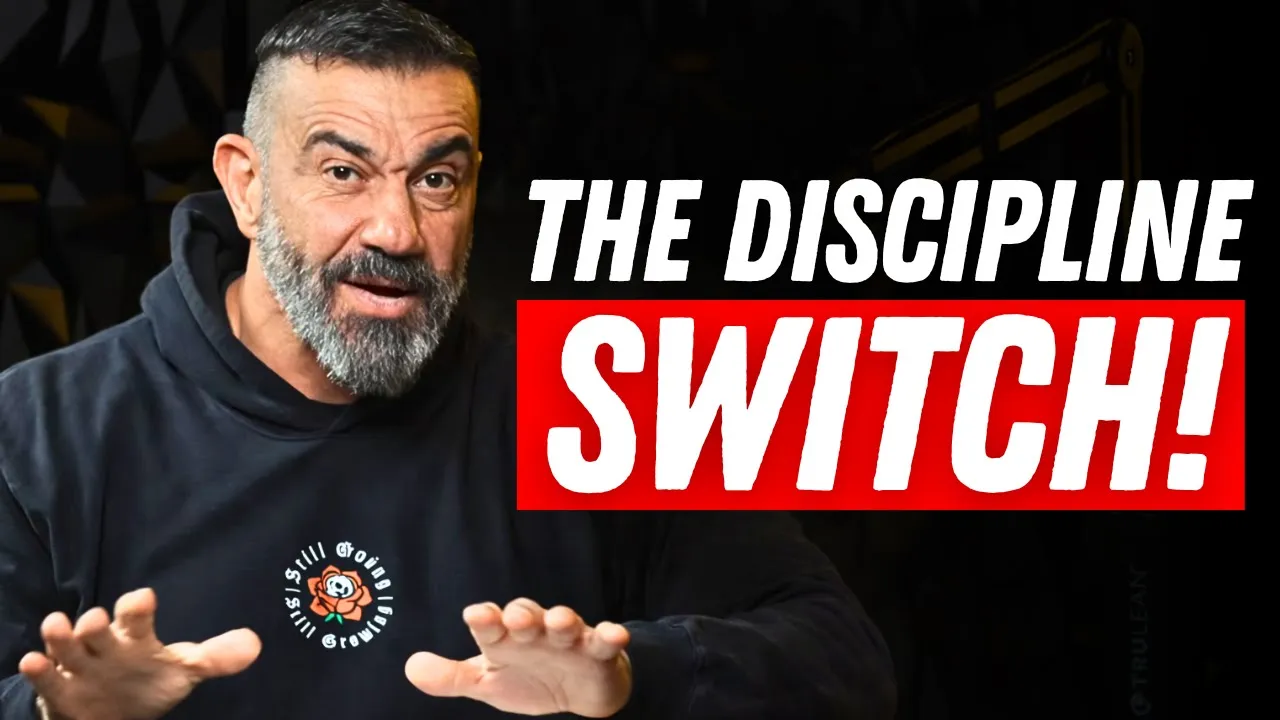
What if I said that there's a easier way like in 48 hours you can develop rock solid discipline and you don't really have to do anything. You don't have to add more to your plate. You don't have to add more to your schedule.
Would you be interested in knowing what the easier way to build discipline is? >> Welcome to the Bedro Coolian Show. >> What if I said there was a science to discipline and there is an art to discipline.
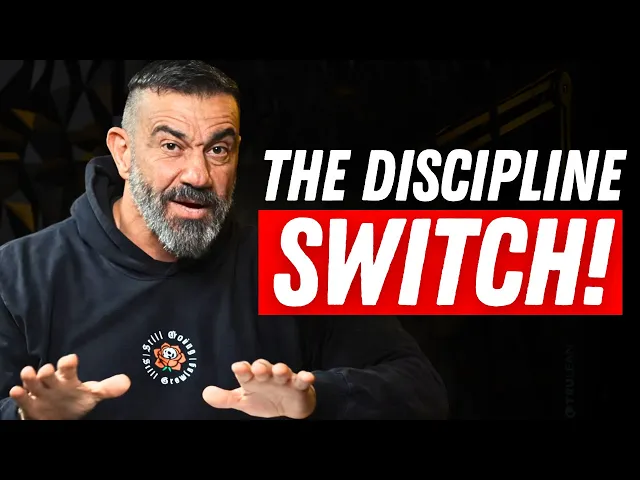
But before you can start practicing the art of discipline, you have to master the science. And on today's episode of the Bedrose Cooling Show, that's exactly what we're going to talk about, guys, is the science of discipline. Uh, and I might be guilty of this, but I'm one of many people that you probably listen to who tell you that if you want to be disciplined, then you've got to get out there and do the hard work even when you don't feel like it.
Right? Because think about how we normally understand discipline as society. We typically understand it as doing the work even when you don't feel like it.
Okay. We also understand it as the willingness to suffer short term so that we can win long term. Cool.
All right. I've said that before. The ability to direct your emotions and your physical state on command.
Bam. Right. I've heard Tony Robbins say that before.
Um, you know, designing your environment and your rituals to make success automatic. Cool. That's discipline, man.
If you design your environment and your rituals and your morning routine a specific way, success is automatic. That makes you disciplined. Or or doing hard things first without ever negotiating them.
No compromising. Just putting the hardest thing that you're going to do today on the top of your list and doing it without ever negotiating or compromising on it. Cool.
That's discipline. I get it. All of that there is the art of discipline.
But what is the science of discipline? How does one become disciplined? How does one develop discipline?
So, I think before we can kind of automatically go into the state of, hey man, discipline to me is an art, you know, and look, I'm 51 years old. I've got abs. In fact, just today I posted up on on um on the social media platforms about, you know, if if you're looking to get disciplined, it starts with abs because that means you have to control everything you're eating 24 hours a day.
It's not just about going to the gym and working out for that hour and doing resistance training and cardio training, you know, four or five days a week, one hour at a time. You can build strength and muscle that way. and you can build strong abs, but it's going to be hidden behind a whole bunch of flub.
But I'm 51 years old. I've got abs. It's because what I focus on is the discipline of my nutrition that happens throughout the day.
Not that one hour a day in the gym, but the other 23 hours of what I put in my pie hole, the conscious decisions I make. To me, having abs is discipline. I've mastered the art of discipline.
So many people have, right? Joo has and and and David Gogggins has and Tony Robbins has and all these people have mastered the art of discipline. I can wake up and it doesn't matter how I feel.
If I didn't sleep well, if it's raining outside, if it's cold, if my back hurts or my neck hurts from jiu-jitsu, I am still training. I am still eating right. I am eating and doing the things that are going to take me towards my desired outcome, my life's highest standards, the mission that I've set out for myself.
Right? Okay, that's the art of discipline. Doesn't matter how Bedro feels, he just put all of his thoughts and feelings aside and he does the work.
Right? But before you can get to the art of discipline, you have to understand the science of discipline. And that's what I want to talk to you guys about today.
Because how we understand it is everything that I mentioned earlier, right? Do the work, don't compromise, right? you know, develop an environment and a ritual.
Okay, you might develop the most perfect environment and ritual and you might do it for a week and then quit. How come it didn't stick for you, but it sticks for other people? Well, because there's a science to discipline first and this is what I want to talk to you guys about.
So, what does the science say? I heard Huberman, Andrew Huberman, talk about limbic friction. And he says all of us experience it.
And this is true. I've experienced it. And and it's not like when I wake up and I didn't sleep well and my neck hurts and my shoulder hurts and my knee hurts and my back hurts that I'm not going to I'm just going to spring out of bed.
I have limbic friction. In other words, my reptilian mind tells me stay in bed. You didn't sleep well.
Your body hurts. Maybe you can take today off. Call it a recovery day.
But what do I know about that? That is the path of becoming a mental slave. If I'm looking for lifestyle and freedom, right, freedom to control my health, freedom to control my time, freedom to control my experiences, well then guess what?
I have to get up and do what was planned and scheduled to do even if I don't feel like doing it. So I have limbic friction just like everyone else. The difference is I get up and do it anyway.
But that's because I understand the science well enough that it's become an art for me. I just do it, right? And so when we talk about limbic friction, it is the resistance that you're feeling when you're in bed or you're about to do something that you haven't done that you know is good for you.
It's aligned with your life standards and missions. However, it's unfamiliar to you and it's not part of your daily routine and ritual yet and you feel the resistance. That is limbic friction.
It's okay to have. Let me give you permission to have limbic friction. Ain't nothing wrong with that, right?
So, how do we fix that? Well, we just get up and we talk through every step. All right, I'm going to turn off the snooze button.
I'm going to get up when my alarm goes off. I'm going to stack little wins throughout the morning. Like, for me, it's drinking 30 ounces of water, sending out three gratitude text messages to three random people in my life I'm grateful for, listening to Jack Johnson because his music puts me in a better mood and state of mind, right?
I made a list of the things I'm going to do and dominate. The night before, I made a list so that in the morning when I get into my work mode, I can start working on my laptop, on the things that I've planned out that's going to give me money and meaning. By 9:00 a.
m. I'm heading to the gym getting my workout on. And then by 12:00 or so, I'm here at HQ making podcast episodes or leading my team across all the various companies or working with coaching clients who fly in to work with me, etc.
Right? My day is planned out. It's structured.
And when I have that structure, it doesn't matter how I feel or what's going on in my mood or my thoughts or my emotions. I execute one thing at a time. And so to get there, you have to understand that it's the it's this the science and the art of stacking small winds.
The way you get through limbic friction is you stack the small winds in your favor, right? And you when you stack small winds in your favor and when you're able to delay gratification. So I'll give you a great example.
I'm human just like you. I wake up when my alarm goes off. I've turned off the snooze button, so I'd have to go out of my way to reset an extra 10, 15, 20, 30 minutes of sleep.
If I don't want to hit the snooze button, make sure that the snooze button is turned off. What a brilliant concept, right? And if you can do that, you're going to get up and you're going to turn off the alarm.
Then I'm going to stack my little wind, drink the 30 ounces of water, and then I'm going to send out my gratitude text messages. And just like you, I'm tempted to go on social media and start scrolling and brain rotting. It's not that I'm not.
The difference is I've already got a structured morning. So I'm like, you know what? Put that off.
Delay that gratification. So the secret to getting through limbic friction is taking small steps throughout the day towards your goal, stacking the small wins, and delaying the gratification to build momentum. By the time I'm on social media, it's like either before my gym workout, I'll carve out 10 15 minutes to go on social media and post some content to help people who follow me add value to their lives.
And while I'm there, I might scroll and like and comment on a few things that my friends and colleagues have posted. But I'm not committing to three hours a day like the average American does on brain rotting because remember I've got a structured schedule for the day that I made the night before. Right?
And if I've got a structured schedule, I have to stick to it. People are counting on me. And that's what you need.
You need to have these wins that you can take throughout the day, delay the gratifications, and start building momentum. And what Hubberman said is that people that have built momentum and willpower throughout their life over time, athletes, he gave as an example, right? These people have an easier time getting through the limbic friction when they have to get up out of bed, get off the couch, do the thing, start the new project, get into the gym, start training and eating right, start making those sales calls, make the shift and transition in their life that's going to help go towards their life's purpose and mission.
small wins and delaying gratifications. And so if you can do that, you've developed momentum. Well, all right.
But then he talks about this thing called it's a part of the brain called the AMCC, the anterior mids singulate cortex. And the anterior mids singulate cortex is this area of the brain that continues to grow each time you push yourself through limbic friction, each time you stack small winds, each time you you delay gratification, each time you use willpower in your favor. And what they found throughout the science of discipline is when you can grow your AMCC, your anterior mids singulate cortex, it becomes significantly easier to stay disciplined, to have that momentum to keep pushing through no matter what and how you feel and the circumstances that stack up against you, the adversity that you have and the people talking the [ __ ] and all these things, right?
What a cool thing. And the example that he gave is he said look you know the AMCC can grow very big. He says we see this in in people and women especially that have anorexia because when they are doing something and being rewarded for it in their case they go I'm going to lose weight.
They lose a pound dopamine hit. They lose two pounds dopamine hit. Three lbs dopamine hit.
20 lbs dopamine hit. 40 lbs dopamine hit. Anorexia stops us from realizing where the line is that we've crossed from healthy to self-destructive.
All these women know is that anorexia or not eating and starving myself keeps me going towards the goal of weight loss. They never set a weight goal or a body fat percentage goal or a body composition goal or a strength goal. It was a open-ended weight loss goal.
And if you've got an open-ended weight loss goal and you keep achieving weight loss at the detriment of losing muscle, uh, connective tissue, bone density, now you're sick. You screwed your hormones up. But you know what?
They found their AMCC, that part of that brain, the anterior mid uh, singlet cortex is huge. So that's proof that sticking to something improves your discipline. Of course, anorexia is a great example of self-destructive discipline, right?
And there's plenty of that. Many of you are fully addicted to self-destructive discipline. You're so disciplined that you don't go a day without getting on that Only Fans account or that or that porn site or drinking booze at night to take the edge off.
You're so disciplined that you have a routine of the junk food that you eat at night and feel shitty about it the next morning. You don't think that you don't have discipline. You do.
You're disciplined towards your vices because you have developed an environment, a ritual, and a routine of self-destructive. Going the opposite way from your highest self and highest standards. Going the opposite way of your life's mission.
Right? Because in your mind's eye, you're like, man, my higher higher version of me, the highest standard version of me, the man that's on a mission would do these things. He would exercise daily.
He would be lean and jacked. He would have visible abs. He would he would be well articulated.
He would be vice free and addictionree. He would be uh debtree and making money. He'd be in a healthy relationship.
He'd be someone working towards his life's purpose. Right? We all know what our higher self would look like.
And then we go, I'm going to start working on that. I'm going to get disciplined starting tomorrow morning and start working on that. And you start working on all of it.
The nutrition, the workouts, the making the monies, the waking up early, the morning routine, the meditation, the journaling, the interpretive dance. And all of a sudden, you went from doing none of that to trying to do all of that. And you now have so much limbic friction that you self-sabotage.
And so that's the problem here. You have to understand that we have need to stack small winds, delay gratification, build momentum, begin to push through and override limbic friction. And when we do that, we go, "Holy [ __ ] this is becoming almost automatic to get out of bed, still feel a little grumpy, like I don't want to get out of bed.
It's nice and warm. It's cozy. It feels good in here.
You know, I didn't sleep well last night, but you know what? I made a commitment to myself. I've got a structured routine and schedule that I'm going to follow today.
So, [ __ ] it. Here we go. Right?
I've had that conversation with myself probably on a weekly basis. But that's the art. But you have to master the science first.
And so when you master the science first, you realize there's dopamine gained through extended effort and result loop. See, most of you think you need to get the results fast. And if you get results fast, you'll keep making effort.
That's not how it works. Discipline is built when you put in the effort and effort and effort and you don't quite see the results yet, but you believe in yourself and you have faith and hope that the result will come. That builds discipline, effort then results, not results so that I can put more effort in.
I wish the world worked that way, but it doesn't. Right? Dopamine is gained when you put in over time you put in effort and you get the results.
And if you can do that over a prolonged period of time, you've now started to develop willpower and momentum. So what is willpower? It's the ability to control your impulses, right?
Hey guys, quick interruption to the Bedrose Cooling Show. It is cold and flu season and I want to make sure that you have a strong immune system and that your body is fighting off inflammation because right now lots of people around you have the cold or flu and you want to make sure that one you don't get it and if you do get it you want to get over it as quickly as possible so you can go back to dominating your day and stacking wins right so most of you out there are probably taking a whole bunch of supplements like vitamin C vitamin D echanatia ginger turmeric estraulus B12 zinc and while all these things are great for building your immune system one they cost a lot of money and two the quality of the ingredients in here are not great. So I want you to throw all these away and instead what you're going to do is you're going to get the trulene everyday wellness shot.
Tastes delicious. You can feel it working. You're going to boost your immune system, fight off inflammation, have more energy, and keep your body hydrated because we recently added pink Himalayan sea salt for sodium and potassium and magnesium to keep you hydrated.
So here's an offer that you can't refuse. Go to trulene. com.
Use my name, Bedro, to get 50% off the Trulene subscribe and save offer. Plus, you're going to get free shipping and a 30-day unconditional money back guarantee. This product is so good, such high quality, strong efficacy, and third-party tested that I want you to try it out at no risk.
So, use my name, Bedro, to get 50% off, plus free shipping and 30-day unconditional money back guarantee. Now, back to the show. The ability to control the desire to self-sabotage.
That's what willpower is. And each time you start developing more positive association with winning, with getting the results, with getting the dopamines, developing momentum, pushing through limbic friction, stacking small winds, delaying gratification. Each of these things begin to build your willpower.
Willpower is not just saying no to your friends who want to go out and party. Willpower is saying no to the Cheetos that are whispering at you and the in the pantry and that you want to open and crumble up and put in your mouth and have some of that dust go right in your belly button. Willpower is to have the ability to push through temptation when no one else is around to correct you because higher self will keep you on track.
And if you can develop that willpower, my friends, through all the things that we listed off, now you've gotten great momentum. So remember, it's effort first, results second. And if you're willing to do that, what happens next is really rad.
So, so how do we develop this discipline concept quickly? Cuz I got to thinking, I'm like, all right, so if someone wants to be disciplined, man, they have to push through this limbic friction that we all experience because a caveman wants to stay in bed, stay cozy, and not really get up and do the work. Okay, [ __ ] Well, that's not great, you know, because we have work to do, right?
We we want to have a incredible physique. I I I heard Jo say this I think on Chris Williamson's podcast. Uh Chris Williamson is an awesome dude.
He was out here a couple years ago and I did his podcast um out in LA. Uh but Joo was on Chris's podcast and Joo said or Chris asked him. He said, "Hey Joo, why is discipline freedom?
" He said, "Well, if you're disciplined, you have the freedom of health. If you're disciplined in your exercise and your nutrition, you have the freedom of health. Otherwise, if you're not, you're a slave to disease.
I was like, [ __ ] that's powerful. And he said, if you're disciplined in your work, then you have the freedom of money, financial freedom, otherwise you're a slave to debt and financial struggle. Oof.
Right? He said, "If you're disciplined in your time management and scheduling, then you have lifestyle freedom. Otherwise, you're a slave to the work that other people want you to do for them.
" Because, let's face it, if you decide to be an entrepreneur, you don't have a boss. You are the boss. And that means you can take a break whenever you want or you can work whenever you want.
And those of you that are self-employed, but you find it hard to focus, to be consistent, to stay on track, to check off the things on your list that are going to produce the desired outcome. Well, that's because you have no boss breathing down your neck. You are that boss.
If you are able to stay disciplined and push through the limbic friction, stack the little winds, delay the gratification, develop momentum, and increase your willpower, guess what happens next? you end up getting all that [ __ ] done, making money, hiring people to start doing the work for you, and you have more time and lifestyle freedom. Otherwise, you're a slave to your work, right?
And so, I thought that was such a beautiful way to to explain why discipline gives freedom. And then I got to thinking, well, all right, those of us that have been doing this discipline thing long enough, it's become an art for us. What if you're starting out and you're like, I need to get more disciplined.
I need to get more structured. I need to start doing this thing. Right?
I got to thinking. I'm like, what is an easy way to build discipline? Like, why do it the hard way if you can do it the easy way, right?
And what I found is most of the time when we think about I got to get disciplined, it's usually a byproduct of I got to get disciplined so that I can start working out. So, I'm going start working out first thing in the morning. Cool.
You weren't doing that. Now you are. You're adding things to your you're you're doing more, right?
Discipline is usually doing more. I got to start working out. I got to start meal prepping and eating, right?
I got to start making more sales calls and posting more content for my business. I got to start and then fill in the blank. And so you're adding more to your plate, doing more.
I get it. Most of you already feel like you're overwhelmed. I got so much on my plate already.
What more can I add? And then if you start working out or eating right, you're not going to lose the fat and build the muscle overnight. You're not.
So, it's not an easy win, is it, to build that discipline. Yeah, you felt good today because you woke up and you fought the limbic resistance and you and you went and worked out. Good for you.
And all day long you followed your meal prep. Good for you. And you did it yesterday uh tomorrow and the next day and the next day and the next day and your body still looks the same for the first week or two or three, but you feel good about it, but there's a higher chance of quitting.
And this is why people quit. That's why there's a 85% failure rate of New Year's resolutions that are related to health and fitness because most people don't get the results as quickly as they wanted to. But what if I said there was an easier way?
What if I said that there's a easier way? Like in 48 hours, you can develop rock solid discipline and you don't really have to do anything. You don't have to add more to your plate.
You don't have to add more to your schedule. You don't have to wake up any earlier. Would you be interested in knowing what the easier way to build discipline is?
And I think those of us that have figured out the art of discipline because we understand the science of discipline, we know this already. It is to not scratch the itch. Think about it.
If you had an itch on your arm right now, instincts and impulse tell us to scratch that itch. If you've got an itch, to not scratch it is to exercise discipline, right? It is the temptation of wanting to satisfy that itch, but is the discipline to not scratch it and wait until that itch goes away.
That is development of discipline. There you go. But that is too easy.
That's not challenging enough, right? the other things I just talked about. Sometimes it's too overwhelming for you and it takes time.
But what if I said there's a better way, a 48 hour way, and it's actually good for you and doesn't add more to your plate. In fact, it takes things off your plate, literally. And that is fasting.
Think about it. If you did a 48 hour fast, meaning you ate nothing, you only drink water throughout the day. You drink your 10, 12 glasses of water throughout the day and you fast and eat nothing for 48 hours.
That means at least three times a day, some of you that eat four or five times a day or snack throughout the day, you're going to have to exercise willpower and discipline to not eat. That means you have to keep yourself busy and occupied to not eat. Here's the cool thing.
Talk about small wins. If you wake up and you decide that you're going to fast, if you don't eat anything, you just stacked a win. Come lunchtime, you don't eat anything, you stacked another win.
Come dinner time, you don't eat anything, you stacked another win. You wake up and you do that one more time and you've got 48 hours of stacking wins, of fighting temptation, of pushing through and overriding the limbic friction that says just go eat. Just go eat.
Go into the fridge, go into the cupboard, go into the pantry, go to a fast food joint and eat. But if you didn't, you did yourself a solid. Why?
Because you are building willpower. You are building discipline. You are stacking little wins.
You're delaying gratification. And when you do, that meal that you eat at hour 48 is going to be so delicious. It's going to be such a rewarding process that not only were you getting micro dopamine hits each time you were not eating your breakfast, lunch, and dinner, and your snacks for those 48 hours, but now that when you eat that reward meal at hour number 48, man, the dopamine hit and the reward system feedback that you get is massive.
That is the science of discipline, right? And then you know, well [ __ ] if I was able to fight off and not do the thing that I am instinctively programmed to do at least three times a day, which is eating, if I could do that, I could wake up early in the mornings and work out and give it enough time to start losing some weight and building some muscle tone and getting some shape to this pear-shaped gelatinous body of mine, right? And so fasting isn't just about building discipline and willpower and stacking little wins by each of those meals that you skip.
Fasting also creates an environment of autophagy. If you don't know what autophagy is, look it up. But it's basically it means self-eing.
Autophagy means self-eing. Your body begins to eat and recycle its damaged cells and toxins and free radicals that exist in your body. See, when you eat food, your body is too busy digesting and processing and and and and pooping out and peeing out that food.
It does not have the time and energy to go into autophagy to begin to eat the damaged and toxic and and and free radical cells that exist in your body to literally rid you of these cells that could eventually cause disease. But when you put yourself in an environment of fasting and you're now experiencing autophagy, your body is self-cleansing, right? That's when your gut lining begins to heal.
That is when you begin to start fighting off Alzheimer's disease and all of these other like proven proven diseases that fasting can help fight off. But it only happens when you create a state and an environment in your body. So, not only does fasting build discipline, willpower, stack wins, delayed gratification, help us, gives us a training ground to fight off limbic friction to override it every time.
It's like a 48 hour mental toughness challenge with a massive health benefit opportunity created through autophagy and healing of the gut lining and recycling and and getting rid of toxic and and really bad cells that are just no longer good for your body, right? So, I decided I'm going to do something. I think fasting is is probably the easiest way.
In 48 hours you will develop so much discipline. You will have such greater health on the other side of it. In 48 hours you will lose weight.
You actually will lose weight. Sure you will lose, you know, obviously you're not going to lose muscle in 48 hours. You will lose fat.
You will lose water weight. If you then start eating clean on the other side of that 48 hours and working out or exercising right, you'll have given yourself a massive jump start. And so I decided I'm going to do something really cool and I'm going to create the True Lean Challenge.
So what is the True Lean Challenge? The True Lean Challenge is a 48 hour fast, right? And so you guys know all about the Trulene wellness shots.
You guys know this. And so I'm going to do this and you guys are welcome to join me for a 48 hour fast and it's going to start Sunday at 6 p. m.
February 22nd and it ends Tuesday at 6 p. m. February 24th.
So basically, Sunday, February 22nd at 6 PM, that's your last meal. That's your last meal. Ideally, you'll go to bed early so that you don't have to worry about hunger.
You're going to wake up in the morning, drink a glass of truly wellness shot. Put water, 6 to 8 ounces of water in a glass. Put a packet of the truly wellness shot in there.
It's going to give you the ginger, the echgonatia, the estraulus, the turmeric, the vitamin C, vitamin D, zinc, everything that you need in terms of supplements, but it's not going to break your fast because it's zero calories with no sugar in it. Tastes freaking delicious. Gives you the nourishment that you need.
And then throughout the rest of the day, you're going to drink your water and go throughout your day. Get your exercises in. Get your work in.
When the whispering of temptation sets in, fight it. Hey, I've got 48 hours. Just fight.
One hour at a time. One hour at a time. Before you know it, the 48 hours is over.
You wake up Tuesday morning again. Another Trulene everyday wellness shot mixed with water. Drnk it first thing in the morning.
Nourish your body. It does not break your fast. And then throughout the day, just keep drinking a ton of water, a lot of water, and go throughout your normal workday.
Fight off the temptation. Fight off the desire to want to eat. Don't break your fast.
Go one hour at a time. And then before you know it, it's Tuesday, 6:00 p. m.
on February 24th, and it's time to break that fast. Break that fast with a high protein meal, moderate carbs, moderate fat. And guess what?
You feel satisfied. You feel massive dopamine. You feel like you accomplished something.
You proved to yourself that you've got discipline. And you just developed it in a 48 hour window. And you had nine or whatever anywhere between six and nine opportunities depending on how many times you eat a day to sabotage yourself.
And you didn't look at all the benefits you gave yourself. Mental, emotional, and physical health benefits. Right?
So guys, if you want to join me on the Trulene everyday wellness 48 hour fast that starts February 22nd at 6 p. m. on a Sunday.
It ends February 24th, Tuesday at 6 p. m. I want you to go to trulene.
com. Use my name bedro join the subscribe and save and you will save 50% off your first order. A box of 30 of these are going to be delivered right to your house so that you can start the trulene 48 hour fast with me.
This is your opportunity. This is your opportunity. What's even better is you get free shipping on top of the 50% discount.
You get free shipping and we donate $1 to Shriner Children's Hospital. It's a hospital network across the United States that I've been donating millions of dollars to over the years that really provides medical services for kids whose families can't afford those medical services. And it's funded by people like you and me.
So the 40 48 hour fast, it's on. We're building even more discipline. We're dialing in autophagy and letting our body destroy the cells that are damaged and recycle those cells, heal your gut.
And then after the 48 hour fast, continue to drink one trillion everyday wellness shot every single morning because when you do, you're going to keep your immune system strong. You're going to fight off inflammation in your gut and in your joints, and you're going to have natural energy. That's what this provides.
All right, so guys, thank you so much for listening and watching to this episode of the Bedro Cooling Show. I really appreciate you guys. I hope you join me on the 48 hour fast.
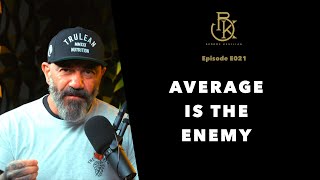
But above above all, remember this that average is the enemy, that success is your responsibility, and change can take place in an instant if you are willing to flip the switch. I'll see you next time.