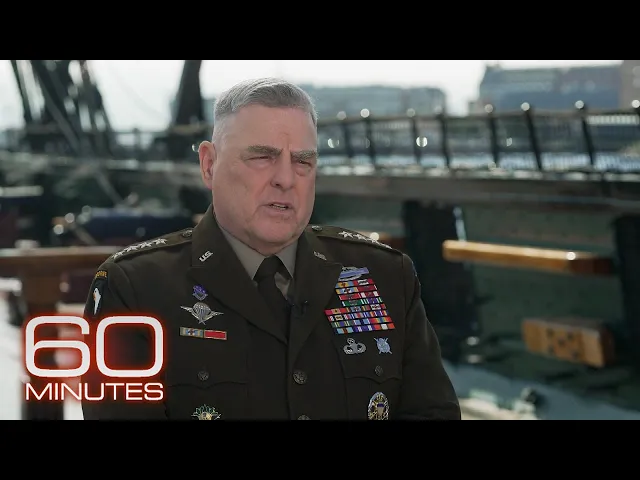
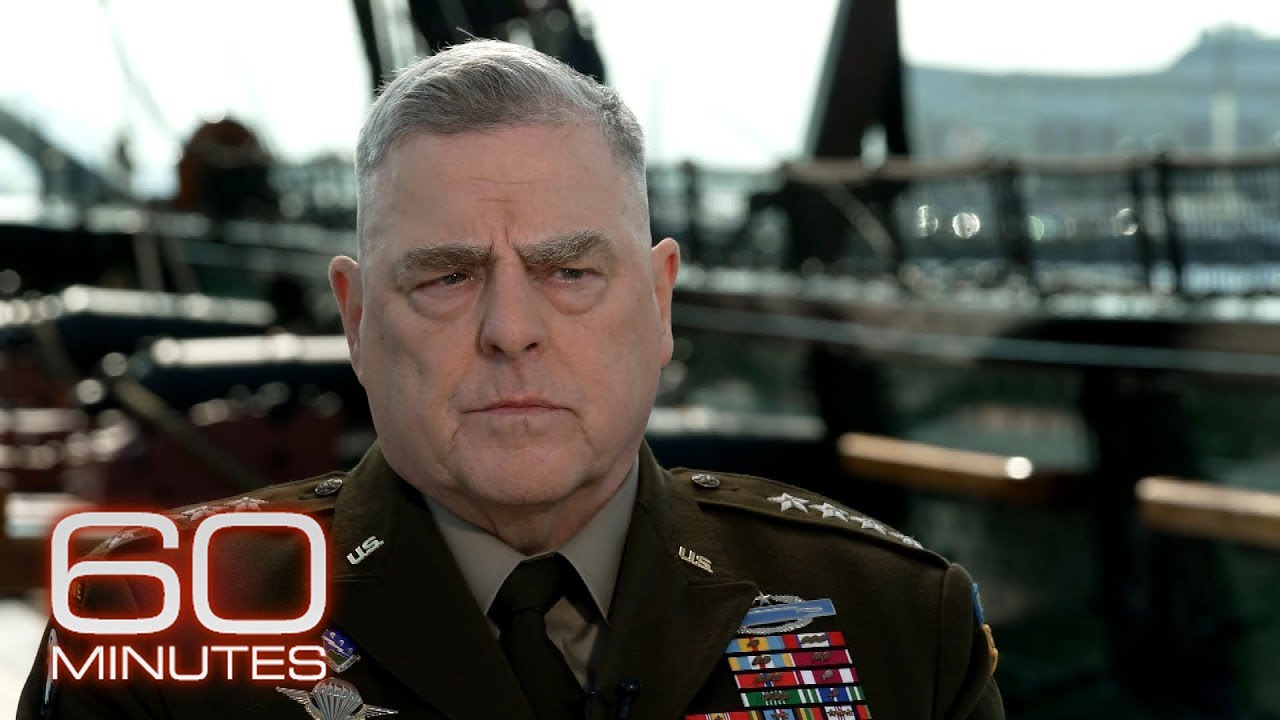
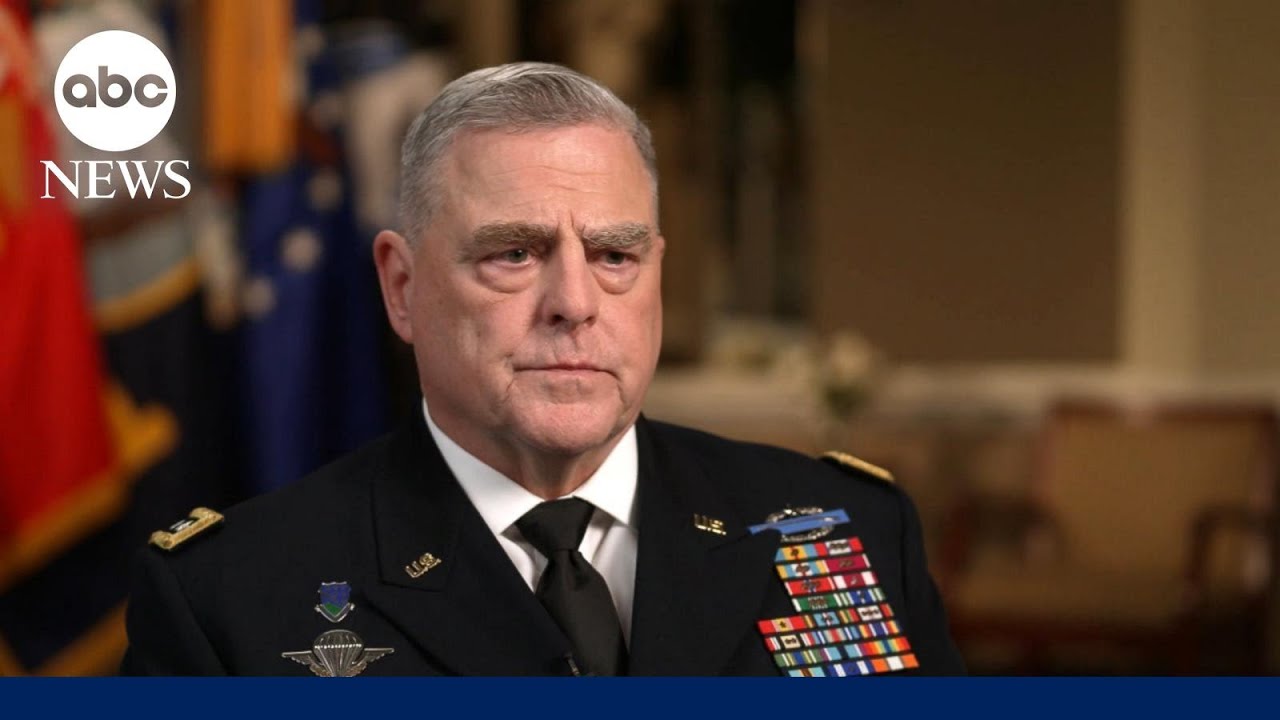
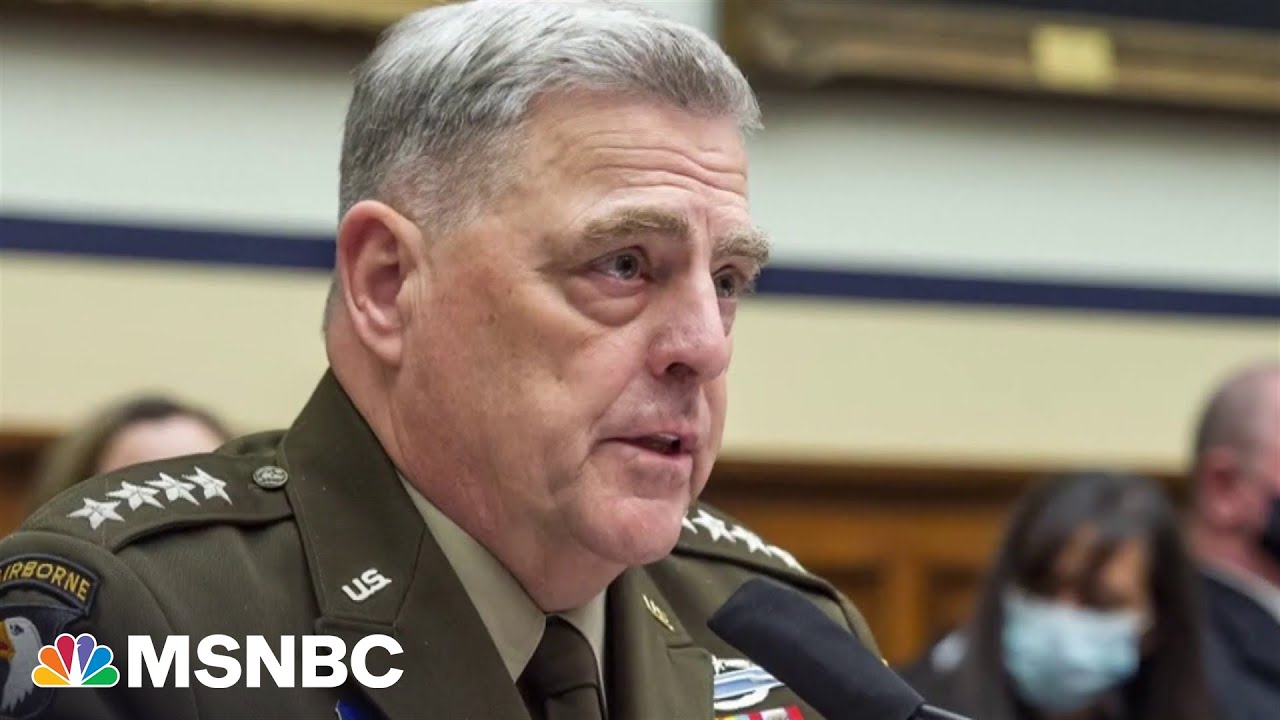
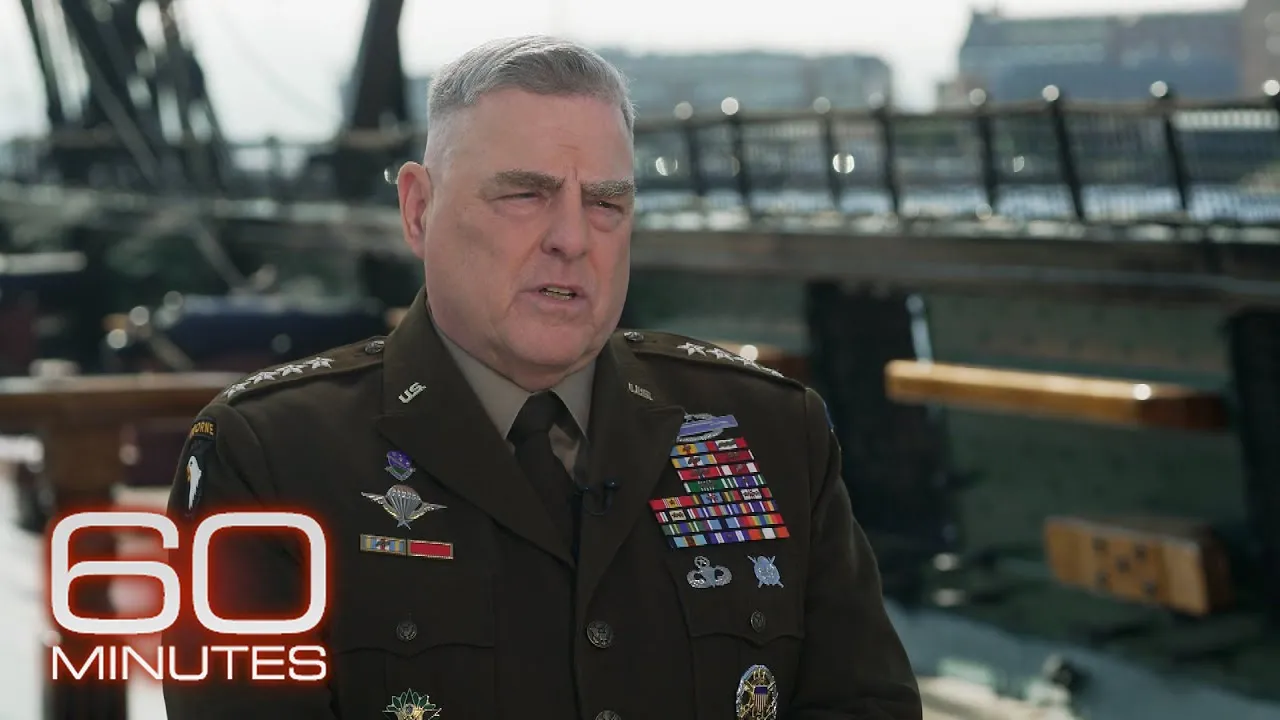
60 minutes overtime for this week's 60 minutes we talked to General Mark Millie who stepped down last month as the chairman of the Joint Chiefs of Staff we spoke to him on the USS Constitution the venerated Naval frigate that was first launched in 1797 just months after George Washington stepped down as president nicknamed old iron sides it is the oldest Naval warship still afloat as we sat on the deck surrounded by America's military past we asked General Millie about its future he told us that Advanced Technologies like Robotics and artificial intelligence will rapidly change the
character of war and because every country will have access to these Technologies the US must be prepared our military is going to have to change uh if we are going to continue to to be superior uh to every other military on Earth uh and it's through that degree of strength that military strength and the willingness to use it that I think you maintain that International order uh and that you maintain the peace there have been several periods in history that have transformed military operations or armed Warfare where does artificial intelligence sit in that that's huge
in fact I've referred to it as the mother of all technology sort of thing so the ability to make decisions so-called UDA Loop to observe Orient direct an act Loop to to do that faster than your opponent uh often times not always but often times gives you a decisive Advantage so Napoleon would oftentimes wake up at 2: in the morning to issue his orders to his Marshals and they'd be on the move before the British woke up for tea and and you know if you think about the German uh operational doctrine of Blitz cre that's
what that did so artificial intelligence allows you uh to absorb massive amounts of complex information very rapidly uh to assist humans in their decision-making and theoretically you can actually program the computers to make the decisions themselves uh which would be a whole new world at that point as of now the Department of Defense guidelines say fully autonomous Weapons Systems must allow commanders and operators to exercise appropriate levels of human judgment over the use of force those standards will apply to a new defense program called replicator a pentagon initiative aimed at countering the size of China's
military the program will produce thousands of autonomous weapon systems powered by artificial intelligence the international Committee of the Red Cross says autonomous weapons including those that use AI could lead to unintended consequences like civilian casualties or an escalation of conflict does it make war more likely it could it actually could so artificial intelligence has a huge amount of legal ethical and moral implications that we're just beginning to start to come to grips with well there's no chain of command in artificial intelligence is there well there might not be um you know it artificial intelligence theoretically
that take into it it's Extreme Machines could be making decisions uh without human interface uh that could be a very very dangerous thing extremely dangerous uh right now the Department of Defense standard uh is for all decision-making to have a human in the loop uh for better or worse uh and uh but other countries may not have that same uh sense so artificial intelligence is extremely powerful it's coming at us I I suspect it will be probably optimized for command and control of military operations within maybe 10 to 15 years Max uh and then you
combine that with robotics uh you're probably looking at something like a third of sophisticated militaries United States Russian China Etc about maybe a third or 20% will likely be robotic in maybe 15 years or so so you're going to go from you know the USS Constitution and the ships of sale up to the Nimitz aircraft carrier in the span of 15 years uh so it's a pretty pretty fundamental change that's uh about to take place