Politics and economics are for better or worse inextricably linked together, and collectively act as some of, if not the most powerful influences over how we live our lives. On this channel we focus on the economics, the numbers and the theories about how human beings interact with things of value. But the political side of that equation is incredibly important as well.
That's why we are launching a new channel called Context Matters. The channel will be produced by myself along with a team of experts in the field of geopolitics to talk about what is going on in the world with the same focus on what the facts and data say that you're used to hearing here from Economics Explained. Go and check out the first videos on the channel which are already released and subscribe to be the first to see new videos as they come out.
Now here's why both the economic ideas on this channel and the political focus on Context Matters is so tricky. World leaders are made and cast aside based on in large part how well they run their economy, and a good economy makes even other aspects of running a government significantly easier. The link between these two disciplines can be an incredible force for good if managed well.
We today enjoy lives with more freedom and wealth than basically any other humans at any time throughout history because there are more countries than ever with strong functioning democracies that need to keep their people happy, and what better way to keep people happy than by providing them with economic prosperity. However, getting the relationship wrong can cause an unimaginable amount of human suffering. In even the most low-stakes cases, bad economic policies driven by political ideology rather than practical methodology can lead to high unemployment, wasted resources, excessive negative externalities, and slow growth.
In more serious cases when policy makers willfully ignore the advice of their economic advisors, or they don't care, or worst of all the economic advisors have a political agenda or alignment of their own, then people can, and have died in the millions. The problem doesn't just stop with corrupt or incompetent governments either, they are going to cause harm regardless of how much economic justification they put behind their decisions. The problem is increasingly being traced all the way back to the institutions that create and test the economic theories that even the most benign world leaders have to rely on.
Academic economics is in somewhat of a crisis at the moment because more and more widely recognized studies have been exposed as basically complete frauds, where methodologies were altered or data points were just completely made up to generate outcomes that sounded important. The economists that perpetuated these bad practices were either looking for recognition, which they got a lot of, or to support ideas that they already personally held. An economist studying the efficacy of something like a universal basic income should put their personal beliefs about government spending, taxation, and social welfare to the side while assessing the viability of such a program.
If they don't and they personally believe in a hardcore laissez-faire system of government, then they might consciously or subconsciously influence variables or overlook outcomes that support what could be a promising program. Something that could be even more damaging is if they personally love the idea of a universal basic income and do everything in their power to make sure the experiment is a success to justify what could be a flawed system that would ultimately cost the economy billions of dollars and provide worse outcomes for the people that really need it. Unfortunately, good economists also need to be realists and recognize that even the best, most well-thought-out plans are not going to get anywhere unless they can convince policymakers and ultimately voters.
Anytime on this channel that we look at any economic case study, countries in particular, we are always extremely careful to avoid talking about politics as much as possible and just focus on economic theories. That's the best way to learn the lessons from these stories, but it does sometimes leave out some of the details of how such silly decisions were made. We know we have a big audience here, and that a lot of you watching are only just getting started learning about economics, so we have a big responsibility to make sure that you all learn theories with as little spin as possible.
In our attempt to try and be better than the economists that get swept up affirming their own political beliefs with their work, we often omit political motivations behind big economic decisions or only cover them in the most basic detail. It's for this reason that myself and the whole team here at EE are really excited about starting a new channel that is going to help us provide that context from people that are much more qualified to talk about it, while being able to focus solely on economics here. Context Matters will be brought to you by a team of people with a long career of providing policy advice to government leaders around the world.
So not only can this new team talk about geopolitics in isolation, they are also far more qualified to teach everyone the political realities than I could ever hope to be. In the past when we were covering topics like the Russian invasion of Ukraine, we had to skim over the geopolitical motivations behind what from a neutral economist point of view looked like something that was nothing but a totally illogical waste of resources. From now on with this new part of the team we are going to be able to collaborate on topics like this to provide a straightforward economic explanation of major world events, and then with context matters add the, well the context to some of the non-economic motivations that shape the world around us.
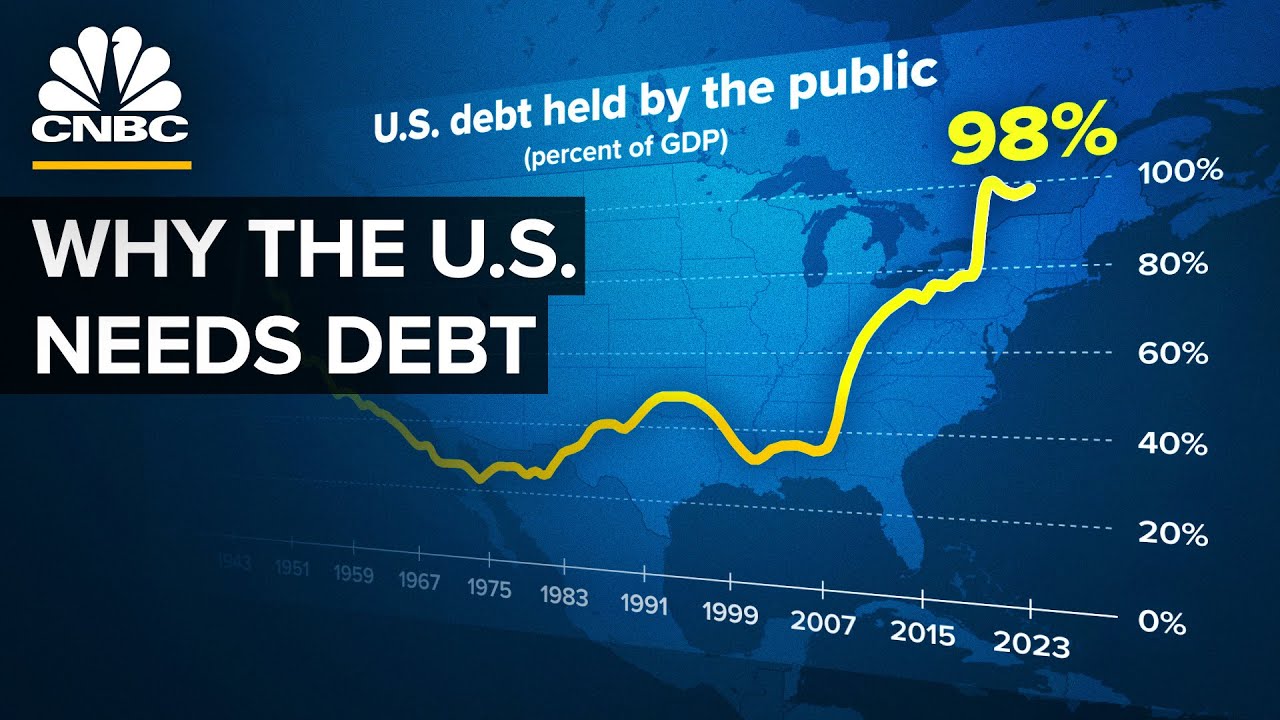
Everybody watching is already in for a real treat. This year we have spoken a lot about some major economic developments in the USA, the world's largest and most influential national economy. Despite challenges like a developing rivalry with a growing group of powers, and internal issues like national debt and shifting demographics, it is seemingly still powering on with sustained growth well above most comparable advanced economies.
Of course the USA has many economic advantages, which means it has a leg up over a lot of other countries around the world, but a lot of those advantages didn't come from nowhere. There have been a lot of instances on this channel where we have attributed national economic success to stability and confidence, and any economic stability is only ever built on top of political stability. The USA for all of its challenges has a political system that is still one of the most robust democracies in the world, and it is that stability that has given it those advantages like attracting trillions of dollars in foreign investment, and having the world's reserve currency.
It is also the destination for millions of the world's most talented people that want to take their expertise to this country to build a better life for themselves and their families. There are no official agreements anymore that make this country anything special, it's just that people know that their resources, financial or otherwise, when put to work in the USA are more likely than anywhere else to be looked after and consistently rewarded. But that's not a guaranteed thing, just like there is nothing officially unique about the US economy, there is nothing to stop its political system succumbing to the same challenges that many other countries around the world are facing today.
One of the first questions I wanted to ask the new team was, why hasn't the USA succumbed to an authoritarian rule? Have they just been getting lucky, or is there something behind this stability? And if there is, why aren't more countries following their model?
Another thing we are really excited to bring you is insights into geopolitical rivalries. Tensions around the world are at some of the highest levels they have been since the end of the cold war, and to make sense of some issues that seem so simple on the surface, we asked the new team some dumb questions with surprisingly nuanced and interesting answers. North Korea has been the thorn in the side of the global economy for more than half a century.
One of the very first videos I made on this channel, back when it was just me, was a deep dive into explaining what this economy was really like behind the scenes. We also put the new team to work explaining why, after causing so many problems for so many countries around the world, this relatively small, relatively poor and relatively weak nation hasn't just been dealt with by the much more significant powers in the region. As a typical overconfident economist, we kind of thought we already knew the answer, nuclear threats, a military build-up on the doorstep of South Korea's capital city, and China's desire to keep a buffer state in place.
But we were surprised to learn that there is a lot more going on, and hopefully you will be too. If for nothing else, make sure to subscribe over there so we can keep the geopolitical experts on the payroll for the exclusive reason of asking them fun questions like this every week, and watching them make a video out of it, which will hopefully provide some much-needed context, not only for our videos here on EE, but for everything going on in the world around us. Thanks for watching mate, bye.