The engineering behind detergents Hey Engineering Lovers, today we are going to talk about detergents and soap. Things that are part of our everyday lives and you don't even think about how complex they work. Soap seems like the simplest thing in the world.
Just throw it on your face and it gets rid of the dirt, right? It's actually a chemical and it works in a really interesting way. But let's go in parts.
Firstly, what are detergents? We often use the words "soap" and "detergent" interchangeably, but they are actually very different things. A detergent is a chemical substance that you use to break down and remove grease and dirt, while soap is simply a type of detergent.
Soap has a long history and was originally made from purely natural products such as animal fat and wood ash. Today, detergents are more likely to be a mixture of synthetic chemicals and additives cooked up in a huge chemical plant, and unlike traditional soap, they are usually liquids rather than solids. Detergents are used in everything from hair shampoo and laundry detergent to shaving foam and stain removers.
The most important ingredients in detergents are chemicals called surfactants. But what are surfactants? You might think that water makes you wet, and it does, but it doesn't make you nearly as wet as it could.
That's because it has something called surface tension. Water molecules prefer their own company, so they tend to stick together into droplets. When rain falls on a window, it does not wet the glass evenly.
Instead, it sticks to the surface in discrete droplets that gravity pulls down in flowing ribbons. To make water wash better, we have to reduce its surface tension so that it wets things more evenly. And that's exactly what a surfactant does.
Surfactants in detergents reduce their surface tension, and thus improve water's ability to wet things, spread over surfaces and infiltrate the fibers of dirty clothes. But they do other important work too. One end of its molecule is attracted to water, while the other end is attracted to dirt and grease.
Then, the surfactant molecules help the water hold onto the fat, break it down and wash it away. And how do detergents work? To tell you how detergents work, we bring here a new channel partner, INSIDER.
And we are partnering at the best time for you. Insider is anticipating Black Insider discounts, with unmissable offers. So don't waste time and buy your Insider piece, or an entire kit, now with our exclusive coupon.
I'm using the tech T shirt, which is an extremely practical piece, and since we're talking about detergents, it will be your best friend after washing. Firstly because it lasts much longer than conventional clothes, withstanding many more wash cycles without fading, and Insider takes this so seriously that it offers a 2-year guarantee against fading on this shirt. And the part I like most is that it doesn't need to be ironed, because it already melts into your body.
Use the coupon ENGENHARIADETALHADA15 or click on the link in the description or pinned comment and take advantage of our discount throughout the store. Now coming back to detergents, the smartest part of a washing machine is not the drum, transmission belt, the electric motor or the electronic circuit that controls the program, but rather the detergent that is inside our washing powder or liquid soap that you put at the beginning. Water alone cannot clean clothes because it does not bind to grease, fat and dirt molecules.
When we use washing powder, this story changes a little. Suppose you have a little fat on your favorite Insider outfit. No problem, just throw it in the washing machine with a little washing powder and what happens there is the following.
With the movement of the washing machine, this causes the technological fabric used by Insider to hit and collide with other parts of the fabric and break down the dirt and grease into smaller, easier-to-remove pieces. During the wash cycle, the surfactant present in the washing powder mixes with water. The ends of the surfactant molecules attach to the fat, and with this, it can remove the fat from the clothes.
During the rinse cycle, water molecules passing through the fibers attach to opposite ends of the water-loving surfactant molecules. This way, the water molecules pull the surfactant and dirt away from the clothing. During the final spin, the dirty water is eliminated, leaving your Insider clean again!
And then just wait for it to dry, put it on your body and you're ready for your day. That's why soap and water clean better than either of those things alone. And what other chemicals are present in detergents?
Surfactants aren't the only thing in detergents. Look at the ingredients on a typical detergent bottle and you'll see lots of other chemicals as well. In washing detergents, you will find optical brighteners, which make your clothes shine in sunlight.
Biological detergents contain active chemicals called enzymes, which help break down and remove food and other caked-on deposits. The main enzymes are proteases that break down proteins , lipases that break down fats and amylases that attack starch. Other ingredients include perfumes, while household cleaning detergents contain abrasive substances such as chalk to help scrub things like burnt stove grease and bathtub grime.
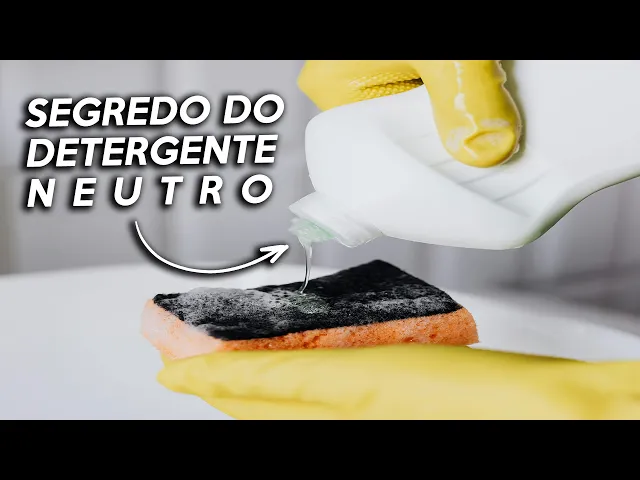
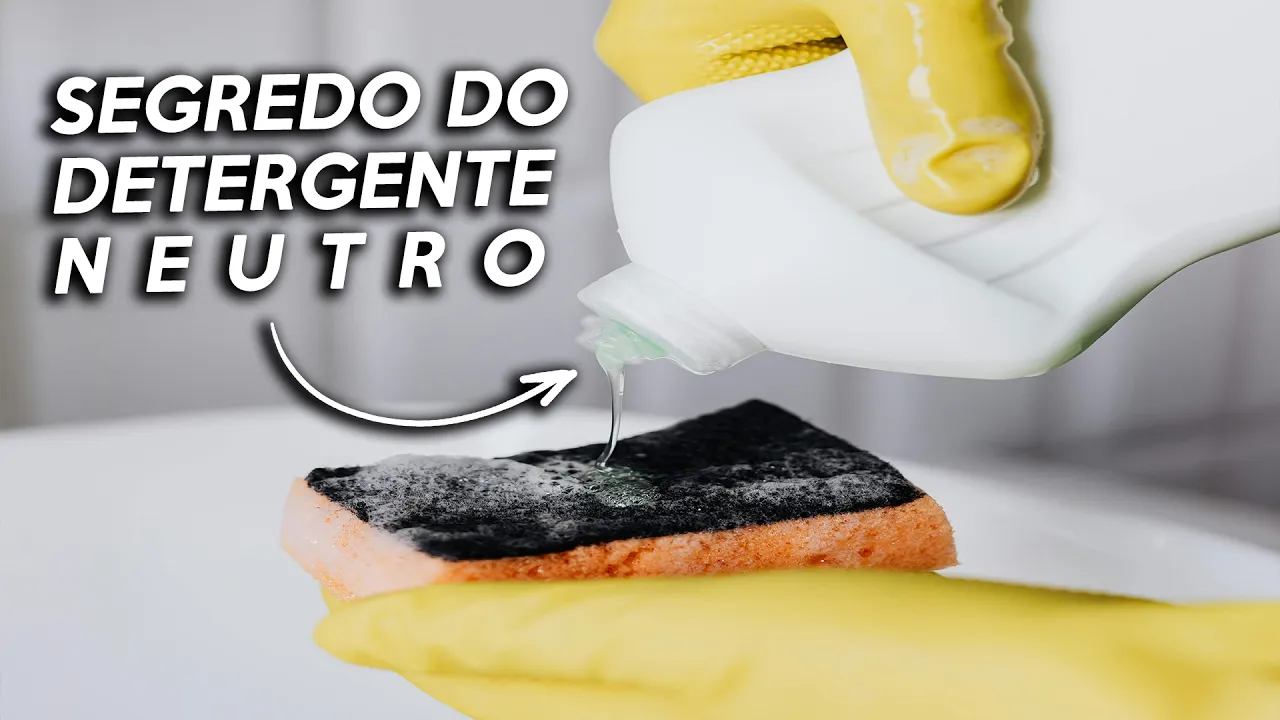
A simple thing that we use in our home, there is a lot of chemistry and engineering involved. For example, when we see on the packaging of a detergent that it is neutral, this means that it has a pH close to 7, which as we already know in our video about pH , indicates neutrality. Because it has this neutrality point, it acts much more on dirt, without damaging the surfaces of the materials we are cleaning.
The detergents we use to wash our cars are normally neutral, because the idea is to clean the car without damaging the car's paintwork and surfaces. However, a neutral detergent has less cleaning power when compared to acidic or alkaline detergents. If you've come this far and liked the video, take the opportunity to subscribe if you're not already subscribed, leave your like and turn on the notification bell and if you find our content interesting, consider becoming a member to help us continue producing content here at platform and be remembered in our videos.
And don't forget to click on the link in the description or use the coupon ENGENHARIADETALHADA15 to take advantage of our exclusive discount at Insider. So, have you washed your hands today? What types of detergent do you have at home?
Leave it here in the comments and I want to know. Here you have two interesting video options that you need to watch to expand your knowledge and explore your curiosity. And if you want to contribute to us, leave your like, subscribe to the channel, activate the bell and consider becoming a member of the channel.