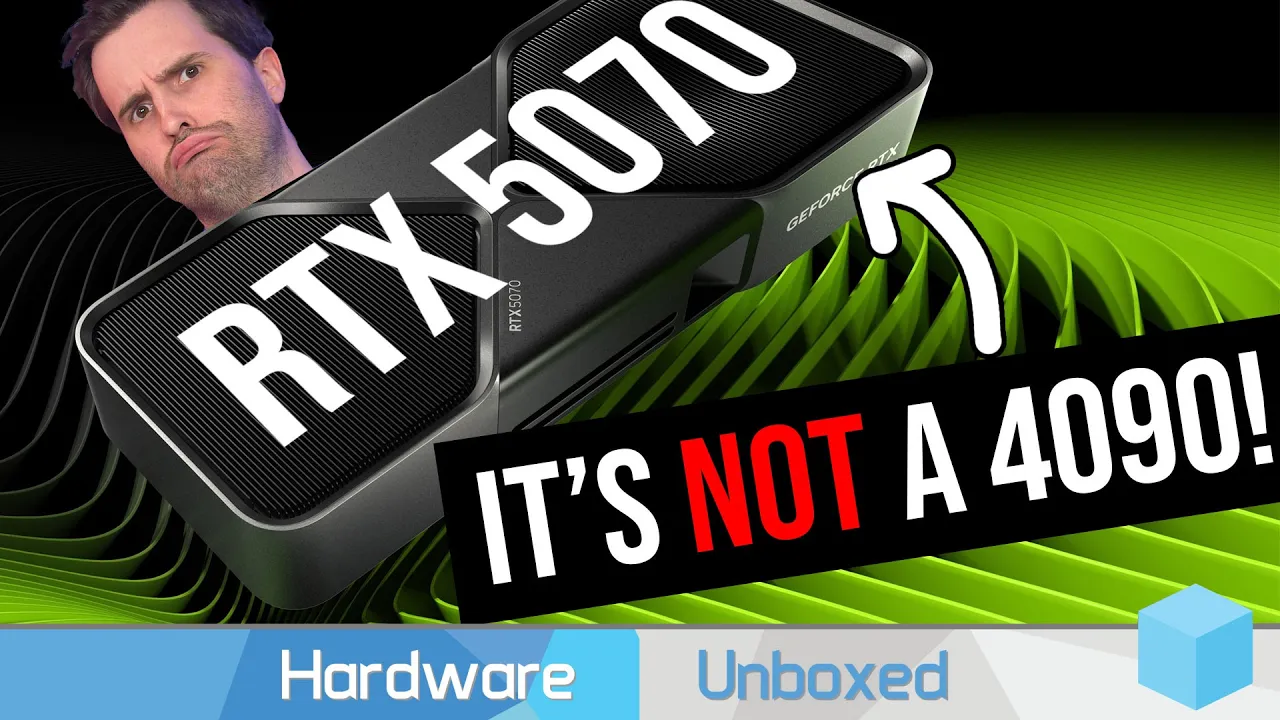
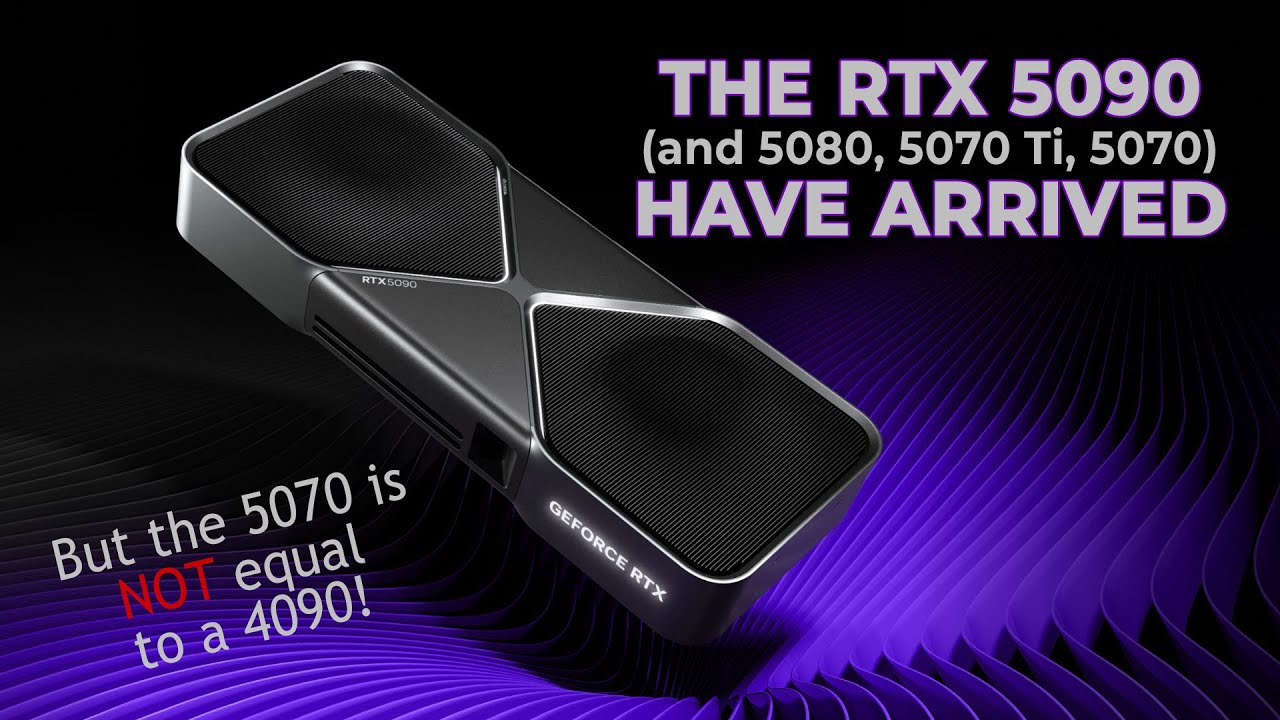
Nvidia has just announced the GeForce 50 Series and dlss 4 technology I'm sure many of you were watching the live stream so it's time to give my thoughts on what has been shown right here at CES 2025 in addition to all the specs pricing performance claims and there was even a lot of stuff that wasn't in that live stream that you might have missed as expected Nvidia focused on high-end models for this launch announcing the GeForce RTX 5090 the RTX 580 the RTX 570 TI and RTX 570 and it won't be long until you can get your hands on one with the RTX 580 and 590 launching first on January 30th this will be followed by the RTX 570 and 570 TI in February with more 50 Series models coming later I'm assuming 50 60s that sort of thing will be announced down the track the flagship model the RTX 590 packs a significant increase in Hardware over its predecessor the RTX 490 not only does this GPU use nvidia's new Blackwell architecture it also packs significantly more cuticles more memory bandwidth and a higher vram capacity the SM count has increased from 128 with the 490 to a whopping 170 with the RTX 590 a 33% increase in the size of the core but there's decreased GPU clocks going from a boost of 2. 5 GHz down to 2. 4 GHz now the memory subsystem is overhauled Now featuring gddr 7ch technology on a huge 512-bit bus with this gddr 7 memory clocked at 28 gbits per second memory bandwidth comes out to 1,792 GB per second and the 80% increase on the 409s bandwidth this is attached to 32 gig of vram as well the most Nvidia have provided on a consumer GPU with consumer Blackwell still built on tsmc 4 NM technology the board power rating has risen to accommodate these cores and memory rising to a mammoth 5 75 wats 28% higher than the 490 the RTX 580 uses a much smaller GPU configuration in fact an entirely different GPU die with just 84 SMS four more than last gen's RTX 480 super pretty much everything about this model is half of the RTX 590 just under half the Cuda cores half the memory bus width to 256 bits half the vram capacity at just 16 GB a little over half the memory bandwidth at 960 GB per second through the use of gddr 7 clocked at 30 GB per second normally this is the configuration you'd get with an RTX 5070 type of GPU which is historically where Nvidia have positioned the model that's half the size of the flagship but these days it's a 80 in I guess a bit of a disappointing move for gamers the RTX 57 TI is cut down further it falls to 70 SM 4 SM more than the last Generations 47 super however boost clocks are down from 2.
61 GHz to 2. 45 GHz now the memory bus width Remains the Same as the RTX 580 256bit meaning it also has 16 GB of gddr 7 memory this time it's 28 GB per second memory leading to 896 GB of bandwidth the 570 TI is rated at 300 wats while the 580 is rated at 360 WS then there's the RTX 570 we're looking at 48 SMS here which is just 2 sms more than the RTX 470 from the previous generation it also has just a 192-bit memory bus and 12 GB vram which I think is insufficient for this tier of product in 2025 boost clocks are only slightly higher than the 4070 and there's a total power rating of 250 wat all new GeForce 50 Series gpus come with new connectivity including PCI 5. 0 time6 for these announced models and display port 2.
1b uhb 20 a new revision to display port that adds support for active cables there's also HDMI 2. 1 and a single 16 pin power connector on each model before getting into to even more on these new Blackwell gpus a word from our CES sponsor the harbor unboxed CES coverage is brought to you by gigabyte and the new range of x870 and z890 motherboards powering the latest AMD and Intel processors gigaby z890 range supports Intel's new core Ultra processors while the x870 range supports amd's ryzen 9000 series including the gaming Flagship ryzen 7 9800 x3d all models offer robust power delivery with optimal cooling screwless m.





![Best Gaming CPUs: Update Late 2024 [28 CPUs, 14 Games]](https://img.youtube.com/vi/2mE4YEm2L-g/maxresdefault.jpg)




![1 A.M Chill Session 🌌 [synthwave]](https://img.youtube.com/vi/TlWYgGyNnJo/maxresdefault.jpg)