- What's up, guys? It's Justin here. If you're new to the channel, I am a doctor here in New Zealand and I help students learn and manage their time more efficiently.
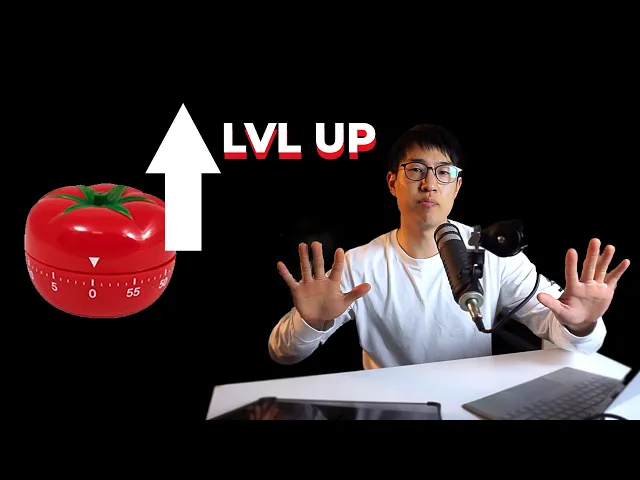
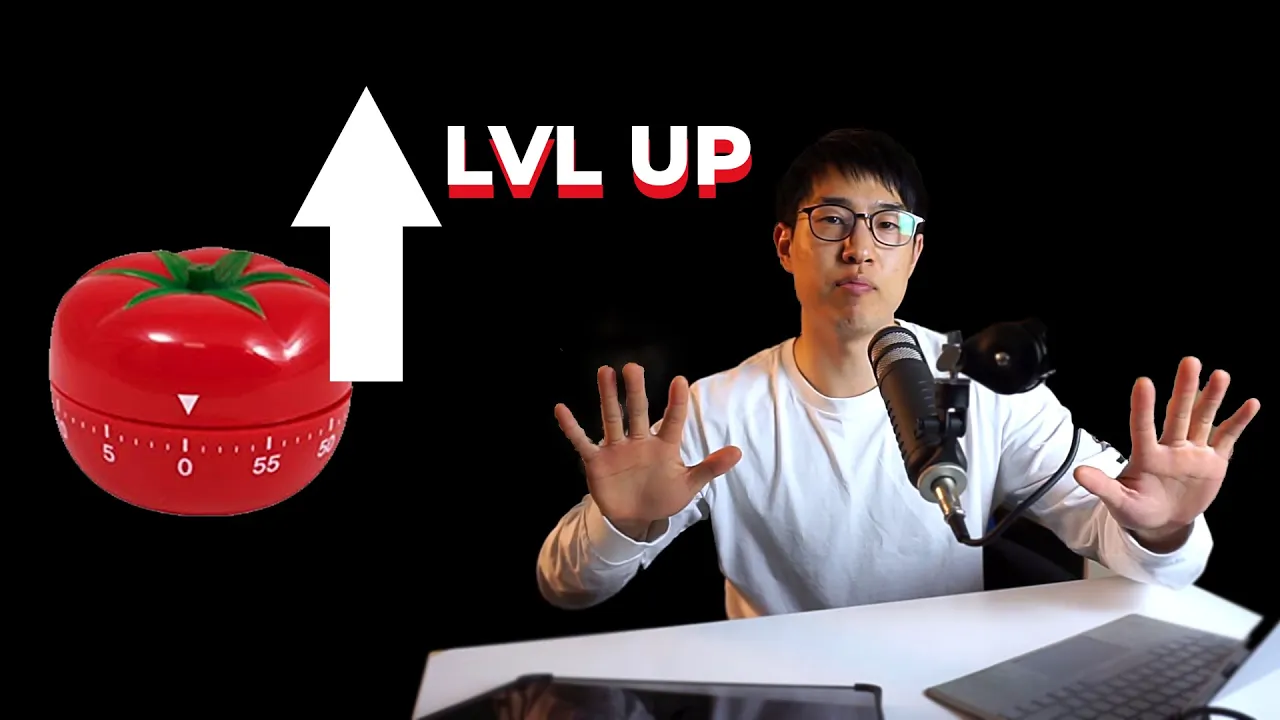
If you haven't seen my video on why the Pomodoro Technique works, then I recommend that you check that one out first because we're gonna take the lessons that we extracted from that video and then we're gonna apply it combined with this video to create a technique that is better than the original Pomodoro Technique itself. If you don't already know the Pomodoro Technique, it is a 25/5-minute work/rest timer. It's pretty effective, really famous, and a lot of the students that I work with have used this in the past to varying levels of success.
We, from the first video, already know that there are three sort of parts to why the Pomodoro Technique works. By applying the time pressure for ourselves, it reduces our distractibility and increases our concentration while also giving us our clear intention at the beginning as well as a nice wrap-up with minimal attention residue at the end. So as long as we can have a technique that applies those things, we should be good to go.
The limitation of the Pomodoro Technique is that it doesn't really talk about the break as much and the work time is pretty arbitrary. You know, I really don't think it can get more arbitrary than basing it off a tomato-cooking timer. And so this is where we can make a few adjustments.
We should really be working for the ideal amount of time and then we should be breaking for the ideal amount of time. So when I say ideal, what exactly am I talking about? Well, it kind of depends.
So let's say that we're wanting to do a lot of work very, very quickly and we don't care about the sustainability of that. Like, we just have the next couple hours to get as much work done as possible. In that case, it's not really gonna matter.
Most of the time, though, it's not like that. We wanna have a high level of output for a long period of time. We wanna be consistently productive rather than sporadically productive in bursts.
So what that means is that the ideal time to work and the ideal time to rest is the combination that produces the highest overall level of productive output in that given time, and the given time is a little bit longer than just one cycle of Pomodoro. It might be over a week or a couple weeks or an entire semester before your exams. And if we think about it that way, then it changes a lot of things about the way that we think about when to work, for how long, how intensely, and, likewise, how long and when we should take breaks.
So when we work, we wanna work at the highest level of efficiency or thereabouts. We don't wanna be dropping down the efficiency graph and working at really low levels of efficiency because if that happens, then we're training our brain to work in a suboptimal state and we're losing our brain's ability to work in focus. We wanna train an association with our brain with focus so that when we work, we are highly productive and able to activate focus.
If we keep exposing our brain to working inefficiently without focus, and especially if that actually ends up being the majority of the time that our brain is exposed to, then our brain is gonna get better at being less efficient. As a rule of thumb, I generally teach students to stop working once they feel like their efficiency is less than 50% or so. And what 50% feels like is that the razor edge of efficiency is starting to noticeably dull.
This is when it feels like we're sluggish, we're performing a little bit slowly, we're making more mistakes. It generally takes less effort to be at a high level of performance. We can still be at a high level of performance but it takes more effort.
And the reason that we don't wanna push further than that is because then our recovery is going to need to be longer. So we spend more time recovering and taking a break than we will actually working and we don't want that. We wanna spend more time working and less time taking a break so that overall we're getting more work done.
So we take a break a little bit earlier than we're used to, when that razor edge of focus starts to dull and blunt a little bit. The amount of time that we rest for, as a rule of thumb, I generally say divide the time you have been working for by three to four. So if you've been working pretty well for the last 30 or 40 minutes, then you're going to take a 15- or 10-minute rest.
I've found working with students and personally experimenting with myself that this tends to be a pretty good level of rest. Obviously, if you've been working for longer, you take a longer break. So a one-hour block of time, you might end up resting for around 20 minutes.
And as the day goes on and gets longer, the amount of time that we're working for will reduce as our ability to focus reduces and our energy is just lower. So while we were able to work really well for an hour in the morning, we might by the end of day only be able to work for 20 minutes before we are starting to feel like that edge is getting dull. But the important thing is that we were able to work consistently at a higher level of focus, taking strategically less rest than we were working for the entire day from the morning through to the evening, if that's what's required of us.
Otherwise, it's very easy to have a highly productive morning and then a completely inefficient evening where overall, if you look at the efficiency of the entire day, it really wasn't so good. Now the question is, what are we doing in our break to optimize that? Well, if you spend that break scrolling around on Facebook and Instagram, you're probably not going to recover enough and you're gonna still feel exhausted and you won't feel ready to enter into the next one.
It's also not gonna utilize the benefit that the Pomodoro Technique had, which was that we have a clear intention coming into the session. So what we do here is we set those short-term goals every single block of work. So if we're starting something, we set a one-hour or 45-minute short-term goal.
This is what I'm going to achieve, very clearly. You give yourself that amount of time and you time it and if you feel like you're losing focus earlier than that, you just simply stop the timer short and wrap up whatever you were on. Look at the amount of time that you have worked for and then divide that by three or four to get the number that you need to rest.
During that rest, if you're really tired, you wanna do something that's more active relaxation. This could be something like meditation, which has a number of well-researched benefits, or you could be doing something else that maintains your flow state, such as being productive, like getting housework done or life admin or organizing your room, or if you're studying, then a thing that I commonly recommend is go for a stroll. Not only does it help relax your eyes by looking further than short-distance books and computer screens, but it also helps you activate a higher level of learning by connecting ideas a little bit more casually rather than being boxed or tunneled in, which there is a tendency to do when you're studying sitting at a desk.
So what that might look like and what it looks like for me usually is that I'll go for a stroll with a notebook in hand, I'll think about the ideas that I've been learning about, and I'll create some big widespread mind maps, literally mind maps in my mind, and identify if there's any gaps or weaknesses or see if I can simplify it. I might try to create some analogies, which is a higher level of learning as well. By doing this, I'm staying productive, maintaining that flow state that I wanna protect, but I'm not compromising the actual relaxation that I'm getting because I'm not gonna be stressing about it.
And honestly, going for that walk and just thinking about things is very enjoyable. So you can see that this technique takes the best of the Pomodoro Technique without the limitations where the breaks are a little bit undirected and the time that you spend is either arbitrary or just guesswork. A lot of people will say, "I like to work for 50 minutes and then 10 minutes," but does that always work?
It won't always work. It depends on the day, it depends on your mood, it depends on your diet and your sleep and the subject that you might be working on. So there are a lot of variables in it.
So it's better to be calibrated to how deeply you feel you are focused and then create time pressure around that to enhance that focus and then use the breaks strategically to recover rather than sticking to a very rigid work/rest time, which, based on the fact that it's not flexible, often won't work for you. So here's my challenge to you. Use this method of work/rest timing for your next big, long study or work session.
Break it up into smaller chunks and then set clear goals and intentions at the beginning of each chunk. Use your breaks strategically and apply the time pressure throughout the entire period. See how that goes and let me know, leave a comment if you've ever used a technique like this or a variation of it and how it worked for you.
So far, this technique that I've just explained to you has worked for every student that I've ever worked with who has tried it. It's consistently been more effective than the Pomodoro Technique or other variations of it. And for me, I find that it's very flexible, very dynamic, and actually makes work and study a lot more enjoyable because it's fun to be focused, in a way.
It feels good. It's satisfying, it's fulfilling. Anyway, let me know your experience in the comments down below.
Make sure to leave a like and subscribe. It really helps with the YouTube algorithm. And until next time, stay efficient.