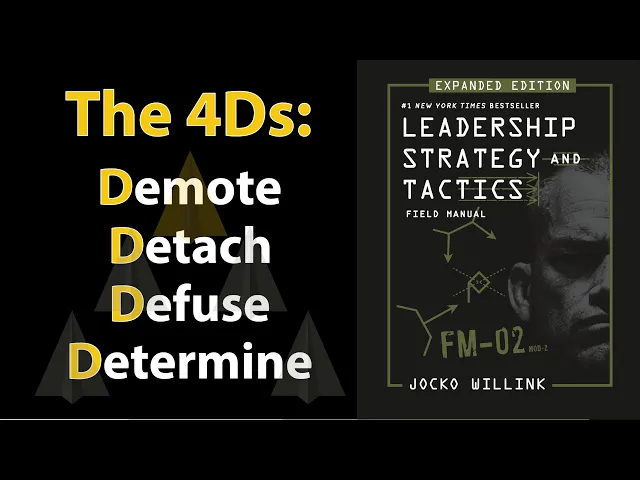
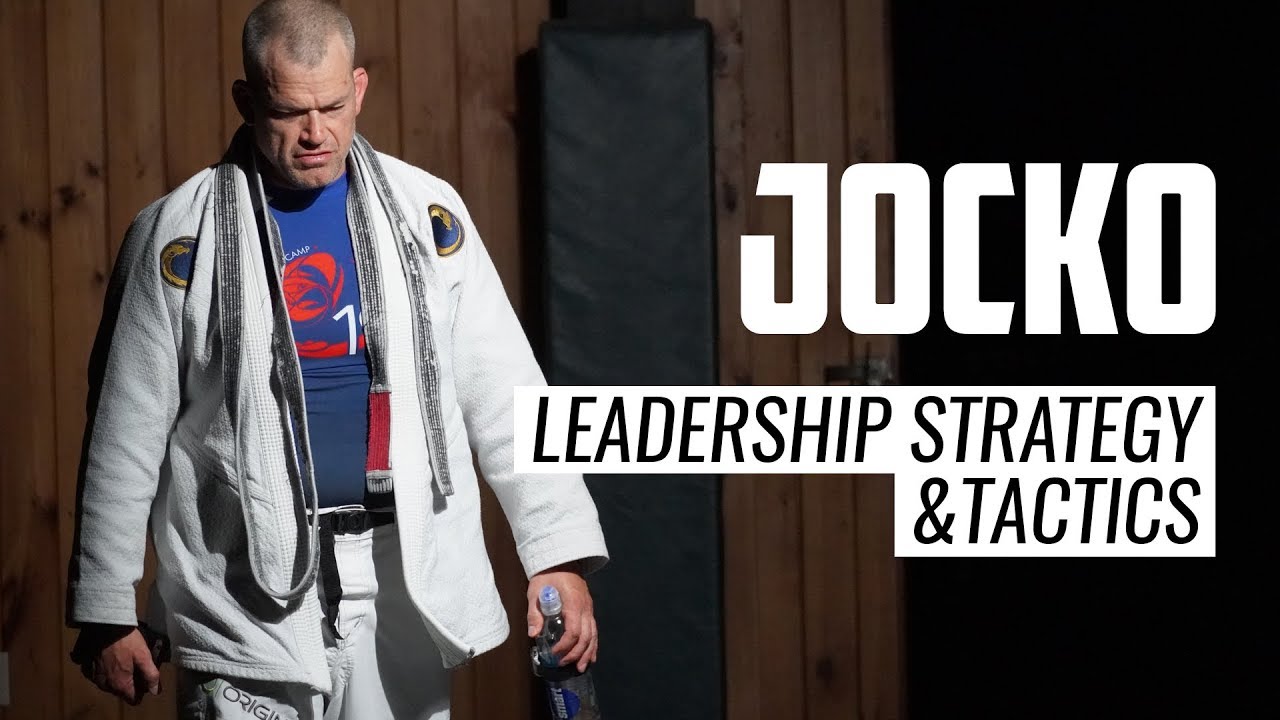
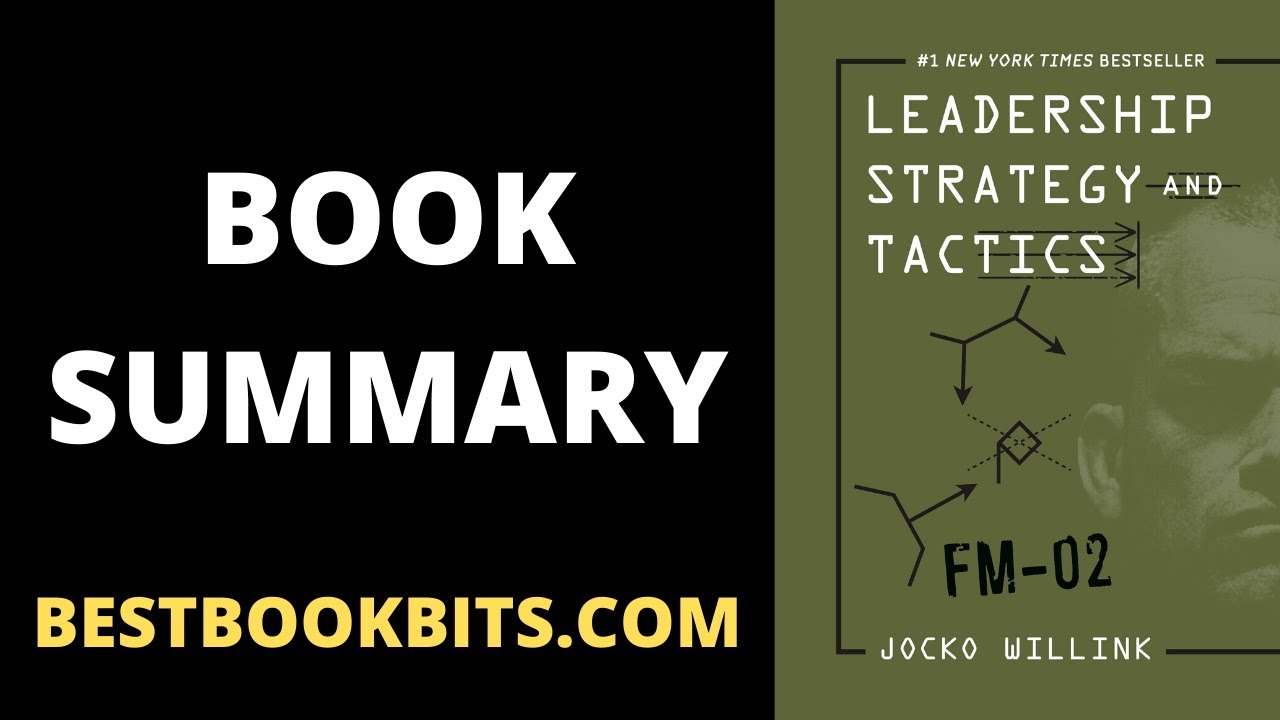
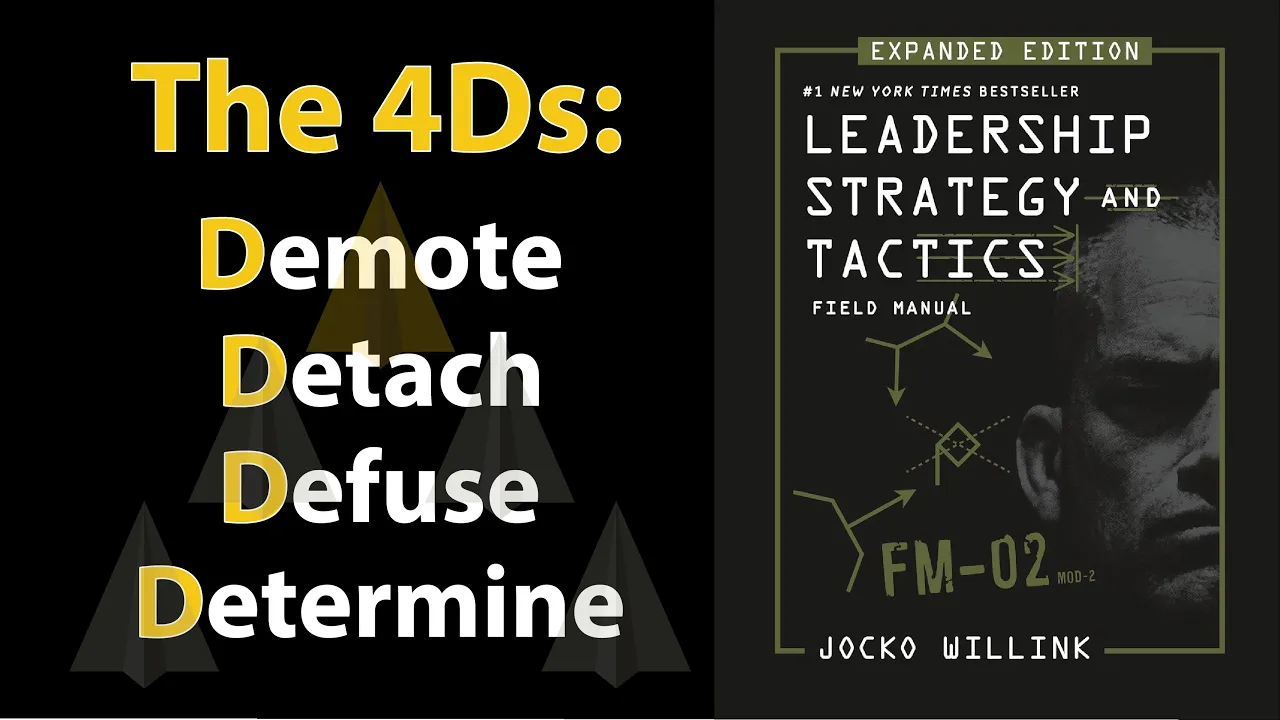
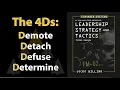
I recently read leadership strategy and tactics by Joo willink Joo willink a retired Navy SEAL Commander uses the leadership strategies and tactics he learned in the military to help Business Leaders and run his own businesses after learning more about these strategies and tactics I'm confident that you and I can use them to be more effective leaders at home at the office and in any team environment I've distilled what I believe to be 's most impactful lessons into what I call joo's 4D Leadership Model demote detach defuse and determine first demote your ego when jao willink
joined his second Seal Team he had a commander from another Navy unit who lacked SEAL training and combat experience so he tried to overcompensate he refused to listen to advice from experienced team members of lower Rank and insisted that he knew the best way to execute team missions when the missions went wrong he blamed others never admitting his plans were flawed his ego was so big that when one of his plans got challenged by a subordinate he took a swing at him Joo and his team thought that the only way to be free of this
Commander was to start a mutiny and petition to remove the commander this was a risk because the Navy states that mutinies are punishable by death thankfully senior Navy leadership recognized the problem and replaced the commander with a highly experienced Navy SEAL named Delta charlie delta Charlie was a start contrast to his predecessor for starters he established a decentralized command by clearly stating his intent for a mission like saving a hostage located in a building and then empowered his men to devise the plans all he asked was to review their plans at which time he would
provide a few suggestions based on years of experience but still make the plan feel like it was his team's plan if the plan went sideways Delta Charlie owned it and dealt with the Fallout more on that later as a leader your ego will urge you to have all the answers and make all the decisions to trust and give control to your team as Delta Charlie did you must demote your ego the instant you get promoted to a leadership position empowering others to make decisions is the fastest way to build a cohesive team when you consistently
trust your team they will be more likely to trust and commit to your decisions even if they disagree with them the second D in joo's 4D Leadership Model is detached to decide when jao was a junior Navy SEAL he was in a tense combat situation on an oil rig his platoon seemed overwhelmed by the complex environment and was paralyzed jao waited for his leader to make a decision but it never came knowing a decision had to be made Joo did something powerful he detached he stepped back both physically and mentally and gained a clear view
of the situation almost like he was flying a drone above the battlefield to assess the entire situation and seeing himself and his teammates from A New Perspective while in this detached State he made the call hold left move right his team repeated hold left move right and cleared the deck allowing the mission to continue on smoothly later Joo was praised for this call and it taught him a vital leadership lesson when your team is overwhelmed don't get caught in the chaos instead detach from your emotions by taking a deep inhale and performing a long exhale
as you exhale imagine stepping outside of your body and the torent of emotions you're experiencing to become the decider expand your field of vision and try to take in the whole situation then make what you know to be the right call regardless of how uncomfortable or unpopular it may be in the short term now the thirdd in joo's 4D Leadership Model is diffus tension with extreme ownership arguably the most counterintuitive leadership lesson Joo learned on this path to becoming a Navy SEAL Commander is completely owning and taking blame for every bad thing that happened on
his teams most people's Instinct as a leader is to teach people lessons by making them feel guilty for doing something wrong like a parent yelling at a child saying what were you thinking but the fastest way to get people you're leading to do the right thing and do it long term is as a leader to immediately accept fault for a negative result by saying a version of I let this happen now what can we do to make sure this doesn't happen again so for example when someone fails to complete a task on time say I
didn't explain the task well enough what can we do to ensure that you better understand the requirements next time this extreme ownership approach has three powerful effects first it immediately lowers the tension between you and the person you're leading since they have no need to fight back second if they know deep down that they are more at fault than you they will feel guilty that you took the blame and work twice as hard to fix it and three it will make people respect you more as a leader and want to screw up Less in the
future so that you don't have to carry the burden when you take extreme ownership you're saying the blame game is over now let's work together to solve this this the result is less time arguing over who is at fault and more time coming up with good Solutions now the last D in joo's 4D Leadership Model is determine the optimal balance Joo says leaders must talk but if they talk too much they overwhelm their subordinates with information on the other hand if they talk too little the troops aren't properly informed likewise a leader must be aggressive
but if they are too aggressive they might expose themselves to unnecessary risk contrarily if they're not aggressive enough they will never make progress the list of dichotomies opposing forces that poll leaders in contradictory directions is vast however there are three critical dichotomies that demand your attention as a leader one take ownership and responsibility but avoid doing the work for your team or micromanaging them two maintain incredibly high standards but remain easygoing enough so you don't push people too hard and three love your people but also be willing to put them In Harm's Way by giving
them uncomfortable challenges that force them to struggle and stretch their abilities poor leaders tend to flip-flop between two extremes of a dichotomy but great leaders consciously maintain a perfect balance like a surfer ratting the wave staying as close to the desirable Extreme as possible without letting themselves or their team go too far in the end when you're put in a leadership position or feel that you must step up and assume a leadership position practice joo's 4D leadership philosophy demote your ego detach to decide diffuse tension with extreme ownership and determine the optimal balance execute these
4 DS and remember as Joo says it's all on you but it's not about you the team is more important than you and the moment you put your interest above the team and the mission is the moment you fail as a leader that was the core message that I gathered from leadership strategy and tactics by Joo willing this book was a great collection of lessons from joo's life I highly recommend it for every leader if you would like a one-page PDF summary of insights that I gather from this book just click the link below and
i' be happy to email it to you if you already subscribed to the free productivity game email newsletter this PDF is sitting in your inbox if you like this video please share it and as always thanks for watching and have yourself a productive week