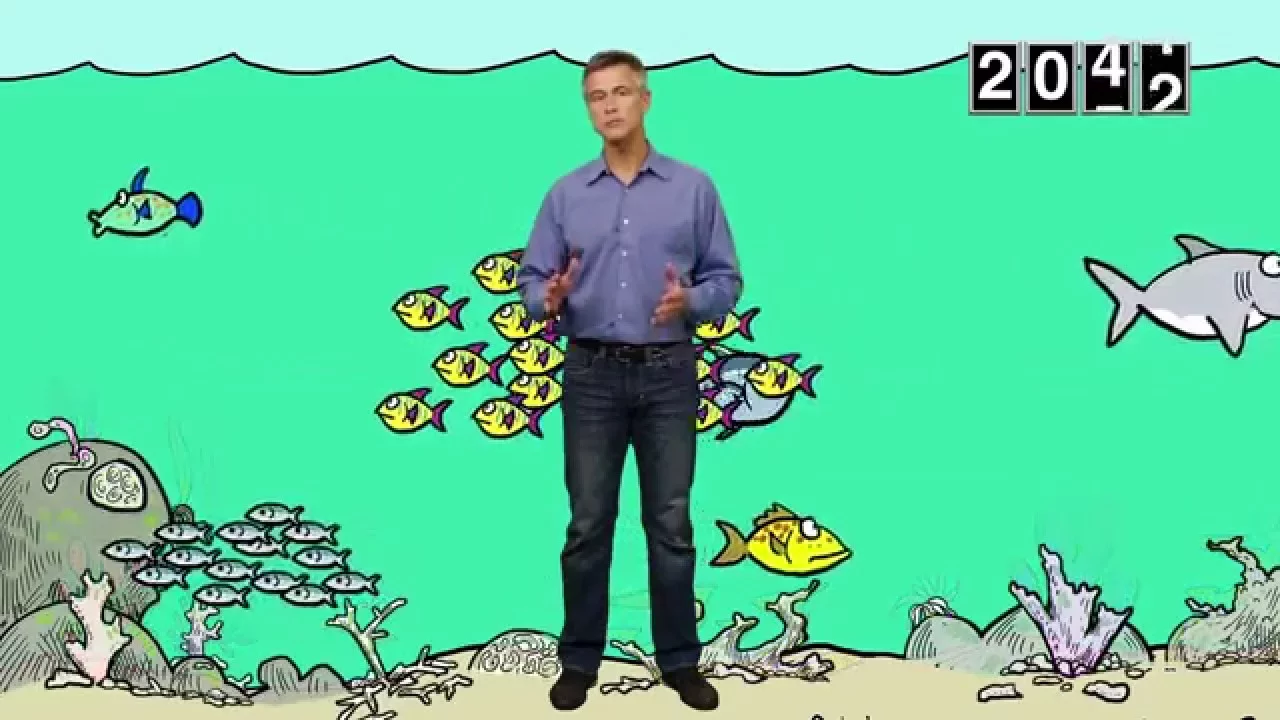
Invisible force invades world, slowly dissolving residents! Sounds like science fiction. Actually, it’s science nonfiction – otherwise known as reality – and it’s happening in our oceans right now.
“It” is ocean acidification. “Huh? ” The oceans absorbs about a third of the carbon dioxide that spews forth from our cars, power plants, factories and airplanes.
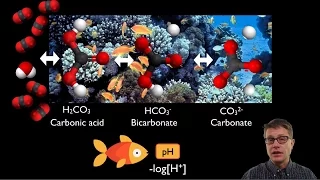
That’s over 22 million tons of CO2 every day! But the ocean doesn’t just “absorb” all that CO2. There’s a chemical reaction at work here.
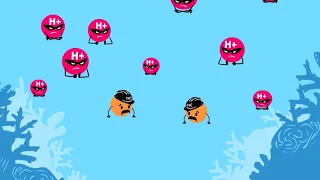
Through processes involving hydrogen ions and other science-y nonfiction words, the ocean is becoming more acidic, and that in turn is eroding the shells of vital marine species including clams, oysters, urchins, and pteropods. Oh sure, I know what you’re thinking… “Who cares about a bunch of pteropods? ” But these animals are part of the foundation of an enormous food web.
And when little things change on a big scale, big changes are sure to follow. The chemical change in our seawater is also having an effect on corals. In fact, scientists say that ocean acidification could wipe out most coral reefs by the middle of this century.
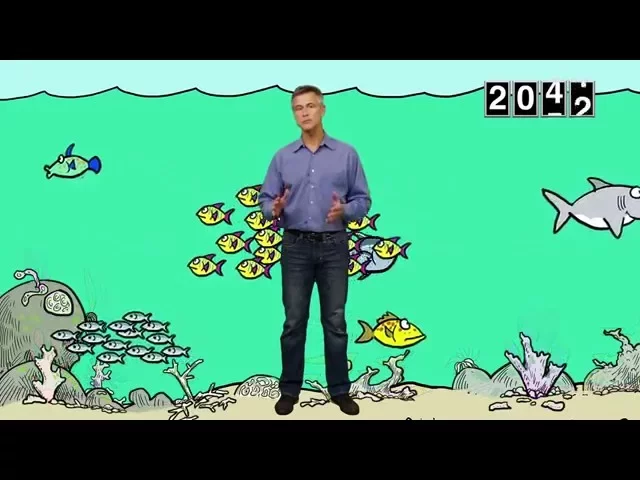
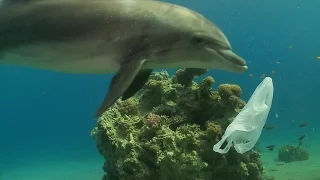
It’s affecting larger animals, too. For example, certain fish have a harder time detecting predators. And that’s just for starters.
The good news is that with less carbon pollution, the ocean should regain its chemical balance. If not, the truth will be a lot scarier than fiction.