Have you ever noticed how some people seem to effortlessly glide through life while the rest of us are grinding away just to keep our heads above water? They're not necessarily smarter than you. They didn't inherit secret family fortunes, and they're definitely not using some mystical money manifestation technique they learned from a guru on Instagram.
Yet, somehow they're building wealth while you're wondering where your paycheck disappeared to. Again, here's what's really happening. The top 1% don't just have more money than everyone else.
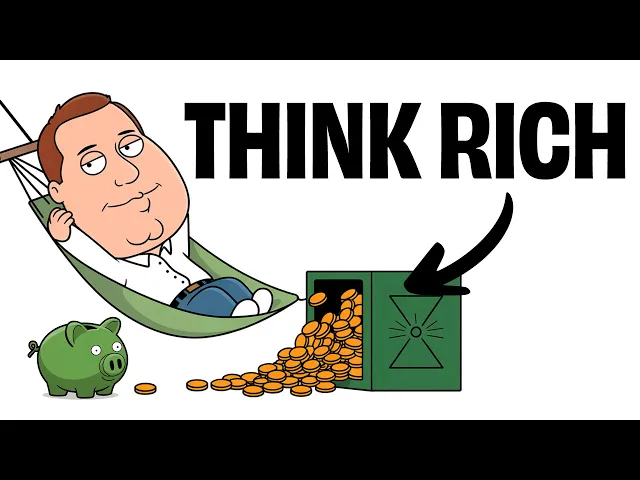
They think about money in a completely different way. While most people are stuck playing financial defense, constantly worried about bills and expenses, the wealthy are playing offense um strategically building systems that work for them even when they're sleeping. My name is Nick and I spend way too much time studying the habits and mindsets of people who've cracked the code on building serious wealth.
If you're tired of thinking like everyone else and getting the same mediocre results everyone else gets, make sure to hit that subscribe button and give this video a thumbs up if it helps you see money differently. The truth is, most of us were programmed from childhood to think about money in ways that virtually guarantee we'll stay middle class forever. We were taught that working hard automatically leads to financial success, that saving pennies in a checking account counts as investing, and that anyone who talks about getting rich must be greedy or shallow.
Meanwhile, the wealthy learned an entirely different set of rules. And they've been using these rules to build generational wealth while the rest of us argue about whether a $4 coffee is a reasonable expense. Let me start with something that might sting a little bit, but it needs to be said.
Um, your current financial situation is not an accident. It's not bad luck. It's not the economy, and it's definitely not because you haven't found the right getrichqu scheme yet.
Your financial situation is a direct result of how you think about money. And until you change those thought patterns, your bank account will stay exactly where it is. Uh the first major shift that separates wealthy thinking from poor thinking is understanding the difference between assets and liabilities.
Now before you roll your eyes and assume this is going to be some boring accounting lecture, stick with me because this concept alone can transform your entire financial future. Most people think they know what an asset is. Though they'll point to their car, their expensive watch, maybe their college degree, and proudly declare these as assets.
But here's the problem. An asset puts money in your pocket. A liability takes money out of your pocket.
That car you're so proud of, it's costing you hundreds of dollars every month in payments, insurance, gas, and maintenance. That's not an asset. That's a liability disguised as status symbol.
Um the wealthy understand this distinction. Intuitively, um before they buy anything, they ask themselves one simple question. Will this make me money or cost me money?
If it makes money, they buy it. In if it costs money, they either avoid it entirely or they use income from their real assets to pay for it. This is why you'll often see millionaires driving older cars while people making 50,000 a year are financing brand new trucks they can't afford.
The second shift is about time horizon. Poor people think about money in terms of days, weeks, and months. They're focused on making it to the next paycheck, covering this month's rent, or maybe saving up for a vacation next year.
Wealthy people think in terms of decades. They make financial decisions based on where they want to be in 10, 20, or 30 years from now. This long-term thinking changes everything about how they approach money.
Instead of asking whether they can afford something right now, they ask whether this purchase or investment will help them build the life they want in the future. Instead of celebrating a tax refund as free money, they see it as proof they gave the government an interestfree loan and adjust their withholding accordingly. Here's where this gets really interesting.
The wealthy don't just think long-term about their investments. They think long-term about their education and skill development. While most people stop learning the moment they graduate from school, wealthy individuals treat education as a lifelong investment that compounds over time.
They're constantly reading, taking courses, attending seminars, and surrounding themselves with people who challenge their thinking. This brings us to the third major shift, and this one might be the most important. The top 1% are absolutely obsessed with understanding how money actually works.
They're they don't just throw their savings into whatever investment their co-orker recommended or blindly trust a financial adviser who makes money whether their clients succeed or fail. They take the time to educate themselves about compound interest, tax strategies, different asset classes, and market cycles. Most people avoid learning about money because they think it's complicated or boring.
The wealthy embrace this complexity because they understand that financial literacy is the foundation of financial freedom. They know that every hour they spend learning about money will pay dividends for the rest of their lives. But here's what separates the truly wealthy from people who are just financially literate.
The wealthy don't just understand money. They understand psychology. They know that success with money is at least 80% behavior and only 20% knowledge.
They've learned to control their emotions, delay gratification, and make rational decisions even when their feelings are telling them to do something different. This psychological mastery shows up in countless ways. When the stock market crashes, poor people panic and sell their investments at the worst possible time.
Wealthy people see market crashes as opportunities to buy quality investments at discount prices. When poor people get a windfall like a bonus or tax refund, they immediately think about what they can buy with it. Wealthy people immediately think about how they can invest it to create more money in the future.
The fourth shift is about creating versus consuming. Most people are primarily consumers. They work to earn money.
Then they spend that money on things that make other people wealthy. They buy products, they pay for services, they consume entertainment, and they repeat this cycle until they retire with barely enough money to survive. Wealthy people flip this equation.
They focus on creating value for other people, whether that's through a business, investments, or developing skills that command higher compensation. Instead of just being consumers, they position themselves as the people who own the businesses, create the products, and provide the services that everyone else is buying. This doesn't mean you need to start a Fortune 500 company or become the next tech billionaire.
It means shifting your mindset from someone who just earns and spends money to someone who creates systems and owns assets that generate money. Maybe that's starting a side business. Maybe it's investing in dividend paying stocks, or maybe it's developing expertise that allows you to command higher fees for your services.
The key insight here is that wealthy people understand the difference between working for money and having money work for them. Poor people trade their time directly for dollars, which means their income is always limited by the number of hours they can work. Wealthy people create income streams that aren't dependent on their personal time and effort.
This is why you'll meet people who seem to work less than everyone around them, but somehow have more money than people working 60-hour weeks. It's not because they're lazy or lucky. It's because they've built systems that generate income whether they're actively working or not.
The fifth shift is about risk. And this is where most people get it completely backwards. Poor people think wealthy people take huge risks with their money.
like they're constantly gambling on risky investments or starting businesses that could fail spectacularly. But the reality is almost the opposite. The wealthy understand that the biggest risk isn't losing money on an investment.
The biggest risk is not investing at all. Think about it this way. If you keep your money in a savings account earning half a percent interest while inflation runs at 3% annually, you're guaranteed to lose purchasing power every single year.
That's not safe. That's financial suicide in slow motion. Meanwhile, the stock market has averaged about 10% returns over the past century, even accounting for crashes, recessions, and world wars.
The wealthy don't see investing as risky. They see not investing as the riskiest thing you can possibly do with your money. They understand that doing nothing is actually doing something.
And what you're doing is choosing to get poorer every year while pretending you're being conservative. But here's where it gets interesting. Uh while poor people avoid financial risk, they take massive risks in other areas without even realizing it.
They risk their entire financial future on a single income source by never developing additional streams of revenue. They risk decades of their life working for companies that could eliminate their position tomorrow. They risk their retirement security by assuming social security will somehow fund their golden years.
The wealthy spread their risk across multiple income sources, multiple asset classes, and multiple strategies. If one investment performs poorly, they have others that might perform well. If one business struggles, they have other revenue streams to fall back on.
They're not putting all their eggs in one basket and hoping for the best. This brings us to the sixth major shift, and this one might surprise you. Wealthy people are absolutely obsessed with taxes, but not in the way you might think.
They're not trying to evade taxes or hide money in offshore accounts. They're laser focused on understanding tax law and using every legal strategy available to minimize what they owe. While most people think about taxes once a year when they're frantically searching for receipts and hoping for a refund, wealthy people think about taxes with every financial decision they make.
They understand that it's not about how much you make, it's about how much you keep after taxes. A person earning $200,000 who pays a 40% effective tax rate is keeping less money than someone earning $150,000 who pays a 20% effective tax rate. This is why wealthy people max out their retirement contributions, invest in tax advantaged accounts, and structure their businesses to minimize their tax burden.
They're not being greedy or unpatriotic. They're simply following the tax code as it was written and keeping more of their money so they can invest it and build more wealth. Here's something that will probably annoy you, but it's true.
The tax code is actually designed to reward the behaviors that wealthy people engage in naturally. If you own a business, you get tax deductions. If you invest in real estate, you get depreciation benefits.
If you contribute to retirement accounts, you get tax deferrals or tax-free growth. The government wants people to start businesses, invest in real estate, and save for retirement. So, they incentivize these behaviors through the tax system.
Poor people inadvertently choose the most tax inefficient strategies possible. They earn regular income, which is taxed at the highest rates. They keep their money in savings accounts that generate taxable interest.
They buy things with after tax dollars instead of structuring purchases through businesses where they might be deductible. Then they complain that the wealthy don't pay their fair share, not realizing that the wealthy are simply playing by the same rules, but understanding them better. The seventh shift is about leverage.
And I'm not just talking about financial leverage like loans and mortgages. I'm talking about leveraging other people's time, other people's money, other people's expertise, and other people's networks to achieve results that would be impossible on your own. Poor people try to do everything themselves.
They think asking for help is a sign of weakness or they're too proud to admit they don't know something. Wealthy people are constantly looking for ways to leverage resources they don't personally own to achieve their goals faster and more efficiently. This shows up in countless ways.
Instead of spending years learning to manage their own investments, they hire financial adviserss and fund managers who do this professionally. Instead of trying to understand every aspect of tax law, they work with accountants who specialize in tax strategy. Instead of attempting to build a business entirely with their own capital, they raise money from investors or take out business loans.
Aha. But here's the key insight. Uh wealthy people don't just use leverage randomly.
They understand that leverage amplifies both gains and losses. So, they're extremely strategic about when and how they use it. They'll use leverage to acquire assets that generate income or appreciate in value, but they avoid using leverage to buy liabilities or fund consumption.
The eighth shift might be the most counterintuitive of all. Um, wealthy people are incredibly generous with their money, but they're generous in ways that also benefit them financially. While poor people think you have to choose between making money and helping others, wealthy people understand that the most successful businesses solve problems for other people.
They don't see money as something to hoard or guard jealously. They see money as a tool for creating value, solving problems, and building relationships. When they invest in a company, they're providing capital that helps that business grow and create jobs.
When they donate to charity, they're often getting tax deductions while supporting causes they care about. When they pay for quality products and services, they're supporting other businesses and entrepreneurs. This abundance mindset changes everything about how they approach opportunities.
Instead of asking what they can get out of a situation, they ask what value they can provide. Instead of trying to win at other people's expense, they look for situations where everyone benefits. This approach naturally leads to better relationships, more opportunities, and ultimately more wealth.
Poor people often operate from a scarcity mindset. It they think there's only so much money to go around. So if someone else gets rich, that somehow means less opportunity for them.
They see money as something to compete for rather than something to create. This mindset leads to jealousy, resentment, and missed opportunities because they're so focused on what they don't have that they can't see possibilities right in front of them. The ninth shift is about information and decision-making.
Wealthy people are voracious consumers of highquality information, but they're extremely selective about their sources. They understand that in the information age, your success is largely you consume and how determined by the quality of information. Quickly, you can turn that information into action.
While most people get their financial advice from social media, cable news, or casual conversations with friends who are just as financially confused as they are. Wealthy people seek out experts, read actual research, and base their decisions on data rather than emotions or popular opinion. But here's what's really interesting.
Wealthy people don't just consume more information. They consume different types of information. Instead of focusing on daytoday market movements or the latest financial drama in the news, they're reading about um long-term uh economic trends uh technological innovations and demographic shifts that will create opportunities over the coming decades.
They also understand that information without action is worthless. Poor people often get trapped in analysis paralysis, constantly researching and planning, but never actually doing anything. Wealthy people gather enough information to make an informed decision, then they act.
They know that taking imperfect action is usually better than taking no action while waiting for perfect information. Like this willingness to act on incomplete information might seem reckless, but it's actually based on a sophisticated understanding of risk and opportunity cost. They know that waiting too long for certainty often means missing the best opportunities entirely.
The 10th shift is about understanding money velocity. And this is where wealthy people really separate themselves from everyone else. While most people think the goal is just to accumulate money and let it sit there looking pretty in their bank account.
Wealthy people understand that money is meant to move. They're constantly looking for ways to put their money to work, cycle it through profitable investments, and generate returns that can be reinvested for even greater returns. Poor people treat money like a pet rock.
They get excited when they finally save up $5,000. Then they park it in a savings account, earning practically nothing, and pat themselves on the back for being financially responsible. Meanwhile, inflation is quietly eating away at their purchasing power.
like termites in a wooden house. You're like, wealthy people see that same $5,000 as an opportunity. Maybe it's the down payment on a rental property that generates monthly cash flow.
Maybe it's seed capital for a side business. Maybe it's the start of a diversified investment portfolio. The point is, they're not content to let money sit idle when it could be working to create more money.
This doesn't mean they're reckless with their capital. They understand the difference between investing and gambling, but they also understand that keeping money in low yield savings accounts is actually a form of gambling, too. You're betting that inflation won't erode your purchasing power faster than your account grows.
And historically, that's been a losing bet. The 11th shift is about what I call strategic impatience. Um, poor people are impatient about the wrong things and patient about the wrong things.
They want immediate results from their investments. they but are perfectly content to spend decades in jobs that barely cover their expenses. They'll panic and sell their stocks after a few months of poor performance, but they'll stay in toxic work environments for years without doing anything to change their situation.
Wealthy people flip this entirely. They're extremely impatient about improving their circumstances. If they're not happy with their income, they don't just complain about it for years.
They immediately start looking for ways to increase it. Whether that's developing new skills, starting a side business, or negotiating better compensation. But when it comes to their investments, they have the patience of a monk.
They understand that building serious wealth takes time, and they're willing to wait years or even decades to see the full results of their strategy. This strategic impatience shows up in their daily habits, too. They're impatient about wasting time on activities that don't move them forward, but they're patient about building systems and processes that will pay off over the long term.
They'll spend months perfecting a business system that saves them hours every week, while poor people waste those same hours every week because they're too impatient to invest the time upfront. Look, I've just given you 11 mental shifts that separate the wealthy from everyone else. But, uh, here's the uncomfortable truth.
Most of you watching this will nod along, maybe even take some notes, and then go right back to thinking exactly the same way you did before clicking on this video. That's not me being pessimistic. That's just human nature.
Um, but for those of you who actually implement even half of these concepts, your financial future just changed dramatically. The choice is yours. And frankly, your bank account will reflect whatever you decide to do next.