nineteen hundred and things in Europe are getting a bit tense why one reason was that a series that defensive alliances had been drawn up meaning that the next European war was going to be a doozy to make matters worse there were several areas of contention that could lead to the outbreak of said war the first was the ongoing anglo-german naval arms race as the recently formed german empire ruled by kaiser wilhelm ii sought to build a fleet large enough to challenge the royal navy the second was french resentment over its loss of alsace-lorraine to germany
back in 1871 the third was the rivalry between the austro-hungarian Empire in the Russian Empire for dominance in the Balkans and the fourth was the rivalry between Britain and Russia for control over the Middle East knowing that a major war was potentially on the horizon you think that the great powers of Europe these nations would act calmly to prevent that but you'd be wrong over the following decade in a bit there were several potential sparks for the outbreak of this war France and Britain had signed some agreements collectively known as the on tante cordial which
made them allies in foreign policy but importantly it wasn't a mutual defense pact soon after this in 1905 came the first moroccan crisis in which Vilhelm ii gave his support to moroccan independence which upset the french because they saw it as a part of their sphere of influence it was agreed that Morocco would stay under French influence but with a foreign run police force 1907 saw Britain and Russia patched things up where they divided the Middle East up between them thus it seemed that things were calming down but then austria-hungary annex Bosnia in 1908 without
consulting anyone which led to Russia getting very annoyed more tensions erupted from the collapse of the Ottoman empires European territories this led to the birth of the Balkan states who by 1913 looked like this by 1914 things were very tense but fortunately nothing interesting was happening except for a visit of the heir to the austro-hungarian throne Franz Ferdinand to Bosnia to inspect troops there whilst in Bosnia he managed to get a tiny bit assassinated by Bosnian Serb coal Gavrilo Princip the Emperor of austria-hungary Franz Joseph was unsurprisingly furious and the assassination gave him pretext for
war with whom Serbia this was because it was assumed that Serbia whom principal wanted Bosnia to be united with had something to do with it the turmoil that followed this is known as the July crisis during this Germany issued the blank cheque whereby it gave its full support to Austria in any course of action it chose to take Austria Hungary wanted to subdue Serbia either by diplomacy or by force and this would almost inevitably mean war with Russia who saw itself as the protector of all Slavs for Germany support austria-hungary made sense since it had
determined that if it left Russia to its own devices Russia would become far too powerful to defeat in a war by about 1917 as such an ultimatum with the list of demands was issued to Serbia Serbia refused and on the 28th of July austria-hungary declared war on them and Russia began to mobilize its military Germany demanded they stop they didn't and on the 1st of August Germany declared war on Russia France then started to mobilize and on the 3rd Germany declared war on them too the German plan for the war was simple hold off the
Russians in the East whilst the large force cut through Luxembourg and Belgium in what was called the Schlieffen Plan the idea was that the Germans would capture Paris and force a French surrender after which they could turn their full might on the Russians who would take a long time to mobilize on the 4th Germany entered Belgium after it refused to grant the passage of German troops Britain had guaranteed Belgium's independent since 1830 but the Germans weren't expecting the British to actually be willing to go to war for it they were wrong by mid-august the respective
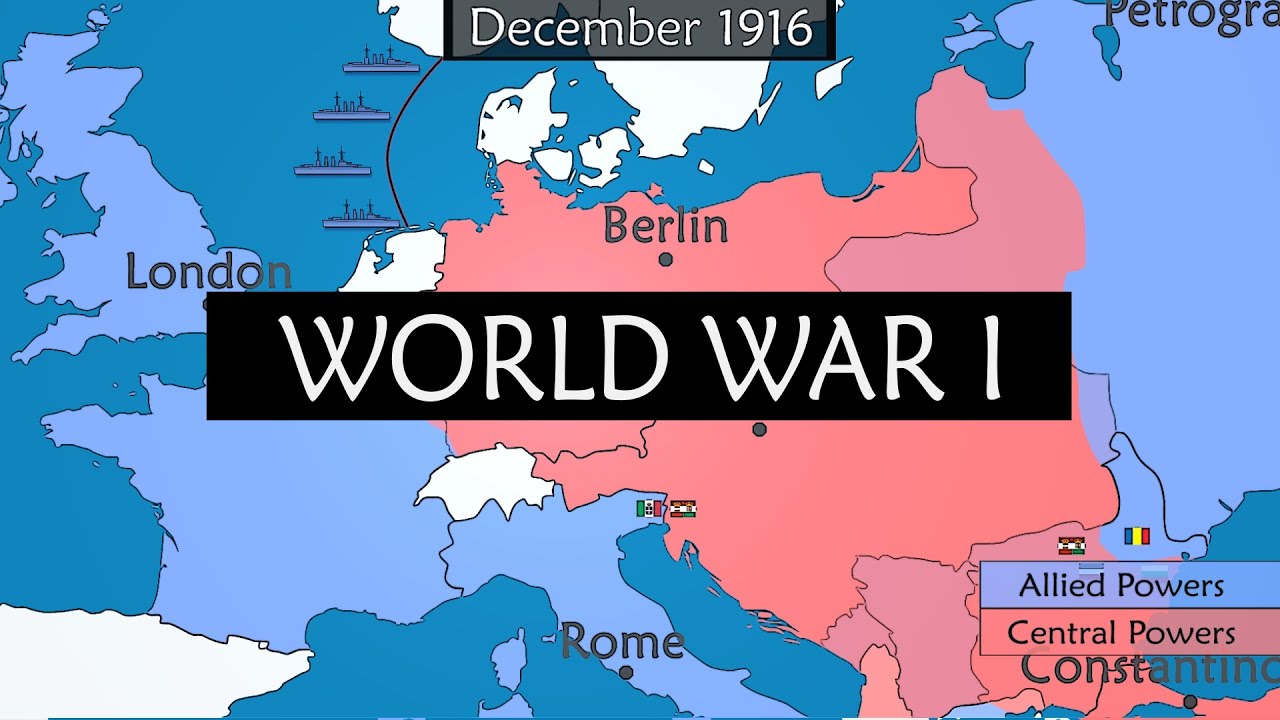
site of the war look like this you'll note that Italy hadn't come to the aid of the rest of the Triple Alliance and the reason for this was that this was only a defensive pact and so Italy wasn't obligated to do anything and so they didn't so the balance of power early on favoured Germany in austria-hungary together known as the Central Powers Germany had a large population it was heavily industrialized and at the beginning had more been available to fight austria-hungary was also there whereas Russia on paper had a terrifyingly large army but it was
spread out poorly trained and under equipped France also had a well-equipped conscript army but it was much smaller and Britain didn't have any conscripts at all but instead had a fairly small but robust professional army the German army started by quickly pushing through Belgium and in the zones they occupied they brutally repressed any Belgium resistance Germany advanced to here but it was halted at the First Battle of the Marne by the British in the French this ended any hopes of a quick war and the Germans retreated where they dug in and began what the conflict
is most famous for trench warfare after man came the race to the scene which both sides advanced north trying to outflank each other and after this the Western Front came to a standstill so trench warfare heavily favored the defenders since in order to attack the enemy soldiers had to go over the top and leave the safety of the trenches they were then exposed to enemy machine guns barbed wire and all the other horrors of war both sites would spend a lot of time and money developing weapons and tactics to break this stalemate on the Eastern
Front the Russian Empire did well at first and pushed into Germany this advance came to a grinding halt at the Battle of Tannenberg in which food marshal Paul von Hindenburg crushed the Russian army to the south austria-hungary concentrated on attacking Serbia which did not go well and Russia advanced into the empire soon after this the Central Powers received a boost when the Ottoman Empire entered the war on their side Montenegro would also join the on tonton by the end of the year the front lines looked like this after this the methods are fighting a modern
war started to evolve rapidly England was subject to Zeppelin raids and Germany debuted the use of chlorine gas mid 1915 saw the Gallipoli campaign which spoiler alert ended in disaster this was where the ontong tried to strike at the heart of the Ottoman Empire but again defensive warfare was easy when a lots of people died for nothing 1915 also witnessed the sinking of the Lusitania a passenger ship which was carrying people and weapons to Britain from the United States the sinking was part of the German naval doctrine of unrestricted submarine warfare in which German u-boats
would attack shipping indiscriminately in the hopes of starving Britain out of the war soon after this Italy joined the war on the side of the un-- tante the Italians failed to advance quickly into austria-hungary and so trench warfare the war wasn't just limited to Europe though troops of the British and Russian empires were advancing into bottom and lands and both sides clashed in Africa as well Japan also joined the war and nabbed all of the German colonies in the Pacific in Australia captured Guinea late 1915 so Serbia finally full but not until Bulgaria joined the
Central Powers and invaded from the south the Russians who had been struggling for a while we're now in mass retreat and so sonic lists ii decided that he would take personal charge to fix things 1916 saw montenegro conquered the Fayed Easter rising in Ireland and attempts by both sides to break the deadlock on the Western Front the Germans launched the Battle of Verdun during which lots of people died for a whole load of nothing and later the British launched the Battle of the Somme which was more of the same soon after this Romania entered the
war and was swiftly conquered this was also the year that so the main British and German fleets clash at the gargantuan Battle of Jutland in which Germany attempted to break British naval dominance they did not soon after this came the Brusilov offensive on the Eastern Front which would the Russians push back to here also Franz Josef proved that he could actually die and was succeeded by Charles the first 1916 was important from a technological standpoint because it saw the introduction of the tank by the British and they were largely effective when they weren't breaking down
that was so by 1917 everyone was getting a bit tired of this war stuff but not much could be done since both sides wanted to remake the balance of power in Europe which the other side could never accept the Central Powers wanted Europe to look like this and the on Tom wanted this the contempt with the war was particularly strong in Russia and February so rioting which soon became the February Revolution they saw Nicholas the second abdicate and Russia become a republic the new provisional government there would importantly not end the war discontent wasn't limited
to Russia though austria-hungary was basically coming apart at the seams and in Germany political pressures were dividing the country this was exacerbated by the British naval blockade which prevented Germany from importing the food it desperately needed which induced hunger and starvation in certain parts of the country Woodrow Wilson the recently reelected president of the United States was keen to stay out of the war but had sympathies to the on tante after some more unrestricted submarine warfare and finding out about the Zimmermann telegram in which Germany invited Mexico to invade the US America joined the war
against the Central Powers Greece after a lot of pressure joined the war on the side of the un-- tante the late year also saw the october revolution in which the Communists seized control of russia russia then withdrew from the war and after long negotiations with the central powers russia ceded this territory in 1918 germany then launched the spring offensive against the ontong to win the war before too many Americans arrived a lot of people died some land was taken nothing changed and the war dragged on austria-hungary continued to break down and most of the fronts
were still a stalemate in southern Europe Greek Serbian British and French troops advanced into Bulgaria which had its own disgruntled population and so it signed an armistice the British were now advancing into the Ottoman Empire with the help of its rebelling Arabian population and the neighboring peoples under the guidance of TE Lawrence better known as Lawrence of Arabia the British had secured their help by promising them this land the British had lied by late October the on tante had captured the important city of Damascus and the Ottoman signed an armistice in October the 30th four
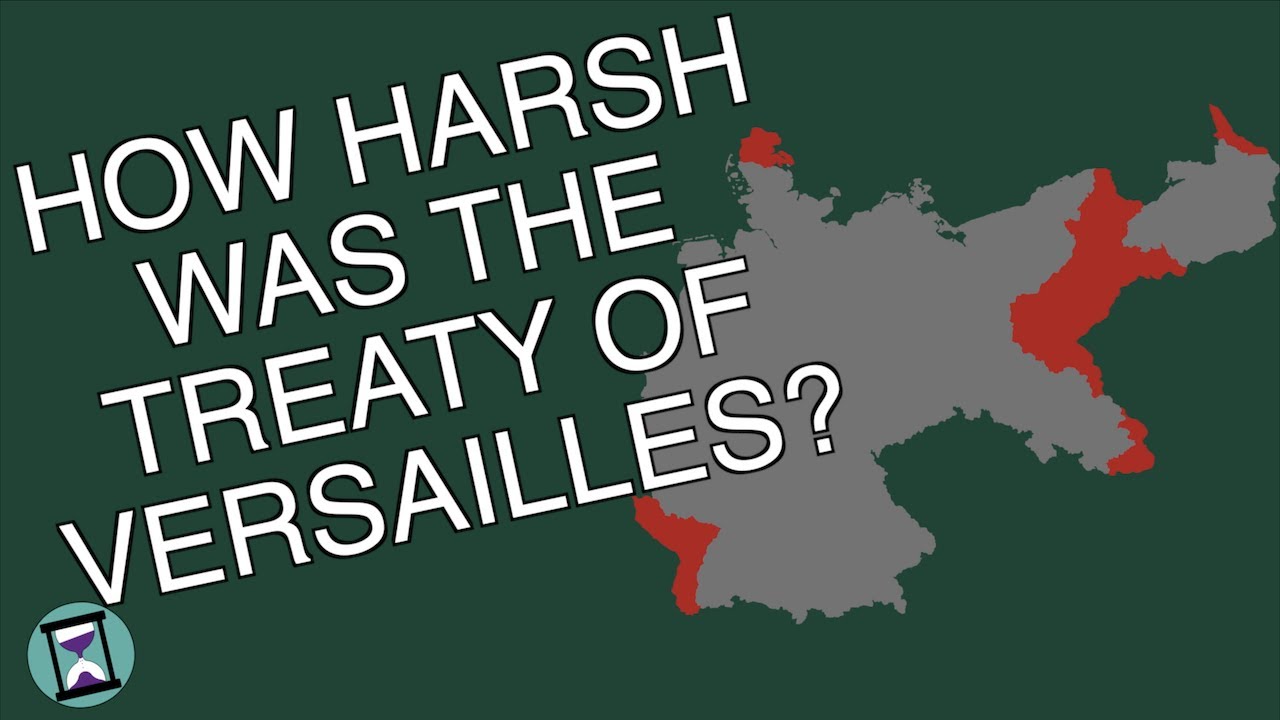
days later after the Italians had finally pushed into austro-hungarian territory Charles the first signed an armistice in about six seconds later the Empire fell apart realizing the war was lost bill ham the second applicated on November the 11th Germany signed an armistice the war was over in 1919 the peace was formalized in the Treaty of Versailles which limited the size of Germany's armed forces demanded hefty reparations and reduced its territory to this the Treaty of Trianon divided the hungarian half of the austro-hungarian Empire and gave territory to Romania in the new kingdom of Serbs Croats
and Slovenes later known as Yugoslavia the Treaty of San Germain onlay divided the Austrian half creating Czechoslovakia giving territory to Poland and also Italy but not as much as they had been promised Bulgaria was tripped of this territory the Ottoman Empire was supposed to lose this the Turks refused to accept this a war broke out the Turks won and this became the Republic of Turkey with the rest of the Empire's territories going to Britain and France the war had seen about 8 million military debt with Russia Germany and France seeing the lion's share the war
had been started over Imperial pride millions of men had died in the vain hope of bringing their generals and emperors glory in a quick resolution to the war tactical and flexibility combined with revolutionary methods of warming the scores of men who didn't have to die did so with such a heavy price paid what did the war achieve honestly not much it had brought about the death of four major empires and the rise of new nations from their ashes ultimately what were one's greatest legacy was that he created the conditions necessary for the outbreak of world
war two I hope you enjoyed this episode and thank you for watching the special thanks to James Bissonnette Thomas guest Strich Adam Harvey and Winston Cawood coward I hope I'm pronouncing that correctly if you'd like to know more about World War one there are some book recommendations in the description below