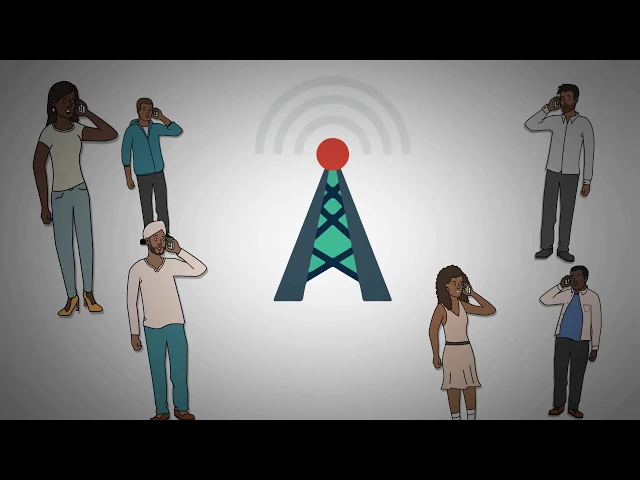
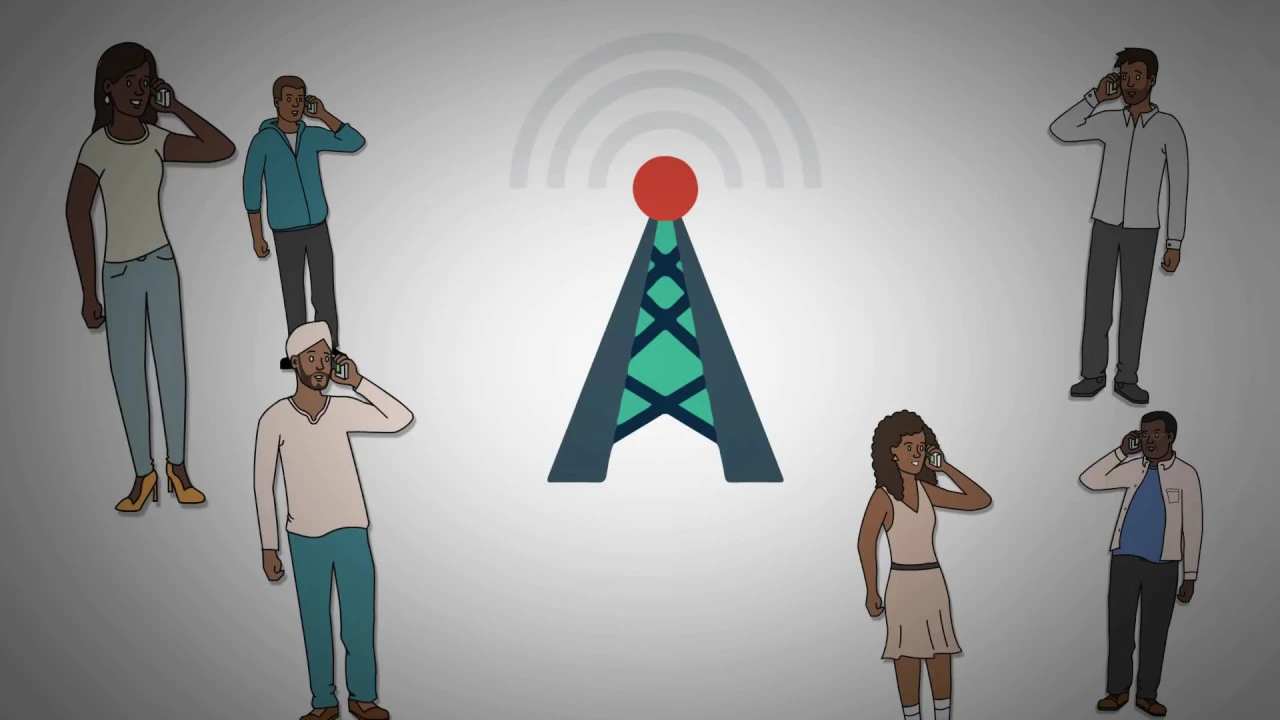
All of us get excited when we see the symbol. But How does it Work? Ever wondered How millions of subscribers are served by telecom operators simultaneously?
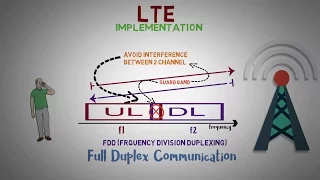
Hi Everyone, welcome to the world of Long term evolution (4G). Today we will show how Multiple users access network using Multiplexing. In the Last video we have shown, how two signals were combined over a common pathway in duplexing.
So, what exactly is multiplexing. . ?
? ? Multiplexing is the process of combining multiple signals and transmitting them over a common channel.
Then What is Multiple Access ? When multiplexing is used to allow multiple users to communicate over a single common channel, we call it multiple access. In other word, Multiple Access is nothing but the application of Multiplexing.
So Here’s a Wifi hotspot sharing its internet connection among multiple users by providing them a frequency block over which they can transmit and receive data. The greater the size of this block, greater is the throughput. Telecommunication systems, which mostly use radio waves as a communication link with end users, have employed several ways to share this resource.
FDMA which uses frequency division multiplexing, provides chunks of the frequency spectrum to each user for data transmission. Generally the data is generated at baseband and modulated at varying radio frequencies. Guard bands are introduced to avoid any interference.
AMPS or the first generation analog systems used FDMA to provide each user a duplex channel with one way bandwidth of 30 kHz. TDMA which uses Time division multiplexing, allows multiple users to share a common frequency band by allocating different time slots. Thus, in a N channel TDMA, where each channel is given a time slot of T seconds, signals coming from each user will be transmitted at intervals of N*T seconds.
This technology was used in the 2G systems like GSM, GPRS and EDGE. Each user was provided one of 8 TDMA slots in a bandwidth of 200 kHz. Dynamic resource allocation meant more users could be supported but each channel could support only eight active users at a time.
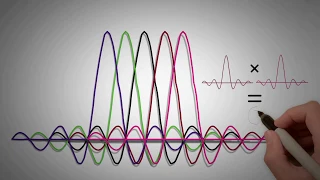
CDMA based on code division multiplexing is a technique in which the data bits are modulated by a high frequency orthogonal sequence of bits such as Walsh codes or a pseudo random code such as gold codes to spread the signals over a large frequency band. multiple such signals from different users are then transmitted over the same frequency band. In order to retrieve the signal, receiver must have the same spreading sequence, which is multiplied to this composite signal in a process called despreading.
This makes CDMA very secure and robust. It was used in 3GPP2 standards such as CDMA and CDMA EVDO (Evolution data optimized) standards. Wideband CDMA or W-CDMA spreads the signals over a even higher bandwidth.
This was used in the 3G standards of 3GPP from UMTS to HSPA+. Where the available bandwidth was 5MHz compared to 1. 25 Mhz used in CDMA.
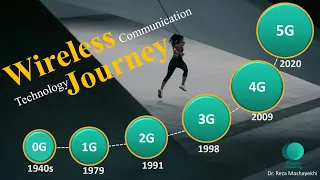
There are other multiple access techniques like WDMA(Wavelength Division Multiple Access) which is used in fibre optics and SDMA(Space Division Multiple Access) which refers to Spectrum reuse over non overlapping areas. As the number of users and their demand started growing, communication networks evolved from 1G to 4G. Radio part was significantly enhanced from GSM to HSPA+.
Now, focus was shifted towards better spectral efficiency by using higher modulation order like QPSK, 8PSK, 16 QAM, 64 QAM etc. W-CDMA improved upon some of the problems of earlier generations like First, Low data rates (In GSM, effective bandwidth for a user was only 25 kHz). Second, Congestion at peak hours.
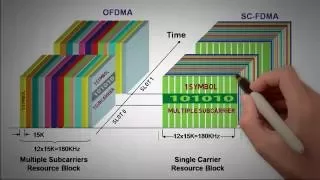
(As the frequency chunks and time slots were very limited) Third, Resource wastage (Resources remained idle when users were Inactive) Fourth, Poor spectral efficiency (Due to guard bands and guard periods used for avoid interference) But exhaustion of Spectrum, Need for even higher data rates and spectral efficiency lead us towards OFDMA. OFDMA comes with several advantages over WCDMA like, Bandwidth Scalability, Carrier aggregation, Low ISI(Inter Symbol Interference). OFDMA uses orthogonal subcarriers equally spaced at 15khz.
Users are provided a subset of these subcarriers for data transmission. Unlike FDMA or TDMA, OFDMA allows the users to access variable bandwidth depending upon the resource availability. Also since these subcarriers are orthogonal there are no guard bands between them.
It was first introduced in WiFi and subsequently in WiMax by IEEE but as wimax lacked backward compatibility and support for mobile wireless at its inception, operators remain stuck with W-CDMA. This changed with the introduction of LTE which brought OFDMA to the forefront of today's mobile networks. So, today we showed, what were the different Multiple access techniques that were used in various generations of wireless communication.
In our next video we will dive deep into OFDMA and SC-FDMA the two pillars of 4G. Hope you enjoyed the video. Don't forget to subscribe to our channel to stay updated.
Happy learning.