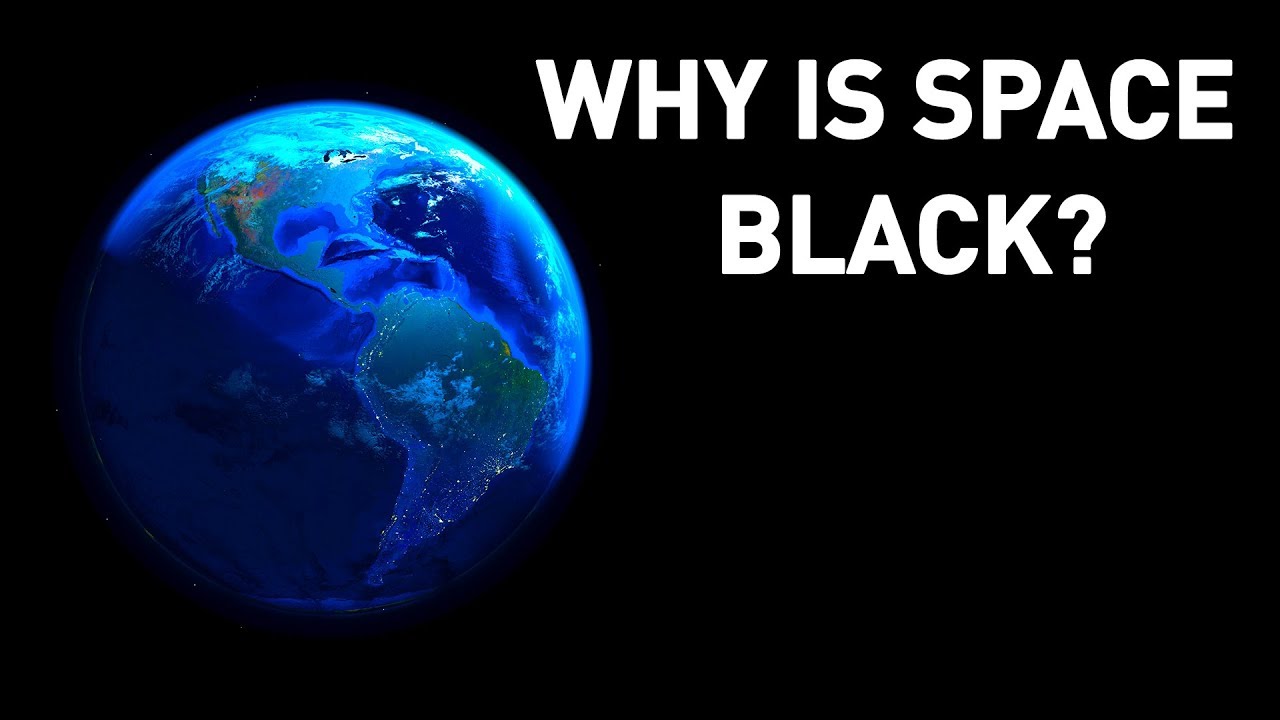
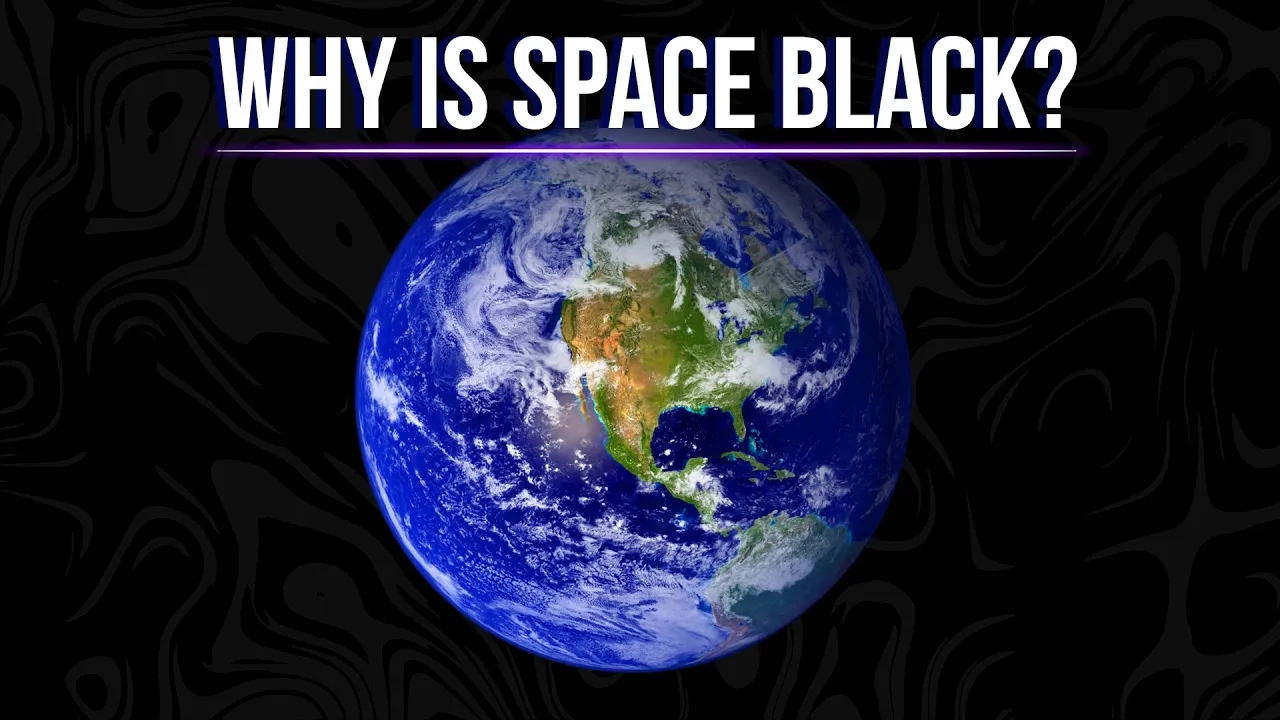
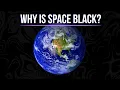
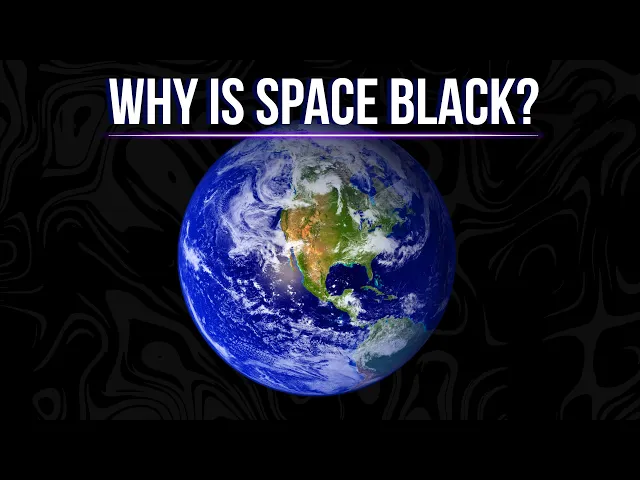
Why is there light on Earth but not in space? Why does space look dark if the universe is full of stars? This was the question asked by Heinrich Wilhelm Olbers in 1823.
From there came the famous "Olbers Paradox. " It tells us that, in a static and infinite universe like ours with infinite stars and infinite space, the night sky should be bright and without any dark region since the stars would illuminate every corner of the sky. But why does the night sky look dark if infinite stars exist in the universe?
"Introduction" Whenever we look at the sky at night, we see some star beads on a dark background; this is because when on earth it is night, it is because the sun is illuminating the other side of our planet where it is a day. But if this is the case. .
. Why is only the part that points to the sun illuminated? In other words, why is it daylight on earth, but in the rest of space, it is dark?
This is due to an optical phenomenon called "reflection" this phenomenon causes some objects to reflect the light that reaches them like a mirror. As you know, the earth is covered by several layers that make up the atmosphere; the atmosphere contains different types of gases. These are the ones that trap the rays of light emitted by the sun and then reflect that light towards the earth, causing the day; if we did not have an atmosphere, even on the face that points to the sun on the earth, it would always be at night, just as it happens on the moon.
Something that few know is that, just like the earth, on the moon, there is also day and night; the difference is that the lunar day does not look like the earth's day. While the days on earth, everything is fully illuminated, on the moon, the days are dark; this is because, although the sun illuminates the entire surface of the moon, the sky remains dark. After all, no atmosphere catches the sun's rays.
Whether it is day or night, on the moon, the sky always looks dark because there is nothing that catches the sun's rays. WHY IS SPACE DARK? When we look at the sky at night, it is natural to wonder, why is space so black if the universe is riddled with stars and galaxies?
Where are all the stars, nebulae, and galaxies that form that majestic landscape that space telescopes show us in the photos? The magnificent photos of telescopes such as Hubble or the James Web lead us to think that we could see those colorful and bright celestial bodies by looking at the sky with our eyes or with simple amateur telescopes. However, in addition to the stars, our eyes cannot see anything else.
When we look for photographs from space agencies such as NASA, we find photos of the Moon, Mars, Pluto, or Saturn in which the background is uniformly black without stars. The explanation for this phenomenon has to do with photography, not astronomy. Unfortunately, space agencies do not send million-dollar probes and telescopes to take beautiful photos to comfort our long-awaited desire to see stars in high definition; these are used exclusively to study the universe.
The light conditions in space force you to take photos with a very high shutter speed and a very short exposure. However, a good photo of the stars requires a low shutter speed and a very long exposure. In other words, engineers who operate large space telescopes must choose between taking a perfect picture of Saturn, but with a black background, or taking a perfect picture of the background of stars behind Saturn and letting Saturn appear completely white by excess light.
The problem is not much different than the classic photo with a flash at a concert. The lights of the objects in the foreground make the background look black, but if we want to take a photo of the background, the things in the foreground will look blurry and with excess lighting. In defense of space agencies, photos of space are not always like this.
From the International Space Station, with enough time and a good camera, beautiful photos have been taken in which the shutter speed and the low luminosity of the environment allow us to see the Milky Way and a simply spectacular space panorama with billions of stars. Space telescopes and other sensors also get perfect photos because they focus on faraway corners where there is no object in the foreground reflecting vast amounts of light. Not to mention that they often take images at wavelengths that are not visible to the naked eye, such as infrared or ultraviolet.
It is also for this reason that in the photographs the astronauts took when they went to the moon, you do not see the stars because on the moon, it was daylight, and the sun illuminated the lunar surface, completely obscuring the faint light of the stars. However, if you look carefully, you will find photos of the moon landing where some stars are seen in the background. SPACE AND TIME, THE ENEMIES OF LIGHT The current explanation for the blackness of the universe revolves around two concepts as old as the world: space and time.
We know that the universe is so big that we can consider it infinite. However, we also know that he is not infinitely old. Current astrophysics estimates that the universe formed between 13 and 14 billion years ago.
Light moves at a speed of 300,000 km/s, being the fastest thing in the universe, but the universe is vast, and even with that speed, light cannot cover the entire universe in that short time. In other words, space is black because most of the light emitted by stars has not yet had time to cover the entire universe and probably never succeeds since the universe is expanding faster than light, that is, even if we gave light an infinite amount of time, It is never covering the sky completely, as space moves away faster than the light itself. The second part of the problem is that even though the universe is 13 billion years old, light sources like stars are not as old.
Most of the stars we know are between 1 and 10 billion years old. OLBERS' PARADOX One of the first solutions to Olbers' paradox was the existence of opaque bodies in the same proportion as that of stars; if we start with the statement that the universe is infinite and its stars, it is logical to think that the opaque bodies in it will also necessarily be infinite. Today, thanks to the advancement of technology, we know that the universe is not as empty as we thought.
On the contrary, it turns out that in the space between galaxies, there are vast concentrations of hydrogen clouds that can only be seen with infrared light detectors. This would be an obstacle to light, which would make it unable to travel to Earth in all observable directions. However, this solution poses a problem since, since energy is not created or destroyed, if these opaque bodies received light from these infinite stars, they would end up heating up and returning the energy in the form of light emitted.
Hence, the safest is that clouds of dust between galaxies are not as dense as estimated or are not as common in all galactic clusters. EXPANSION OF THE UNIVERSE There is also a theory that the universe's expansion causes light to decrease in intensity. We know that the universe expanded from a zero moment called the Big Bang.
This expansion affects the very propagation of light, whose wavelength lengthens further and further until it falls into the infrared spectrum, which is not visible to us. The problem with this theory is that ultraviolet radiation should be transformed into visible light for us. Still, perhaps it is simply that there is not so much radiation of this type.
The best explanation for Olbers' Paradox is that we live in a dark room so impossibly large that light has not yet had enough time to travel through it, and many of the "star" bulbs have already off. Even without using the Big Bang explanation, it can be established that the universe is finite, which would solve the Olbers paradox problem and solve the question of why the sky is not entirely bright. As we know, the amount of hydrogen in the universe is very high.
However, as time goes by, this amount decreases. This is because stars use hydrogen to create helium and heavier atoms. If the universe were infinite, the process of transforming hydrogen into heavier atoms would have been entirely completed.
However, the reality is that hydrogen is a very abundant element in the universe, making us think that the universe is finite, just like time. However, this solution could be questioned if some way were discovered to reverse the process, that is, to transform heavy atoms into simpler atoms up to hydrogen. However, today, it is a process that has not been observed naturally, which suggests that the universe is a finite space-time and, therefore the stars are also finite, so they could not illuminate space completely.
THE LIGHT WE CAN'T SEE Making clear the reasons why there is light on earth and not in space, the next question is for you Are you sure that space is dark? The answer to this is "It depends," since, although the space is dark for us, perhaps for other beings, it is not. Space is filled with a particular type of matter that permeates every corner of the universe; this is dark matter, a matter that we know exists, but we do not know concretely what it is.
In addition, we know that there are immense clouds of cosmic dust covering the empty spaces between star groups and galactic groups. These clouds can only be seen with infrared light. Visible light represents the minimum amount of light in the universe, so when we look at the universe with spectroscopes or radio telescopes, we can see the light that our eyes cannot see.
To our eyes, the universe is dark and empty, but when we look at it with the eyes of science, we realize that we live in a very bright and fascinating universe. Would you like us to talk about the dark matter or dark energy that envelops the entire universe? Let us know in the comments.


![Beyond the Observable Universe [4K]](https://img.youtube.com/vi/mty0srmLhTk/maxresdefault.jpg)