Hi, I am Hans Lillian, and in this video in the Life Explained series, I will talk a little bit about the Law of Rejection. A woman was once visited by a friend, and she complained bitterly to her friend about how dirty her neighbor was. She said the neighbor had a dirty house, dirty children, and a dirty look at her washing on the line.
She said they were full of black streaks. So the friend went to the window, looked out, and said, "My friend, I think the clothes are quite clean; the streaks are on your window. " This, in a nutshell, is the Law of Rejection.
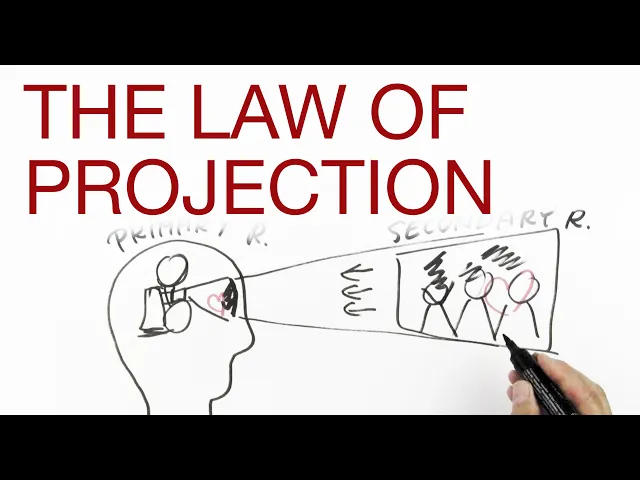
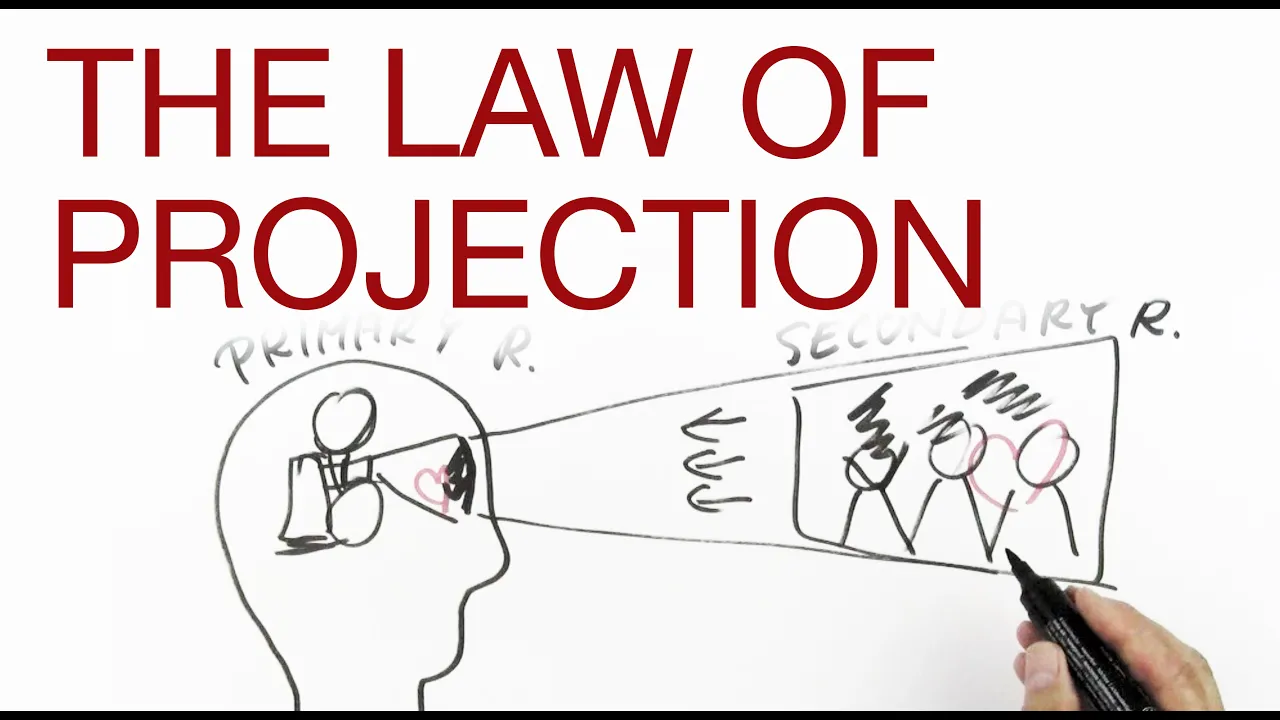
Now, let's have a look at how it actually works. This Law of Rejection is a mental law of the mind. It states that whatever we project on the screen of our mind, we perceive in the world around us.
We have one of these old-fashioned movie projectors in our head: there are the two reels, and this is a movie projector, and the screen for that movie is, firstly, our mind. The movie that is always running in our head is called "My Beliefs, My Characteristics, My Hang-ups, and My Programs. " The screen for this movie is not just our mind, but it is also the world around us.
Someone said that the world we perceive is nothing but an out-picturing of our beliefs. In other words, whatever we see inwardly determines what we see on the outside. If I perceive, for instance, a lot of hate in me, I see a lot of hate in the outside world.
And if I see a lot of love in me, I see a lot of love also around me. Whatever is in me determines what I see in the world around me. In his book "The Power of Now," Eckhart Tolle calls the world within us the "primary reality," and the world outside of us the "secondary reality.
" The primary reality determines how we experience the secondary reality. The world around us reflects to us who we are, what we judge, what we fear, and most of all, all our beliefs, programs, and characteristics. The external world also mirrors how we feel about ourselves and what we believe about ourselves.
Wherever we look, we only see ourselves. Look at this wonderful toy; it perfectly demonstrates how we see the world. We are that little person in the center of our world, and wherever this little person looks, he only sees himself in all the mirrors around him.
That is exactly how the world around us reflects nothing but ourselves back to us—who we are, what we judge, what we fear, our character traits, and all our beliefs. We normally say, "Seeing is believing," but in actuality, it's the other way around: "Believing is seeing," because our beliefs determine what we see. Interesting, isn't it?
And as we believe, so we experience the creation of the physical reality around us, always, no exception. Every belief is an absolute, self-fulfilling system of our own personal reality. If we want to see anything change in the world, we have to change first.
We have to either change the movie, or we have to clean the projector. Sometimes there is some dirt on the movie; we have to clean the length of the lens, and then this becomes clean again. Before we try to stop the wars in the world, we have to stop the wars within ourselves first.
So whatever bugs us is in us. This includes all the people, situations, or anything else that pushes our buttons, then mirrors to us beliefs, behavior patterns, attitudes, and character traits that we either overtly express or secretly repress. That's why this law is often summarized as, "It takes one to know one," or "You spot it, you got it.
" What we spot in another person is in us. We also know it as "the pot calling the kettle black. " Others call it the "triggering law" because it triggers something within us.
We are what we see in others. If we are angry, we see, of course, angry people, and situations that give us emotional charges, reflecting a charge we have against ourselves. It can go so far that a person who is physically hurting us is also reflecting a hurt that we have inflicted inwardly onto ourselves.
Whatever people outwardly do unto us, we have been doing inwardly to ourselves. In other words, people are expressing what we are repressing. If we inwardly attack, push, or resist ourselves, we feel outwardly attacked, pushed, and resisted by others.
Whatever bugs us in others is in us, always. Ever since I learned about this spiritual law some forty years ago, I have been searching for exceptions, and so have my students, but so far we have not found a single exception to this law. If you're doubtful, here is a simple test: Pick your least favorite politician or president and then write down three of his most despicable characteristics.
I'm just making this up—let's say one is he lies, and another is he manipulates. Now, you have to write down your own personal characteristics that you hate in that person. Now, write behind each of these characteristics three instances where you have been doing the same thing or desperately wanted to do the same thing in your life at one time or another.
When you are honest with yourself, you will find these instances very quickly. Write them down in a few words. Now, once you have completed this list, go over these three instances and reflect on how they have actually served you and given you what you wanted.
The last part of this exercise is helpful for us to realize that even the so-called negative character traits all have a positive side to them. It is, as well, the yin-yang because everything is balanced in our universe. Everything has two sides to it, and only once we see the whole picture can we start loving that which has haunted us for so long.
But the great thing about this law of rejection is the fact that it also reflects back to us all the good characteristics that we admire so much in others. Here's a little halo: all the talents, skills, and the menace that we may have even envied in others are actually also enough; otherwise, we could not have recognized them in the other. Remember, you spot it, you got it.
We have the same talents, the same skills, but we may not have been aware of them or expressed them; but they are there, waiting for us to use them and to own them. So, the law of rejection is an amazing gift that helps us to recognize ourselves and shows us what we still have to love and clear up so that we become, once again, that magnificent, glorious being that we all are in truth.