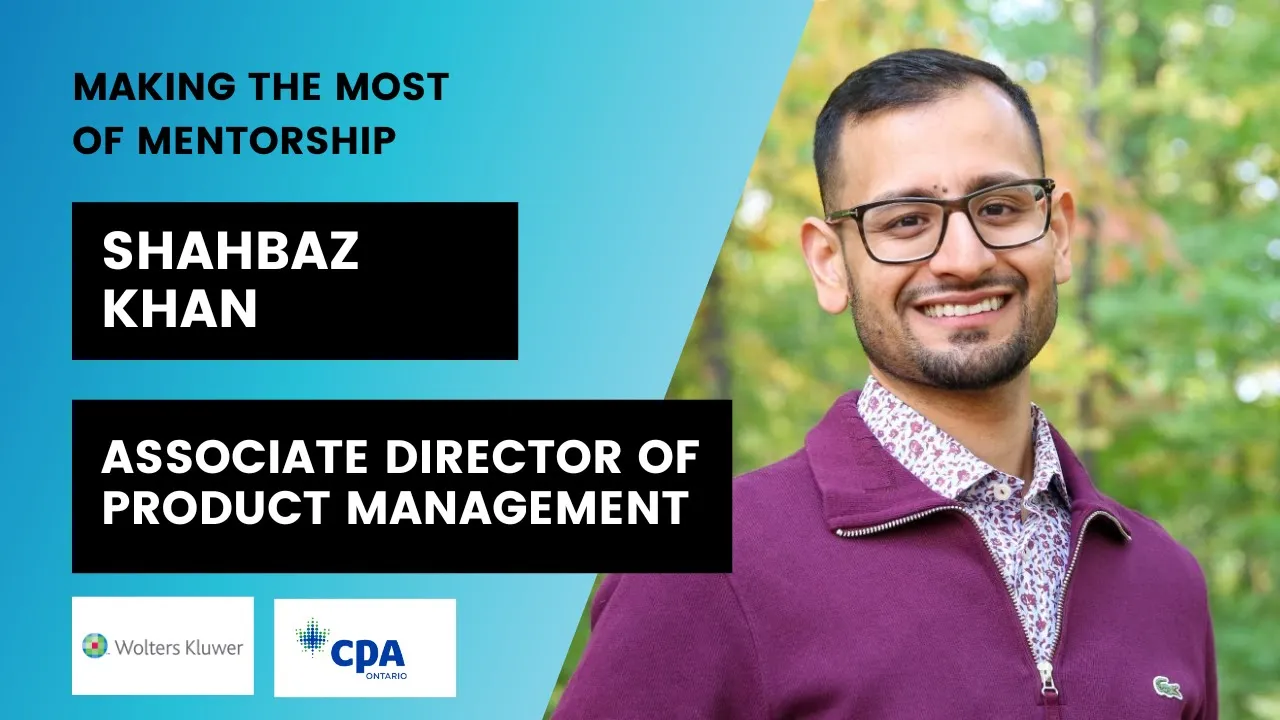
foreign [Music] thank you so much for coming on to the show today it's such an honor to speak with you today now my first question for you is we would love to hear about your story and career development let's start from the very beginning how did your post-secondary experience lead you where you are today thanks a lot for having me a pleasure to be here first and foremost what I studied is you really what I'm doing today but I will talk to you a little about how it led to where I am I I went
to Brock for accounting as I got a special about hanging over there and I originally started a program in economics and then a big way through I learned about the CPA designation I thought was one that I wanted to pursue and so I transferred into that program met some great people good advice so I graduated joined public accounting which has my first role in the ca stream I worked at a small firm and then I went to a larger firm I went to a larger firm just in a quest to do more complicated Audits and
along the way I tried tax as well and and ultimately I realized that it wasn't for me kind of in this traditional sense and so I did decide to leave public practice and I went into the tech space and that's an interesting story I I wanted to go into technology but I had no kind of Avenue to get in except for if I wanted to be maybe like a controller in that Finance accounting function I've had enough of accounting and tax and I want to trust something different and I was fortunate enough that I was
able to leverage everything I learned in public practice but also common technology tools are used across all of the firms I worked at which was accounting specific tools and and so I applied those companies my value proposition was hey like I know your tools really well and I used to be a customer and I know your customers user stories and so I got a job at a company that specializes in making the engagement software that all the accounting firms in North America use and even globally and that's kind of my first foray into technology and
since then I've been able to continue growing in the same industry which is accounting technology and because I just love the space and a lot of domain expertise but in different areas so I did commercial roles first and now I'm doing product and kind of strategy roles and so it's been exciting I mean going back to the beginning it's I studied Accounting in post-secondary but the only thing I'm doing kind of not accounting related is just the industry I work at it's nothing I don't I don't I mean I personally don't trust myself to file
my own taxes even I always make someone else look it over just in case I mean I I take a stop myself because I have a passion for tax but but there's so much kind of legislative change just to ensure that someone else is putting a set of eyes on it just to give you a sense of hey like what did you study in post-secondary you'll open doors for you especially kind of your first few career moves but it's not I think the end-all be-all and it won't I think although it'll I'll set the initial
trajectory of your career it won't die by any means that's really up to you and you can take whatever you want it sounds like your accounting Foundation gave you the platform to experience and explore different careers so this leads me to my next question how does the CPA play a role in your career development very fair point whether it's what I do personally in the accounting industry a CPA plays a significant role and I think that the first thing I'll say is all the doors that open up along the way the CPO was a significant
factor in those doors opening up first earlier in my career because there was accounting the odd in tax rolls but later on because when I went into the industry of Technology providers serving CPAs having that credibility is still valuable and so it's an open significant doors there and so I think they're from one one it was just like because I chose to work in a CPA profession and secondly at industry serving CPAs but the skills that you learn as a CPA whether it be like your work ethic whether it be analytical skills whether it be
working with teams those are kind of universal right and I think that in any project in any role in any kind of position in life those are valuable and so when I look at what the CPU provided to me earlier on and every outside the traditional audit attacks like you think about the fact that you're able to lead a team of on an audit engagement probably your second or third year into your career like I mean how many roles provide you the opportunity to be able to lead a team of people two years after graduating
and you're sitting across from like a CFO right and I think those kinds of skills you develop they carry you a long way so I think the CPA I credit a lot of the doors are opened in the past and even today and going forward it's not only the credibility the CPA provided but even the kind of the core companies that developed as a CPA so in today's business we're out the only constant is change can you share some advice with the Young Generation and our Learners here on how we can keep up uh to
the change and become more competitive and even to adapt to this ever evolving fast-paced business world that we're in keeping up with change is a tough question to answer it's like I mean my answer for how do you keep up with today's technological change when I'd be relevant by the time you publish this right as we're seeing the rapid change in technology most recently regenerative Ai and my advice would be to anyone kind of younger than myself even to myself it's I think you have to stay curious all the time like stay with this mindset
of you you don't know anything like you want to go and learn it and I think if you're curious you'll find ways to be to develop and to continue to be relevant the second one would be don't let what you're doing Define you right and what I mean by that is if I look back at my journey if I was in like the 30th University I'd be like you know I'm gonna file tax returns and do auto engages my whole life and I've been kind of far from that and I probably I may not go
back to doing that ever I mean who knows right but what I'm trying to get is if I had this mindset of like this is what I studied this is what I'm going to do then I think it's tough to keep up with any sort of change when you look at any job reporter a good one is the role economic Forum talks about about Industries and skills that are going to be most in demand in the next 10 years I mean I that's something I'd recommend reading every single year to see the trends but when
you look at those you'll realize that again the change is constant if you're in this mindset of I've studied for four years and that what I've learned will carry me for the rest of my life for the next 40 or 45 years of work I think you're in for a bit of a surprise and probably disappointment I think now more than ever we have to continuously learn be curious there's some great thought leaders out there and researchers you know like that talk about having a growth mindset being a learner doll versus a know-it-all so I
think that's kind of my my takeaways it continues to seek knowledge and see to to further educate yourself don't feel like what you're doing today is going to be what you do forever it defines you I think tying your identity to a role or to a specific job I think is very dangerous now more than ever I think tires identity to someone that's curious someone that can develop someone that can learn someone that wants to pick up new skills and then if you tie yourself to that to that kind of persona you'll always be successful
you have to really take ownership as well of your career right I think previously when you look at the generation above us or before that there was an element of like if I go work for a company I'm going to stay there for like 40 years or whatever however long the company lasts and they'll take care of me and I'll progress I think now with all this change even just kind of generational change in leadership and leadership styles it's very important for anyone to to control their own destiny what I mean by that is you
have to I think be deliberate in what you want voice it don't be afraid to voice where you want to go in your career I think that oftentimes people Overlook the fact that it's in the company's Messengers to help you develop and to help you find opportunity within the company than somewhere else right and think if you voice where you want to go and the skills you need to get there it'll be well received I think people would rather invest in you than have to replace you and the outcome is always more valuable with you
if you're a good employee than without you and so I think voicing we're going to be being deliberate with it and then being accountable like learning those skills that you need to get there seeking the opportunities to develop those skills and then being accountable to yourself and to wherever you said you're going to do something I think that's very important as well we know that you're an active member at your community and you're passionate about empowering other people I can tell that and from our interview as well so what qualities or characteristics make a good
mentality you know it's interesting that's a great question for all the mentors I've mentioned me because I I often leave without a product of mentorship but you're right you know I you know I I believe highly in in mentorship and the value it provides to people I still think I'm mentors I've had a tremendous amount of mentors in my career that I credit my any accomplishment or success to and and to this day I always look for ways to identify or look for opportunities identify as mentors in different stages of my career even outside of
my career I think even in your personal life you can have mentors as well right but but when I think about mentees and hopefully I'm able to to walk the walk on this one and I should probably ask my mentors this question as well but I think it's important to be accountable I think you have to really take charge of any Mentor mental relationship it's almost unfair if you seek a mentor and then expect them to carry the relationship I think that at least what I found inherently is that if you are willing to provide
Value First they'll probably match or exceed the value that you get out of it but you have to be willing to provide and sometimes it's tough to to think that you can provide value to someone that's so much more senior than you and more accomplished and you look up to them but you can right and there's different ways to do that it could be it could be bringing your whole self to the table and providing them a perspective on something that they don't have access to right I mean you look at oftentimes there's a different
generational relationship in a matter of relationship right and I think that's a unique perspective for a mentor to be able to draw on your perspective and offer that and honestly right and that's one it's I'm sure that you're able to find Value the second one is be the kind of mentee that you would want I think and it sounds simple but it really it's just that I mean if you are a mentee who's not going to take charge on initiating discussion or c seeking feedback or even applying that feedback I think that neither parties benefiting
from that relationship and so I always after every kind of mentor mentee meeting I treated the same way with any professional obligation like I'll write down action items make sure I execute on them I'll check in and let them know where I am with that and and you better bet that any good Mentor is going to ask you next time you know like okay last time we met we discussed this what have you done since then or like how has that taken or how has that impacted you or anything that if you're able to show
that you you are taking what they're offering you it's really impacting your life when you're applying it and it means something to you and demonstrate about your effort then they're going to want to give back right I think that's another way just to give value to the relationship it's like I've applied it whether or worse or doesn't is a different story right but I think it's it's almost like you have to you have to invest in it and I think people often confused us like I found a mentor and like that's it but that's the
start of something right and there's so much hard work after that to develop a productive successful healthy mental mental relationship and so again I'm a part of mentorship I I value it highly but I think it takes a lot of work and so if you are interested in seeking a mentor really think to yourself like am I really interested in what do I want out of it and am I prepared to give what it takes to get that and to ensure that it's going to be a healthy management so can you share with us an
example from your own experience where mentorship played a crucial role in your career I can share Lots you know I I kind of go back to my earliest exposure to mentorship not anything I knew I knew of it as mentorship back then but I don't know if you've ever heard of Big Brothers Big Sisters it's an off-for-profit focused on providing kind of like life-changing mentorship opportunities to to youth who have experienced adverse childhood experiences and so I'm a formal little kind of transparency and that was a little when I was nine or ten and back
then I had no concept of what mentorship was right and but I was paired with the big brother of mine and and to this day I keep in touch with him and although we kind of graduate from the program about like a year after it's about a year to two years is how long the the pairing last but that was probably my first exposure to something that was structured where I was drawing on the experience of someone more senior and and when I look at what it provided my life like I think it really provided
me a lens of I can go and do whatever I wanted to try hard I think I was missing that at that point in my life just given the kind of environment I was in and uh and and he is in Madison and I still talk to him today but he was able to instill in me that hey like she was if you work hard and if you set ambitious goals and you drive to accomplish them like you're no different than anyone else and you can do it right and I think that that was my
first foreign that's really stayed with me today and to this day I love that organization I actually volunteer there I sent the board of directors at Big Brothers Big Sisters I'm a formal I'm a former volunteer at the agency level so I have that perspective I think it's it's provided a meaningful change in my life and I really hope that it continues to do so for other people but that's my my first four I since then I mean I've had lots of mentors today I have multiple mentors I have mentors that are kind of like
in my career path a few years from now I have mentors that are probably in a bit of a different path but a lot more senior just to get their taken perspective like I think it's all determine what you what you want to get out of mentorship and if you are able to really clearly identify that and be prepared to put in the work then you can you can see your mentors and there's a lot of people that are willing to help you know one time a mentor told me that people often don't realize that
as a mentor you want to give back if you've achieved some level of experience you sort of want to share with other people and so I think that to understand that they're also getting something from it don't look at mentorship as like I'm gonna take from someone and take away their time and their energy but if you can again if you're interested in providing value people want to give back people want to share their experience they want you to not make the same mistakes that they did very life changing for me that was my earliest
experience and to this day I'm multiple mentors at this time and I've had and I've had multiple mentors kind of in the course of since then to now and the cycle on and off depending on the stage of your career and where you are and what you're seeking very important temperatures I think you know the mentors that I've had in my life in the past 10 years I have three mentors in my career and I known them for over 10 years means a lot to build that relationship and I love my mentors because they build
illuminate with me where like Partners but I know they're smarter than me wiser than me and so I'm just always so humbled by their presence and I think I bring that into the culture out of lemonade where I tell everyone hey look you're empowered to be your own CEO and my only ask is that you would pay forward these mentorship to others in the future so I completely align with what you said so thank you so much to the show today it was so fun talking to you and we hope to continue inviting you to
some of our initiatives in the future and have you join the illuminate Community to share with more of our Learners and maybe once again for your time and list them thanks a lot for having me and then it really helped someone finds better from Lisbon foreign