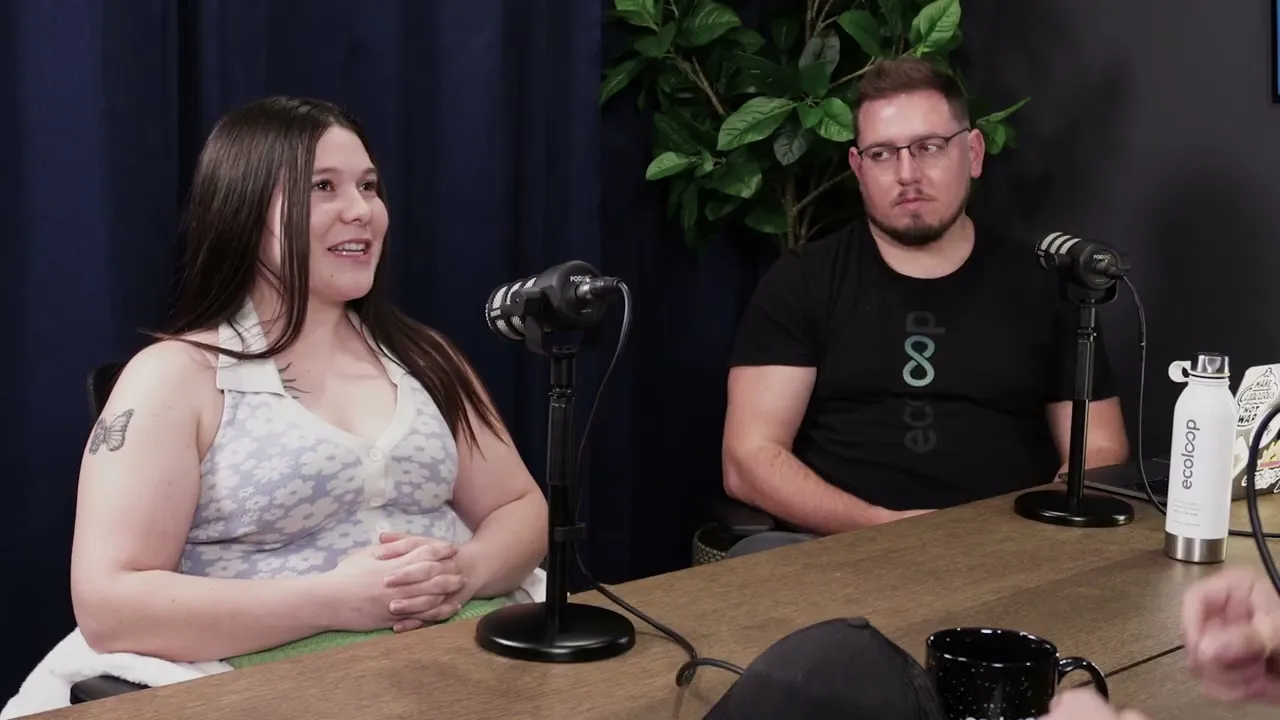
[Music] welcome to the second podcast of in the loop EOL Loop sponsored podcast I am Gabe Linder I'm Cory O'Brien Louisa Silva and I'm Grace Myers and welcome welcome what's up Corey what's up guys um no there's a lot going on we um we are now entering into the next uh phase or the next iteration of the Industrial Revolution and uh AI dude AI is happening AI requires a ton of power um So it's facing a little bit of backlash right now to actually Empower these systems how are we going to do it there's a
lot of questions of the functionality and the viability of it um but one of the things that's happening with AI is it's allowing us to solve some of these um these climate change questions that we have and then also some of the logistics questions that we have with deploying these Energy Systems so it's kind of a double-edged sword and I guess the issue here is how are we going to find that point where we are satisfying the needs of these very demanding machines and and um doing it in a in a clean fashion right so
a lot of speculation has been uh brought forward right as to do we need more nuclear because that's the type of load we're looking at a lot of people as you might assume or you know are are skeptical about nuclear because as much as there's been so many improvements Since the Inception of the technology it can get hairy very fast right um and what do you do with all that waste yeah sure it burns clean but that waste is going to sit there for thousands of years right doesn't sit well with me right um so
you know this is the challenge that we Face AI is great love it awesome nobody loves it more than Lind me I think AI is going to take over so I'm on team AI baby I'm on team AI I mean we use it for a lot of Different things we use it for emails and stuff like that makes my job easier oh yeah I love it then 10 years from now imagine what they're going to be using it you know in all aspects of life and like Cory said computers got to be powered for that
to happen so oh yeah that's that's happening really fast and I don't think anybody has a real plan for it these data senders too it's like they're going to be I think you know I don't know how you centralize all Of them right I think you might have just a kind of let's call it like a shotgun approach where there's smaller Centers located you know strategically throughout a certain geography um maybe that's the way that they do that right and then you deploy like PV on site so at least you're you're if not coming close
to meeting all of the Power needs on site you're making some sort of you know impact right um but that's the challenge that We face um yeah uh it's funny that you mentioned AI on the way over here I was watching something about the progress of AI and everyone you know technology always goes up and at some point hits that hockey stick moment where it just exponential and we thought that would happen really quickly with AI it turns out that we hit like a plau uh with General AI so it's funny cuz you know we
thought That it would just learn everything right away but I'm starting to think that it has to be more specialized before we get to that General moment I mean I guess that's a whole separate topic that we get in the Weeds about but maybe you know that'll help with the you know distribution of the energy right cuz if we're trying to generalize all this knowledge into one server maybe that's a lot but if you're like okay this is going to specialize in uh green Efficiency this one be in the medical this's going to do that
specifically the generalized server is is less weight now cuz it's specific stuff that it needs to know and keep track right so uh there are going to be a bunch of different ways but it's funny that you mentioned that cuz I thought about that on the way over here like CU I I literally just saw that and maybe it's not as smart as we thought it would be or maybe just not yet maybe just not yet I know I read That um Elon Musk AI is actually the smartest one so every Tesla like the Tesla
yes every car that drives itself is its own AI uh learning about its environment as it's driving and elom musk has the smartest biggest network of all these cars which are technically robots just driving around so you know it's happening it's technically smarter than like chat GPT yeah wow that's really impressive even the chat GPT we know there's a smarter version of that Right that you can pay for yeah yeah they def GPT yeah yeah like is it within chachy PT yeah so even within that own server like will you get the basic sandbox version
and then they have more advanced version but that's what I mean those are they're called I forget the word they use but it's like general information computers it has all the information yeah and maybe that's too much for it to try to grasp and be really good at everything but it can be Good at specific things I mean is AI not already being used on like those batteries that they use in California to like distribute power back there's definitely an element of that right so like performing rate Arbitrage right where you know you're buying power
at let's say Just 2 cents per Kow hour in tier one in the regulated markets and then deploying it when you're hitting like tier three when it's like 37 cents right yeah cuz I was I back when that Like all happened the whole change in California and we were going over to batteries mainly that's what I was like thinking is how is the battery going to know when to put it back onto the grid and I guess AI would be the like the way right yeah yeah exactly yeah yeah and I know like um actually
so I was on the way here I was reading something about um California's problem right now is that they're they have diminishing returns with their net metering right so Obviously there's some people that are still grandfathered in like that Ono one scenario right like they have here yeah Mass um where you you send one kilowatt hour you get one kilowatt hour in credits and but then they switch their model from like um like a time value of money perspective right like if you're exporting at like 600 a.m. when nobody needs the electricity it's basically you
get nothing all for not right they'll give you less than a penny that's right On some of those yeah during high peak hours they're giving you like $2 per kilow hour exactly and that's where that battery tag comes and makes things a lot more exciting cuz then where you can like turn this into like a revenue generating Machine by deploying that power when it's that precious right and there's such a demand for it so if somebody's interested in that what would they look for on Google to learn about that Battery Technology yeah I mean you
Look about you know net metering 3.0 in California right you start there um there you want to make sure and I think this is standard at this point but all battery you got to make sure it has an inverter so it can interact with the grid and with your solar system yeah um you're not using the the ancient stuff like a like a a basement full of car batteries or anything anymore right things have gotten a lot smarter um and then yeah see like how that Compensation structure looks like because there will be times where
you export and there's it's virtually not worth your time right right and then other times it's yeah so here's my question how fast do you guys think or how much time do you think we have until people are going to need to know really about that here in Massachusetts for M 3.0 here cuz right now it's nm1 one right yeah it's still the first version so we're good for a while tough to say So but but here I think that it's more difficult to um for example California it's easier to press something like that because
5 Kow systems are the average mhm right so you're rarely going over 20 grand for your system now you add a battery to it or 20 some odd th000 now you add a battery to it it's digestible it's in the 30,000 that is roughly our average system without the battery here in the 30,000 or higher so now how do you introduce a Battery or in a bigger system like that how do you introduce two batteries now it's really expensive so I think it's going to be a while before they can push something like that right
because we still need to adapt the cost the value and everything else before we try to put 12 kilow systems and two batteries and have $80,000 make sense to a customer here and and before like we get ahead of ourselves you guys were in California when that meter 3.0 happened can you Kind of explain what you know when you were speaking to customers how was it before and then what happened and then how did it all change and what was that experience like for you guys it's a good question yeah yeah so how is that
muting 3.0 uh for you guys being in California while it was all happening so it's a good question I mean yeah you don't know how good you have it till it starts to look like it's going away all right so the on Toone Exchange is a great offer but it kept getting better cuz it's funny cuz they had this deadline extended over and over and over again right so it was supposed to be 2019 they had the final resolution pushed it over to 2020 it was supposed to be in the beginning of the year pushed
it to the end of the year so that push all through like what were they like um what's it called like protests right like people protested and signed petitions in order in able to Yeah to get it to push forward for years that's how much it affect Ed people's savings honestly wow they were able to petition it and it's going backwards right they were one of the first states to want to go 100% renewable but they're shutting the doors or at least just leaving it a crack open so and I I actually want to Circle
back to to Grace's point was that you know Massachusetts and really the Northeast but really Massachusetts in particular Because there's so much solar activity here um it's kind of the figurative second mouse gets the cheese right you know like California went very very hard they were an early adopter they just started slapping panels everywhere and just didn't really and like the chips are falling where they may right where Massachusetts was like well let's learn from some of their mistakes and I guess the difference is too is that mass excuse me California is a regulated Market
so there's less energy assets out there because it's all owned by one entity versus here there's a ton of activity from you know um Commodities and and other Just Energy suppliers so one of the things with Community solar in particular is that when you hit a certain threshold system sizewise when you're deploying these Community solar assets you have to couple it with storage you have to yeah right and often and like that's the biggest challenge Right now that California faces is there's so much export at any given time but like who's using that power right
right you have to like pay people to turn on the light so like the Transformers don't blow exactly you know and the other thing too is to that point is because there's so much you know from the meter Community Solar Development is that the utility companies aren't paying for all that infrastructure upgrade it's all the developers oh yeah like they'll Say hey cool you want to build a 5 megawatt asset here awesome go ahead you're like this seems too good to be true what's going on they're like well you can do it but you got
to build this $4 million substation right and you're like oh guess my Project's not going to pencil anymore see you later yeah but eventually you know you get enough people who are interested and and you build it right so um it's interesting to see the the Differences between both of those markets because there's so much activity involved yeah I mean uh honestly like if I had to describe it like really quickly it was it literally just felt like a bunch of fear like everyone right when they announced it like immediately when it was like okay
nem 3.0 here's when it's going to start um it was like April 1st is when it was starting if you hadn't signed up for it up for solar prior to then that sounds like a joke I Know right seriously no I know I know it sounded like a joke that's what we all thought too well the deadline was tax day but uh the reality is if you started your deal on April 1st you're not getting your documents in in time to get correct locked in right correct yeah so that was the deadline for most companies
some companies were a week or so prior to that but it was a stampede it you got to do things legally right so you got to make sure you can get documents in on Time and a lot of people cuz once you got the application in you had a year before um it got expired right so you can install it next year even so people are doing additions but just getting their application and so we had a flood of people just you know doing auditions but they're like here's my blueprint just get it through seriously
seriously it was when when we like would break it down to these people that they would have to pay $10,000 more if they didn't Get it while it was still good then they were like oh okay well then in that case sign me up like sign me up yesterday it was very yeah um I don't know if we can say this but Gabe and I had a conversation with somebody from one of the prominent uh investor owned utility zones within Massachusetts M let's say of the three one of the big two okay okay all right
okay you do the math okay um let's just say that this individual had said hey One toone net metering is going to be around for the foreseeable future one to one yeah so what's foreseeable though as in he was pretty shortsighted that's a good you know what I mean cuz Force cuz like if you I bet you back when it was still them 2.0 in California you were to call them and talk to them you know what I'm saying and you were going to be like oh my gosh are you going to take it away
they'd be like in the for the Foreseeable future Corey of course not we got you Cory that's right you you know what I mean they could be taking it away very for me after being in California that fear will forever be H in me that like they can take it away tomorrow and at that point that's why I'm like everyone needs to get solar today I think like to that point yes and absolutely with creating a sense of urgency all the time because this is such a policy driven industry and Literally at any given moment
the rug can pulled out from underneath you I mean what just happened you know November 31st you know what I'm saying yeah oh yeah and there's still like and what what are you referring to 20 kilowatt systems yeah I mean it's 25 AC they're saying this is Massachusetts for all the new listeners here um there was a ruling the dpu said to all the investor own utility zones in Massachusetts hey you've got even though Like legally from a legislative point of view right you've had 25 kwac eligible for net metering one:1 um for like 2
years now you haven't figured it out from like a logistical standpoint I'm going to give you till November 30th to sort your [ __ ] out right right and when push came to shove they gave some very vague intentionally vague in my opinion kind of guidance on what implementing or integrating these these larger systems into the infrastructure looks like and It's still to me what it looks like is they introduced a third party to somewhat function as like a legal buffering Zone between the client andity right and they're basically likeing all the blame and all
the responsibility now on the homeowner like well I know like it was our legislatively it said like this should have been in place but now you're basically have to reapply for um Interconnection all that they phrase it as like eligibility right which for all intents and purposes is basically a new version of uh interconnection and did you did you think that that was going to happen like back back before right like 6 months ago were you assuming that they were going to do this were you assuming that they were going to be so stupid 6
months ago we spoke to somebody actually from the dpu and she was not Helpful um she was like no no everything is going to work out and like all the folks that are sitting like in a queue are like registered as a qualified facility they're like automatically going to get one to one like immediately I was like I know you guys all right but they told you that right that's fair sounds like free solar to me it's not free dude some of the utilities are not always telling the Truth is what it sounds like to
me Cory um I uh I have a special hate for them in my heart and this is why I'm in this business right pretty much and it's funny how they can play that propaganda back at you and really make you think is solar a scam like when people are looking into solar options you know all that a customer knows is hey I heard solar is free nothing's free solar is a scam my neighbor got scammed and somehow solar is a scam so you know how does That happen yeah and I guess like to me that's
the the wildest thing right so I always look at at almost everything from like like a rugged individualism perspective right like I think humans are inherently rebellious and like it is their god-given right to be free right so the minute like someone or something some imposing monolithic structure saying you're going to pay this or else you're going to pay this or freeze to death you're going to pay this or you're Not going to have any food in your refrigerator right like that's predatory right all day every day and tomorrow and the idea of them saying
like you know well we just you know we have we essentially charge you whatever we want hey we make a bad investment in a wind farm that like went Bluey you're paying for it hey this all this infrastructure that we should have updated you know that excuse me that is inherently obsolete right that we should have like Buried transmission lines 100 years ago you're paying for all these upgrades hey something that we should have done you know to like fireproof you know these transmission lines a million years ago you're paying for that now right right
and even just random stuff like the earthquake that just happened you know I'm sure that rate payers isn't going to be paying for those updates all these costs get boed onto rate payers right and like year after year it's you know You're seeing increases and like it definitely has been a lot more pronounced in these last like 5 years or so because of you know just regular inflation but it's only going to get worse right I mean there's so much transmission work that's happening there's so many like unknowns with you know um the the cost
per barrel right with crude right then with um uh natural gas right so all these like commodity prices are going to impact What happens here from a price per kilowatt hour level and you know there's geopolitical uncertainty with how like that is that crude or that natural gas is actually going to get here right and then you have the the dock worker strike like a couple of weeks ago right so all this stuff impacts our ability to one get electricity and and have it be somewhat affordable um and then you couple that are then you
can consider that there's so much scarcity because Massachusetts doesn't really produce any of its own power anymore right and we're getting it from Canada or from anywhere else or some freaking you know a facility down in Texas right so all of this is just going to contribute to you know prices getting higher and higher and higher and you look at like the last 25 years worth of data from the Energy Information Administration you know you're looking at like basically I think it's high sevens low eights per year Right on average increases right and somehow the
solar kid that knocks on your door that says hey I'm gonna give you this like free solar it's not free right we all know that right right but so what's the real cost of solar if somebody says free solar nothing's free so what is the real cost of solar the real cost of solar is this right so that kid that knocks on your door that's saying hey client you know you're never going to avoid the grid they're always Going to get you they're always going to increase their prices on you that's true um that that
free solar is not free some Bank essentially is coming and they're paying some kid to knock on your door to identify you as a good candidate to put the solar system on your roof you know hopefully it's very efficient you know so it's like um it's a good investment in their eyes they're going to deploy that system right they're going to find either that same entity or maybe a Second party to fulfill the engineering procurement construction part of that job EOL Loop EOL Loop we do both just say we do it all just say um
and then they're going to say Hey you negotiated this contract for the next 25 years you know the guy is paying 50 you're going to give him a 25 cent rate with a 2.9% annual escalator awesome right and then in the middle of that entity agrees with within the confines of that contract there's value on the EPC side everyone makes money and then ultimately that long-term asset owner the bank is going to fulfill all the operating and maintenance obligations and that homeowner is going to pay that long-term asset or that bank right nothing is free
that bank is making investment on that homeowner site right they're just like hey do you want your own personal power PL or do you want to like roll the dice with these guys right do you want to maybe continue to pay Eight to 9 to 10 and sometimes it's even more pronounced you know percentage increases year after year or do you want like a 30% immediate savings with maybe a 2.9% annual escalator and you will achieve parity with where you're at today you know 14 to 15 years from now right you want that CU that's
a proper hedge right right I guess what gets lost is you have a bunch of guys who don't know how to explain that or like simplify that or or the way they do Simplify it is they say the word free yes because the thing is free solar is like it's one of the bins of my existence is in terms of a phrase yes um because it's not free nothing is free right obviously um and then when it comes down to it like people ask okay well what is it then it's no out of pocket cost
right it's financed everybody so that's that's what it is and it's it's government subsidized right so that's why it can be no out of Pocket class very simply it's um yeah there's like there's really crazy ways to look at it and then there's like it's not free guys it's absolutely not free the money is coming from the government thank daddy Trump and then you you know what I'm saying and then you can just like totally like use all the money and get like your own solar system it's great yeah and um Obama did start it
but I hear you yeah fair play fair play fair play Daddy Obama thank You thank you for continuing all that yes 2017 2025 extend those G gang gang um you know with the free solar idea I think that it's funny cuz when we first started that still is kind of our biggest hurdles is getting them to believe what's too good to be true right we can all agree that that's one of the top five objections that we get all the time they just don't believe um but it's because we threw around that word if you
remember our sales process When we first started there was always a segment on there where we'd say the way we get our money we always made that very abundantly clear how we made our money right so when we started to disguise that sure maybe the sales went up for a bit but then overnight what happened they don't trust it anymore so I think we have to have that transparency uh with these kinds of things or else that's we're just going to lose trust right so sure uh doesn't Cost you anything get started but it didn't
cost you anything to get the pools and wires up on the street it was all government subsidized the same same thing's happening but it's not in different parts we're now subsidizing a power plant to then subsidize a transmission center to then get this to your house with the meter that's also subsidized it's just a system yeah and there's such like a already there's such like a stigma with salespeople right and People I think are inherently skeptical the minute you say the word free oh my gosh and then you add the fact that like some guy's
knocking on your door you know you're like away from who the hell is this dude making your smoothie in the morning that's right you know what I'm saying that's right reading your newspaper so you know I can see why people are skeptical but it's all I think like you nailed it too as like that old school Solar City training the Best dude it was they don't make him like they used to top tier oh man make him like they used to like two weeks of like eight hour block in-depth training and by the by like
the last day like I will sell everything I will give your bill right now right it was amazing it's just that knowledge after you have it you share it and people appreciate it and like you said if you try to mask it it now it just doesn't become real anymore and and when it looks fake you Know everything that you talked about is fake now even if it's a really good product um so yeah I mean I always frame it just hey you're either buying for the equipment or you're buying power you know pay for
panel or pay for power there's that's it you pick your poison nothing is free let's figure it out with the the best situation is and realistically speaking you know a lot of people uh might not like the lease option or a power purchase agreement but When you look at their taxing situation and you look at just their point of their lives they they're probably not um getting a system in spending $30,000 on their house if they're going to move out in 5 years you know like it really depends on what that person is going through
which stage of their life they're in and if they can actually monetize those tax credits and and make sure that you know that loan that they're going to finance or that lease That they're going to get for the energy will make sense for their property so really depends yeah and that's the beauty of solar it depends but there's multiple ways there are different buckets that you can fit into some might not make sense for you some may right so one thing I did notice working in California is that the shift in the products interest happened
right and it's a e and flow right so it was PPA predominantly right Le PPA lease first And then they introduced the PPA that was the the main player and then loan options became more feasible because they weren't $10 a w anymore right so then with the financing prices going down loans became more popular but guess what we were just talking about nem when that happened PPA became more popular right so it's it's not all in one bucket that's why being a broker which is what we have and we really appreciate having all these kinds
of options because we Can give those options to our customers right so um it that being said I do believe that there is an edge in being a difference right so if everybody's offering PPA and everybody's saying hey it's free free free and they don't believe it what if you told them about the tax credit maybe you'll get an extra second yeah right so I think that I saw this in California where when that shift happened from PPA to ownership there were people really taking a market chunk Just by saying hey this isn't the same
stuff you heard this is actually uh this is ownership you know you can get like 10 grand like Susan did and that helped Elevate theirs just cuz they were different right so I think that that's something to understand too but yes everybody fits in different buckets but every bucket is better than the utility yeah fair play and we've been finding out since the election that a lot of our clients were actually Trump supporters And and it's funny to think that you know four years ago uh most people would would assume that if somebody has a
trump sign they're they're against solar and somehow you know they just don't support that type of Technology but obviously you know at least half the country voted for him and even in Massachusetts even in Cambridge Massachusetts we find Trump supporters that are going solar and it's funny that you know they're going solar for the Same reasons as everybody else yeah they're trying to save some money they're trying to own their power and uh it's a change like you said you know it literally it's not just about the person it's not just about the market it's
about everything and you don't know which bucket you're falling in nowadays exactly exactly I think think like I've had a lot of experience with more like Republican clients really because I spent a lot of my time on the commercial Industrial side and for them it was always an economic play right I'm talking like dudes with Obama dart boards in their office you know like overtly Republican you know and they're like God bless do their thing right but you know for them it was show me the the cash flow model okay cool yeah when's the payback
yeah all right beautiful what's the long-term sa all right done see you know I think the biggest shift right Now is on the residential side right because you know you're already overcoming that objection where it's like this is my home there's an emotional attachment there um you know and people are sentimental about their home even though they they give way more attention or they like put this front on like they look at the roofs every day and they don't but whatever um but what I'm what I getting I guess I'm getting at is like what
I said earlier right Right I think that inherently people are rebellious and it's like they're god-given right to be free right so like I think finally at least like our East Coast Republican colleagues are like hey man like I don't want some big institution telling me what I need to do or what I need to pay for my electricity when I can like literally negotiate with somebody in my house right now and I can take back control from you know like think about National Grid it's an English owned company you know so what I'm saying
it's there's like an allegory there between I don't know yeah who who why would you want to pay uh electricity to a company outside of the United States that's what I'm saying right I don't think people know about that but National Grid is an English company oh yeah and it just like family owns this is this is the Cradle of Liberty you know what I mean we took we took the English language from them we made it Sound better you know what I'm saying they right that's pretty much where it's up um and I think
there's this realization now is like you know and I think Trump was actually played a big part in this with first the tax credits and then also calling out what was going on in the industry from a quality control standpoint when he originally introduced those tariffs everybody was like oh he wants to kill the industry and it was more like no dude there's Some like little kid who's making that forcibly against their own will and we don't want that to continue to happen if you want solar let's bring some of that that manufacturing back home
where we can actually take control of the quality right and the the consumer has spoken they like that as they should right so like slowly but surely I think you know really always but definitely now that more modules are being made domestically like solar power is always local power But solar power is now becoming like overtly American power yeah I mean um my my stepdad loves solar he has solar on his house he was looking at it for like 5 years before he actually got his system and he's like hardcore Republican he was a chief
in the Navy so definitely hardcore Republican you are the one who actually got him his system for him um yeah and it I mean he loves his system he talks about it all the time and like I really you wouldn't think that someone Who' be Republican really loves solar but I think that everyone kind of forgets that like just cuz you're within one political party doesn't mean you're dumb to not understand what it means to save money right like I think that's the thing that people forget is that like Republicans are not like just because
are usually have more money the Republican party doesn't mean that they are not wanting to save any money they still want to save as much as can right Absolutely yeah and that's why you know those conversations if you're able to have them you know about the taxes and just at least getting their you know appetite for solar there because you know those are the types of guys that are going to want to just see a line down the middle and see the bottom line right so if you're able to have that kind of conversation in
language sometimes that's how you get it right I those those people I do think like Subconsciously maybe it's not front and center but they do appreciate the environmental component right yes but that's the thing it's just a difference in conver like there is the difference in conversation like you said you talk to a republican they want to know the way the money moves yeah okay you go to a liberal you they want to know how efficient is this going to really be yeah yeah okay know how good are these modules how's Itation they're the worst
that's that's how it's going to be I'm telling you I think when he comes down to it most people are they they want the same thing you know nobody wants their kids drinking dirty water or exactly so when when you put it down to simple terms I think everybody's in the middle and I think that we get you know just distracted by the extremes but in the end of the day you talk to a random person whether they're Republican Democrat independent or whatever everybody just wants to make sure that you know everyone's healthy we're Education
Health Care and I think that especially for the solar aspect of it is just a technology right I think it's been used to um you know try to maybe make a case for the left for the last few years because of all the environmental um issues however when you look at it you know when the iPhone launched and everything everybody Realized it was a good product everybody got an iPhone and solar panel is a good product it is better than paying National Grid or ever Source uh whether you're owning the system buying the power so
in the end of the day it's you know like like you said eventually people just realize that hey this is more Valu than what I'm getting right now let me make the switch it's not about politics it's about a technology that we have and maybe we're just not Using it enough right yeah and I think you know one of the things that stood out to me about the Trump Administration in particular and I I completely agree with that most people are just they want to work hard they want to come home and relax and be
like with their loving family and and carry on right but one thing that stood out to me and you know the Trump Administration he said in the um or Trump said in one of the debates about like I love solar we said now we Know who you are yeah and then you know he did also like further down the line say I think it's dumb to like slap panels like in the middle of like a huge like piece of farmland or something like that or like cut down a a forest in order to like put
these these systems in and I agree I think the case for solar isn't utility scale I don't think so I think it's distributed Generation all day right on your roof you know building and like and think about just from an Economic activity standpoint like you have one major solar farm in the middle of Nebraska who knows right right that's like one big project versus millions and millions and millions and millions of rooftop projects right right so there's just and that's like the guy that lives down the street from you exactly like yeah he yeah he's
my installer oh and that's the electrician he lives two blocks away yeah right so I think it's way more impactful what the distributed Generation scale side of the business is doing than utility scale all day yeah and growing her local economies cuz when the electrician lives down the street from you he's got to get a lunch at the local restaurant amen and he's going to use the laundry he's going to use that neighborhood and just generate more you know more revenue for everyone that's around them and I think that solar if I'm not mistaken during
Co it was one of the biggest uh workforces in the country That we actively working and and it's you know we're we're part of it and maybe we don't realize how big it is but it's millions of people that are involved in this whole entire supply chain from materials all the way to Glass and roof and you know we're happy to be a part of it but I think that's one of those jobs AI can't take one of my things I mean team human I'm yeah I'm like Len I think I'm in a safe position
no matter how great AI gets I Think that no matter what we'll have a job cuz something's always going to require a human touch oh of course oh yeah sales for sure you know when it comes to Human Experience it's not the same you're not going to order something over the phone as often as you would with somebody who's hearing your problems right and that's the thing you got to make sure that they that you hear their problems or at least they feel that way right that's right so um yeah I Think solar's in a
good place right now um I think the trajectory of it because you know we're trying to reach such aggressive numbers in such a short amount of time I think Massachusetts especially with all these old homes like we're running on a hamster wheel but that's great yeah that's great get that exercise get those calories in because uh you know soon enough as long as we get to the end of this uh ride here you know it should Have should work we should get the results that we're looking for from this right so I think um this
is a nice market and solar is prime right now financing is going to improve and everything is in house here so we there's nothing else that we could ask for that's right yeah yeah I think like one of the biggest changes that we're going to see is from like a financial product standpoint right it's now that the language has finally been settled on How to sell tax credits even though let's say the exchanges have been happening for quite some time hey I'm not a snitch IRS nope um it wasn't me no it wasn't me but
um yeah I think like now we can get really creative um and and some of the stuff that we were seeing on the commercial side was like these you know tax Equity Partners would basically like come in they would monetize the tax credits like almost immediately because they had like Such a healthy appetite and then you the site host or the asset owner would just like you know being so much of a better like Financial point you know like you're basically paid like let's imagine if you didn't have this tax Equity partner either you couldn't
monetize the tax credits or it would take you way longer receive it right versus like some guy or some organization comes in and it's like I'm going to take all this year one yeah now your system's paid off Like almost instantly right savings and the economics are just like that much better so I think like from the Rumblings that you've that I've been hearing in the industry is like we're going to see some of those models hit the residential market right um fun yeah for sure right so I think maybe you know if interest rates
continue to go down I know that they're just kind of they're te raring in solar it's funny CU we're getting teased mortgage rates go down And then solar goes up a bit I don't know what happen how does that work right just give it give it a little bit I think I think we'll we'll see some benefit there I think we're g to have to you know get people equipped to start selling direct ownership again yeah yeah yeah this podcast is sponsored by EOL Loop energy audits Solar Solutions and Energy Efficiency Take Back Control Power
Within Reach click below to set an appointment so we're back and Um I got a little game for you guys oh while you guys were um I like games all right so we're going to do a little game here and we're going to guess how much did the CEO of National Grid and ever Source make in the last year or two years ago two years ago yep so we're going to start with National Grid National Grid is an English company not an American company wait wait wait American dollar is going to England wait what do
I get if I win what Do you get if you win you will get this mug EOL Loop mug on the laser cut it's mine laser if you win if I win okay you got to get on the money okay all right so divid and all so before we do that what would you guys say so before we do that what would you guys say is an average electricity bill for a homie Massachusetts that's within National Grid or eversource territories what what what's that average bill that people are paying right now yeah 220 250 can
we Look that up too I think I'm right there during this time of year I mean yeah 200 250 250 yeah let's call it $250 across millions of people right so now the game is how much did the CEO of ever Source Mr Joe Nolan earned in 2023 and we'll go with the person that guess to the closest you're guessing right you start 2023 Joe Nolan I'm going to go how much money you make that year yep yeah don't peek I saw You no I'm not looking at it I'm I thought it was net worth
now I'm changing it no how much did he make that year and I'll actually give you a hint no don't hint no no no I don't want I don't want one either I don't want either NOS go I'm not that great at this but I'm going to go $12 million okay all right strong bet pretty strong bet $1 million I don't know I feel like it's going to change with the eversource one and what Would you say a National Grid CEO um made in a Year John Pettigrew that's no way that's his name you know
that's you know that's the villain's name in Harry Potter his name is Peter pedig screw that guy you know say see what's going English I see you see right through you what's his full name johned of Slytherin for sure he actually got a race um last year So what what did he what did he make that year $10 million all right Louise what you want to take a gas sure hm it's because I can't do the same thing uh we'll do 15 for National Grid and then 13 for eversource eversource Cory um National Grid 7
million pounds sterling pounds serion listen the conversion was pretty pretty spot on Eversource can I give a range no all right 18 18 M who won Cory was extremely closed even with the pounds so National Grid was5 million pound okay 7 M7 million us okay so I was pretty close 10 10 guest and then the eversource CEO eversource CEO Joe Nolan um $1.32 million but what about his oh no that was his salary plus bonuses of another $17 million I'm pretty good they had all That money oh you read it before okay so that's why
you were on the money okay but just off the whim that's pretty good terrible not knowing a lot not terrible do I still get the mug you should W it's mine now yeah now the next question do they deserve it that pry that's pretty blatantly obvious that they don't deserve it but it's a lot think of the returns they got on all their customers they got returning Customers every single month wow you mean like it's almost that they don't have a choice it's crazy you mean like the mafia yeah I mean it sounds like they
got really good cancel rates though what's really interesting to me is they make that much money in one year but still like the rate payers are the ones that have to keep footing the bill yeah it's wild insane it's almost like a racket Anyways so so all right that was a great game I think U one of the questions that we had for the comments over there Louise was just talking about that and we want to make sure that we're answering all of our listeners questions and a you know people are basically saying solar and
New England don't match so basically they're saying that New England is the type of territory that doesn't make sense for solar we don't have enough Sun we don't have the right Landscape we don't you know it gets too cold and at the same time um the way that the grid is set up is just it's not compatible so Corey is solar the way to fix the Grid in New England or what um I think from a resiliency standpoint solar can definitely help um right I mean it's like when you make so many small incremental changes
you know year after year it's like um you know like the it's like the weak weak weak link Theory right Like the chain is only as strong as as weakest link and if like all the individual components or let's take this step back it's like a Synergy perspective right the sum of its individual parts are greater than the whole so if a hole is comprised by like a grid that's supported by you know a multitude of distributed generation scale systems you have res ileny right there um I think despite us being in the Northeast we
still have like very good Radiance levels All Things Considered you know you know if you had to put an average on it like our systems are often producing at like 1.25% of their production capacity so that's that's technically an efficient system right it's not one to one right we're we're overseeing or ex excuse me exceeding that you know kilowatt to kilowatt hour production right so that's a that's a healthy ratio um I think solar is is is pretty healthy here in This market I know it's better than like let's say like the Chicago of the
world um so yeah I guess in short um are not so short but I think solar can help support our bolster hour grid and um they're still like uh there's still plenty of very efficient systems here right and I think on average there they're pretty healthy so yeah and I think that that's part of the solution I think for a long time and I heard this and I didn't really quite understand in The past but you know it's it's going to be distributed in different energy sources right like similar to today we got you know
oil gas and different sources uh to get our coal natural gas whatever to to get different fuel uh at different times right depending on demand and I think that that's something that we're going to do as well but with more effic efficient uh product right so for example we touched on nuclear earlier I think that that's going to be An essential part of us building up in society and building these huge cities and being able to have the power for those Peak demand hours that are limited in the day right and most likely the sun's
not up during some parts of the year when that's happening so you're going to need to have a little bit of everything so right to sum it all up I do believe you're going to need a huge chunk of like Cory said distributed energy where it's coming from one Neighbor to the other neighbor so it doesn't travel as far but as we build more buildings 200 units and we need more power we need those power Banks of nuclear that we can just pump into the grid whenever it's necessary and in between that batteries yeah yeah
the cities of the future are going to basically be micro grids where they have their own battery they have their own solar and everything is connected within that location so they don't need to rely On anybody else for it and I think you know Louise you touched on something that resonates with me it's like that overlapping layers of protection right as far as like power is concerned right because you know you often hear like Renewables critics especially about sort like well what are you going to do at night are you you know there's no there's
no sun then it's like yeah no [ __ ] dude of like this is how it works is like you know you have you your Peak Sun during the day you have Peak win at night because there's just technically it's Peak win at night then you have like things like hi hydrogen right which from a utility scale perspective probably makes more sense than anything for like that Baseline of power where the emissions are actually like cleaner than ambient air I don't know I'm pretty bullish on that I think it's been like thoroughly tested in Southeast
Asia and they're making some good strides out There um but from like a strategic standpoint and just let's say I don't know some adversary of ours has the audacity to try to make some trouble on our soil right think about the Strategic importance of having an overlapping layers of protection approach versus centralized electricity let's say we're 100 years ago and some foreign adversary comes on our soil and blows up the one um uh like utility scale power plant that's going to knock off power for Millions of people right because it's just like one big easy
target where you have you know distributed solar here distributed wind you have hydrogen there and you know title there it's like it makes it and then if you get even more granular if everybody has their own solar system on their house solar coupled with storage then it's like the ultimate resilience exactly right exactly you're kind of putting that little middle area to and block you off Against any threat right so storms Wars what have you you're now protected and uh you know solar is going to be responsible for I feel like like you said the
Baseline of a lot of our local power um but it's going to work in conjunction now all that is to say that the doors keep closing we mentioned them all these things sound great but as they're putting the nuclear up and they have more and more solar your buyback is going to go down to less and less return To where it's not going to make as much sense right so get started as soon as you can so that way your home can be in there and you know like we saw in California those homes with
n one and N2 they're they're more valuable oh yeah yeah right so so that's the idea uh get yourself locked in and and future prep right cuz these things are happening and man yeah either you pay for it or you get paid for it and Grace I actually have a question for you so you've been Calling a lot of customers and maybe customers that you know decided not to move forward canceled last minute uh just Reviving leads and what would you say is the biggest concern that those types of customers have and and what what's
stopping them from like is it something that they just didn't like or is it really they don't they don't appreciate solar do they hate solar or so it's a great question yeah um I would say that probably the number one thing That I see on the retention list would be people concerned about the dang snow people are really concerned about the dang snow here um and that's probably why people think that new that's the only reason I could say in my head why people are probably saying New England and solar don't match is there really
any other reason um I mean definitely the trees trees okay whatever same but like same thing with with the snow a little different But same thing with the snow really like those things can be fixed and with the snow like the number one thing that I think people don't know about the snow with the solar panels is that it can still penetrate through the solar through the snow yes the the solar rays can still penetrate through the snow and it'll actually like heat it up and melt it yeah yeah yeah so super cool you know
what I mean there's little misconceptions that people don't Understand so I think that that's the number one thing that I'm seeing um you know I'll explain that to them then they'll give me another oh well I'm just really busy right now it's the holiday season so that's probably the only other thing that we're seeing like at this time is you know holiday season not the time and then snow so they're trying to wait till there's some more sun and you got to think man like we are all starting at Solar City and they had the
Cool like I love the edl plugin to um sketch up which was awesome design software but like in retrospect the stuff that we have now blows it away like with like lar capabilities and then you know and and now even like multiple satellite imageries like historically it was like Hey you have Google Earth and maybe Bing and Bing was always terrible right so U now there's so many different reference points there's so many different like ways that technology has Improved the design experience and I say that especially for like New England folks because because they
are inherently skeptical about oh there's snow there's ice there's this and there's that yeah but you look at design software they're often like taking the site that you're working with and triangulating it between like the three closest weather stations and taking an average of like annual precipitation snow whatever like how whatever have you Right and they're they're assuming those losses in that production model right right so it's also like hey you use you know 10,000 kwatt hours Etc maybe you know and you're producing at 1.25 from like a production ratio standpoint but that weather um
factor is considered in that too right so not a lot of people consider that yeah yeah yeah and you know when we started for example uh we were using 225 W panels right that are the same dimensions Yeah so uh they were great degradation was 2% right uh versus versus what we're using today right so we're getting 425 Watts double the system size or you probably if you weren't able to get all your power back then you you can now yeah right and before your system after 25 years would be performing at about 60 70%
yeah that's horrible yeah and now you're performing at about 87 90% depending on who or what panel was installed but Either way that's considerable difference probably this probably the only the only like industry where it's not the planned what do they call it planned obsolesence or whatever is that what they call it where like the light bulb thing where they make light bulb over time not yet right cuz we need it both them time but get in there yeah cuz they are built to last a while so if you get the ones that are supposed
to last a while perfect you are good for 30 years Like these are 25 year warranties that's not because they're going to die after 25 it's cuz they're confidence going to pass that right so uh I think that that's something to consider uh people who didn't make sense for them before because they were getting 60 % offset maybe take a second look because maybe now you can get all of it yeah if you look at a panel like this one this is a Solaria panel and this are probably one of the well now it's maxion
maxion Max Excuse me so maxion panels are super efficient and you know there were not panels like this available even four years ago um so now we're we're actually working with a lot better technology um ourselves and like you said you know a lot of people just don't have the space so when you put more efficient panels now they can get all of their power they don't have to just pay half of their bill to the utility company anymore the Amount of Sals you can fit within a 60 cell frame is like absurd and I
think it's so funny when someone's like I'm just I'm waiting for the right time for the technology to get better well hey if you can get all your power today what are you waiting for tomorrow for yeah yeah yeah right so I think that that's where we're reaching in a lot of cases and with our flexibility of being able to do car ports you know even if you can't yeah even if you're getting close To 100% you're not quite there yet don't worry we can get a a canopy or something to get you there right
so what a lot of people don't know what a carport is there's not a lot of that here in Massachusetts so what's a carport what's a canopy um you know uh solar you've seen it in parking lots um for schools shopping centers what have you they'll have like a cover for your cars you park underneath it uh here would' be great because of snow right benefit oh yeah uh It's summertime it's not as high when you get in the car so there's tons of advantages of it but most importantly 24 well I shouldn't say 24/7
but as Sun as long as the sun is out you're getting production out of that system and you're getting more out of that parking lot than you would have when it was just giving you parking space right so I think that that's something that we're going to adapt a little bit more here uh at the technolog is getting more Affordable to do it still more expensive than rooftops so if you can get away with all your power there it's always recommended but um the option now exists for some of these bigger projects to be able
to do that and I think that that's something that we're going to definitely see a lot more here uh especially since we're so limited on land oh yeah and they're just called car ports but I think that they can be used for a lot more things than just like car ports Just because like the first time I ever saw a version of that was actually when I was in elementary school um my mom helped put giant solar like car ports if you will all over like where all of us just played outside like a pavilion
yeah so the whole thing is shaded so it provides shade you know what I mean for all the kids while they play out inot California Sun I mean and like canopies I mean there's like you know a minimal distinction between to your Point like a car park can basically function as like a pavilion or a canopy yes but like where a canopy is became like super useful is in places like New York City for example where people want to go solar they have flat roofs the fire setbacks are super aggressive so it's like they did
what they do best is just like they build up right so you have this this canopy that's basically like flushing a system from corner to corner of uh of the roof and it's Sitting about like 10 ft above the actual roof space so that you can circumvent those very strict fire setbacks firefighters you know God forbid they need to like you know get into somebody's home from the top because it's all on fire they just go right up over the wall underneath see you later I'm going to go save somebody with Shade that's right with
shade so um I think you'll start to see some of that more within Boston Proper Um because I know like from smart if the new iteration of smart ever comes out they're definitely trying to prioritize more carport activity and more um canopy activity because again to like our earlier point is like they are the second mouse getting the cheese um they're learning from California's mistakes and they you know one to thing I really appreciate about Massachusetts is they are basically penalizing people for like um Ground development right ground Mount like large scale ground Mount development
because they want to preserve what little land they have left right and obviously Massachusetts has like a ton of conservation measures that they Place upon the public and no land and not a ton of land right so they're like hey guys if you're going to like build on the ground where it's going to cost you amount of cents per watt and penalties right so they definitely want People to start taking advantage of carports and Canes yeah I like them a lot too I think they're pretty let trees be trees man yeah they're awesome what are
we doing and then build another solar tree next to it you know what I mean more shade right more shade more shade the better that's right that's what I think Cory can you tell us about how um we're replacing trees whenever we need to cut down a tree for a customer and what we're doing to make up for that Within their their property still yeah um so you know you know when Grace had mentioned maybe people are skeptical about solar in New England because of all the mature growth trees and everything else you know fortunately
uh I would have been fourth generation arborus had I not been crazy enough to go into solar um you know looking at my great-grandfather's IM just like a lumberjack today you see me that's what you did D he's a tree surgeon coming From Cork Ireland close to your roots um no but you know I was able to I see you that was good I see you I I was able to um you know like because this is somewhat of like let's call it a necessary evil in some cases people want to go solar and they've
got some tall trees on site that we need to take down to optimize their productivity it happens unfortunately it happens so you know we do what we do best and we you know we make suggestions we we help out The environment we say okay you just took down this I don't know this huge maple tree or excuse me this huge like oak tree um it was gorgeous and I'm sorry that we had to do that um I'm sure it provided you shade and maybe a little bit of noise buffering so but maybe we'll replace you
know this tree here whether close to or another portion of your property with let's say like a green giant right where it's going to grow tall EXC me not as tall but more Wide and give you a nice buffer for a noise between you and your neighbor or maybe like you just want something that's like aesthetically pleasing so it's like hey I'm going to put like a Japanese maple or I'm going to be like a weeping cherry which are gorgeous or magnolia tree I don't know what the weeping cherry is or the other one but
the Japanese maple is gorgeous absolutely yeah but like those ones that I just described before like they're Beautiful like flowering trees in the in the spring the ones like they're pink you often see them in like anime um cartoons you know you often see them in I may or may not know a guy watch anime here there his name is cor historically speaking and when it comes to that like you know solar it's a lasting impact the system's going to be there for a while so you want to have them have a good memory of
it so what better than having that Tree Blossom in The springtime right and then you just see the blossoms fall and it just look so nice on uh in your backyard right so that's something that it'll leave lasting image and I guarantee you even if it cost you know us some money to get it up there that's more U business that we're going to get in the future for sure yeah I had a client recently in hamton Connecticut she was like in the middle of the Forest right like one of those like her house is
surrounded by You know a Hu or covered by huge canopy but she was so motivated to go solar and that's often the case it's like the people who shouldn't be going solar often want it the most please put all the trees please put it under all of my trees she was like I have 100 trees I don't want you to cut them but I know that you have to and I was like don't worry like we're going to take care of you and we had to do her roof which we did cuz it was covered
with moss and it Was because it was molded out from all the moisture you paid for her whole roof cord we gave her a roof kind of you and then we gave her four weeping cherry blossoms in the front and she was stoked you know sent me photos of it and everything she oh look yeah look at my trees great and it's not just if they you know they don't like the tree but somei insurance companies actually not renewing property insurance now because the tree is too close to the house right And that can damage
the roof so they're basically cutting off your insurance until you get that done but if you don't have those $5,000 to remove that tree with a permit what are you going to do not have home insurance that's right and yeah that's happening to a lot of our customers for sure those are we are we able to just help with the tree work without a solar project being done like if like if that happens with the insurance thing coming up I if they want To or we can pay for the tree and we can get them
a solar proposal right what if they don't qualify that's all I'm saying we can help somebody out yeah we're we're creating a network of uh like-minded Partners so this is actually a good time to maybe talk about it um our idea for 2025 is to kind of get everybody together uh that that has the same mission in mind right so we're from Boston we're in New England we're trying to you know do all the same things that Everybody else needs to do and we do run into things that maybe they don't qualify to work with
us but we are able to refer them to somebody else so our goal is to create this network where people can just say what they do say what they're looking for and as we're talking to people on every day um we can find out other ways to add value to them in this case yeah like if if you need to cut down a tree to renew your property insurance you know let's get that done For sure let's let's figure that out you know cuz that's a huge thing you got to do that's one of my
favorite things about our company to be honest oh yeah what's that we that we don't we don't they don't have to be our projects in order for us to want to service them MH that's honestly like my favorite part is that people will you know call in and they'll say I'm so sorry like I don't know who owns I don't know whose solar system it is I own it it's I you know I Paid it off but I I don't know like where the company is anymore they went out of business what do I do
I don't think it works anymore and then I'll be like in the past and the other I worked for I had to be like sorry luck with that now I can actually say like oh we can send someone out there for you they can take a look at it's it's honestly one of my favorite part and that's such a big bonus for even new business cuz sure that home is Already installed but I've had several cases where people have reached out asked questions about their solar system on their home and they come to find out
they have two other homes yeah right and don't have solar yet yeah so all of a sudden you went from just doing a good thing to all of a sudden something happened for you people want to help you once you've helped them so you you can't be afraid to do that and I'm glad that we have that opportunity cuz maybe some Bigger you know companies may not have that reach to be able to say hey uh can you go to this address or they've already hit their Markin requirements and they're like we don't need you
guys anymore it's so interesting so us being able to give that hand definitely extends our uh opportunity to help more people because now they don't hate solar anymore we were able to fix their problem on one home and now we're able to expand that to three and just think About like the three of us like having over a decade of experience in the industry like we're selling systems like 12 years ago you don't think they need like repairs right now right right kind of like regular maintenance operating maintenance is such a good portion of the
business and it's going to get better as these systems like mature right cuz even like the old slowed systems that we were selling they had 10 years of life on them yeah like Optimistically right and that was 10 years ago that was 10 years ago all back around and they had 3G so really it didn't last the 10 years no sure did it sure didn't maybe it was working but you wouldn't know yeah and and it's the type of uh work that most companies are running away from like Grace was saying like nobody everybody's busy
with their own installs nobody wants to take on additional work and solve somebody else's problem but om m is huge and That's going to be a huge thing in 2025 for EOL Loop but I would say for the next 20 years if you're somebody out of high school and you're talking to your counselor and you don't know what you're going to do with your life and you're trying to get into a reliable profession M for solar is the way to go there's nothing out there we're in Massachusetts there's over 2,000 solar companies and you search
on Google for you know I need to fix my solar system nobody shows up Except EOL Loop so so it's crazy how nobody's going after that that that home that actually needs needs you otherwise they're just going to have panels on the roof not functioning and that makes no sense especially if they're already paid for a lot of our realtor partners are also bringing up situations where if somebody's trying to sell a home and they don't know who the Solar Company was they get stuck and we're able to go There make sure the system is
working provide them with a report and now they can close on the house and they know what kind of warranties they have and this is the type of stuff that's again 10 years in the business all these people already have solar if that company's not around if that sales raap is not around they don't know to out and EOP is there but nobody else is and we we kind of need to change that cuz there's a lot of Solar going on like and the other thing too is it's almost like a slap in the face
to all of the people who work for like you know the bigger companies who say that like the small companies suck because what if someone goes out of business who's going to fix it like we will you know what I mean it's kind like a slap in their face like well the smaller we will actually we're like the people picking up the trash at the party H over like all right I'll clean yeah But we're all like and then but it's like all the all one family doing it you know what I mean it's like
fire and one thing that uh someone explained to me this guy had a huge inside sales operation and he was pretty popular in Southern California and a little bit in um like the San FR area and he kind of put a picture in my head that kind of made sense HVAC right you don't really see a national HVAC company name one yeah can't you win yeah Electrician same right it's all regional based for the so that's how solar is going to be for that reason the maintenance right so if something happens you can't call Sunrun
over in Utah to have them come over here like but you can call like they won't be at your house unfortunately or you can bleep that the name I said right but we don't talk about that yeah they're called the other guys call them the other guys yeah they're they're not Going to go back and I think that um if that's just the distance thing if you're Regional and you have four warehouses in your region you can call in and be there today or tomorrow right and I think that that's going to be the big
difference if you have that respect in your region and you got to Branch out from there right but you need to have that Regional confidence yeah I mean I think like you know we've seen this kind of you know over the last 10 years more than a Couple times where you've had like the big boys it's like these vertically integrated companies that like you know the power continues to concentrate and they just become fixated on you know market share at all costs and then the inevitable strategic overstretch happens right then the quality goes down and
then they go belly up yeah right and then you have like the hyper local you know two chucks in a truck that are like you know they're They're trying and God bless right um I think the magic happens like really at the regional level right where it's like you know you do in our case like Massachusetts New Hampshire and devil elsewhere in New England but it's sustainable like measured growth calculated growth because the minute you start to like well you know I'll go into Utah tomorrow and then I'll also sell there and then I'll sell
there and it's just like that Strategic overarch is real it's been you know tested and every time every time in our industry it's like you know Sun Edison's not going to go down see you later Sun power's not going to go down see you later ad not going down see you later right so it's you know I think it's all about for us is and you look over the last 10 years who's still around it's like all the regional guys that you know right that that were like hey here's my backyard I'm playing here Until
like I outgrow it and then I'm going to go to the next place right and it's all this measured and calculated growth yeah I think there's two types of people in solar there's a type of people that are trying to do that exactly what you're saying and grow or organically and do it right and then there's the type of person that obvious sees the grass as being always greener and he just EPC hopping and he's just try to you know trying to find situations that Don't exist or that you know maybe they're just alluded to
for the first month or two and then you realize that like hey it's not that easy to make money here or I thought I was going to make x amount but it's not happening or I'm just getting mistreated as a person they're not treating me as a human being and and when it comes down to it you know we should actually just have a normal industry where it's a construction of renewable energy in a Property and we're setting it up and there's documents and everything needs to be written down and it's it's not that complicated
but I think that for the for the amount of um incentives and the amount of uh just being a new thing right just being so so new that we never had something like this before for that could actually replace your electricity provider people can can make that connection but in the next I would say the next two to three Years that that that's bound to happen and and you know if you're not if you're not doing it right if you're not able to survive when that happens is because you were never doing it right in
the in the first place so I'm I'm happy that we actually have a good Crew That's that that shares that same value and is trying to do it organically and do it right and just not lying to people on their kitchen tables trying to sell them on a crazy time share for 25 years you Know oh yeah well right and that goes back to honestly way back to when you asked what you know what makes solar not a scam honestly the people who explain it yeah I guess that's that's the simple answer right yeah so
Grace what makes solar a scam or not a scam not a scam yeah it's it's the good sales reps sales reps who know how to break down you know that this is way simpler and easier than you know you probably think but here's the exact science as to how that's right Here's the legal reasons as to how yeah here's how it'll be done here are the steps that we're going to take this is the number you call if you ever have a problem right where you call here here's who I will be calling you know
what I mean we we keep everybody very you know transparently in the loop right constantly everyone is very aware of what we're doing where we're at in our process um and I mean like you know we've dealt with people who don't always Do things legally and Stu like that and so that's how I guess some people could think that it could be a scam you know what I'm saying well I'm in the field a lot and what I hear the most from these people um that just kind of push it away you can just sense
the resistance right away and and you just don't really understand why they're telling you they're paying 300 bucks I but you sense the resistance and then you ask them more about their story and then they say Yeah the last time you had somebody over here you just kept saying sign it and then it's going to just sign it just sign it it's not going to cost anything well guess what those are the ones that read the agreement later saw that they they are paying for something which is you know expected then they don't say that
it's going to double or triple at the end they don't go over the details of the agreement hey it's all better than utility but if you Don't make that clear all these little nuances of itre hey you're lying to these people right so and I think that that's the difference you don't just say hey you're paying $60 a month now you say Hey you were using 10,000 Kow we're going to produce for you 12,000 k this is your total price per month if they don't understand those three factors you didn't explain your your job yeah
totally you know so they in California you guys have a page in the front of the Agreement that had to go over everything what was that called it was a CPU so uh can you explain what that is yeah so the California protection Utilities Commission something yeah so basically they make you sign an agreement that go over the you know details of solar it lease versus ownership the uh you know what to ask for they literally say don't sign until you get three quotes that's right wowow it's in the CPU wow and it's funny it's
one of those things like you Know the escalator is great cuz it's fixed against a inflation rate that's lower than the regular inflation right and it's the same thing with that kind of idea because I told them uh about it it's not a big deal right but if you don't tell them that the rates are going to go up now it's a big deal right same thing um um I'm sorry I tailed off there but with with um what you were me what were you mentioning again the CPU CPC oh yeah so they tell you
to read three Agreements right look over these three agreements but as long as you told them it says that they're confident enough with your agreement right it doesn't matter what the CPU saying is saying because everything on your agreement you mentioned was there in black and white now the other agreement is nothing yeah and what else did that say other than that um you yeah it was very long man it was like at least it was longer than the agreement really yeah Wow okay I thought it was just one page no no it was like
20 something Pages oh wow wow yeah okay yeah do you a lot of clicks do you think that you know if they were to do something like that on the federal level is that a good approach or how would you make it better you know what I I do think that a lot of the stuff they did in California made sense in a lot of ways uh maybe they overdid it right some of the things to make it more challenging to get solar Across the board but there were just it was the mecca of solar
there were people like the gold rush I kind of I talked about this earlier people just went over there right in the west coast they did the same thing for solar California was the mecca everybody went there mhm right so you're having a lot of garbage deals go up from garbage salespeople so you have to have that little extra challenge like the his license the CPU just to weed out the people that shouldn't be There in the first place right so do I think it's bad I don't think it's bad I do think that they
overdid it right so like if you uh wanted the information on a bill for usage they only had it on a bar graph with pg& yeah they wouldn't have the number unless you called in at first it was easy because you called in with the account number you can get the information with the account number during a year and a half of of Me Knocking there the last 6 months I had To get their social security number to get their usage yeah now that's making it two challenge I understand certain aspects of what they were
doing but then once you start adding too many hurdles then I just see what you're doing you know you're trying to stop it all together regulation is such like a a double-edged sword you know cuz it's in and I think in our case it's going to be and frankly it already is somewhat of a necessary evil right um I think you know for guys like us who operate with Integrity right and want to see you know this industry flourish because we know how many people we can help and how impactful it is to just regular
everyday families like we're not scared of Regulation all day cool I'll take a test I'll you know put my name on the line you know listen I don't want a 25 page package yeah fair play but give us something cuz like the guys are out There with two cell phones you know riding around in Lamborghinis and stuff like that like that's excessive you're like you're going to go to like a a presentation with like a Rolex on guys or signing up an 80-year-old that that has dementia on alone yeah yeah come on right right so
I kind of Welcome a little regulation or enough regulation right let's these guys out honest that's right and and unfortunately the bar is on the floor Right so just like anything helps yeah right absolutely yeah I'm all for his license all these reasonable things don't make it unreasonable yeah yeah don't make it 25 pages I think I think if it was one page and he just covered the main points that's that's plenty and you know if everybody had to signed that a point of sale and then then change order that happens you know the customer
would always know what it is and it's not that Hard to explain what a kilowatt hour is it's been on their bill you can just do the math with them right that's the whole approach so yeah I think I think that's coming and if it's not it should it should yeah and leave it to the states let them figure it out yep or friends in the State House of Representatives if you guys uh can you know shime in and let us know how this is happening and what you guys are doing about that leave a
comment Below didn't you have a really good uh industry update you wanted to go over there was one about California um um technically the US has had its better its best Q3 ever solar wise it was mainly led by utility scale projects which W um primarily in Texas and in Florida but solar is being adopted you know Florida's a hot Market it is yeah but they have a very strong and Hostile um like invest own utility Zone down there um and they do not play well with solar solar yeah yeah the Koch brothers own duke
or they're they're a huge investor in Duke Energy oh yeah it's they don't play they don't play yeah a lot of sun Sunshine State lot of sun but uh not for us well EOL Loop news we are opening down there so if you do live in Florida this is your time to reach out yeah now for us and you know over there Even though the rates are cheap and you know the thing is the cost of solar has gotten a lot cheaper too there's a ton of Sun so the cost is finally there when we
were there they were paying 8 cents people are now paying 17 cents hey that was only 7 years ago they notice that their rates have doubled if they've lived in the same house it's a it's it's not a high margin Market it's a volume Market to volume for sure yeah and they're all big systems so it's a you're Going to help them that is cranking all year around oh yeah everyone selling 20 kiles down there yes sir so I think that's that wraps it up thank you guys thank you for watching and thank you boom
night all right amen thank you for having me guys [Music]