There are photographs that can stop time. And there are those that show its relentless passing. But only one photographer managed to do something no one had done before—he captured time itself in the faces of four sisters for forty years.
And today, this story brings tears to everyone who sees their last photograph. It all began in the distant year of 1975. A talented photographer, Nicholas Nixon, visited the parents of his wife, Bebe, in Massachusetts.
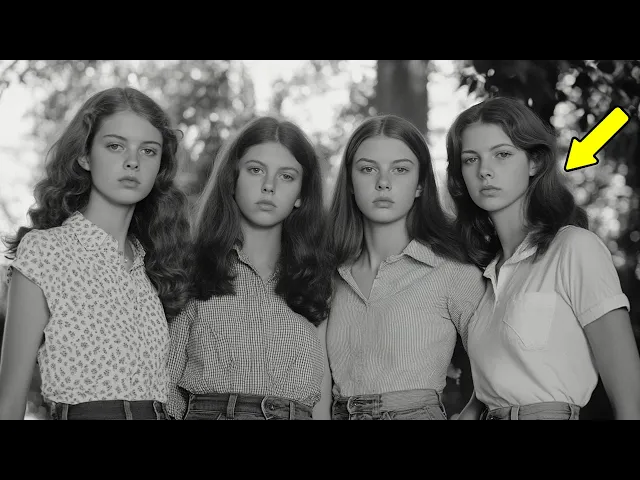
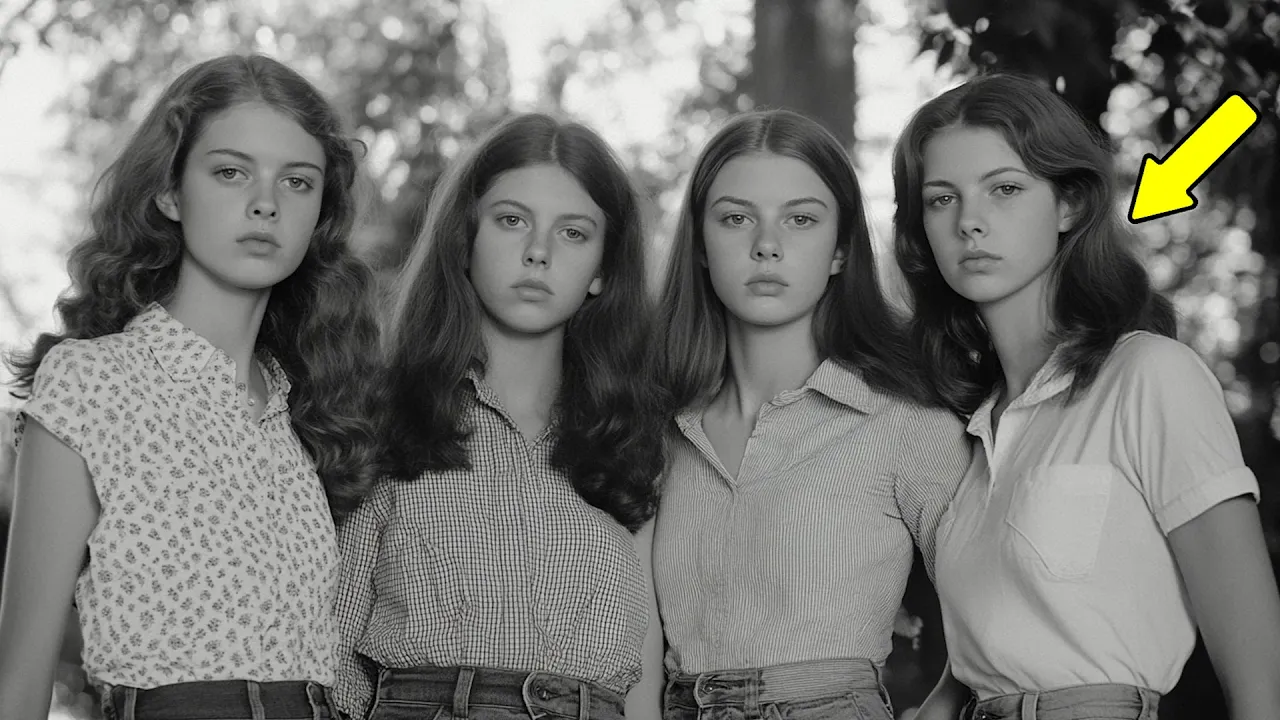
The day was unusually warm. In the garden, four young sisters—Heather, Mimi, Bebe, and Laurie—were having an animated conversation, their laughter filling the air. At some point, Nicholas noticed how the sunlight beautifully played on their faces, how natural their poses were, and how sincere their smiles looked.
"Can I take your picture? " he asked, not even realizing that these simple words would start one of the most powerful and emotional projects in the history of photography. A project that would not only change their lives but also transform our understanding of the beauty of time.
The sisters exchanged uncertain glances. Bebe was already used to her husband's camera, but the others felt uncomfortable. Their body language showed hesitation—crossed arms, slightly furrowed brows, and expressions of mild distrust.
In 1975, there were no digital cameras, so they couldn’t see the result immediately. "What if the picture turns out bad? "—this thought was clearly visible on their faces.
Nicholas used an 8x10 large-format camera—a massive device that required skill and patience. This choice was intentional: the large format allowed him to capture even the smallest details, every line on the face, every sparkle in the eyes. Later, this technical feature would become one of the key aspects of the project, allowing viewers to closely examine the sisters' faces and notice even the slightest changes year after year.
When the first photograph was developed, Nicholas was amazed. There was something more in this simple black-and-white image than just a portrait of four sisters. It captured youth itself—pure, sincere, full of hopes and expectations.
Four young women standing at the threshold of their lives, unaware of the paths that lay ahead. A year later, at the graduation of one of the sisters, Nicholas suggested taking another picture. "Stand the same way as before," he asked, showing each sister her place.
When he compared the two images, he was struck by the barely noticeable differences—slightly altered poses, slightly different facial expressions, tiny changes in their eyes. That was the moment when an idea formed in his mind. "What if we take a picture like this every year?
" Nicholas suggested. The sisters agreed, thinking it would last for a year or two, maybe five at most. None of them could have imagined that this experiment would continue for four decades and become one of the most significant documentary projects in the history of photography.
The rules were simple: one photograph every year, always in the same order—Heather, Mimi, Bebe, Laurie. Always in black and white, always using the 8x10 camera, always in natural light. No makeup, no special preparations—just them, exactly as they were.
Each photoshoot became a special ritual. Sometimes, they had to wait for hours until the light was perfect. But those hours were never wasted—they became precious moments of connection, where the sisters could talk, share news, and laugh about old memories.
With each passing year, choosing the final photograph became more meaningful. In the early years, the sisters would quickly review a few shots and pick "the best one. " But over time, it turned into a serious discussion.
They would spend hours examining each frame, paying attention to the smallest details—how the light fell, how the folds of their clothes looked, what emotions were visible in their eyes. Over those 40 years, many things happened in their lives. There were weddings and divorces, births of children and losses of loved ones, illnesses and recoveries.
But what was truly remarkable—never, not even once, did they miss their annual photoshoot. Even when one of them was seriously ill, she found the strength to stand beside her sisters in front of the camera. One of the most fascinating aspects of the project was observing how their appearance changed.
From the trendy outfits of the '70s, they gradually shifted to more classic, restrained styles. Their hairstyles evolved with the times—from youthful experiments with length and styling to the arrival of the first gray hairs, which none of them tried to hide. Those silver strands became like a crown, a symbol of the years they had lived and the wisdom they had gained.
But the most profound changes happened in their expressions and body language. In the early photographs, each sister seemed to exist in her own space. Even while standing together, they appeared as separate islands, each lost in her own world.
Perhaps it was a reflection of youthful independence, the desire to build their own lives. However, with each passing year, something subtle shifted. Their bodies leaned toward each other, their hands naturally rested on their sisters' shoulders, their gazes became softer, more trusting.
Time, instead of pulling them apart, brought them even closer. This transformation was especially noticeable in Mimi, the second from the left. In the first photos, she seemed wrapped in the armor of her own guardedness.
Her gaze was intense, her lips firmly pressed together, her posture radiated tension. Even when she placed her arm around a sister's shoulder, there was a restraint in her gesture, as if she was protecting a part of herself from the camera, from the world, maybe even from the people closest to her. But time… time does incredible things.
With each new photograph, Mimi's face seemed to soften. Wrinkles appeared not just from age but from the smiles that grew more frequent. By the final year of the project, she was almost unrecognizable—her eyes radiated such warmth and wisdom that it was impossible not to be moved to tears.
As the years went by, the project gained worldwide recognition. The photographs were exhibited in the most prestigious galleries—from the Museum of Modern Art in New York to the Louvre in Paris. But for the sisters themselves, it was never about art for art’s sake.
It was their personal story, one they shared with the world without ever intending to. The uniqueness of the project also lies in how it portrayed the process of aging in women. In a world obsessed with eternal youth, where women over 40 often become invisible to society, where they are made to feel ashamed of their age, the Brown sisters showed another way.
They proved that age is not something to hide but something to embrace and be proud of. Over the years, photography technology has advanced significantly. Digital cameras, Photoshop, and filters that can "erase" any signs of aging have all emerged.
But Nicholas remained loyal to his old 8x10 camera and black-and-white film. Because it was never about the technology—it was about the truth of the moment, about honesty with himself and with the viewers. Interestingly, throughout the entire project, the sisters never shared details of their personal lives publicly.
We do not know their love stories, their career successes and failures, their personal tragedies and triumphs. But all of it can be read in their eyes, in the way their postures changed, in how they held onto one another. This became especially evident during the difficult moments of their lives.
Although the sisters never revealed specifics, an attentive viewer can notice the years when one of them was going through a particularly hard time. In those moments, the others seemed to surround her with their support—it was visible in the way they stood, how they held hands, how they looked at each other. In the project's fortieth year, the decision was made to bring it to an end.
The final photograph… Oh, that last photograph! In it, the sisters are no longer young. Their faces are marked with wrinkles, their hair has turned gray.
But there is something so profoundly moving in this image that it brings tears to the eyes of everyone who sees it. In the final picture, the sisters press close to each other with a special tenderness that only a lifetime together can create. Their eyes shine with wisdom and peace.
And Mimi’s smile… the same Mimi who once looked at the camera with such sternness now smiles with warmth and openness that breaks the heart. Why does this last image bring tears? Not because it signifies an ending.
But because it shows that true beauty lies in embracing life as it is. In the wrinkles near the eyes that appeared from laughter. In the gray hair that became a crown of the years lived.
In the hands that learned to hold onto loved ones even tighter. Every wrinkle on their faces is a trace of a life well lived. The lines around their eyes formed from laughter, the folds near their mouths from smiles, the creases on their foreheads from worries for their loved ones.
It is a map of their journey, captured on their faces, and they were never ashamed to share it with the world. The story of the Brown sisters teaches us the most important lesson—beauty is not in eternal youth. It is in the ability to embrace every stage of life with dignity and love.
In seeing not a loss but a gain in every wrinkle. In having the courage to show the world your real face—the face that time has touched with its beautiful marks. This project became more than just a family chronicle or an artistic work—it turned into a universal message about what it means to be human, about the value of family bonds, and about the beauty of life’s natural progression.
And when we look at that final photograph, our tears are not tears of sadness. They are tears of recognition, of seeing our own stories in theirs. They are tears of gratitude for reminding us that old age is not the end of the journey but its beautiful, wise chapter.
In a world where everyone tries to outsmart time, the Brown sisters showed us that the only way to defeat it is to accept it with dignity and grace. Their story continues to inspire people all over the world, reminding us that the greatest beauty lies in honesty, in self-acceptance, and in love that only grows stronger with time.