Societies have always openly disdained the homeless and less fortunate. Even at a glance, we can see the obvious contempt and facets of our own economy, legislature, and social constructs. Our entire society, at its core, is designed to make life uncomfortable for the poor whilst absorbing those at the top from their feelings of guilt.
But what if this idea goes beyond the intangible? What if it's all around us? What if the train station you use for your daily commute, something as innocuous as a public restroom, or even the park bench you occasionally sit on during lunch hour, all do a small part in maintaining this distance between the haves and have-nots?
I'm talking about hostile, or "defensive architecture. " If you're not familiar, you really should be because it's now seemingly everywhere, especially if you live in a city. Just look at New York, for example.
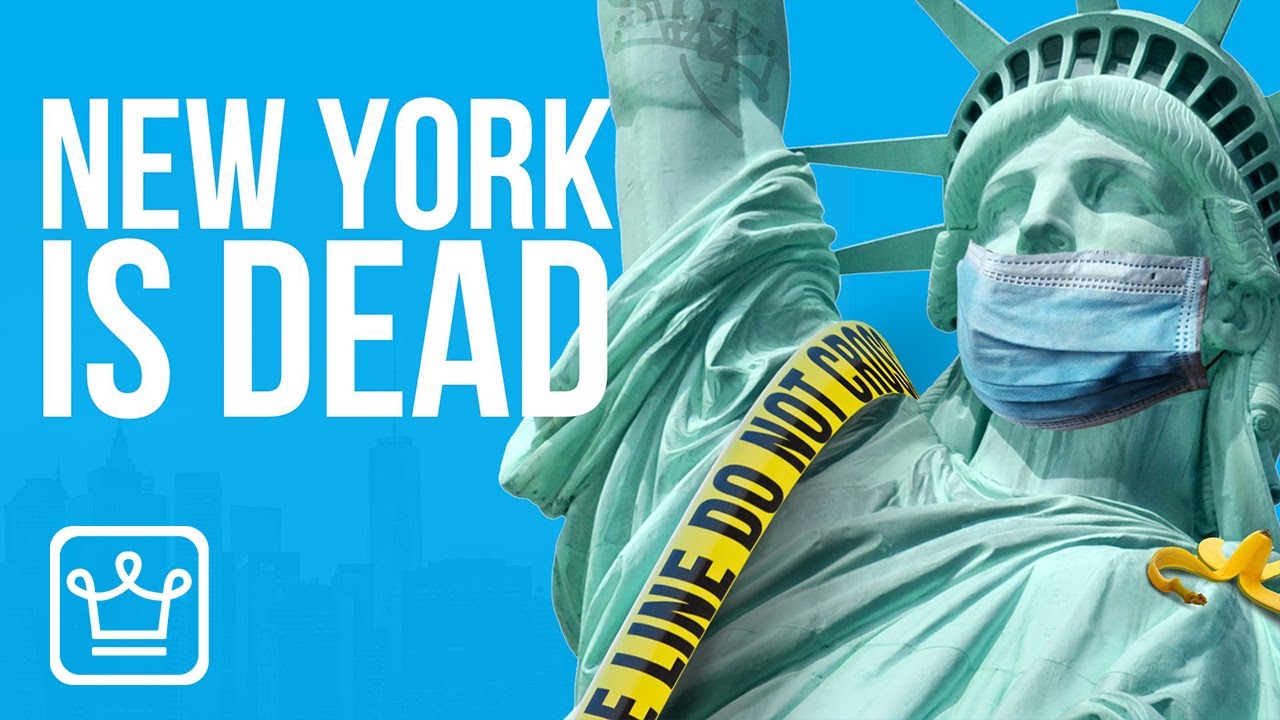
In the past decade, the city has been turning up the heat and weaponizing the design of their public spaces against the homeless. What happened in the winter? You have a lot of homeless people in New York City because of both mental illness and also the fact that a shabby studio apartment can cost upwards of $2,200.
So you had people that would sleep on these grates so that they wouldn't freeze to death. What they did was put this stuff over it so that it's actually painful. Now you can't lie down on this to sleep because not only is it a metal grate, but it also sticks up in certain sections.
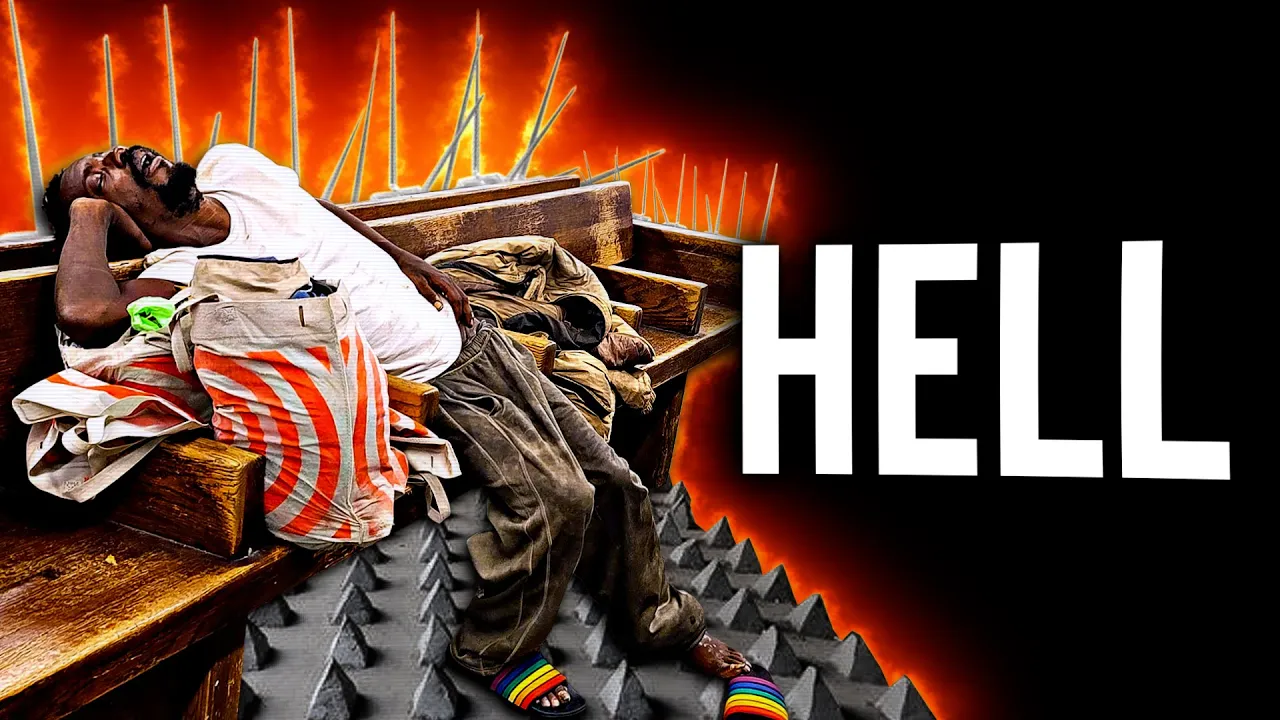
You can see this one sticks up higher than some of the other sections, so that if somebody were to lie down on this, they would actually feel physical pain. Some of the more subtle iterations of this have included installing large metal bars on public benches or making them so shallow that nobody can lay down or even loiter on them comfortably for longer than a few minutes. Some New York City subway stations and bus stops have even done away with public benches altogether in favor of leaning benches.
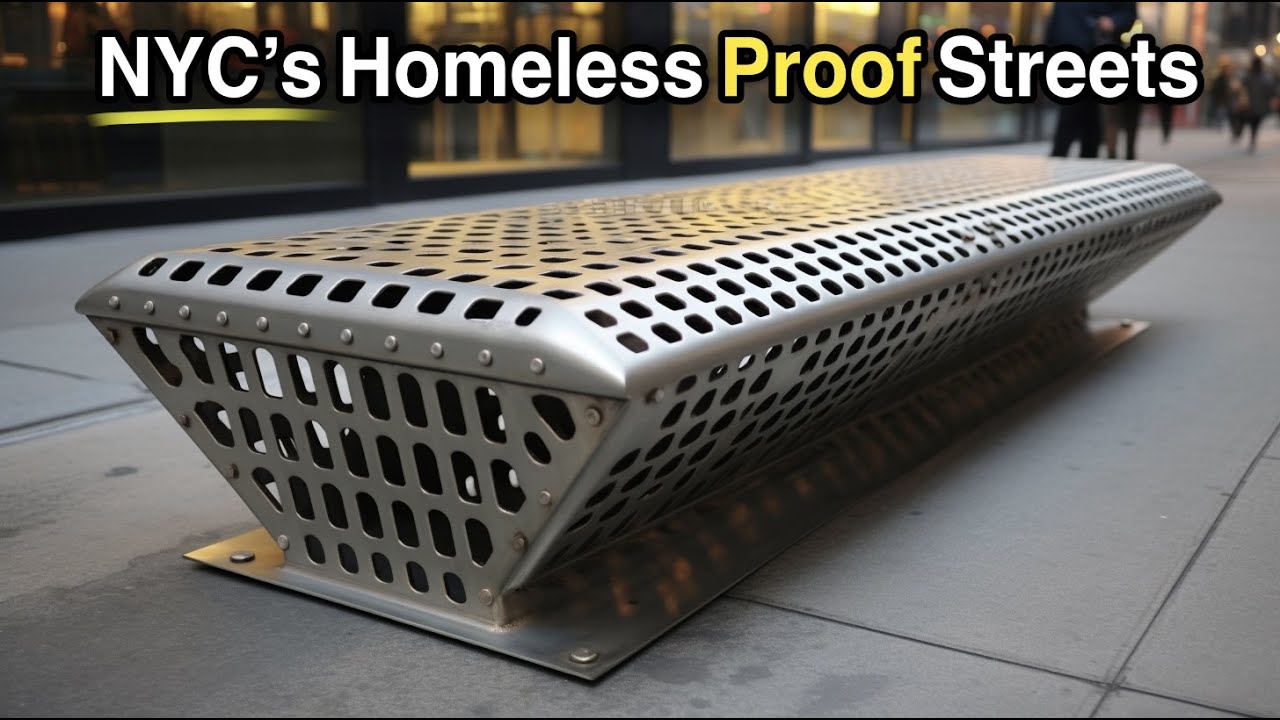
And like I said, these are subtle versions of defensive architecture; there are far more egregious versions of this in New York City alone. For example, these strange installations over subway ventilation covers and storm grates on sidewalks in Queens. The city claims them to be aesthetic benches that facilitate public rest, as well as fulfilling the primary purpose of your average subway ventilation grates.
But they're not aesthetically pleasing, and because of their warped design, they're not comfortable to sit on either. So what do they really accomplish? Well, heat rises from these ventilation systems, and if you're living and sleeping on the streets, you might want to lay on top of one of these regular flat grates for warmth, especially through the cold winter nights of New York.
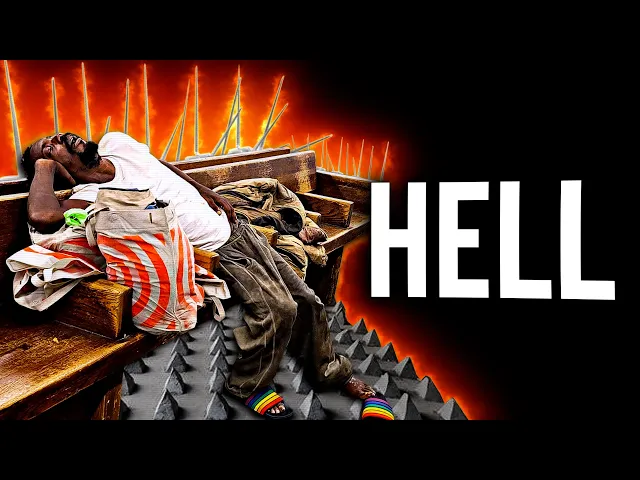
With this new design, that would be impossible because it seems the city would rather see the homeless population die of hypothermia under a bridge and out of sight than staying warm and alive on a sidewalk, but closer to those of us with high economic status. But this is just one specific exemplification of countless egregious instances of city planners designing modern architecture against the homeless. If you walk through the streets in any given first-world city, you might notice large metal spikes on windowsills or doorways meant to deter loitering, a random assortment of boulders, or a dense pallet of small bumps inconveniently placed under a bridge, fencing around a source of heat, and public resting areas which are divided into segments too small for average adult frames.
These are all proof of the same concept: governments are more concerned with bearing the image of poverty rather than solving it. They believe if homelessness is out of sight from the public, it's completely out of mind, and by forcing these people to retreat to less desirable areas where public spaces are less hostile, they believe they're creating a better experience for the upper class who live in wealthy areas. And this is nothing new.
The idea of hostile architecture, as we know it today, can actually be traced back to the aftermath of the 1848 workers' revolution in Paris. During the workers' revolution, the proletariat blockaded the streets with various furniture and supplies to their benefit, which made navigating the streets difficult for the French military. So when the streets were redesigned, Paris's narrow streets were replaced with wide boulevards and open space.
This would then prevent citizens from creating blockades in the event of a future rebellion. Now let's talk about something cool. Today, have you ever wanted a pass from the night sky in your room?
Well, let's dive into the Galaxy projector and see what it's all about. If you’ve ever been thinking of adding a little something special to your space, then this is exactly the kind of lighting you need. It will transform any room into a planetarium and give it a truly unique look and feel.
But not only that, it's also a smart device. So let's look at some features. First off, its RGB colors, brightness, rotation speed, on and off timers, and many more are fully customizable.
Just grab your phone, and with this app, you can change everything and make it truly yours. Do you love using Amazon Alexa or Google Assistant? The Galaxy projector is on your team.
Just say the word, and it obeys—from switching on to changing modes; complete hands-free magic. And guess what? It's energy-efficient too, so you can enjoy your personal galaxy without worrying about your electricity bill skyrocketing.
So for those who appreciate good tech, this is for you. The Galaxy projector is a modern gadget with timeless appeal. So get your projector today by clicking the link below—it's a fantastic Christmas gift!
To the delight and use my discount code "MOON" to get 15% off. In 1980, Langdon Winner, a political scientist, recounted a fascinating yet unsettling account of American urban planning, where he shed light on the bridges spanning the parkways connecting New York City and Long Island. These were intentionally designed to produce a specific social outcome.
These overpasses were notably lower than usual, barely reaching a height of 3 meters from the curb, and this was not a mistake. This deliberate architectural peculiarity was the brainchild of Robert Moses, a man responsible for numerous public renovations in New York throughout the previous century. Moses, cognizant of the fact that low-income communities heavily relied on public transportation, constructed these bridges to dissuade impoverished individuals from utilizing the parkways by preventing buses, which stood at a height of 4 meters, from passing beneath the bridges.
Moses effectively confined the economically disadvantaged within the city limits. Meanwhile, the more affluent, who predominantly drove automobiles, enjoyed unrestricted access to these roads. Rather incredibly, Moses's planning was not widely recognized as discriminatory during his lifetime, which he dedicated to designing sadistic, dystopian ways of pushing the less well-off away.
Drvers using the roads were oblivious to any significant details, as the bridges' seemingly harmless design concealed their nefarious purposes, allowing these qualities to fade into the background. Winner's point was as poignant as it was profound: even the most seemingly benign aspects of the landscape can be powerful tools in the hands of the politically motivated. Enduring constructions made from steel and concrete can easily uphold systematic injustices.
Moses's influence over New York City's physical and political systems is a fascinating and illustrative example of this trend, demonstrating how devious designs can shape political arrangements for generations, hence the coining of the earlier mentioned term "police architecture. " Across the Western world, local governments use a whole host of adverse methods to prevent certain communities access to public space. Part of a subversive subculture, skaters more than most value freedom; the elites obviously don't.
They value control and risk management, and skateboarding is actively discouraged through the use of ledges and surfaces that could be used for grinding, causing skaters to lose balance. Additionally, flattened slope surfaces that are typically used as ramps are often segmented and oppressed, making it impossible for skaters to cruise. While this type of hostile architecture has been criticized for discriminating against skateboarders and teenagers, it is most controversial when it comes to the homeless.
Areas where rough sleeping is common are often covered in spikes or sharp stones, making it impossible to lie down. Covered spaces are also made unattractive to those seeking shelter. It's unclear whether or not these measures actually prevent skateboarding or rough sleeping, as hostile architecture is said to displace behavior rather than prohibit it, forcing targeted communities to move to other areas of the city.
But it is important to note that being homeless or a skateboarder is not a crime, yet both are treated as such. I mean, just look around you. Hostile architecture, or anti-homeless architecture, is everywhere.
Those slanted benches at train stations or bus stops may have caught your attention. Have you tried to sit on one? If so, your chances are you found yourself sliding off.
This is all by design. These benches are intentionally designed to be unsuitable for sitting, and in the case of homeless people, for sleeping. Oh, and those armrests?
They have nothing to do with providing comfort for your weary arms. At first glance, they seem harmless; however, these armrests serve a specific purpose: preventing individuals from sleeping on benches. In recent times, there's been a surge in the popularity of benches that feature imprints or grooves to indicate designated seating areas.
So we have all these preventative measures but nothing to actually get to the root of the problem. By controlling public spaces, governments can control public behavior. Just recently, a new law in France now imposes fines on homeless individuals for littering.
The authorities argue that this legislation is intended to combat the abusive occupation of public space. The law specifically prohibits sitting or lying down in a way that obstructs the movement of pedestrians or traffic. But what are these people to do, and where are they to go?
Contrary to popular belief, many of the homeless are not meant to be delinquents or junkies, or at least they weren't before they found themselves on the streets. The vast majority of them, it seems, simply can't afford to pay rent anymore. This is not true just in France, but also in the U.
S. And to compound matters, the elites, in the modern-day ivory towers equipped with state-of-the-art security systems, couldn't care less. Why would they?
After all, for them, this system is working as planned—or should I say as designed? This philosophy is very important to understand here; not only when it comes to understanding how the government and elites use architectural design to maintain their ongoing disposal of the homeless from cities, but also when it comes to silencing the voice of the masses. Because when public spaces are riddled with spikes, uncomfortable steel bars, and padlocks, and bathrooms, homeless people aren't the only ones being made uncomfortable.
These elements make it difficult for everyone to hang around a space for long periods, which inevitably acts as a deterrent for large protests and gatherings. As a protester, it might be easy to lose steam if you have to stand or sit on the ground for days on end to fight your cause. Hostile architecture is just an unhanded way for the elites to control the masses' behavior; it is the ultimate dystopian dream.
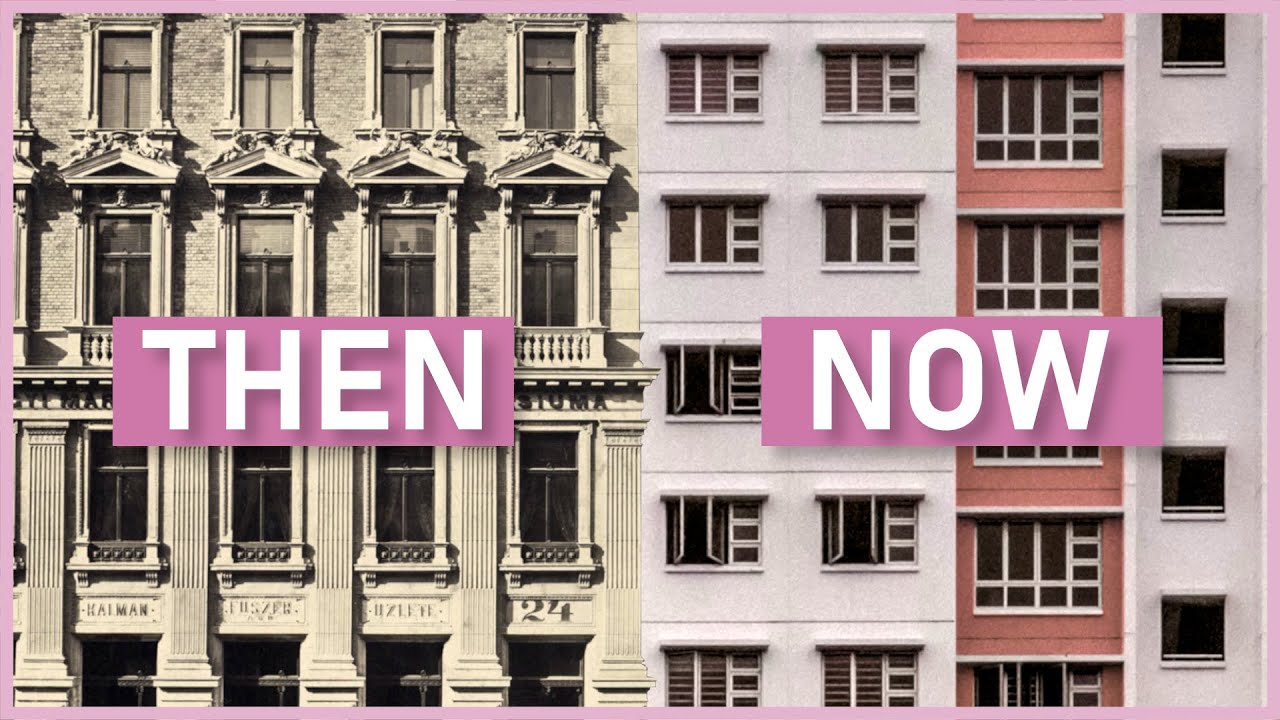
This is why communists have always made buildings so ugly. When you look at Romania and Bulgaria and compare their old societies and architecture to what was built later, the difference is stark. During their communist eras, you can see just how much these communist dictators wanted to control the masses through buildings.
Through another lens, the master-slave dynamic becomes more akin to an owner-animal dynamic. After all, many of the products of modern-day hostile architectures were rolled out as measures to prevent certain animals from resting. Take spikes on windows, for example.
For decades, even centuries, they've been installed on windows and walls in urban areas, primarily to discourage birds from perching on them. In recent times, however, there has been a growing trend of installing spikes on ground-level window sills as well, aiming to discourage individuals from sitting or seeking shelter—treating human beings like pigeons. As we see more and more of these spikes on pavements to prevent the poorest of individuals from resting, they are always positioned strategically around entrances, beneath bridges, and in other protected locations.
The message is clear: your value is the same as a lonely pigeon, and you don't belong here. Even plants are being used with the purpose of discouraging homeless individuals from ever seeking shelter by depriving them of a clear space to rest on the ground, which is a nightmare in places like New York and Chicago for these people when winter is particularly brutal. The homeless often congregate around gates to keep warm, or at least they used to.
Today, fence gates are now implemented as a measure to prevent individuals from gathering around them for warmth. Not only do these people lack shelter, but they also lack any way to actually keep themselves warm, putting themselves at risk of hypothermia on the cold, snowy winter nights in November. San Francisco, a contender for the capital of America's homeless crisis, took radical action, cleaning up several well-known homeless encampments in preparation for the visit of China's leader, Xi Jinping.
San Francisco cleared out homeless camps specifically for this week's summit, where several world leaders are joining Presidents Biden and Xi in San Francisco. City officials reportedly cleared out areas of the city occupied by homeless camps and public drug markets, some now questioning why this was done now instead of months ago. Now, San Francisco is infamously plagued by drug abuse and homelessness.
In fact, it might have ruined the city, as you can walk along the streets and find putrid conditions as a regular occurrence, surrounded by packs of needles everywhere. Gavin Newsom, the state governor, who some could argue represents everything wrong with modern-day America, acknowledged that the effort was made to create a positive impression for other visiting leaders, like one of the world's most brutal authoritarian dictators, Xi Jinping. So, in just a few days, to appease the Chinese government, the city cleaned up seven intersections and neighborhoods south of Market, leaving many incredulous citizens wondering why similar efforts had not really been made earlier.
They've been having this problem for years, and suddenly, just like that, it was gone. The cleanup made multiple hot spots unrecognizable. Newsom defended the state's decision, stating that officials had recently raised the bar for elites, not for the American people.
That's where the elites raise the bar for other elites, but not for everyday taxpaying citizens; they raise it for dictators and communist authoritarian regimes from George Orwell's "1984," but not for Americans. They could fix the problem, but for some reason, they chose not to. The reason they often give for this is because of the cost.
The Department of Housing and Urban Development estimates that the cost of eradicating homelessness in the United States would be about $20 billion. While this figure may seem substantial, it’s important to remember that the U. S.
Congress has, to date, directed more than $75 billion in assistance to Ukraine. As the war goes on, we can expect this figure to rise astronomically. And that’s not to say Ukraine should never receive any support; it's to say that elected officials should first and foremost be dedicated to helping their citizens.
This is the most important thing. While $20 billion might seem like a lot of money, the expenditure on gym memberships in the United States exceeds $35 billion per year. Last year, the U.
S. government spent $876 billion on the military. In other words, the homeless crisis could have been solved 43 times over, but instead, the military-industrial complex prevails.
If that’s not enough to make your blood boil and your head spin, cities are spending even more money criminalizing and displacing homeless individuals when in truth it would actually be far more cost-effective to provide them with housing. The expenses associated with anti-homeless measures, including hostile architecture, are estimated to be over $31,000 per person per year. In contrast, the annual cost of providing supportive housing is only one-third of this cost.
Yet instead of putting out the fire, the U. S. government, like many other governments around the world, chooses to pour more gasoline on the flames.
The U. S. is the wealthiest nation on Earth; it has the capability to provide shelter and basic needs to every individual.
As I speak, there are at least 582,000 homeless people in the U. S. Many of these individuals are elderly, and it's a huge, growing problem.
By 2030, the number of homeless individuals over the age of 65 will have tripled. Instead of being safe and sound, the people who built the U. S.
could soon find themselves on the streets. What we are witnessing here is a hollowing out of the middle class, with more and more people who once occupied relatively safe positions in society being thrown into the pits of despair—scared, alone, hungry, and cold. These people would be left to perish on the streets while the ruling class watches on yet again, with a mix of amusement, utter contempt, and ignorance.
Today, half of Americans have zero savings. Sixty-one percent of U. S.
citizens are living paycheck to paycheck, and fifty-nine percent are just one paycheck away from being homeless. At the same time, those in power are becoming increasingly more powerful and increasingly richer. The gap between the Haves and the Have Nots is, just like in 1789, fast becoming a gaping chasm.
When it seems that the madness can't go on forever, something must give. Then again, it's also possible that those in power, if left unchallenged, will only serve to make us weaker. The world is changing, and not really for the better.
So, every time you walk around a city like New York, Chicago, or even London, really take a look at the designs around these cities. In many ways, you'll soon see that the cities you live in are anti-human by design.