now that you have a better understanding of what cloud computing is and the infrastructure that supports it let's transition to Cloud architecture in this section we'll explore how the cloud compares to traditional architecture to understand this we need to look at some history the trend toward cloud computing started with a first wave known as co-location co-location gave users the financial efficiency of renting physical space instead of investing in data center real estate virtualized Data Centers of today which is the second wave share similarities with the private data centers and co-location Facilities of decades past the
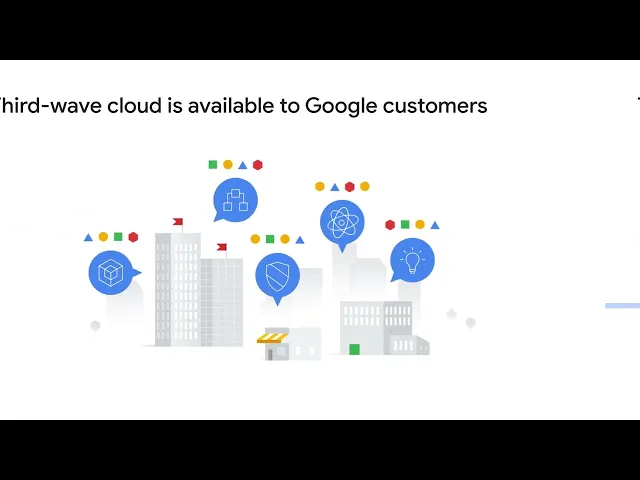
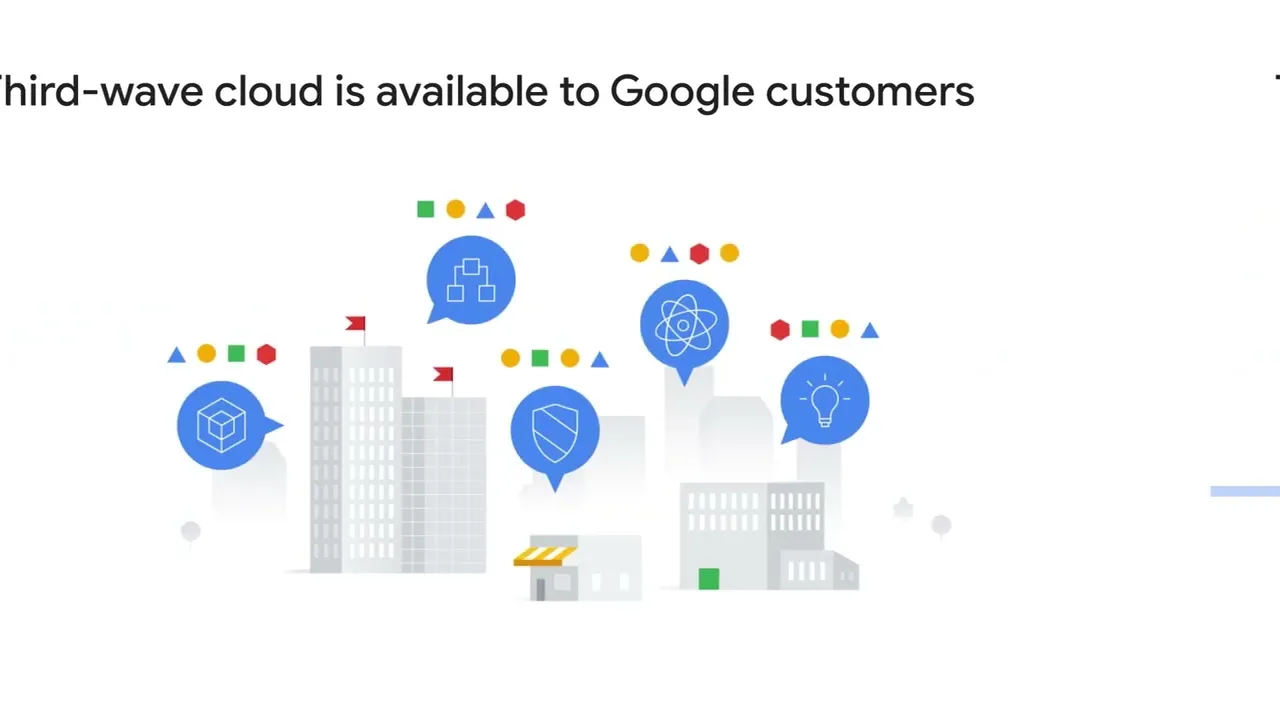
components of virtualized data centers match the physical building blocks of hosted computing servers CPUs disks load balancers and so on but now they're virtual devices with virtualization Enterprise is still maintain the infrastructure it's still a user controlled and user configured environment several years ago Google realized that its business couldn't move fast enough within the confines of the virtualization model so Google switch to a container-based architecture a fully automated elastic third wave Cloud that consists of a combination of automated services and scalable data Services automatically provision and configure the infrastructure used to run applications today Google
cloud makes this third wave Cloud available to Google customers Google believes that in the future every company regardless of size or industry will differentiate itself from its competitors through technology increasingly that technology will be in the form of software great software is based on high quality data this means that every company is or will eventually become a data company the virtual world which includes Google Cloud's network is built on physical infrastructure and all of those racks of humming servers use huge amounts of energy together all existing data centers use roughly two percent of the world's
electricity so Google works to make data centers run as efficiently as possible just like our customers Google is trying to do the right things for the planet we understand that Google Cloud customers have environmental goals of their own and running their workloads in Google Cloud can be a part of meeting them therefore it's important to note that Google's data centers were the first to achieve ISO 14001 certification which is a standard that Maps out a framework for improving resource efficiency and reducing waste this is Google's data center in Hammond of Finland the facility is one
of the most advanced and efficient data centers in the Google Fleet its cooling system which uses sea water from the Bay of Finland reduces energy use and is the first of its kind anywhere in the world in our founding decade Google became the first major company to be carbon neutral in our second decade we were the first company to achieve one hundred percent renewable energy by 2030 we aim to be the first major company to operate carbon free