(folk country music) - What do we consider natural? (folk country music) One of the reasons that people oppose using biotechnology is because they see it as not natural, and that it might threaten the wildness of an environment, but really it's. .
. Those terms are tricky. (folk country music) Could it help us address some of these forest health threats?
(folk country music) Biotechnology, in one perspective, could reduce the wildness of a forest by being a very specific and targeted human intervention. On the other hand, if human activities have introduced a pest or pathogen to a forest that's devastating the health of that forest, and we can use biotechnology to protect that tree species, could that, in fact, restore the wildness or naturalness of that environment? - Genetic engineering might be a tool for helping to recover the health of our forests.
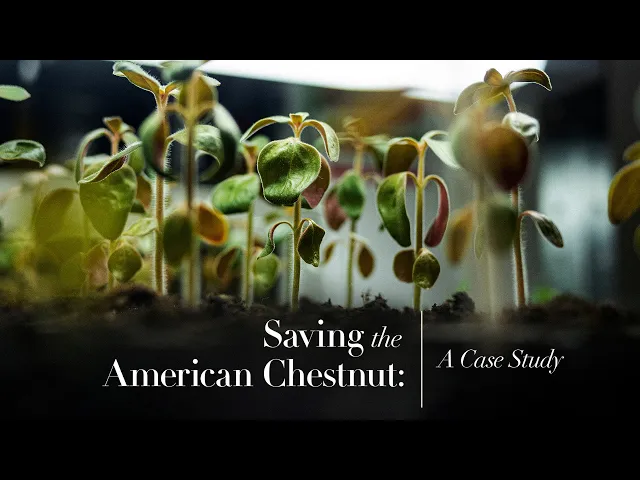
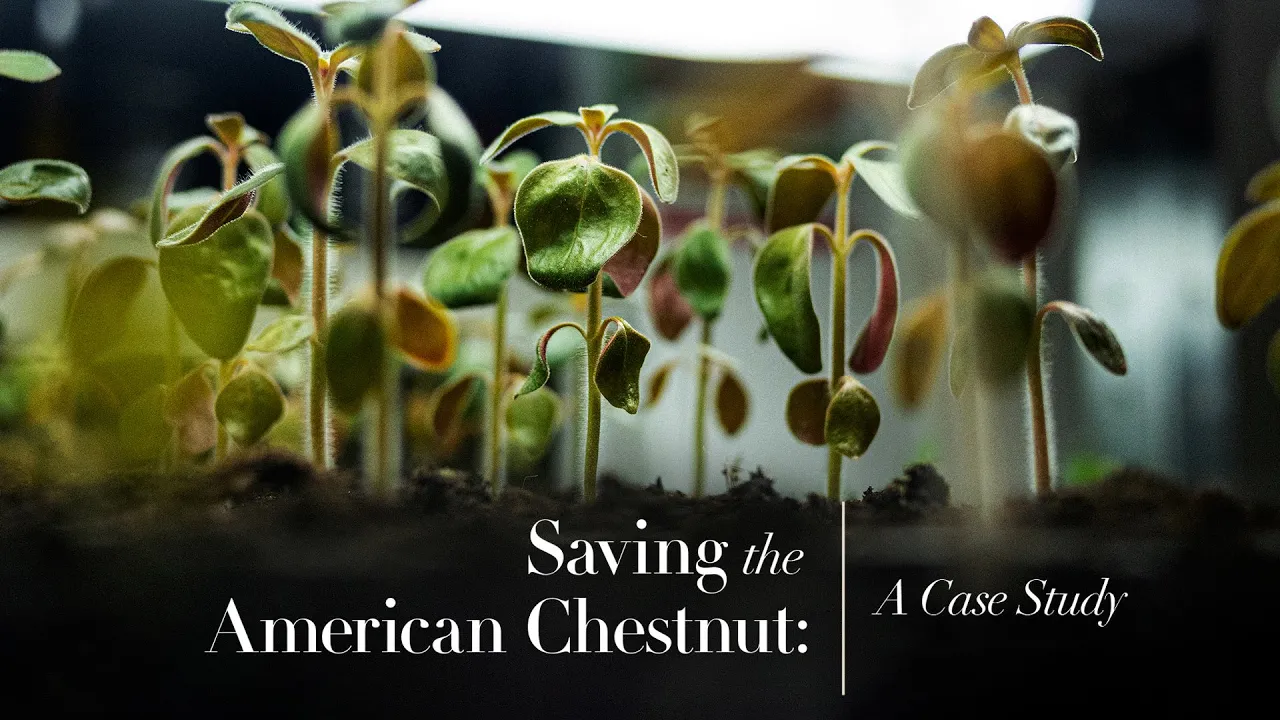
I think people need to understand what the alternatives are and weigh them against each other. It's easier to think about specific examples than to think broadly. So let's think about the American Chestnut.
(bright folk music) - The American Chestnut is a really interesting case. (bright folk music) In the early 1900s, a Chestnut blight was brought to the United States on accident. It was a fungus brought along with either Japanese or Chinese Chestnuts.
American Chestnut trees had never been exposed to this fungus before, and they were devastated. (bright music) So the American Chestnut tree is now functionally extinct. The European American settlers really relied on the Chestnut masts for annual income and for subsistence.
There's evidence that the Chestnut was an important food and product for Native Americans. So there are a lot of reasons to want to restore the Chestnut. That's a tree that was really important ecologically, and also socially.
But it's also an interesting case because those forests have essentially recovered. Other trees have come to take their place, and so we can ask the question, are those forests healthy? Would they be more healthy if they had Chestnuts in them?
There are likely to be differing opinions. (slow music) - What they did was crossbreeding American Chestnut with this Chinese Chestnut. We all know the American Chestnut, right?
A very large and big tree. If we look at the Chinese Chestnut, it's very different. It's a little bit smaller; it's a little bit thinner.
It has less branches. When you crossbreed them, they will have 50% of DNA from the American Chestnut and 50% of the DNA from the Chinese Chestnut. So it's not a real American Chestnut; it's a hybrid.
(slow music) - [Jason] The genetically engineered American Chestnut tree has a particular gene, from wheat, that detoxifies the fungus. - [Doria] In other words, this gene from wheat inoculates the tree against the blight, and therefore if we can figure out how to make sure that it's a durable change, "durable" meaning that not only will it last in the tree in which the gene is implanted, but in the progeny, then, of course, you can drive a trait through the population. - Scientists have invested a lot of efforts into producing new variants of genetically modified trees.
To date, not a single genetically modified tree has been used in either the wild, natural forest or in managed forest plantations. Genetically engineered American Chestnuts are currently undergoing USDA regulatory review, and, if approved, will shortly thereafter be planted in the Appalachian mountains. - And the question will be, how it will it work in the forests?
While there have been field trials that show some real promise, in terms of stands of trees being resistant to the blight, we don't really know how this technology will behave in the forest over decades and over centuries. And really, that's the timeline we're talking about when we think about healthy forests. You know, as a society, we're going to have to accept that kind of uncertainty if we want to move forward with that intervention.
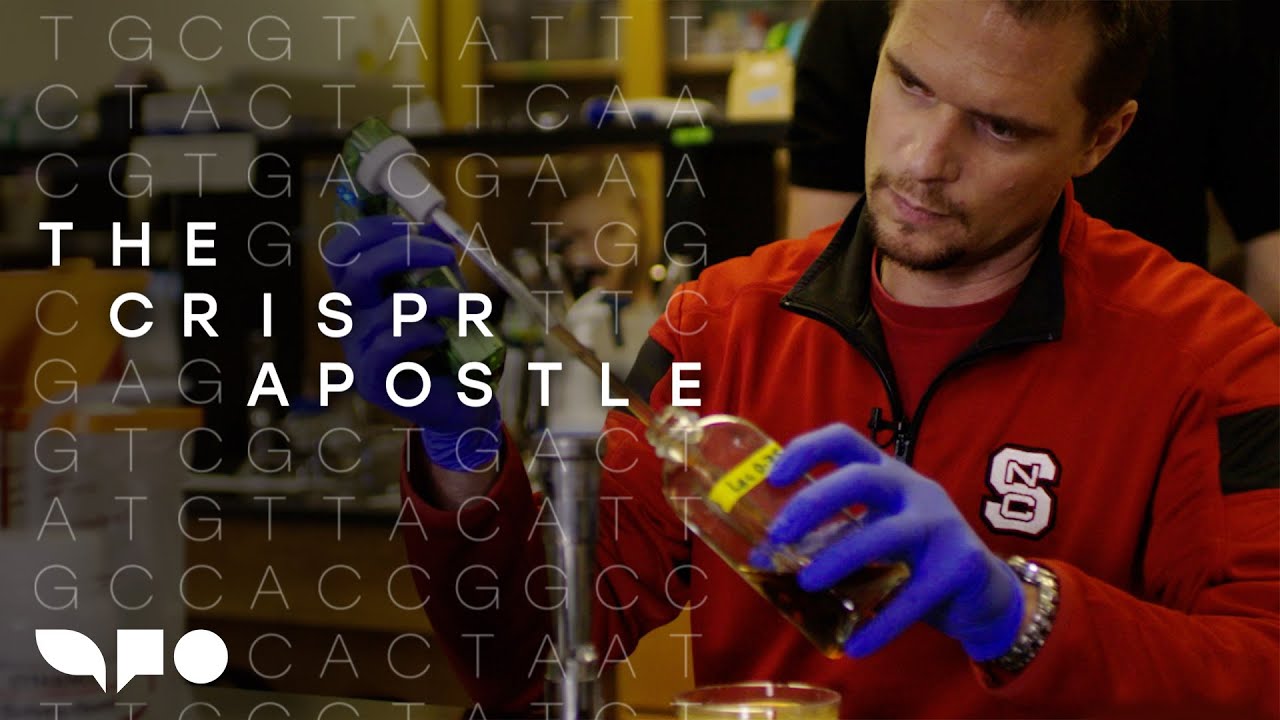
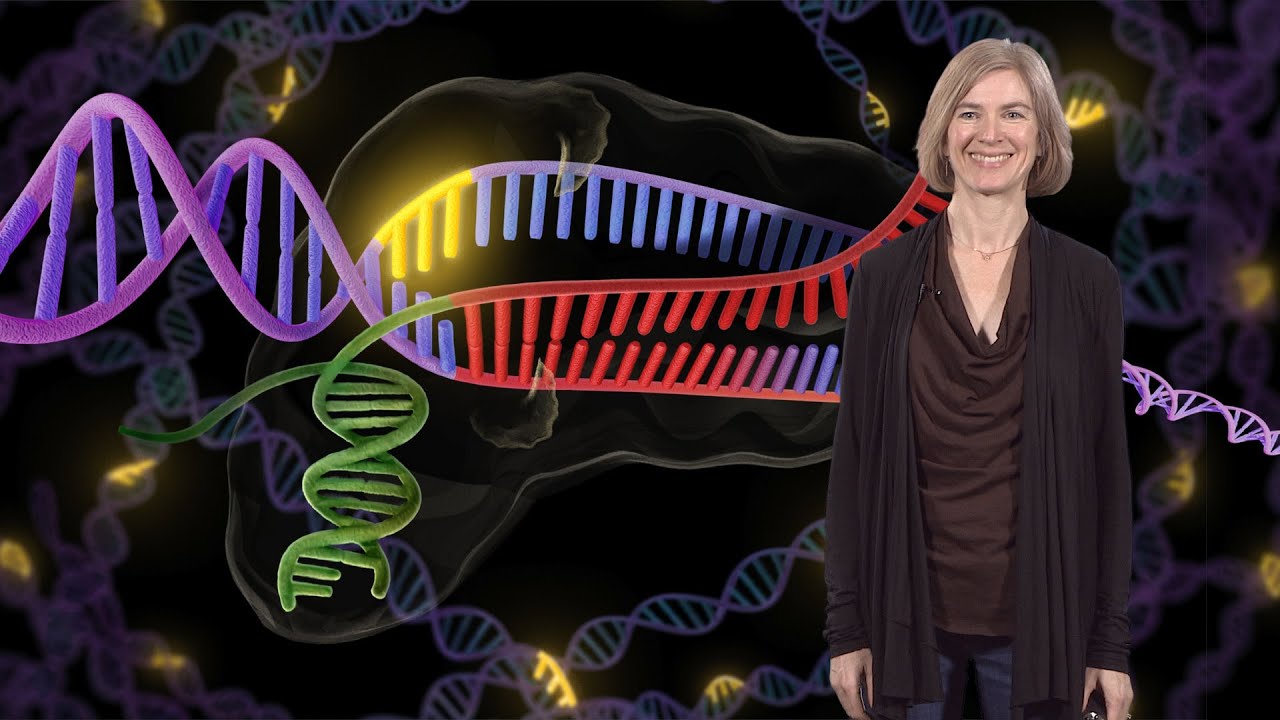
(folk music) - CRISPR-CAS genome editing creates a novel mutant that is genetically indistinguishable from natural variations. - We're just modifying a couple of letters. That is what you can do with CRISPR-CAS.
So in this case, you will not be adding new information to the genome, only modifying a couple of letters. (bright music) - One of the arguments for the CRISPR technology is that it's much more analogous to what can happen naturally in nature or through conventional selective breeding, so nothing different than what we've been doing in the past. - Making things that could potentially occur naturally in a wild population is what is the most unique benefit of CRISPR-based genome editing.
- And some scientists argue that if you can't distinguish between a gene-edited plant and one made through conventional breeding, why would we treat it any differently? Why would we regulate a gene-edited plant differently if we might've been able to make it with conventional breeding? - Using the more emergent, robust, and efficient and safe CRISPR editing approach is one of the more promising ways in which we can accelerate the genetic improvement of trees for specific climate change issues, such as drought tolerance, invasive pests and pathogens, how trees alter their nutrient uptake.
- One of the challenges is that trees are very large organisms, and they live a long time. And so scientists, really, they like to work on organisms that are small, easy to have in a laboratory, and have very short generation times, like fruit flies. Trees are not good laboratory organisms, and they take many years until they're at reproductive maturity.
- They also typically have very complex metabolisms and a genetic makeup. For example, coniferous trees, like pines and firs, have genome sizes that are five to tenfold the size of a human genome, and this makes genetic engineering and CRISPR-based editing of trees particularly challenging. - So the kinds of experiments that are necessary for us to find the genetics or the phenotypes that would be resistant to a pest or pathogen, that can take a really long time.
Also, there's always some degree of uncertainty because a laboratory experiment or a field trial can't perfectly capture the entire complexity of an ecosystem over time, especially when we're talking about forest trees that live a very long time. - The decision on whether a genetically restored tree species is going to be the right alternative, is not gonna be an all or none. It's not gonna be all trees we need to restore this way.
Physically, we can't do it. Economically, we can't do it. Scientifically, we can't do that.
It's gonna be a species-by-species decision. These kinds of decisions resonate with how people see the woods, how they view wildness, how they experience nature.