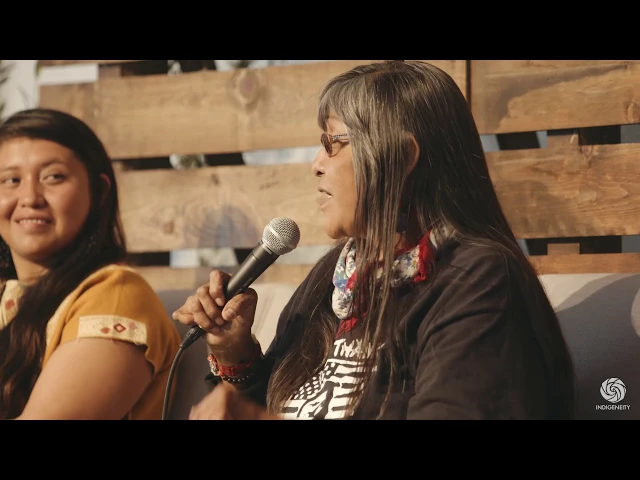
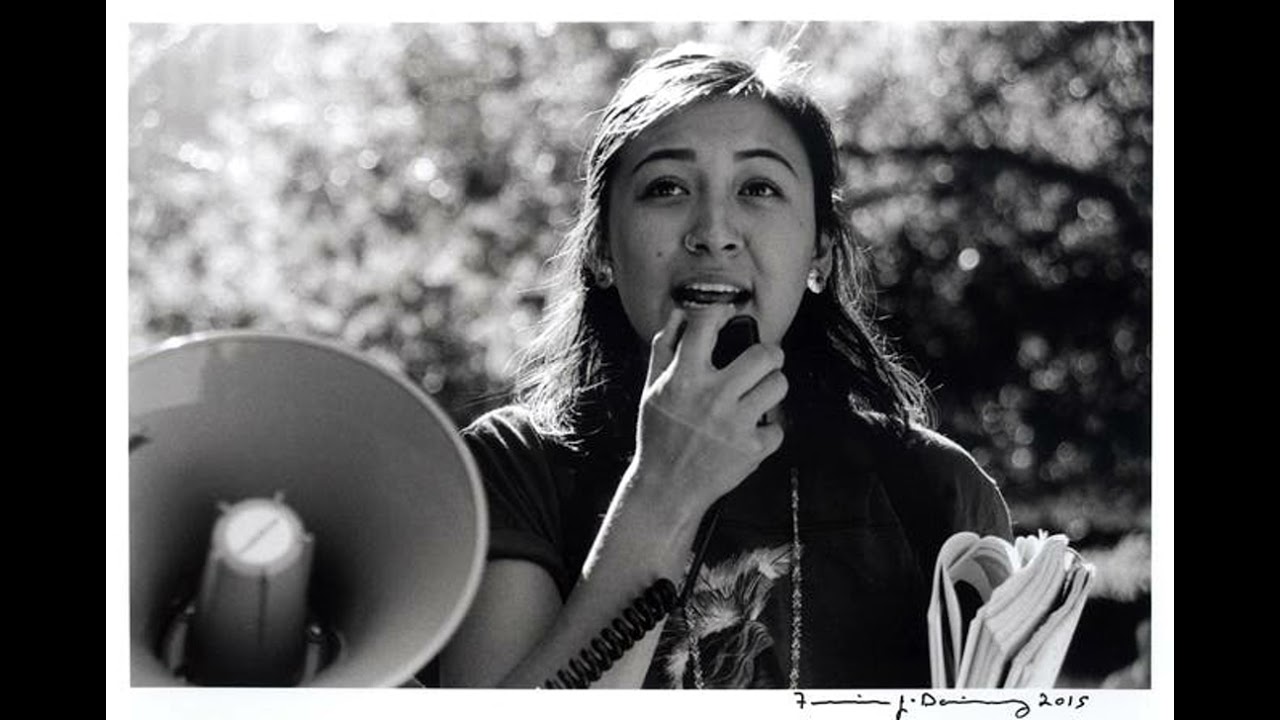
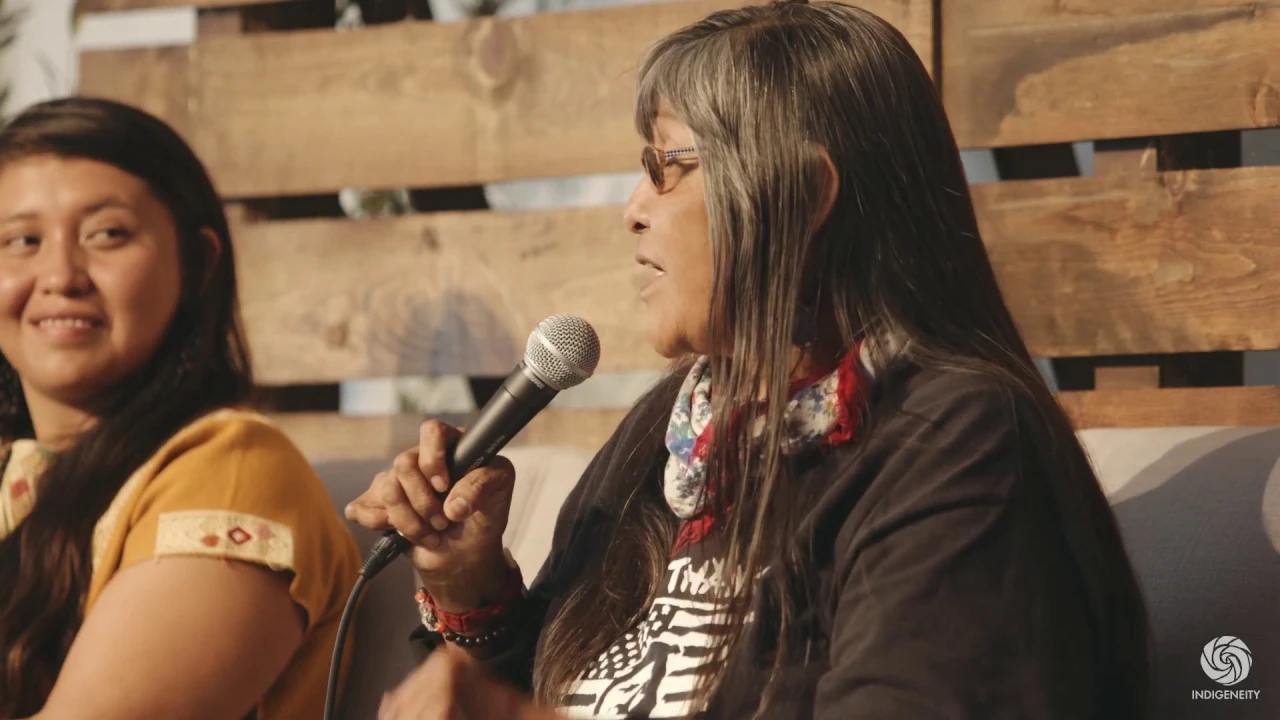
One of the things that we always say as indigenous people, as O’odham people, we say, We're just O'odham. O'odham are just people, and we live by those values of our ancestors. And those kind of ideas, they're foreign ideas and we're forced to live in it, and we do the best that we can to to live in those.
Yes, I have a passport now but I don't have a birth record. How did that happen? In my homelands, on my original homelands, I'm an undocumented person, and I have to carry this card, and I have to instruct my and guide my elders, please carry your cards.
When the Border Patrol stops you, you need to have those cards with you or you're going to get detained and imprisoned and deported from your own homelands, which has happened. And so one of the elders said, "Oh so when the wind blows they're gonna stop it and ask it for papers? And so when the water flows, they're gonna stop that and ask it for papers?
And what about the migrating animals, that migrate back and forth on the lands, that have been doing it for thousands of years-- the turtles and the animals that you don't think about. And so we wonder about that and how that's going to impact our next generations of people because now this wall will be there and who knows how long this wall is going to be there. Is it going to be there from our time until forever?
And what purpose is the wall, because it doesn't stop people. The reality of an ideal existence in our homelands is to erase all those borders. We call it an arbitrary border.
It's just a line there. We cross it all the time. We refused to recognize it as traditional people.
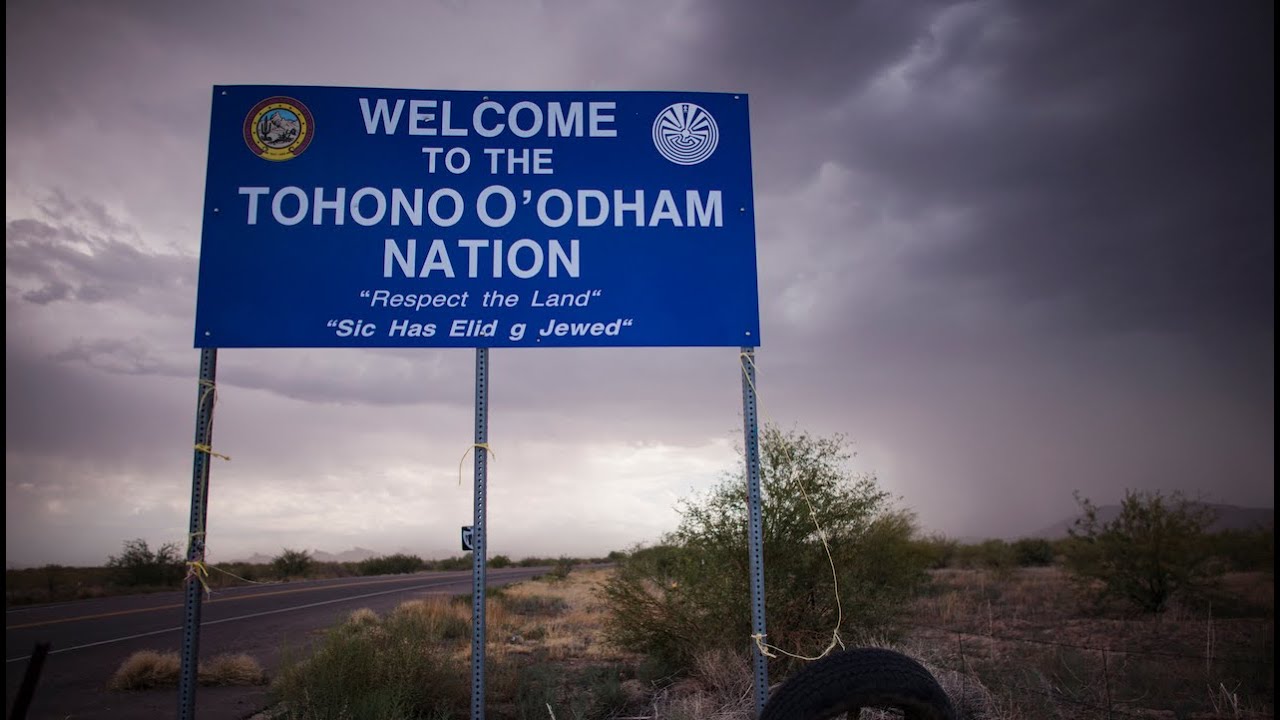
Our government people can recognize it but as traditional people we do not recognize it. And as traditional people throughout the lands, we should declare that we do not recognize these borders as the first action. [APPLAUSE] The reservation Tohono O’odham Nation is on a tenth of our original lands.
Original lands is before it was Mexico, before it was the United States, it was a huge territory. The one in the little space right there, it also has the sea, all the way to the sea, all the way to Hermosillo, Mexico and to Phoenix, Arizona, as we know it now, and east of Tucson, Arizona that is now there. So those vast lands, it holds all our peoples' remains and part of the culture of our seeds that we have in our culture, which includes sacred spaces.
The border that came in 1853 is just another part of that continuation of our devastation of our way of life. The border divided and forced communities to move by just a land survey. It was just a stake in the ground, a metal stake in the ground that marked where US border and Mexico border was going to be, that forced people out of the land, to move away.
And when the fences finally came it also came with immigration policies, United States immigration policies. But our lands became-- I guess they divided people. There's O'odham.
There's four O'odham bands and those bands are the Hia-C’ed O’odham, the O'o Tohono O’odham, Ahkimet[ph] O'odham, and Tohono O’odham. The Tohono O'odham Nation are the largest of the four bands. We continue to be connected with people and on the Mexico side called O'odham in Mexico.
Our lands are now--the reservation is the size of Connecticut and it's sectored off in three sectors by the Border Patrol. So the Border Patrol have in each sector--There's 700 Border Patrol in each sector, and there's also an increase of that now. So our reservation is completely militarized.
It has a checkpoint at every exit where you have to declare your citizenship and you have to carry your documents with you everywhere you go. If you're going to go pick cactus fruit, the elders would have to take their their ID cards with them because they will get stopped and they will get interrogated by the Border Patrol. When our lands became more militarized after 9/11, and I have to say that before 9/11 there was an increase of the Border Patrol on the lands, and when 9/11 happened with the bombing, then they officially announced that there was going to be an increase of Border Patrol in O'odham lands.
Homeland Security wavered all 37 protective laws to build the wall. So that impacted all the people because it impacts the water systems, the ancient water lagoons that are along the border, and also the animals that lived there, and the people and the mountains, and everything that's there. It impacts our people.
In the beginning when they first built the vehicle barrier, they said, oh, it's for vehicles because there's a lot of drug trafficking and human trafficking across the land. So we said okay, well then us people, we can walk across this, but that wasn't so. The Border Patrol still would stop people and force them to go around the port of entries.
So that's the beginning of that, but it's very restrictive there. People are afraid because when the Border Patrol came, they can walk in your house and put everybody on the ground with their military rifles and interrogate them. They can stop you anywhere.
They can run you off the road. They can put a gun to your head, like they put a gun to my head and asked me whether-- to say if I was a US citizen or a Mexican citizen. And then those policies that are enforced on our people that are very devastating to our mobility, our rights of mobility on our traditional routes.
That also restricts a lot of our way of life because there's things that we need on those--both sides of the border and people are either US citizens now or Mexican citizens, and they're now restricted either way coming and going. So all my life I didn't know there was an international border because we go-- My father's village is 15 miles south of the border and other communities in that--in Mexico, what is Mexico. So all my life we were crossing back and forth to my father's village, to my mother's village, which is a quarter of a mile from the border on the US side.
And until later in my life I realized it was an international border, we continued to go back and forth to my father's community. And in 2015, the drug cartel wars began along the northern border of Sonora, Mexico, very violently just killing off entire communities. There's abandoned communities all along the border and my father's community was attacked.
They took the ablest body adult male and tied a rope around his neck and dragged him around in the community with a car. And then they beat him up and he survived, but it forced all the people to leave. They were forced to leave the community.
People are still now in exile, in fear, although it's been four years now. And when in March of this year we traveled back to my father's community just to be there to witness and see, so it was completely abandoned for four years so it was completely vandalized-- all the tin roofs off the buildings, all the usable lumber, all the possessions that were in their homes, private possessions and things that they used in the house--tables, chairs, everything-- everything was vandalized, taken. Just the rubble of things that there-- they didn't use, they didn't need, I guess.
So we came back with elders, a caravan of four cars and 13 elders got out, and not one tear was shed, not one tear. We had equipment to start cleaning and they started cleaning. They cleaned little parts here and there.
The community church, the community kitchen, that's just the remnants of a kitchen, outdoor and indoor. And they just started cleaning because all the workers that came, we still had to feed them. So we were feeding them outside on a mesquite grill.
So those things that happened to us, it's not just us, it happened all across the border, violence of the cartels and the corruption of the Mexican military and officials that do have--that do nothing to protect the people of the lands. We went back because we said that we didn't relinquish our rights to our community and we were determined to rebuild our community. Those--that's just on the Mexico side of what's happening.
I'm not sure if I--that's a part of that story but I just wanted to say that the resilience of people is--it's inspirational when you see your elders, and if my sister was there she would be crying the whole time. And nobody cried and they just picked up a tool and started cleaning the community that's been abandoned for four years. So that's the devastation that's happening on the Mexico side.
When the elder said now you've heard my story, you're obligated now, it's your story, now it's your obligation to carry on the responsibility of taking care of that and being in defense of the land and the whole system of which we live in, which includes the water, and the land, and all the animals, and the people.