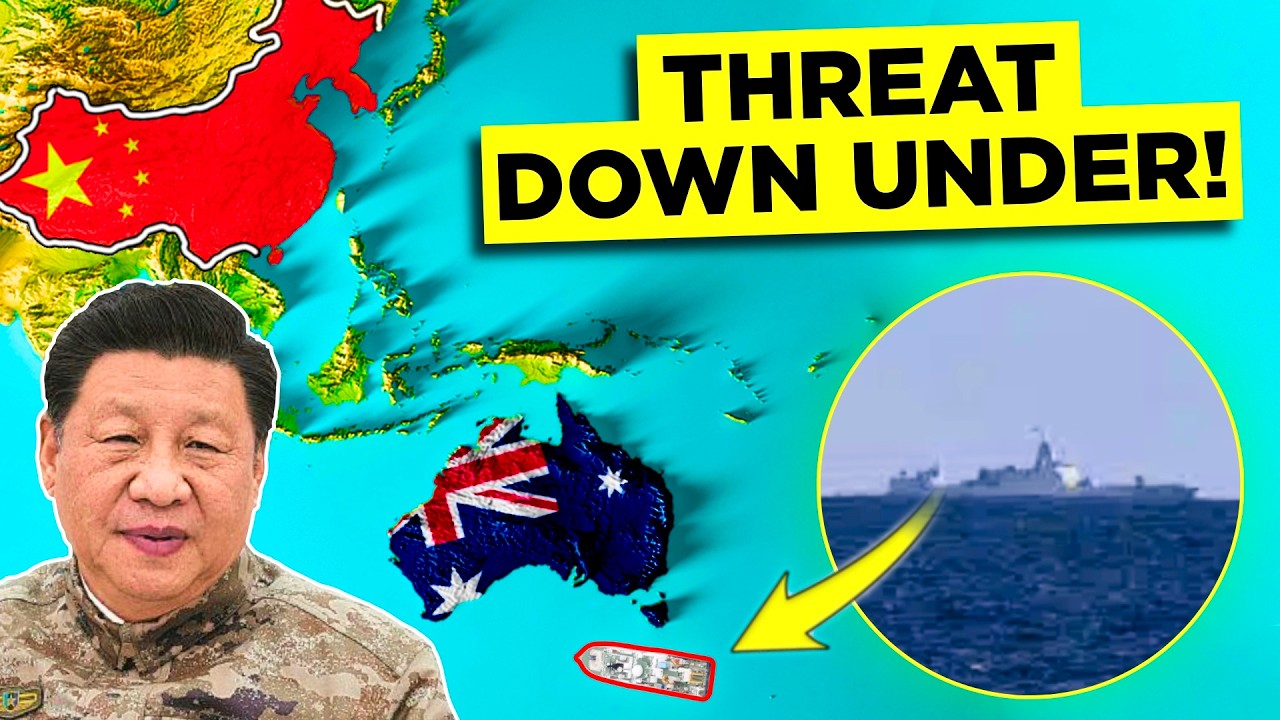
First tonight, we can bring you newly released images from our defense force of three Chinese warships now sitting off the coast of Sydney. While their exact location hasn't been disclosed, the ships are around 150 nautical miles off the coast, around the same distance as a trip from Sydney to Canra in a move being described as an aggressive demonstration of power. Australia is a secret weapon.
Yeah, you heard that right. And in the coming years and decades, it will be at the forefront of countering China's growing military power. It isn't just about alliances.
It's about strategic positioning, military buildup, and a show of force. Right now, in the remote north of Australia, something big is unfolding. Air bases are expanding.
Warships are docking. US Marines are training alongside Australian forces. At RAAF base Tindle, new facilities are being built to house long range bombers capable of reaching China's doorstep.
Meanwhile, the AUKUS pact is bringing nuclearpowered submarines into play, changing the game for Australia's military might like we've never seen before. Why Australia? And why now?
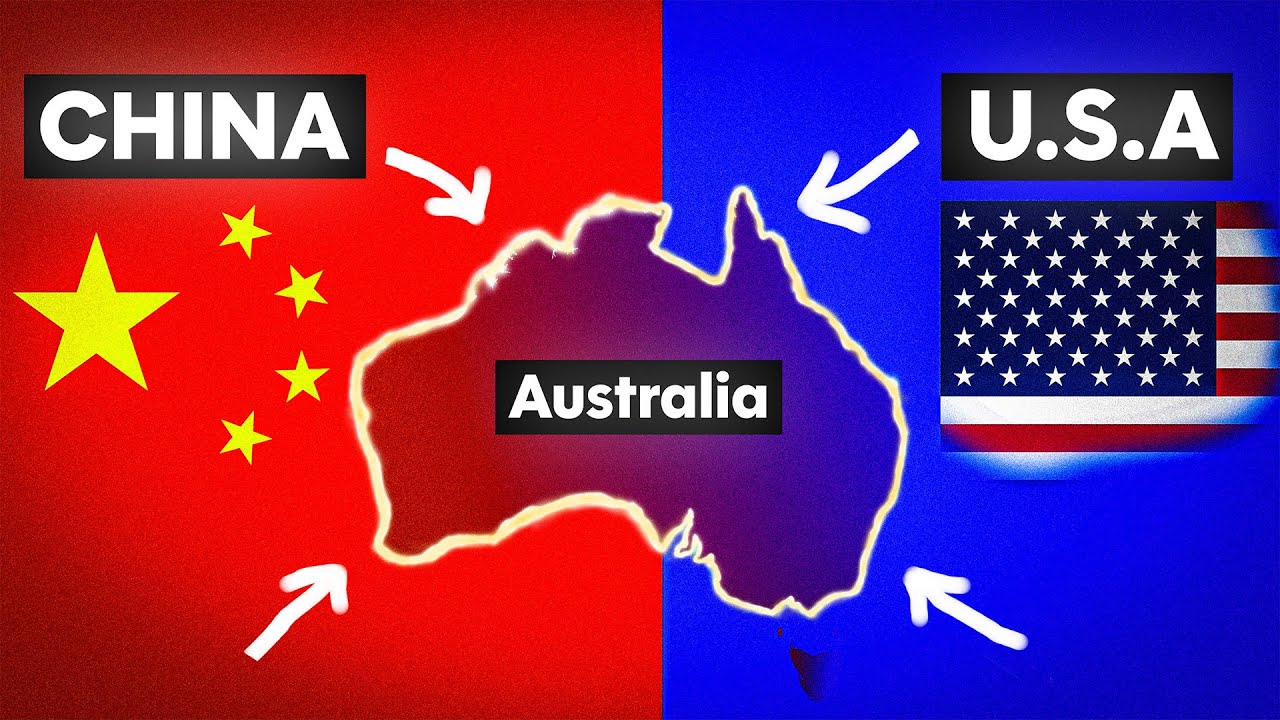
Well, it comes down to power, strategy, and keeping rivals in check in a tense part of the world. You see, the 21st century is shaping up to be a power play between the US and China. And the Indo-Pacific is right at the center of it.
For China, this region isn't just about geography. It's about survival, power, and dominance. It's home to some of the busiest trade routes in the world.
And China depends on them to keep its economy running. Not only that, but the Indoacific is also China's security buffer. The closer foreign military forces get to its borders, the more vulnerable it feels.
That's why Beijing is so focused on expanding and maintaining its influence here. Controlling the region would give China an edge economically, militarily, and politically. For that reason, the CCP wants to reduce American influence as much as they can.
In addition to their security and economic concerns, the Chinese are actively expanding their territory. We've already seen them build artificial islands in the South China Sea, push into international waters, and even militarize them. And then there's the threat to invade Taiwan.
So, the further south the Chinese expand, the closer they get to surrounding and potentially invading neighboring countries and eventually even Australia and Oceanana. So, in this video, we'll break down how the US and Australia are secretly working together to keep China in check. Now, this partnership isn't new.
The US and Australia have been working together for a pretty long time. In fact, they share a lot of history. Both were once British colonies, which means they inherited similar values, democracy, language, and strategic goals.
They're also both massive countries with huge land and sea territories. And in modern history, they've been key players in the Western Alliance. Starting in the early 20th century, Australia began forming its own security and diplomatic relations.
This was part of their process of independence from the British. In 1908, Prime Minister Alfred Deacon invited the American Great White Fleet to visit Australia. This was the first time a non-British navy visited Australia.
This set a precedent for future partnerships between the US and the Aussies. The US and Australia fought as allies in both World Wars. Despite some disagreements on the peace terms of World War I, they remained staunch allies in World War II.
That war was an early example of US Australian cooperation in the Pacific War theater. US General MacArthur even set up headquarters in Brisbane, giving the Americans a key position to fight against the Japanese Empire. After World War II, the first military partnership between the US and Australia was established.
It was known as Azus, the three-way security pact between the United States, New Zealand, and Australia. The US wanted to expand its presence in the Pacific with its new allies in Japan and the Philippines. And of course, Australia and New Zealand being the two English-speaking Western nations of the region.
and key allies during World War II made increasing American influence much easier. In addition, after World War II, Australia was now less dependent on Britain, leaving it more open to embracing American partnership. With this agreement, Australia and New Zealand also agreed to the US rearming Japan.
The US wanted to turn Japan into another Western ally in the Pacific. Australia was weary of this at first due to Japanese attacks on Australian soil during the war, but they eventually agreed and formalized it in the following years. This treaty served as a way to protect Australia and New Zealand and the US from any other foreign attacks on their soil.
The ANZUS treaty was signed on September 1st, 1951. It served as a form of NATO for the Indopacific region. This was the first treaty that Australia signed without the involvement of Britain.
This caused some tension in the UK and the British would not become involved in a US Australian alliance until many years later. The ANZ US treaty also came about during a crucial post-war period. It was the beginning of the cold war and communism was rising in China and Korea.
And while the treaty was not formally invoked at this time, Australia did send troops to the US Soviet proxy wars. We could see Australian soldiers fighting in Korea, Vietnam, and the Gulf. Particularly in Vietnam, PM Robert Menses sent troops through Sito, known as the Southeast Asian Treaty Organization.
It was a western response to rising communism in the Indoacific. As the cold war dragged on with regional changes, Australia chose to be less involved in proxy wars. An example of this was the 1965 Indonesian coup deta attempt.
This resulted in a regime change that became more anti-communist. Indonesia was now a more reliable ally in that sense. For that reason, Australia would feel even less inclined to send troops abroad.
At the same time, Australia and American forces had certain strategic differences which contributed to Australia's decreased involvement. Such differences may resurface today with the new Trump administration. But regardless, A&Z US provided a strong baseline for the US's position in the Indoacific.
The treaty opened a new communication line between the three countries regarding threats and responses. It commits each country to provide each other with military support in case someone attacks them. If the US invoked the treaty against China, they would have access to Australia.
In this case, the Americans would be free to build strategic military infrastructure in either Australia or New Zealand. So far though, the treaty has only been invoked once. This was after the September 11th, 2001 attacks in the US.
This involved Australia directly in the American war on terror. At the time, Australian Prime Minister John Howard became a key ally of US President George W. Bush.
He supported the American 2001 invasion of Afghanistan. He also supported the US during the ensuing Iraq disarmament crisis of 2002 to 2003. Australia directly participated with the Americans in the US-led invasion of Iraq known as Operation Falconer.
This further solidified US Australian alignment on the matter. It also served to honor its commitment to the Americas through A&Z West US. By 2011, under US President Barack Obama, the US military increased its presence in Australia.
Both the US Marine Corps and the US Air Force began rotating units and establishing infrastructure in Northern Australia. These were supplemented by existing Australian military bases across Australia's northern territories. At this time, they began engaging in joint military training exercise.
This move was criticized by the Chinese government as well as Indonesia. This reaction emphasizes the CCP's fear of extended US Australian military collaboration. By 2013, the US Air Force began to conduct rotational deployments of fighter jets and tanker aircraft throughout Australia.
Of the many Australian bases the US has been using, we can highlight two key sites. The Royal Australian Air Force RAAF or RAF Based Tindle and Raphase Darwin. The RAF-Based Tindle is one of the newer Royal Australian Air Force operation bases.
It's located 15 km about 9. 3 mi outside the town of Catherine and 320 km about 198 mi to the southeast of Darwin, the capital of the Northern Territory. It was built in 1942 during World War II and it was extended and upgraded during the next decades.
Eventually, it was declared a fully functioning air force base in the mid1 1980s. Since its official opening in 1988, RAFB Tindle has hosted major yearly military training exercises. They've invited visiting militaries from around the world, including the United States.
Pitch Black, Diamond Storm, and Talisman Shore are three notable examples of these events. The Talisman shore exercise is the largest joint military exercise between Australia and the US. In Tindle, Australia is also building a new parking ramp.
It has the capacity to accommodate four of the raft's largest planes, KC30 tankers. These powerful tankers can refuel fighter jets and allow for attacks at much larger distances. The United States also has plans to build its own parking ramp, which would be large enough to accommodate six B-52 bombers.
These bombers would have the ability to reach mainland China from base Tindle. The RAPH base Darwin located 6 and a half km about 4 mi northeast of Darwin shares the runway with the city's international airport. It's also where many of the US Australia military drills take place.
In this base, the US has recently built a new fuel depot for its Marines MV22 Osprey. This type of aircraft is able to land vertically like a helicopter and transition midair to fly like a regular airplane. The Americans are planning to expand the current parking ramp here and allow for even more of these aircraft.
Plus, both of these bases are located in a very sparsely populated area. The Northern Territory has a small population of just over 250,000 as of 2023. It also has a population density of.
19 people per square kilmter. It's about. 5 people per square mile.
They are spread over a vast 1. 35 km or 520,000 square mile land area. This presents a lot of land available for these kinds of military bases.
The region also has an ideal year-long dry weather that facilitates military drills. These all make for ideal conditions for drills like Talisman Shore to take place. The remote areas of Western Australia and Queensland are also ideal for these bases.
Existing bases such as Raph Curtain and Base Lman have now been eyed for expansion and upgrades for American use as well. These bases are strategically 3,000 mi, about 4,800 km, apart from east to west. This would prevent China from delivering one single fatal knockout blow.
It also allows the US to continue to project its strength against China, even if the Chinese managed to take out one of these remote bases. Furthermore, Australia is also looking to upgrade the airirstrip of the Kokos Islands. These are tiny coral atoles in the Indian Ocean.
They are located northwest of the Australian mainland and south of Indonesia. This expansion would allow to carry heavier military aircraft such as the P8A Poseidon, also known as a submarine hunter. The P8A could be used to monitor Chinese naval activity around the area.
So, it makes sense why the US Navy has already listed Kokos Islands as a possible location to collaborate with the Aussies in this new project. Now, there's one more key piece of the US Australia partnership that we haven't covered yet. Beyond ongoing military drills and existing treaties like A&Z US, there is AUK US.
It is the most recent development in the evolving US Australian security relationship. AUKUS is a trilateral security partnership between Australia, the UK and the US. It aims to renew the older Cold War A&Z US treaty.
New Zealand has been largely inactive in ANZ US since the 1980s due to its non-uclear and anti-militarization policies, making a new agreement necessary. But this time, even the UK was brought into the mix, marking its first security partnership with an independent Australia. It was announced in September of 2021, and it is intended to strengthen security ties between the three countries.
It includes deeper intelligence and technology sharing, as well as expanding military infrastructure and supply chains. The agreement has two key pillars that will significantly impact Australia. The first is providing the Australian Navy with nuclearpowered submarines.
Along with that, the US and the UK will send their own nuclear subs to rotate through Australia. American submarines are expected to start these rotations along Australia's west coast in 2027. The second pillar of the treaty focuses on increasing the Australian military's cyber capabilities.
These include AI, quantum, and also hypersonic infrastructure. The treaty is a direct response to the modern view of China as a growing threat to stability in the Indoacific. This comes from China's expanding military power and aggressive rhetoric, especially its threats towards Taiwan and efforts to extend its influence in the region.
The origin of this treaty goes back to the mid2010s when the Australian Navy was searching for a replacement for its aging Collinsclass submarines. To that end, they partnered with France. In 2016, Prime Minister Malcolm Turnbull signed a 50 billion Australian dollar deal with Naval Group, a French company, to help them build a new class of submarines.
These new subs would be based on the French nuclearpowered submarines known as Barracuda. By 2019, both parties had agreed to build 12 submarines to be built in Australia. However, this deal went through many delays and cost increases, almost doubling the cost to 90 billion Australian dollars.
The agreement was stumped. By June of 2021, the concerns over costs and delays continued to grow. This caused some Australian MPs to think of a contingency plan if the French deal collapsed.
Despite these concerns, PM Scott Morrison met with President Mcron to reinforce their commitment to the project. By late August of 2021, French and Australian defense ministers reaffirmed this commitment. However, 3 weeks later, Australia suddenly terminated the agreement.
In the same month, AUK US was first announced. You see, it turns out that throughout 2021, Australia had been secretly negotiating the new deal with the US and the UK. This was done without the knowledge of the French government or naval group.
Australia basically ditched the French nuclear submarine deal in exchange for a better one with the US and the UK. Eventually, during the June 2021 G7 summit in Cornwall, England, PM Morrison met with PM Johnson and President Biden without Macron. They discussed and negotiated the new treaty behind France's back.
This was possible because of Brexit. Per Brexit, the UK was no longer required to inform the EU about its own new security deals. France was understandably furious at the sudden cancellation and the new agreement.
Macron was pissed at being left out of the AUK US talks. In response, France briefly recalled its ambassadors from the US and Australia. They also threatened delays to the Australia EU trade deal that was being negotiated.
Clement Boon, a top French official, said the trust between France and Australia was broken and would not easily be repaired. In addition, he also slammed the United Kingdom as a vassel for the Americans and as an opportunist. Summits were canceled and Macron reiterated the EU's need to focus on its own security affairs and strengthen its military capacity.
YouTube just dropped a mindbogling announcement. It is paying creators $64 million per day. Why?
Well, because YouTube doesn't have enough creators. That is why you see videos on your homepage that have less than a,000 views like this one. Now, of course, that doesn't mean everyone should start a channel.
But if you have ever wondered about starting a YouTube channel or a faceless YouTube channel like this one, well, now is a perfect time. YouTube is paying creators millions every day, and it's pushing newer, smaller channels now more than ever. But I'm sure many of you have questions on how to get started and how to grow a channel.
We get questions in our email all the time from some of you guys. So, that's why we've decided to put all of our YouTube advice into one training boot camp for the low, low price of completely free. So, if you're someone interested in starting your own YouTube channel, you can sign up for this boot camp by clicking on the link in the description or on the screen.
Sign up now because unfortunately, unlike YouTube videos, the boot camp is like a Zoom call, so it's limited to just 100 people. Okay, let's get back to the video. After the 2022 election in Australia, there was a new government.
Scott Morrison was ousted and Anthony Albanese's Labor Party took the reigns. His government began repairing relations with France. He negotiated a settlement with naval group for the cancellation of the project.
Even another top French official affirmed his own government's commitment to repair relations with Australia. With that, PM Albanese also planned future trips to France. But even though this dispute was short-lived, it exposed a key weakness.
It showed that Western unity isn't as solid as it seems, especially when it comes to the Indoacific. Regardless, AUK US would have clear and immediate effects on US Australia security relations. More importantly, it would have an impact on how they coordinate to counter Chinese influence in the region.
It also shows how both countries could respond to Chinese attacks on Indoacific targets. These targets, by the way, could very well include Australia. We say this because of China's reaction to the agreement.
The CCP condemned a UK, citing concerns that it would disrupt regional peace and stability. China said it would also promote further nuclearization of the region with Australia's new subs. The CCPr run Global Times slammed Australia, labeling it an adversary of China.
It warned that Australia could now be targeted by Chinese forces. This would serve as a warning to the US and its other regional allies not to provoke China. A Beijing based think tank added a warning about Australia getting nuclear subs.
It said that China could now treat Australia as a nuclear country. With this category, it would be fair game to target the Australians with nukes during a war. with an enemy label, Australia would now become China's nearest adversary.
And for that reason, China would want to attack it first and secure its regional position during said war. On the other end, this deal strengthens the already strong military ties between Australia and the US. The deal complements the existing military drills and US expansion of base operations in northern Australia by cementing a stronger American position against China in a war scenario.
In response, some critics have even quipped that Australia is becoming the 51st state. I know you'd immediately spot the reference to the recent remarks about Canada. In any case, though, it is clear that US Australian cooperation is rapidly expanding.
An analyst at Loey Institute uses a different metaphor. They claim that Australia is an unsinkable aircraft carrier at the bottom of the critical maritime sea lanes. This refers to Australia's vast size and location right to the south of the South China Sea.
A UKUS and ANZUS are not the only existing instances of a US Australian alliance. They're involved in the quadrilateral security dialogue known as the Quad for short. This alliance also involves India and Japan.
However, the Quad does not serve as big a role for Australian security as a UKUS. This is due to India and Japan's heavy economic reliance on China. They depend on the Asian giant for key supply chains and trading routes.
The trade volume between both countries has continued to increase in recent years. In 2023, their bilateral trade volume was worth $215 billion. And from ores to precious minerals and cereals, Australia's exports to China were worth more than $120 billion in 2023.
China is also an important source of tourism for Australia with roughly 550,000 Chinese tourists recorded in 2023. This makes sense given Australia's proximity to China and its growing appeal as a tourist destination. However, at the same time, China has continued to become more assertive in the region.
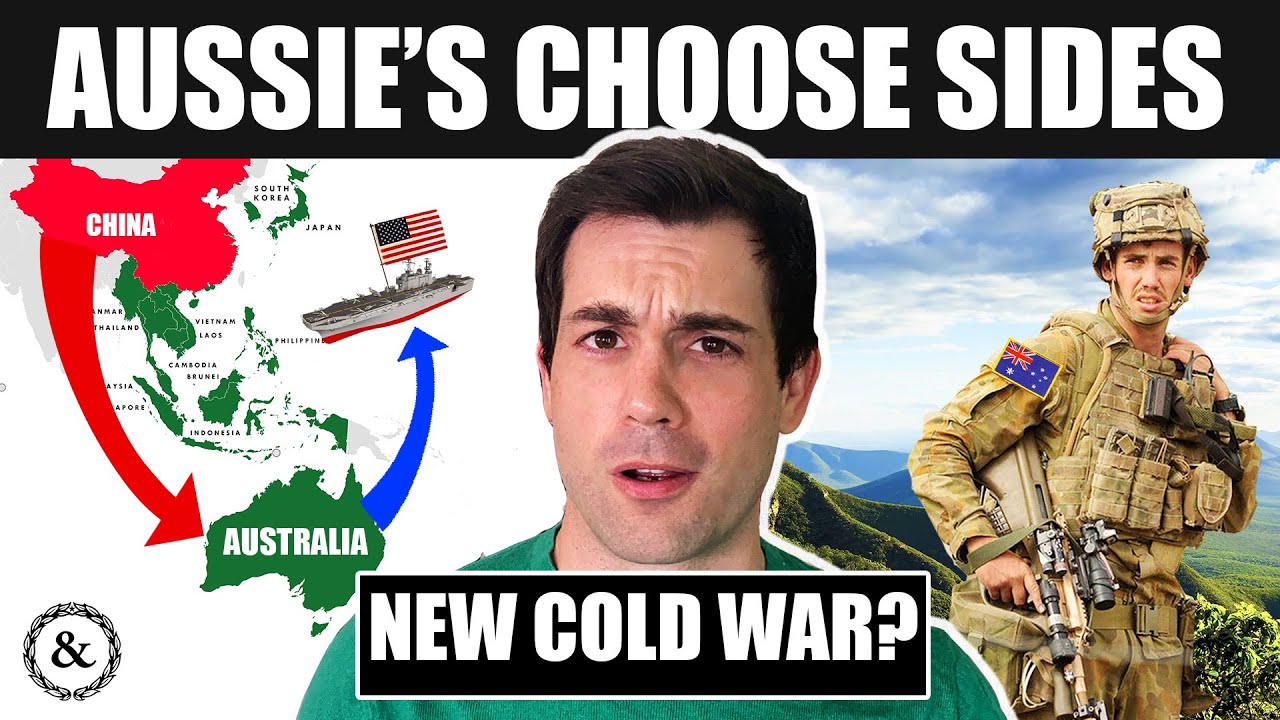
It recently signed a security agreement with the Solomon Islands, a close neighbor of Australia's. For that reason, Australia has begun tilting even more towards the US for security. Right now, Australia is playing a dangerous game of balancing sides.
On the one hand, it risks provoking Chinese wrath by cooperating more closely with the Americans. It allows itself to become a secret weapon for the US to use against China. It has also risked degrading its relations with other Western allies.
Such was the example of their brief rift with France over the cancellation of their submarine deal. You can see how this jeopardized Australia's relations with the broader EU. However, on the other hand, it risks alienating the West by continuing to grow its economic reliance on China.
If they should enter a conflict with China, Australia must be ready to face the consequences. They will have to face the risk of becoming a direct target or even the setting of said war. Australia will have to balance its economic and security priorities.
Like a US lawmaker said, Australia relies on China for prosperity and on America for security.