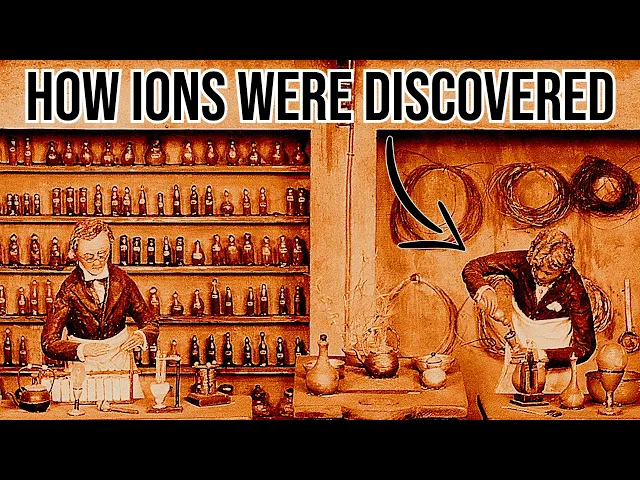
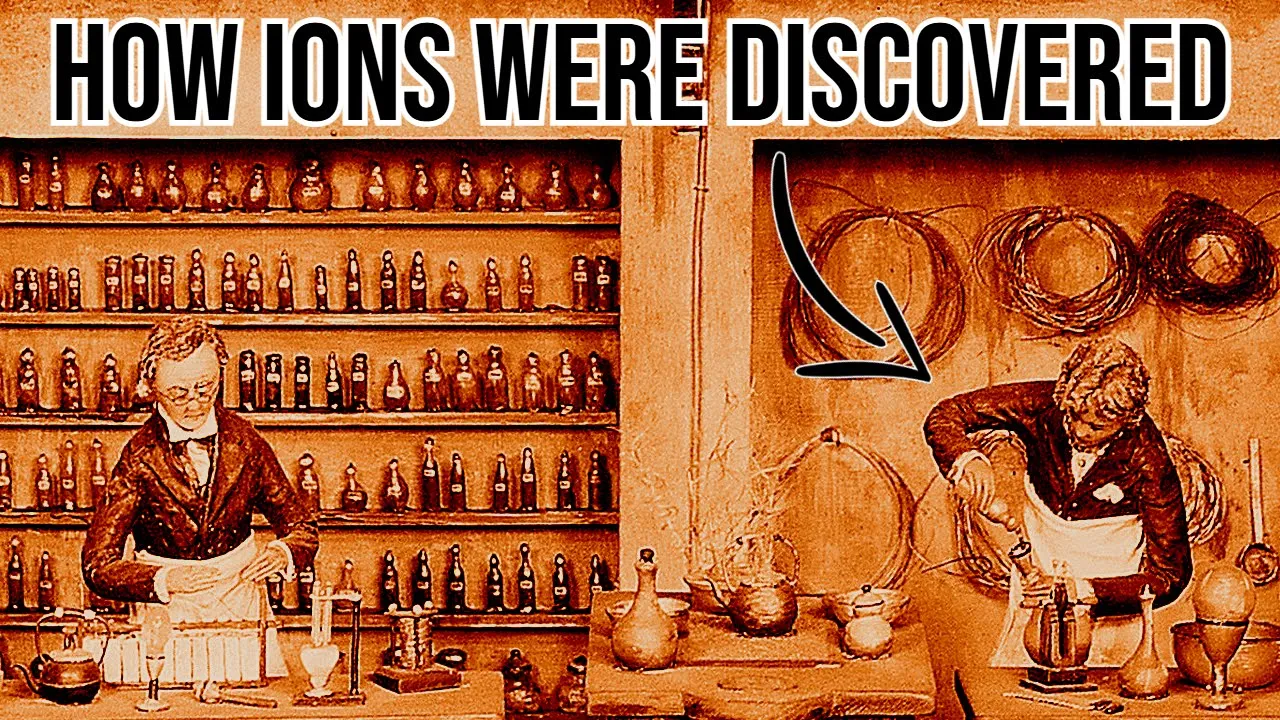
The invention of the electric pile in 1800 by Italian chemist and physicist Alessandro Volta sparked a revolutionary wave in the field of chemistry. His pile consisted of consecutive plates of silver, zinc, and cloth, all of which were soaked in a salt solution. This new invention was a gamecher for it was the first electrical battery ever created that was capable of providing a consistent electrical current to a circuit.
That same year, the pile was used in the laboratory of English scientists William Nicholson and Anthony Carile to separate water into hydrogen gas and oxygen gas through a method that was previously infeasible but was made feasible through use of the pile. This method is known as electrolysis. Throughout the next two decades, a series of discoveries were made through electrolysis headed by British chemist Humphrey Davyy.
Davyy discovered and isolated a series of elements, all of which weren't a separate video themselves. As revolutionary as the pile was, and as fruitful as electrolysis was in the early 19th century, scientists of the time were unsure of how the process worked at a fundamental level. Sure, they knew that sticking two metal poles in a heated solution separated chemical compounds by means of electricity, but the specifics on the process remained unclear until around 1834.
Michael Faraday was one of the first to give a clear and concise explanation as to what is actually going on during electrolysis. And through his explanation came a plethora of definitions and terms that we still use to this very day. 1834 was the year in which Faraday published his seventh series of his experimental researches in electricity.
This series entitled on electrochemical decomposition. The biggest takeaway from this publication is actually Faraday's first and second laws of electrolysis which he discovered through unremitting experimentation with chemical compounds via this new method. At the beginning of this publication though, Faraday defines his new terms electrode which replaced the common term at the time pole, anode and cathode to describe the charge of the electrodes and electrolyze to replace the then popular term electrochemically decompose.
Through his extensive research with electrolysis, Faraday realized that during this process, some substances were attracted only to the anode and others were attracted only to the cathode and no substances were attracted to both. He therefore concluded that this difference in attraction was how they split from their compound and into their components. This realization led to three new terms coined by Faraday on the very next page inspired by his colleague William Hule in which he states I propose to distinguish these bodies by calling those annions which go to the anode of the decomposing body and those passing to the cathode cations ions and when I have occasion to speak of these together I shall call them ions.
It is important to distinguish here that Faraday was not referring to ions as atoms with an extra electron or missing an electron. He was not committed to atomic theory which was still just getting off the ground. At the time of his publication, the highest authority on atomic theory was Jacob Brazelius who just 10 years earlier had outdated John Dalton's theory and refined the table of the then known elements along with their relative atomic weights.
Faraday, though not committed to atomic theory, was comparing electrochemical equivalents and chemical equivalents between many elements and compounds, and putting his results up against that of Brazilius. He laid out his comparisons in the form of a table, listing known elements, splitting them into two categories, annions and cations, and listing their relative weights. As you can see, what was categorized as an annion or a cation is quite different from what we know it is today and for a couple reasons.
One being Faraday skepticism and the other being just the general lack of knowledge of protons and electrons. However, a solid fundamental principle of annions and cations was laid down here. And this principle stuck around and still exists today.
The realization that ions are atoms that have an abnormal amount of electrons didn't come until 1884 when Swedish scientist Svante Arinius proposed his groundbreaking theory that would win him the Nobel Prize in chemistry in 1903. Arinius along with fellow chemists Yakobus Enrique Vento and Vilhelm Oswald formed a trio of chemists dubbed the ionists and took Faraday's pioneering work with ions into the 20th century. If you enjoyed this video, please consider liking and subscribing.
Click here if you want to see more scientific progress made during this time period. Thank you for watching and I will see you in the next video.