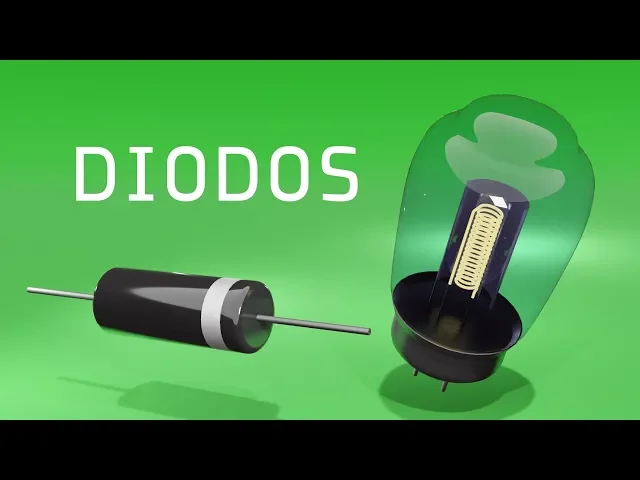
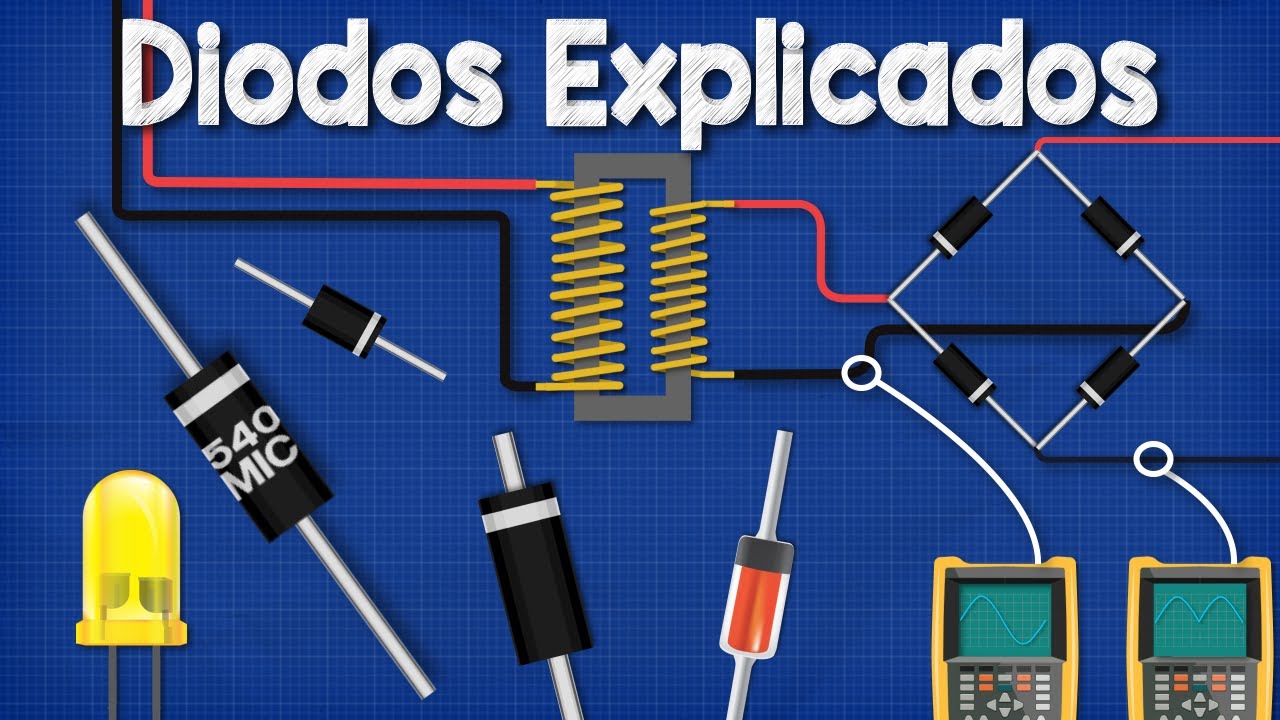
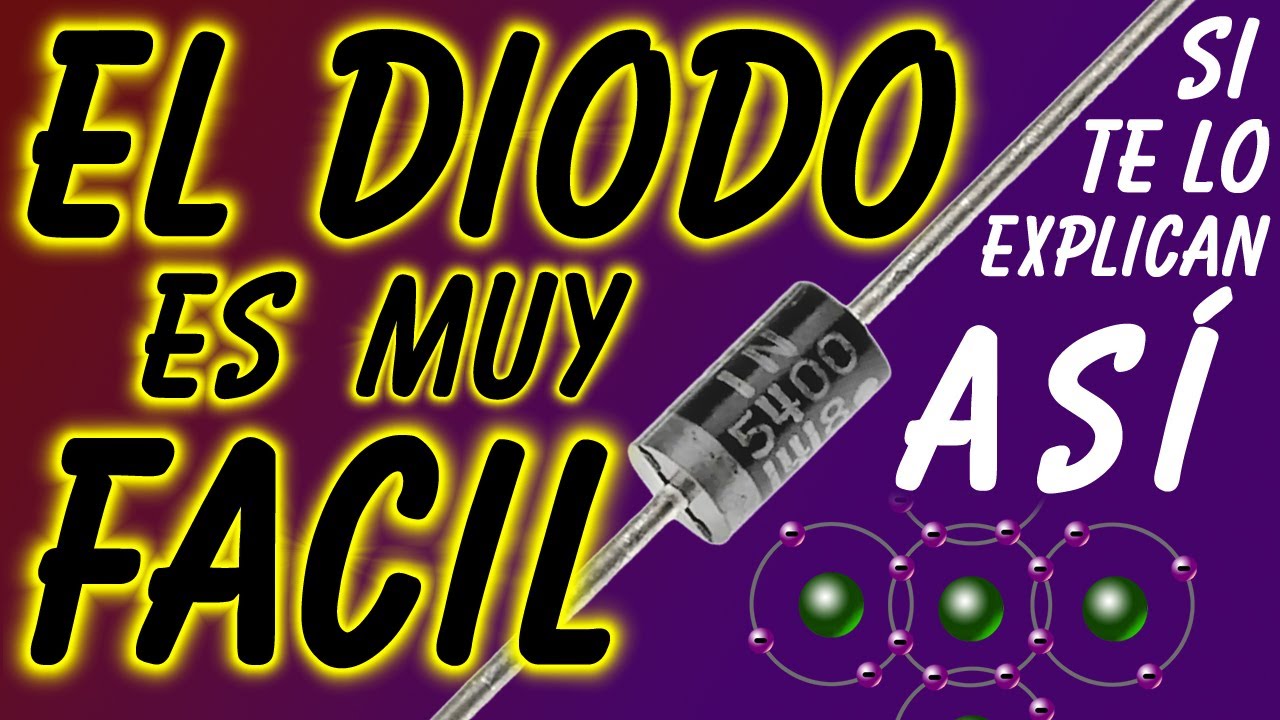
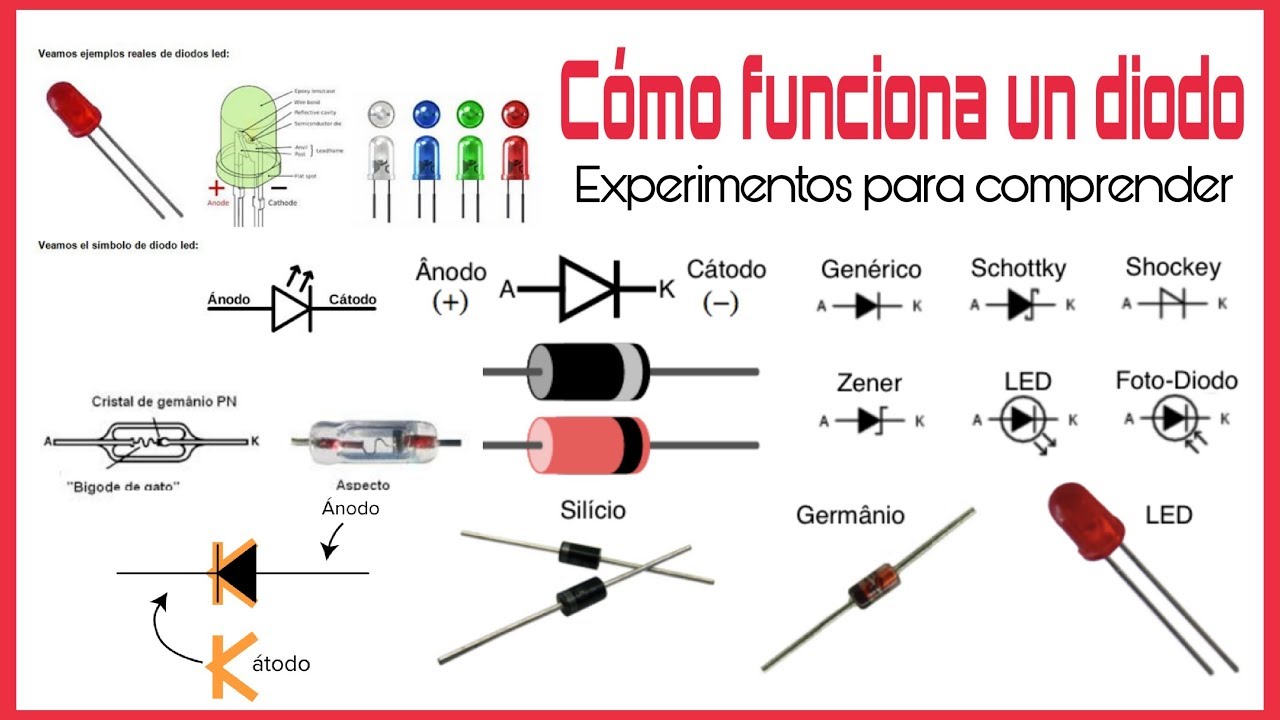
The diode is an essential component of modern electronics **English audio version available! Link in the description! and its main characteristic is that it only allows the passage of electricity in a single direction **English audio version available!
Link in the description! and maybe you have already used it **English audio version available! Link in the description!
but do you know how a diode works internally? **English audio version available! Link in the description!
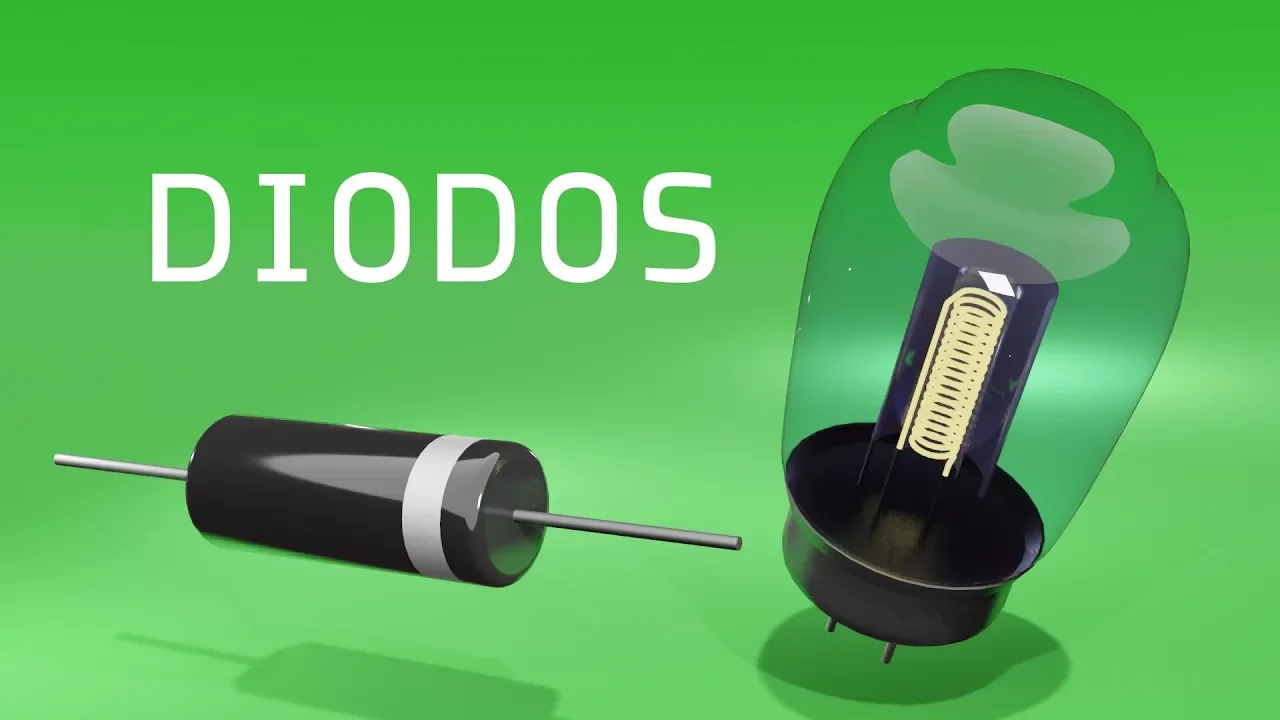
There are dozens of types of diodes but in this video we are going to focus on two the first that was invented: the vacuum diode and one of the most used today: the semiconductor diode to understand how a vacuum diode worked we have to understand a strange behavior of metals which was discovered by Frederick Guthrie in 1876 who in one of his experiments saw how at heating an iron sphere with a negative charge in a vacuum it loses his charge whereas in the opposite case when heating a sphere with a positive charge, no variation occurred this behavior which is known today as thermionic emission is because, at the atomic level are electrons, negatively charged, which can move and in this particular case, when excited by heat they are released from the material in the form of ions years later in 1880 Thomas Edison, without knowing the work of Frederick Guthrie rediscovered this phenomenon while trying to develop the electric bulb The problem that he wanted to solve was that when he turned on the bulbs, it started to get dark inside. and trying different alternatives he realized that if he put inside a metal plate positively charged the material was deposited only on this plate and not on the glass of the bulb in this configuration, since the filament was releasing electrons we will call it a cathode while on the other hand, as the sheet was receiving electrons we will call it anode in this way by having a cathode and an anode, the assembly was known as a diode But, there is a detail, it was not Thomas Edison who claimed his invention since he only saw it as a way to remove the dirt inside the bulbs it was John Ambrose Fleming who gave him the utility for which we know it today he realized that by integrating these components into a circuit the Diode only allowed the passage of the current in one direction making it an ideal component to rectify alternate signals or also as a current regulating device as the amount of charge that passed from the anode to the cathode was directly related to the system temperature But, there were several reasons why vacuum diodes were replaced they needed to be heated to function and therefore necessarily spent energy besides requiring a time to reach the temperature at which they began to release the electrons its size was relatively large having a glass dome was a very fragile component and like the incandescent bulbs their life was not very long but, with the semiconductor diodes all those problems disappeared ~ ALL ~ They are small, they do not require extra energy, they are resistant, they have a longer life and its reaction speed is almost instantaneous the way that this type of diode works is using . .
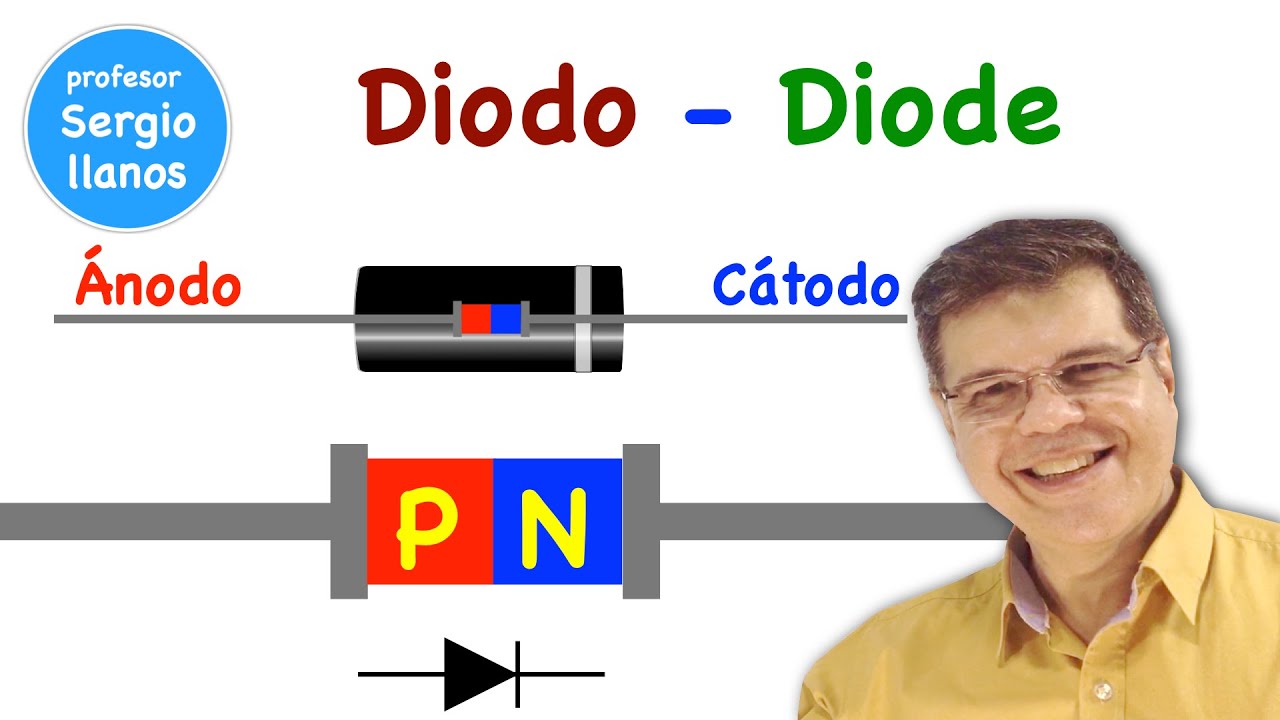
. Exactly, semiconductor materials These are materials that act as electrical insulators, but that under certain circumstances they are able to act as conductors as for example when applying a magnetic field a certain temperature or being impacted by radiation among other factors Specifically, semiconductor diodes use two semiconductors which although they have the same matrix or base material, such as silicon on the one hand a semiconductor will have an excess of free electrons and for that reason it is known as N-type semiconductor, of negative while the other semiconductor will have a lack of electrons or gaps and for that reason it is known as a positive type P semiconductor having these two semiconductors together Nothing happens but if we connect the positive pole of a battery to the n-type semiconductor nothing is happening either because the electrons are going to try to move towards the positive terminal and therefore there will be no current flow through the diode Now, if we reverse the connections, the electrons are going to try to move in the opposite direction and they will pass to the P-type semiconductor Note: Whenever it exceeds a voltage threshold, generally 0.