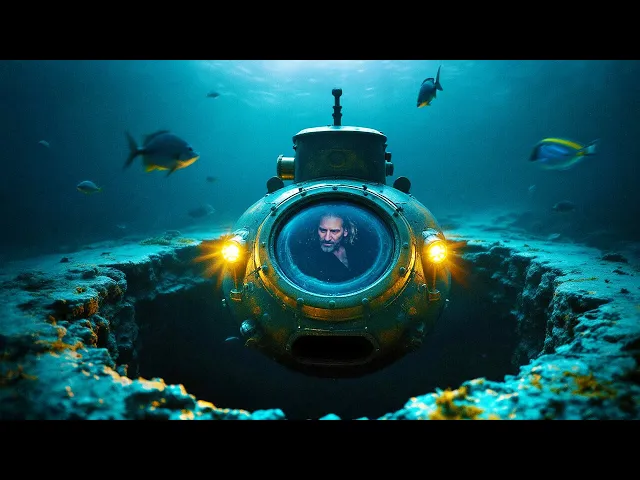
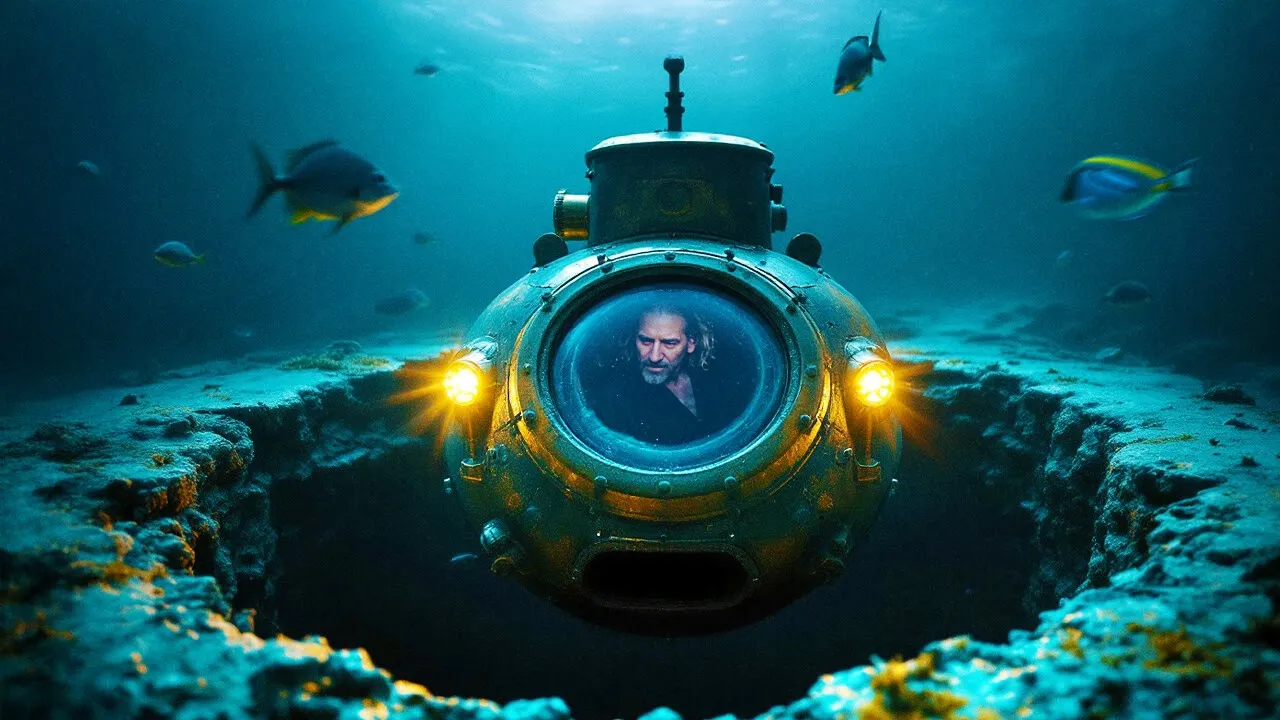
so think about it what was the weirdest thing you've ever done for work printing hundreds of pages of useless reports or unknotting Holiday Lights well there's a scientist out there who spent 100 days below the surface of the Atlantic Ocean Dr Jose of Deering or rather Dr deep sea as he likes to call himself was living underwater as part of project Neptune 100 this project is a long-term study of how compression affects humans both physiologically and psychologically Dr deep C who's a biomedical engineer and University of South Florida associate professor went under the sea to
see if increased pressure can help humans live longer and prevent health problems that come with old age from day one of the mission Dr deturi was actively sharing what was going on in his social networks he mentioned that another important goal for him was to inspire scientists from different generations to study life under sea after 74 days of the mission he officially set a new Guinness world record for the longest time living in an underwater fixed avitat but he didn't just jump out on the surface after it woohoo and stayed the planned 100 days the
scientist definitely wasn't bored for those 14 weeks he collected data collaborated with other researchers virtually taught a biomedic engineering course at his university and reached out to thousands of students from 15 countries online once the mission was over Dr deturi was greeted by his family and friends the media and many fans who were following his work online Dr deep sea is now 55 years old and he claims that living underwater has really made him feel 10 years younger the doctors who greeted him and the results of the test they have so far prove the daging
effect our hero has some improvement in his sleep and Metabolism he also noted that his body had shrunk a half an inch wow 2,300 more days and he'd be a foot shorter maybe yeah probably not if you want to try a light version of what Dr deep C has gone through you have two options the first option is hyperbaric oxygen therapy you go inside a special chamber where the air pressure is higher than normal it helps more oxygen get inside your lungs it has a healing effect on your body too much oxygen can be a
bad thing though so these Chambers must follow strict regulations you can also stay in the exact same place where Dr duri lived it's called juwes undersea Lodge after Jules ver the author of 20,000 Leagues Under the Sea it's a two-bedroom apartment located 30 ft below the surface of a lagoon in kargo Florida don't worry your prospective home Won't Sail Away it's attached to the seabed by leg structures there are three windows with a direct Ocean View and some marine life outside a lot of it there's also a command center that keeps oxygen water and power
levels under control an air conditioner keeps the temperature comfortable and a chef Dives in to cook meals for the guests upon request now you can't just dive in to see if they have a spare room though there's some paperwork involved for each guest and you'll have to put on some gear and leave it in the wet room before you get into the nice and comfortable apartment as for Dr deturi he doesn't plan to stop his studies of how humans can survive in isolated environments he's going to take a flight on a modified airliner where you
can experience zero gravity multiple times something not for the weak of stomach it's the next step to his dream of becoming a civilian astronaut and traveling into space by 2026 Dr deepy wasn't the first scientist to stay alone in an unusual setting for research purposes Italian sociologist morito mobini had spent a total of 2 years and 8 months in caves to see how the human mind in body would cope with complete isolation he started his experiments in the 1980s at the end of 1986 he entered a cave in the appenine mountains near aana in Italy
he would only get back on the surface 210 days later which made him the world recordbreaker for spending the longest in complete isolation at that time Montel beanie survived on a high calorie diet of powdered foods and pills much like those that astronauts use on space flights scientists monitor his health using special tools from the outside of the cave marito would later break his own record and he shared that the only way to do it was to make a friend of solitude instead of fighting it he did his experiments in collaboration with NASA and universities
around the world and prove that isolation affects time perception and sleep an interior designer from anona was so inspired by the experiments that she volunteered to take part in a similar one herself in 1989 Stefania folini spent 4 months in an underground room 30 ft down in the LOF cave in New Mexico the experiment was on circadian rhythms those 24-hour cycles that are part of your body's internal clock stania had no natural Clues on what time or day it was soon enough she stayed awake for more than 20 hours and slept for 10 hours at
a time so her biological clock changed into a 48-hour day CLE she stayed entertained down there thanks to a guitar a computer two friendly mice some frogs and some grasshoppers she decorated the cave with cutouts from cardboard when she got bored and did Judo to stay strong and flexible once the experiment was over the scientists who greeted Stefania asked her to guess what day it was she felt like it was the middle of March but in reality she went out of the cave on May 22nd so she lost the perception of time and 17 lb
her meals were super spread out because of her new regime and because she mostly ate beans and rice she had a shortage of vitamin D you know that feeling when your parents tell you something all the time and you wish you could prove them wrong well it drove Dr Donald uner into an unusual scientific experiment he cracked the knuckles on his left hand twice a day for over 50 years he didn't get any terrible health conditions unlike what his mother told of course that evidence can't be enough to prove or disprove this common belief but
there are other studies that show the same results reene grees a biologist from British Columbia Canada decided to ignore the wisdom we all know sleep tight don't let the bed bugs bite and let bed bugs bite her around 180,000 times all for science she did it to test and find the most effective compounds to attract and trap bed bugs once those little unwelcome guests get inside your building making them leave can be tricky and cost a lot the biologist together with her team decided to see if baiting traps with pheromones could help lure the bugs
and detect their Gatherings before they multiply they were missing one puzzle piece the compound that bed bugs use to determine that a particular habitat is a safe place for them to settle and that's how gree became bait for bed bugs her team managed to find that the compound they were looking for for was histamine which humans produced during immune responses the researchers believe this means they can produce really cheap chemical traps for those little pests Dr Kevin Warwick former professor of cybernetics at the University of reing became the world's first real cyborg he connected his
own nervous system to a computer to see how technology can change Healthcare he implanted a device in his left arm to transmit his own neural signal to a robotic hand and control it the scientist believes implants are the ideal solution for people with neurological problems as they can control objects just by thinking about moving and it doesn't have to be only about treatment this Tech can help all humans open up a huge potential if we link up the human brain to a computer or AI system that's it for today so hey if you pacified your
curiosity then give the video a like and share it with your friends or if you want more just click on these videos and stay on the bright side