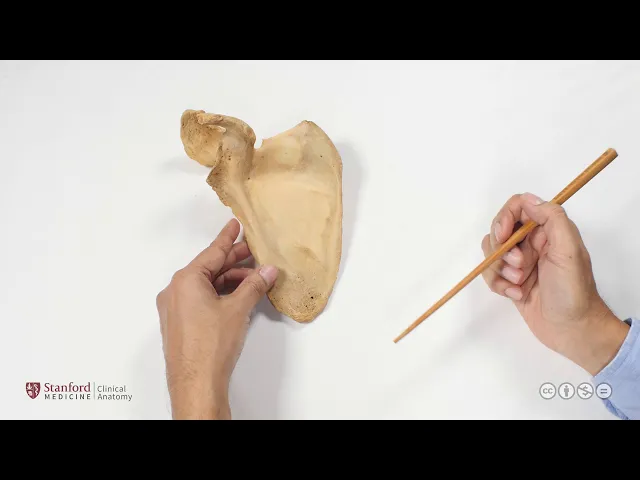
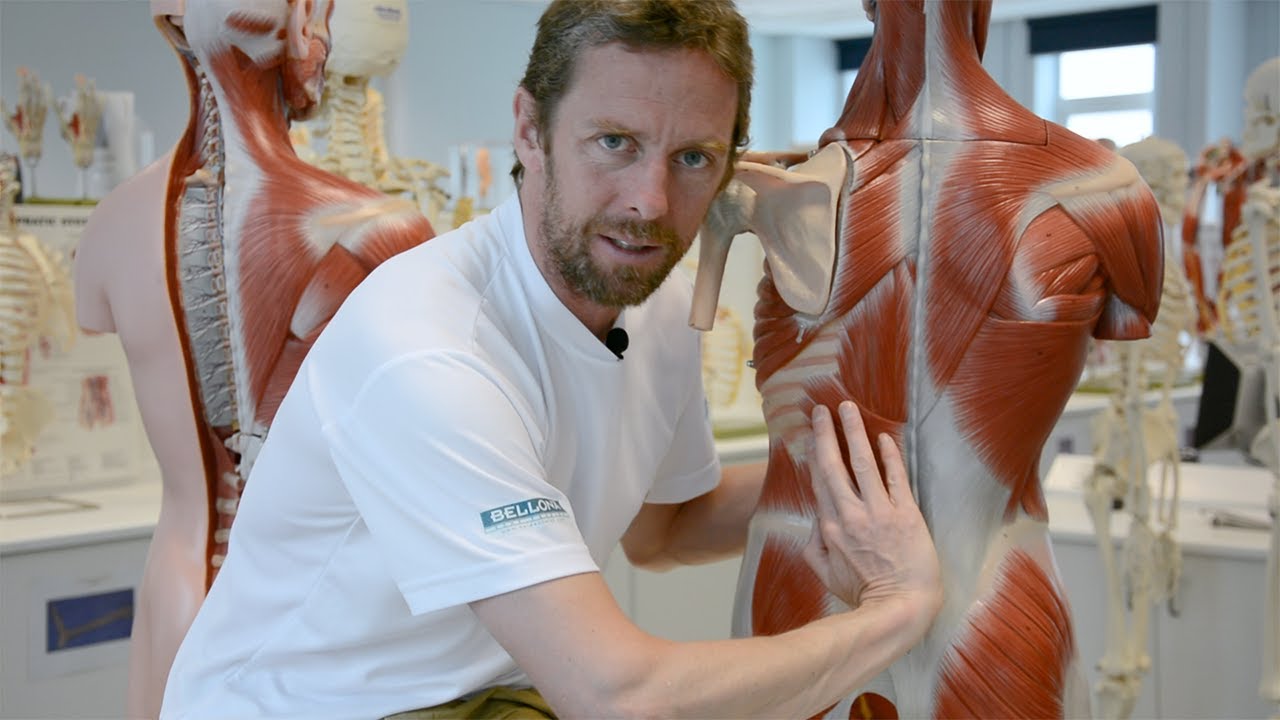
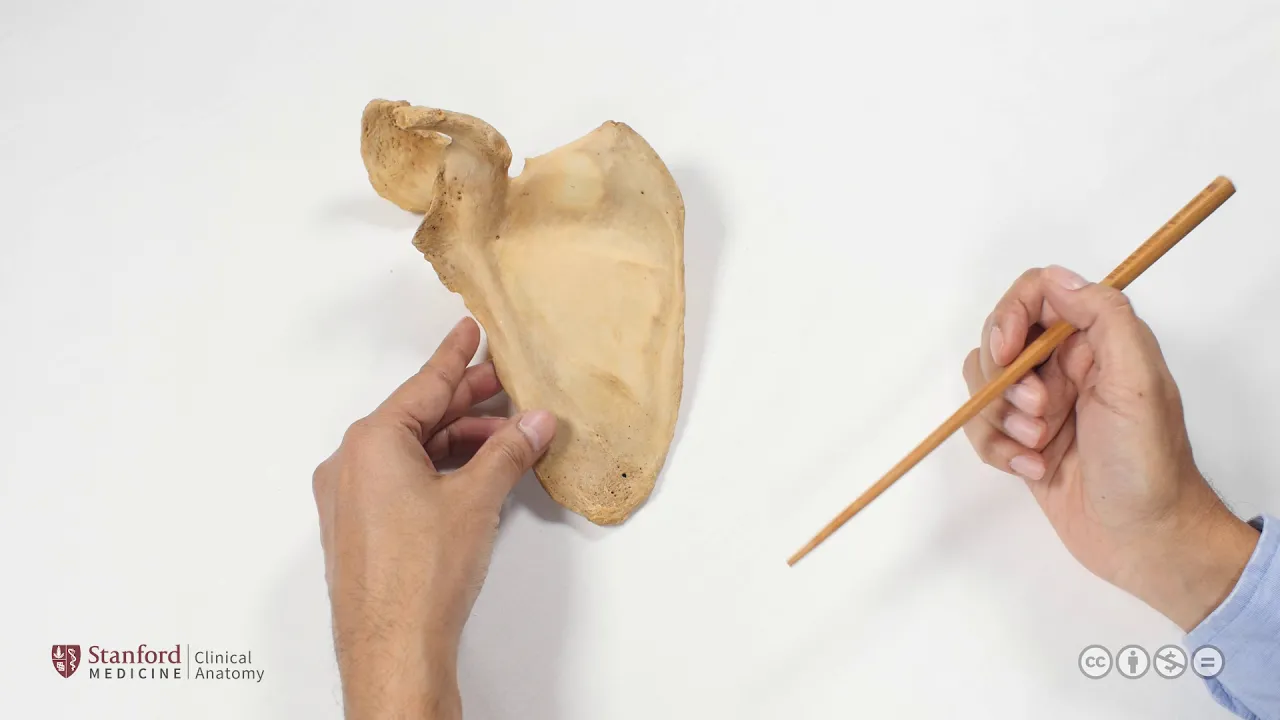
[Music] here we have a specimen of a right scapula note that this is a very flat triangular bone and we're looking at the anterior surface of the scapula the scapula has a fairly prominent medial border as well as a lateral border and these two borders come in unite at the inferior angle superiorly the scapula has some prominent bony projections the first one is the coracoid process which is seen here it's a beak-like projection and hence the name coracoid which suggests Ravens or a Crow's beak here we see the glenoid cavity which is a rather of
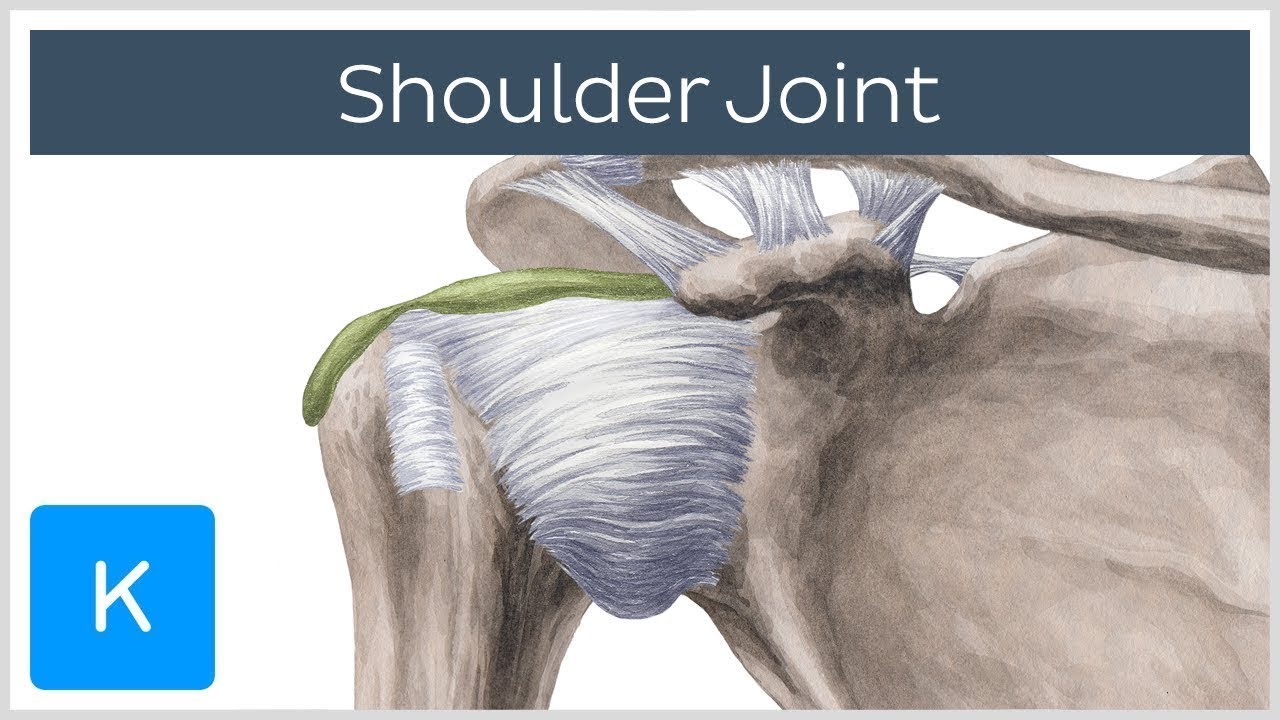
shallow cavity which articulates with the head of the humerus to form the glenohumeral joint or the shoulder joint proper if I rotate the scapula around we see the posterior surface of the scapula and we see this prominent bony ledge known as the spine of the scapula the spine of the scapula extends laterally to form the acromion process over here which is overhanging the glenoid cavity the spine of the scapula divides the posterior surface into two parts an upper or superior smaller component known as the supraspinous fossa and a much larger infraspinous fossa below the spine
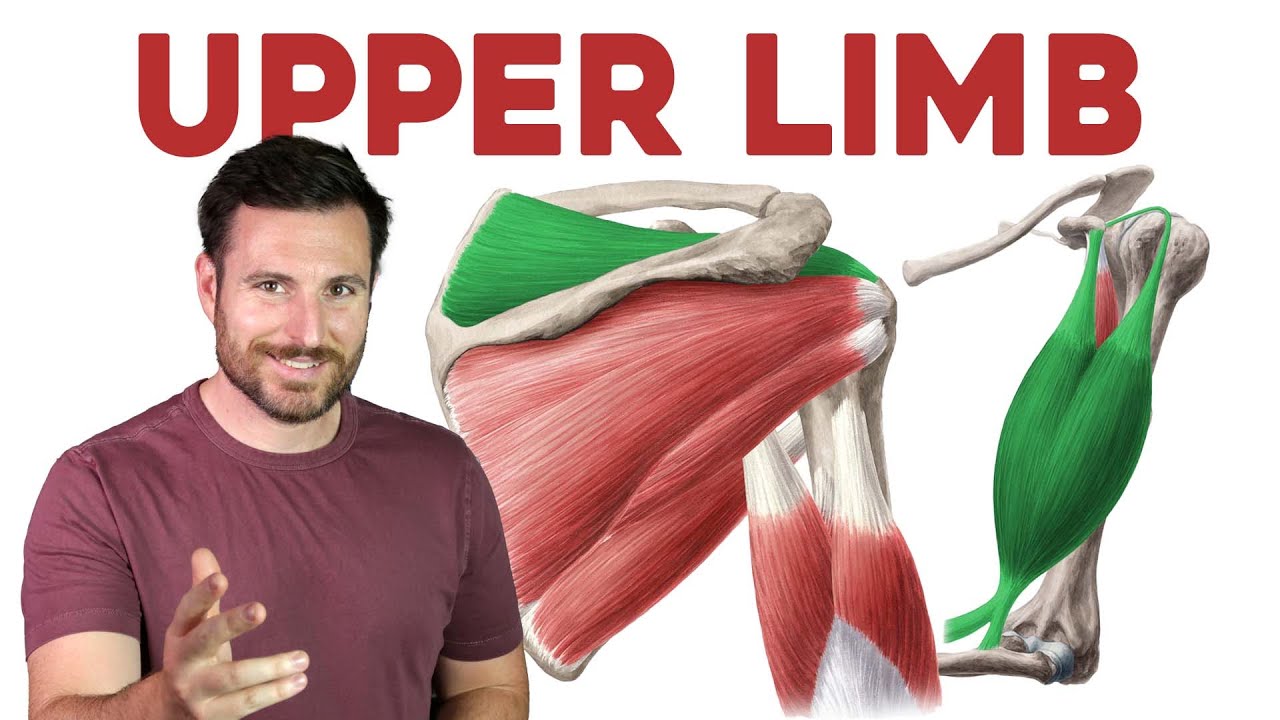
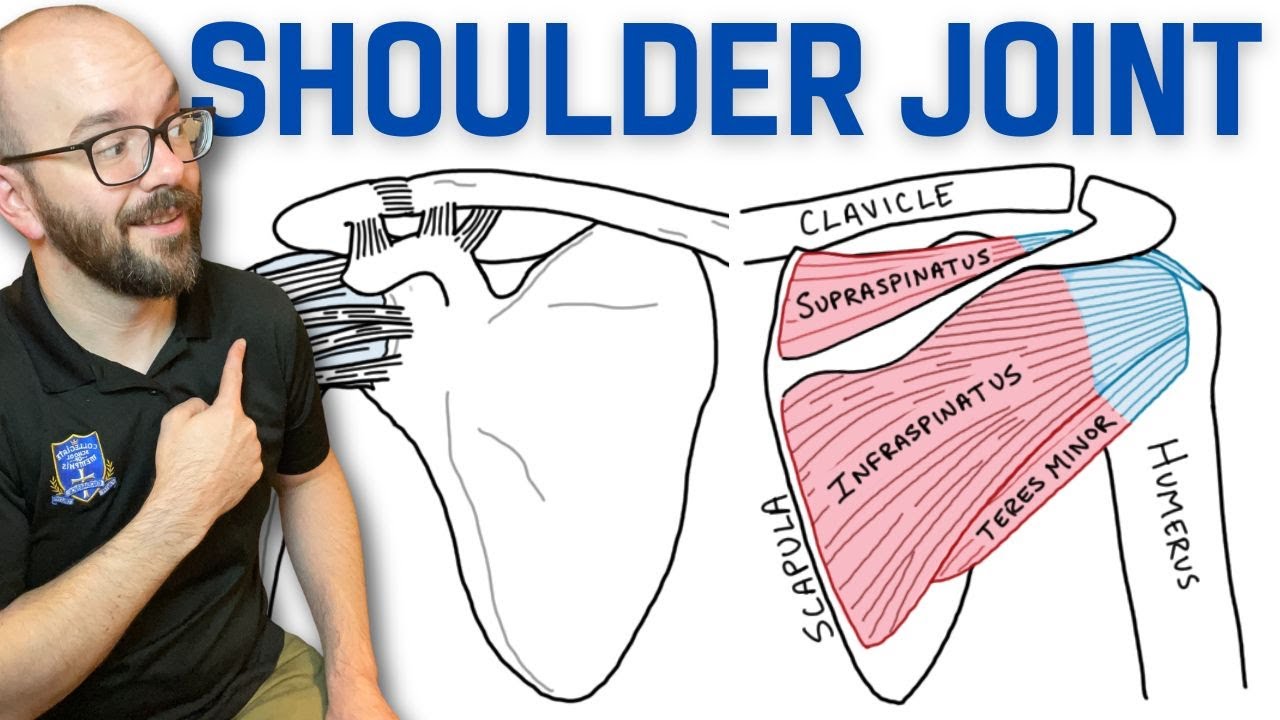
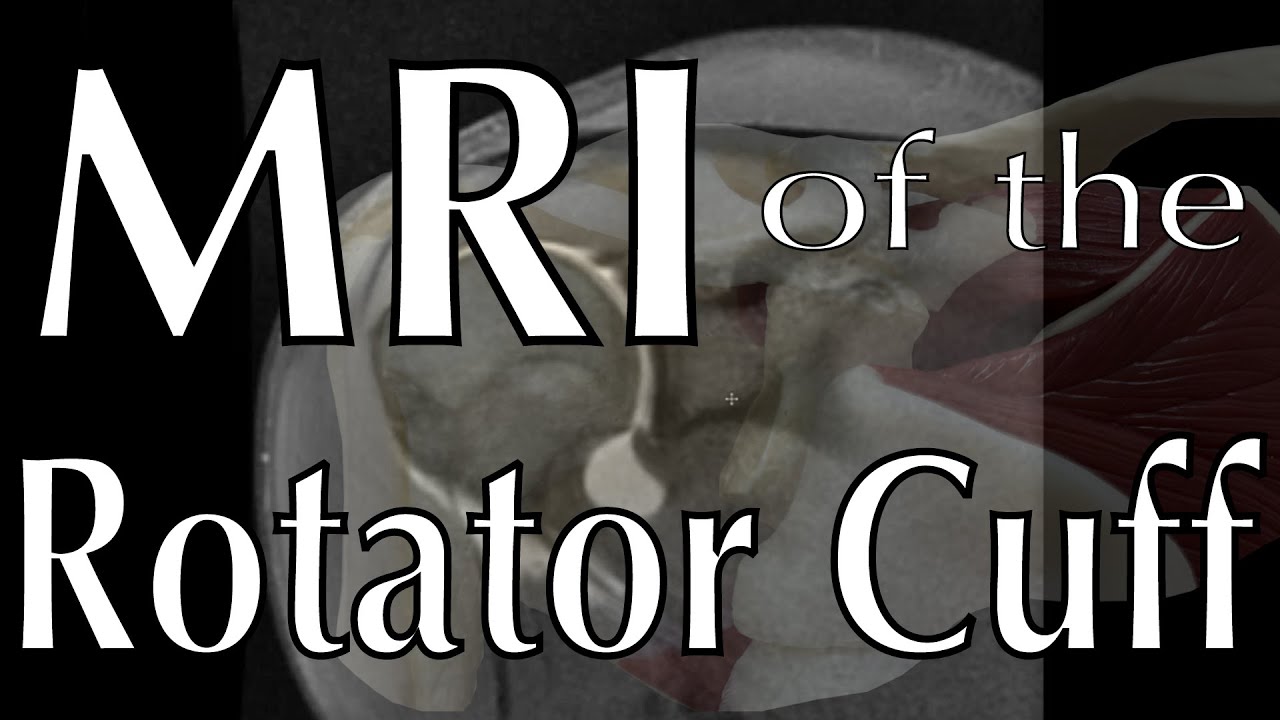
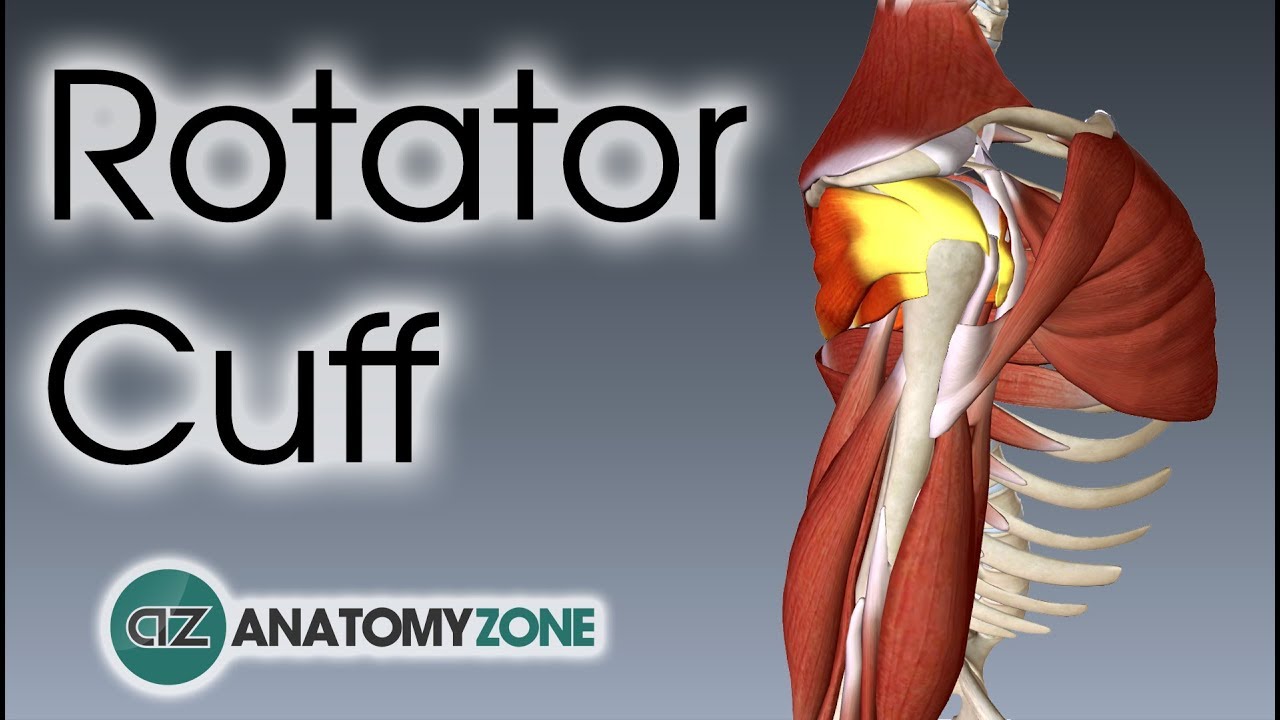
of the scapula next we will consider some of the muscles that attach to the scapula and we'll begin by looking at the muscles that make up the rotator cuff there are four muscles the first one is known as the subscapularis and it is seated in this area of the scapula on its anterior surface the fibers of the subscapularis muscle go laterally and attach onto the humerus specifically the lesser tubercle of the humerus the other three muscles of the rotator cuff can be seen from a posterior vantage point the muscle which is situated in the supraspinous
fossa is the supraspinatus muscle and the fibers of this muscle cross the glenohumeral joint and are attached onto the greater tuberosity of humorous the third muscle is below or inferior to the spine of the scapula and is known as infraspinatus this is a large muscle and it's fibers also cross the glenohumeral joint and are attached on to the greater tuberosity of the humerus the fourth and final muscle from the rotator cuff series is a small muscle known as the teres minor which is attached in this area and it's fibers also cross the glenohumeral joint and
are attached on to the greater tuberosity of the humerus there are several other muscles that are attached on to the scapula that do not participate in the rotator cuff on the anterior side we would see a muscle on the medial border here known as the serratus anterior muscle this muscle attaches on its other end to the first or the top eight ribs and participates in rotational movements of this capulet there are several muscles that we would see from a posterior vantage point on the medial border going from the superior to inferior direction we would find
the muscles that stabilize the scapula and they are called the levator scapulae which will be attached here the rhomboid minor which will be attached here at the place where the root of the spine of the scapula is situated and then the rhomboid major which would be situated along here on the medial border of the scapula there will be one other muscle that would be seen more laterally and it would be attached on to this area on the posterior inferior part of the scapula known as the Cherry's major and this muscle also goes laterally and has
its attachment on to the proximal humerus and then finally we have a muscle that has a very small attachment but it's a large muscle the latissimus dorsi which is attached here onto the inferior angle of the scapula and it makes its way also onto the proximal part of the humerus so those are some of the muscles that find attachment on to the scapula I started off the description by saying this is the right scapula and we can now confirm that side whether it's the right or left by looking at the features so we know this
is the anterior part of the scapula because the posterior part of the scapula has a ridge known as the spine of the scapula and when we look at the anterior surface of the scapula we know that the glenoid cavity needs to face laterally so this is the glenoid cavity and it must be facing laterally so if this is the anterior surface this is facing laterally the only other thing we need to know is which is superior and which is inferior and clearly these bony projections are superior and this is the inferior angle and so we
know all of those features this can only be the right scapula here we have the clavicle bone note that it is a lazy s-shaped bone and it has a flat end which is seen here on this side and a very rounded end seen over here the rounded end is the medial end of the clavicle which has this extension which articulates with the sternum whereas the lateral end is flattened and it articulates with the acromion process and because this is the lateral end that I'm holding and this is the medial end we also know that this
convexity faces anteriorly which is good because the clavicle is convex in its more medial aspect and the concavity facing anteriorly is seen in the lateral side so this is the clavicle of the right side and the lateral end of the clavicle articulates with the acromion process of the scapula as seen here so this is the acromion process of the right scapula and the right end of the clavicle is articulating with the acromion process as seen here in this situation note that there is roughly a u-shaped appearance around the spine of the scapula on its external
border and also the lateral border of the chromium that extends then onto the lateral side of the clavicle on it on anterior aspect similarly there is another you that is formed by the inner side of the spine of the scapula and the acromion process and this extends on to the posterior part of the lateral end of the clavicle there are important bony important muscular attachments on both of these u-shaped areas of bony attachment the one that is around the inner side is the site of attachment for the trapezius muscle and the outer you which is
seen around here is the site of attachment for the deltoid muscle if we turn the clavicle around we can see the inferior surface of the clavicle over here in contrast to the superior surface which is very flat the inferior surface has some bony ridges and a projection seen here it's also got some roughened areas of the bone more laterally this bony projection is a site for some ligament ligaments that attach it to the underlying coracoid process in its normal articulation as seen here one can imagine where the ligaments might extend between the undersurface of the
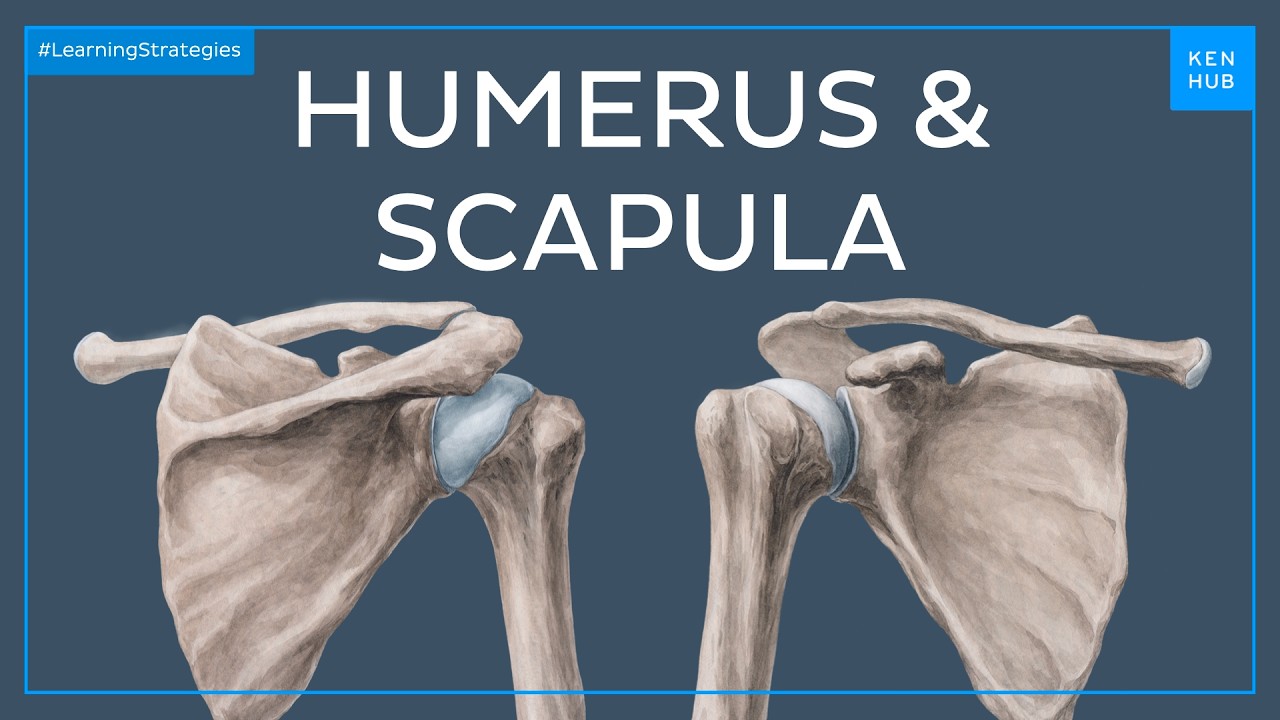
clavicle and the coracoid process here we have a right humerus which is the single bone of the arm we're looking at the proximal or superior end of the humerus which continues down as the shaft and then finally we have the distal end here that participates in the elbow joint let's begin by looking at the details of the proximal end which articulates with the scapula seen here this is the hemispherical head of the humerus note it's smooth curved surface and it articulates with the glenoid cavity of the scapula as seen here the head of the humerus
is attached to the remainder of the bone at what is known as the anatomical neck of the humerus which I'm pointing out here and this runs circumferentially all the way around and all the way around till we got back to the point we started off with which is the anatomical neck of the if we continue down more distally we find two bony projections one is here and then the other one is here the larger one is known as the greater tuberosity the smaller one and the one that's more medial is known as the lesser tuberosity
and in between the two the two tuberosities we have a groove which is known as the intertubercular groove and they're important structures that go through this intertubercular groove from the area of the shoulder joint and into the arm once we go a little bit more distal to the tuberosities this area of the bone becomes narrowed and it continues down as the shaft at this point this area here that I'm pointing out now circumferentially and I'll rotate this all the way around this area that I'm pointing out is now is known as the surgical neck of
the humerus and it has some very important clinical significance because of the blood vessels that are in this location as well as some important nerves if we look at the glenohumeral joint in its anatomical orientation here note that the greater tuberosity which is here hits against the under surface of the acromion as the humerus AB ducts and this is one of the reasons for cause of shoulder pain because of what is known as impingement and compression or irritation of some of the soft tissues that sit in this area such as components of the rotator cuff
[Music] you