Good morning, everyone! I'm Andrea Leali, chef of Casa Leali and we're here today inside the lemon garden La Malora in Gargnano, the last lemon garden. It's the only one left today still producing the first and native variety of lemons from the Garda lake, meaning the Madernina lemon, a very small lemon with a thin skin, very fragrant, and inside this lemon house there's centennial trees that are still productive today, obviously planted in the ground and supported by these chestnut tree structures that help the plants support the weight of the fruits when they're in the harvesting season.
This productive lemon house is run by Fabio, also called the lemon monk. He's the only person managing all of this, which includes the seasonal covering and uncovering of the plants. During the summer he unnails and remove a whole ceiling and in the winter he nails it down and covers the whole lemon garden to put to rest the fruit trees.
We're now moving from this magical place and going inside the kitchen of Casa Leali to prepare two amazing recipes based on and themed around lemons. Welcome to Casa Leali, in my restaurant on the Garda Lake in Puegnago. We're on the hilltops of the lake, on the Brescia side.
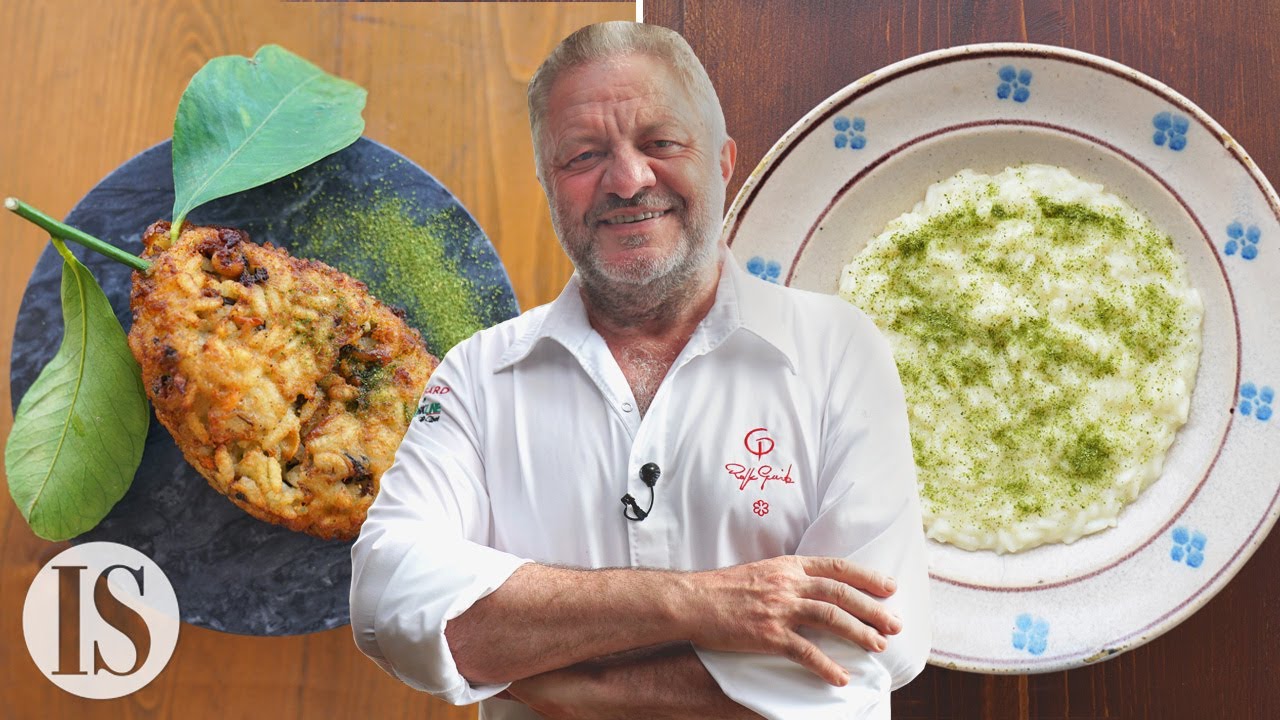
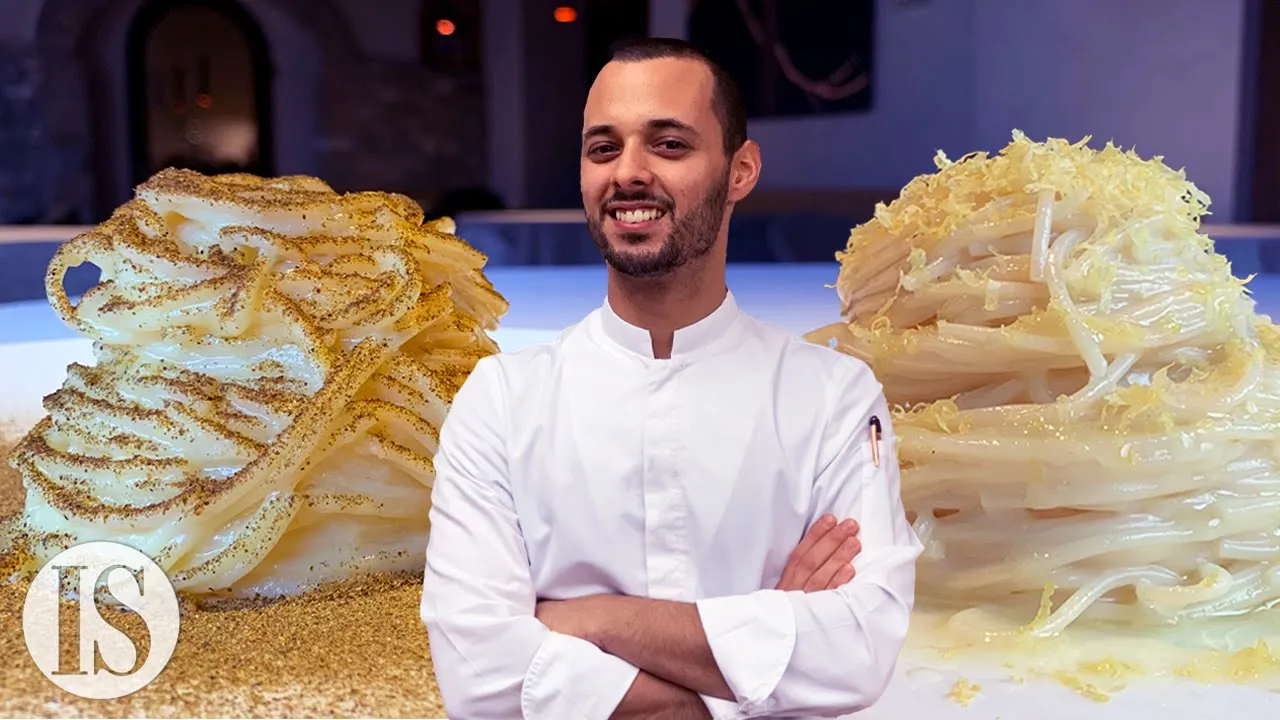
In this restaurant, built inside our family house. What we're going to make today is two versions of spaghetti with lemon. One is more classic and takes inspiration from a master, Pepe Guida, and the second version is developed by me and my guys, where we're going to use the fruit in all of its parts to deeply exalt it.
For the original spaghetti, meaning the classic recipe, among the ingredients we'll need: for the lemon broth, water, lemon peels, lemon leaves. For the lemon oil, instead, the lemon peels and grapeseed oil, spaghettini, Parmesan, butter and extra virgin olive oil. We're going to start from the first recipe, the more classic one, with the first passage, very simple: we're creating the broth that we'll need to cook the pasta.
Let's fill the pot up with cold water and turn our flame on. Let's collect some lemon leaves, obviously cleaned, and we're adding the lemon zest as well, so we're using a potato peeler. 4 zests are enough.
We're adding around two liters of water and we're also adding a part of the lemons we might have used in the kitchen for other preparations. We extracted the juice, so we're not discarding and throwing them away, but re-using them inside the broth. We'll need around 35 to 40 minutes to make the broth.
It's a preparation we can also make a day in advance. Once it's made and then filtered, so it's obviously cooled down, we can easily store it in the fridge. We're adding salt to the water, so once the broth will come to a boil, as it boils vigorously we're turning the flame down, so the bitterness in the broth is much more balanced and mastered.
And we're creating our lemon oil. We're adding the lemon zests to any blender or even a hand blender. We're pouring the grapeseed oil directly in and we're then blending at the maximum speed.
Once our oil is blended and we allowed it to rest for 15-20 minutes, we're filtering it simply, using a sieve and with the back of a spoon we're helping it by pressing onto the net of the sieve, as to collect all of this yellow gold that the lemon gifted us with. Here it is. We're keeping it on one side, and in case we're not using it all for this recipe, we can also store it in a jar in the fridge.
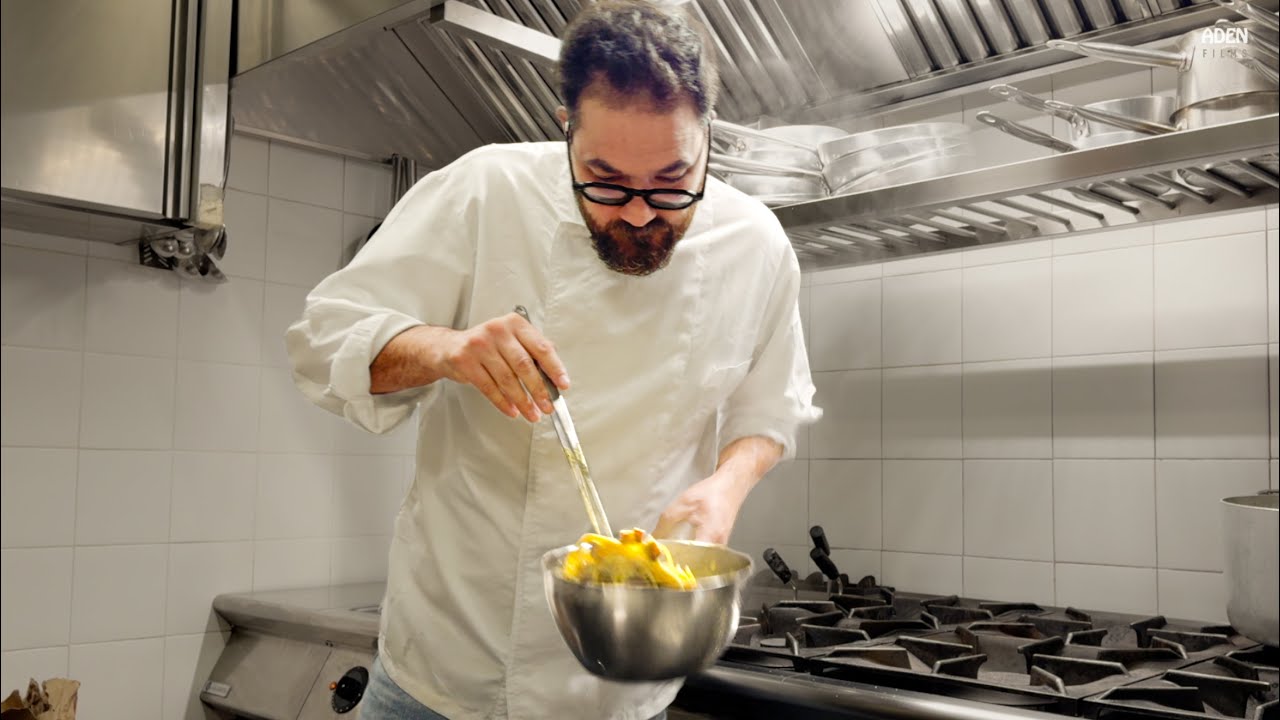
In this moment, we're getting ready, so we're going to throw the spaghettini in the water, cooking them, though, for half of the cooking time, so in this case we'll have six minutes cooking time, so we're going to simply cook them for three, three and a half minutes, then we're straining our spaghettino, also keeping a bit of the cooking water. We're going to cook it as if it was a risotto, so we're moving it on the pan, heating our broth lightly up. We're not filtering it, but keeping it as such and start cooking our spaghettino as a risotto until it is done, so we're adding two generous ladleful of broth and lowering the temperature.
An important phase for the spaghettino, as we're cooking it as a risotto is to not touch it. The water made it more tender, but did not completely cook it, so if we were going to touch it, we would break it. After the time, meaning two minutes, passed without us touching it, we can start helping ourselves with the tong, so as to distribute all of the starch that we'll need later in order to cream it.
We're adding a drop of broth more. There's just 30 seconds left, and we're creaming it away from the flame. We're taking our oil and pouring a generous dose.
It will help a lot also in adding fragrance to the pasta. We're adding 4 small cubes of butter, around 20 grams, and the Parmesan as well. In this case, we're using a 30 months aged one and we're creaming it.
Once we creamed it and the fats completely melted inside the pasta, let's not worry if we're obtaining a compact consistency. We can help ourselves with a bit of broth to correct this consistency, so as to get to a perfect creaminess. And we're going to obtain the consistency that we need and getting ready to plate.
We're rolling it up on the ladle, bringing it to the front and in the center of the plate, finishing it with some grated lemon on top, abundant and fresh. We're then finishing the dish up with our lemon oil, so as to give even more freshness and liveliness to the dish. So, here is my classic recipe for spaghetti with lemon, fresh and quick, very easy.
Let's then move on to the second recipe, the bit more complex one, with some more detail. This dish was born out of a real and tangible need: here at Casa Leali we're buying more lemons than potatoes, so we end up having excessive zesting and squeezing, and pulp used for other preparations. We then asked ourselves how to use and really value them at best, so we took inspiration from a Moroccan recipe, cured lemons, so we could have a lemon that is used in all of its parts.
We'll need these ingredients: the same broth we used for the original recipe, the zests and ends and squeezed lemons that we carefully kept on one side, coarse salt, butter, Parmesan, extra virgin olive oil, always our variety, casaliva, spaghettini and pulverized lemon leaves, that is nothing but the lemon leaves fallen from the tree, collected and dried, pulverized, then passed through a sieve, and we'll obtain this powder that is very balsamic and fragrant. The first phase of this recipe is the preparation of the cured lemons. We're filling the jar with salt on the bottom, and once we created a bottom layer, we'll start adding our lemon quarters, also keeping the small stones, we're keeping everything and again, we're covering them with salt so it can seep through all of the fissures and we're finishing it by adding up to fill the whole jar with the lemon cuts.
Salt again, up to the brim, then we're closing it and shaking it lightly so that the salt goes in, and we can see if more salt is needed. Once we obtain this result, we're placing it back in the cupboard, in our cellar, or anyway, in a cool and dry place for 40 days, so that the salt can seep completely through and make our pulp very soft. For practical reasons, at the restaurant we make this operation directly in vacuum bags - it's more practical and since we produce more quantity, we need a storing system that takes up less space.
We're opening the bag and placing them in a bowl or container and washing them from all of the salt, that needs to be removed, then we're placing them under warm water and washing and removing the most of the salt. We're removing the water, and so the excess salt. In case it's needed, we can repeat the passages and then we're keeping them in water in the fridge for at least one night.
We're then blending the lemons that we cleaned and strained, perfect, and we can collect this and put it in jars as well, storing it in the freezer. And while the broth gets to a boil, we're throwing the pasta in, cooking it for the same amount of cooking time as before, meaning three minutes. I'm straining it and keeping some of its water.
Our by now famous broth, and we're cooking it for two or three more minutes, and before the final minute we're adding he lemon pulp we made before. The bubbles are getting thicker, so the starch is developing. One last drop, and we're adding the lemon pulp.
Let's lower the flame. Once we added it, we're diluting it with very little broth, incorporating with the pasta. The addition of this pulp will give us the feeling of a thickening and creaming already, as the lemon is a fruit rich in pectin anyway, so it will give us a very velvety texture to the bite.
Let's turn the flame off and start really creaming it, so, just like before, we're adding butter, oil, a part of Parmesan, always grating it at the moment, then once it's creamed we're getting ready to plate it. We're then rolling our nest of spaghettini, tensing it lightly and placing it in the middle of the plate. We're then finishing it with our powdered leaves, that we ground before.
Just a small dusting. Here is our spaghetto in a version 100% lemon, with our lemons from Garda. We've seen the simple, original one, easy to make at home as well, and the second, more complex version.
Trying it is a must, either at home or here, or simply come to Garda and try the products, discovering lemon in all of its parts, the oil, and why not, come and visit us! Greetings to all friends of Italia Squisita from the Garda lake!