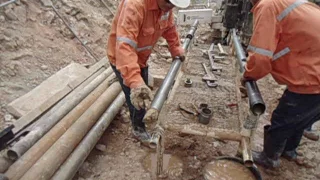
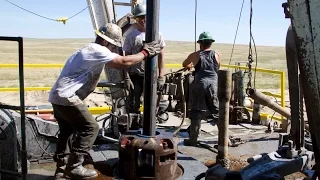
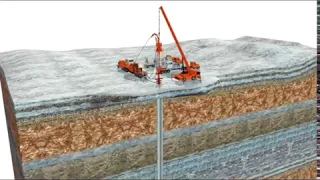
phishing services are frequently used to retrieve unwanted objects from the wellbore such as tools or equipment and twisted or broken sections of pipe or tubing fishing also includes the recovery of stuck drilling or production strings stuck drill pipe or tubing results in costly downtime and occurs all too often both in open hole and cased hole situations the causes of string sticking are numerous sand or heavy mud in the well bore can build up in the annulus to create sticking during drilling and tripping the strain can wear a groove into the high side of an open
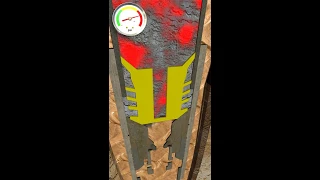
hole this groove called a key seat can lead to sticking in all types of wells differential sticking can occur when the hydrostatic pressure of the mud column exceeds the pressure exerted by a porous underground formation as the mud filter cake increases in thickness the likelihood of differential or wall stuck drill collars also increases there are other reasons for string sticking but whatever the cause the object in all cases is to determine at what point the string is stuck and at what point it is free the free point can be determined with a special electronic three-point
tool run on wireline the free point tool is securely attached to the wireline and both are small enough to be run inside the stock rope I pour tubing as the driller applies torque or stretch to the string this free point tool measures the difference in pipe stress in the section between the two fixed points the stress in the section of pipe is sensed by the down hold detector and electronically transmitted via the wireline to the surface panel where it is displayed on a readout meter the down hole free point reading is directly proportional to the
amount of torque or stretch being applied to the string from the surface after making a calculation to estimate the stuck point experienced wire line operators begin taking readings slightly above the calculated stock point as the stuck point is approached readings will decline until the detector is in the totally stocked section of the string indicating no pipe movement through this method of data interpretation a skilled wireline operator determines the free point precisely only by combining all of formation with specialized training and experience can the expert operator compensate for various down hole conditions to determine the actual
free point Weatherford's unique free point detector the home cove stress sector has several advantages over other free point detection systems the stress vector is extremely sensitive to torque and stretch it can detect even subtle movement including tension compression and right or left hand torque the ability to read left-hand torque is essential in certain fishing situations another advantage of the stress sector design is its durability it can be run in combination with string shot explosives which reduces the time involved in freeing the stuck string a new version of the home CO stress vector the stress Tector
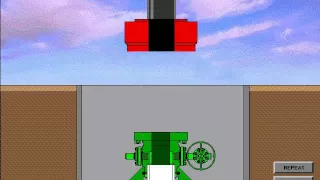
2 is being introduced for slim hole coil tubing and high temperature situations the smallest sized stress vector 2 at 5/8 inch diameter has been developed to handle pressures up to 20,000 psi and over 400 degrees Fahrenheit regardless of which detector is used once the actual free point is determined the free pipe can be removed from the well bore after backing off from the stuck section of pipe below it a back off is made by applying left hand torque and holding that torque pala controlled explosive charge placed across a connection is detonated the explosion allows the
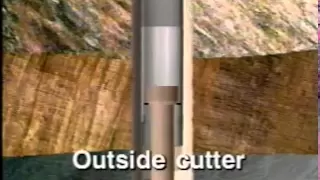
connection to be unscrewed without damaging the threads the freed pipe is then removed from the well bore it is often necessary to cut a section of pipe or tubing to remove it among the cutting tools available to Weatherford wireline operators is the chemical cutter which uses hydrofluoric acid to cut pipe the chemical cutter severs the tubing without leaving a flare or debris this eliminates the need to mill or dress the top of the fish making it easier to recover with an overshot fishing tool another cutting device the jet cutter severs pipe with a shaped explosive
charge like the chemical cutter the jet is matched to the size of tubing being cut the gem cutter is also used to cut drill pipe casing and corded or rusted fight the jet cutter leaves a flared fish top which must be milled or dressed off with a mill guide before the fish can be caught still another tool used in fishing is the severing tool the severing tool utilizes a powerful explosive charge run on wire line which violently severs drill pipe heavyweight drill pipe and drill collars when conventional back-off techniques are not possible the severing tool
is recommended only as a last resort inexpensive open hole situations such as offshore drilling operations in open hole operations special wireline tools are used to perforate multiple shots per foot in a stray stuck pipe perforations are sometimes necessary to establish circulation to the annulus or spot lubricating fluid to help free the stock pipe other specialized wireline tools are employed by Weatherford operators to aid in the removal of casing drill pipe or too many wireline caliper tools are used to measure the inside diameter of down a pipe occasionally an open hole fishing junk may be too
large and must be broken up into small pieces to be more easily retrieved in these instances a powerful explosive charge run on drill pipe is placed directly on top of the junk down hole with the shot in position at go-devil electronic charge carrier is dropped inside the drill pipe when it strikes the charge it safely fires down hole the smaller debris is then recovered this first module and Weatherford's series on fishing operations has reviewed the techniques and common tools used in wireline pipe recovery