Your life expands or shrinks in proportion to your courage. So if we understand that cultivating this virtue of courage is incredibly important, how do we go about it? What do you need to do in order to become unflinchingly courageous so as to face this thing or things in your life that are currently making you feel terrified, a little bit scared or just giving you a brief stint of squeaky bum time.
There is something in your life that you are currently avoiding because it is making you feel afraid. could be starting a new conversation with someone, having a difficult conversation with someone you already know, traveling to a new country, traveling to a new place within your country, taking a new opportunity, saying no to an opportunity that you currently have, no matter what it is, and no matter the shape, form, size, color of this thing that is making you feel afraid. What you need in order to face it is unflinching courage.
But again, how do we go about cultivating this? Well, in my experience, the way to cultivate unflinching courage is through the understanding of 10 simple but potent principles. You don't need hacks, techniques, methodologies, or prescriptions.
You don't need need me to sit here and say this is exactly what you do. Just follow this prescription. No, you need principles, things that you can understand.
And that after you understand them, they shake you into a state of readiness to face this thing with fresh understanding energy. And when you understand a principle and you unlock it, your task for the rest of your life is to simply refresh your understanding of that principle. Sorry, I have granola in my mouth.
Not anymore. is to refresh your understanding of that principle when you inevitably forget the understanding. So this is our only intention in this video.
When you finish this video, I will have achieved my task if you feel ready, slightly more ready to face this thing that is giving you squeaky bum time. Let's achieve this. Before we dive into the principles, let's first of all, Bob, let's first of all begin with a definition of courage.
Two definitions for us. First of all, courage is a love affair with the unknown. That is a very simple way to think about it.
Courage is what you equip yourself with to go out into the unknown and to get the gold from the dragon that you need to face, big, medium, or small. Final definition is courage is acting despite the feeling of fear. Another very simple definition that we're going to return to a lot throughout these principles.
Definitions done. Saucy intro done. Let's begin with the principles.
First principle to help you become unflinchingly courageous is going to butcher this in Latin. Inquillinius inventor. This is a Latin alchemical phrase which translates as in filth it will be found.
The context for this principle begins around 2,000 years ago when the ancient alchemists who were the OG scientists were practicing their field of alchemy. And what the task of an alchemist was back in the day was to work with the elements and the material of the world to combine them together so as to make new properties. And you might have heard that the story of the philosopher stone that was the prime the prima material the prime material that each alchem alchemist was striving to create and find.
And this principle comes from this journey of the alchemists striving to find the philosopher stone. And it highlights that the alchemist will likely find the philosopher stone in the place where he or she least wants to look in filth. When you look at popular culture, whether it's books or famous films about mythology, what we usually see is the hero needs to undertake the exact same journey in order to achieve his destiny or her destiny.
What the hero needs to do is to journey to each center of the world that is dark, dangerous, and full of terrors so as to face that darkness and to gain those skills from that darkness to keep them in their arsenal so as to become a better hero. But in each one of these mythological stories, naturally so the hero never wants to go to the bad lands, the dark lands, or the darkness. Why?
Well, because why would you wake up one day and say, "Do you know what? I fancy a bit of chaos. Let's go out and slay some dragons.
" The hero is always reluctant, which is why mythologically speaking, he usually requires the mage, usually in the form of the feminine, to look at the hero and communicate a very subtle signal or message. You're good, but you can do better. And you know exactly what you need to do in order to be better and to take that next step.
Find your fears and go there. But what might I find? The hero might ask the mage who's saying all of this mysterious or saying all of these mysterious things to him.
Well, the mage would reply, I'm not 100% sure, but you need to travel to this dark area of the world in order to complete this quest. In filth, it will be found. Another way of saying this, which we covered in the last video, if you watched, then you'll remember this principle.
The lessons you need are in the tasks you're avoiding. And to frame all of this in a fresh context, consider this quote from Epictitus, who was commenting on the trials of Hercules? What would have become of Hercules if there had been no lion, hydra, stag, or boar, and no savage criminals to rid the world of?
What would he have done in the absence of such challenges? Obviously, he would have just rolled over in bed and gone back to sleep. So, by snoring his life away in luxury and comfort, he never would have he never would have developed into the might mighty Hercules.
And even if he had, what good would it have done him? What would have been the use of those arms, that physique, and that noble soul without crises or conditions to stir him into action? You can only find the things that you want and the primary source of life in those things that you're avoiding.
How do you equip yourself with more courage to face them rather than me just simply saying you need to go out and embrace them? It's not very helpful. So, let's continue.
Principle number two, which is a fun one. Things are always scarier before they happen. I I came across this principle about three years ago and I'm not entirely sure where I heard it from, but I've kept it close ever since and it's never failed to be true in anything that I've done in my life.
I'm 25 now. When I was 18, I went traveling around Europe alone. Before I did that, I was terrified.
I was so nervous. I don't I had no idea how to book into a hostel. I had no idea how to start conversations with strangers in a country I've never been in before.
I had no idea how to book a train ticket in a train station where the people there didn't speak my language. But as soon as I did those things, I was like, "Oh, really? I that's what I spent all those months worrying about.
" A new example here. I'm now in Mexico and I had thought for months for months of my life. Ever since I started learning Spanish about 2 years ago, I had thought and meditated for months about the idea of traveling to Latin America.
And I always made it this huge thing in my mind that would be slightly terrifying and I had no idea if I would be able to manage. Three weeks ago when I was on the plane and I arrived here, all I could think was, "Lol, things are always scarier before they happen. If you just trust me on one thing, then just trust me on that.
No matter what this thing is that you feel scared to do, it's always going to be scarier before you actually do it. Trust me on that one. Number three, all growth is a leap in the dark.
Link to the first point about infield it will be found. The lessons you need are in the tasks you're avoiding. Facing those tasks is another way of saying growing because by facing the things that you're avoiding, of course, that is where all of the growth in your life is going to sprout from.
So when you understand the principle that all growth is a leap in the dark, you can understand that facing anything new, scary or terrifying in your life is no different from you being in this room with me now and you wanting to journey somewhere. I don't know, there's anywhere in your mind you want to journey to. And you say, "Louis, how do I get to this place?
" And I say, "Oh, no worries. Well, you're here. I can obviously let you know.
You just jump down this big black hole. " And feeling confused and frightened at the fact that you look down on this floor and you can see a huge hole that just seems to descend into the abyss. You look at me again as if to get my confirmation.
I say, "Yep, that that's how you jump. That's how you make this journey. But there's no ladder.
You said you tell me obviously and I say, "Well, yeah, of course there's no ladder. You're just going to have to jump in. " That is no different from facing anything new in your life.
And it's never going to be different from that. It's never going to be a different feeling. jumping in, not knowing how deep it's going to be, not knowing if there's going to be a cool plunge pool down within that depth to greet you into a sense of welcome or whether there's going to be a big big old rock that's going to penetrate.
No, you don't know what's down that deep dark hole. But again, as the saying goes, your fear is a mile wide and an inch deep. And combining the previous principle of things are always scarier before they happen with all growth is a leap in the dark.
You can understand that most of the time that black hole it's only going to be about that deep and you'll be prepared to jump and you'll jump. Oh. Oh well.
Uh, that was easier than I thought. All growth is a leap in the dark. To use a quote from the poet, English poet John Keats, I leaped headlong into the sea and thereby became better acquainted with the surroundings, the quick sands and rocks, than if I had stayed upon the green shore and took tea and comfortable advice.
Would you like to take tea and comfortable advice or jump into this big dark hole? That's where your growth is. Wherever the leap in the dark is, that is where your growth is.
Number four, faith in yourself isn't holding on to yourself, but letting go. In my experience of prep trying to prepare myself for something I feel I don't trying to prepare myself for something in which I don't feel very courageous towards I find myself scurrying around before I do this thing and before I face it so as to prepare myself for every possible thing that could go wrong and to try and and to try and give myself a sense of control over it. And what that makes me think is I'm gripping tightly to the experience.
I'm gripping tightly to myself, which signals a lack of trust in myself. Because although a lot of people, especially within the spiritual space, give the advice of you just need to let go. You need to stop trying.
You need to just let go of yourself. It never really sinks into you with a sense of understanding because it's very vague telling people to let go. So what does it mean?
Another way of saying let go is to cultivate more trust in yourself to be able to deal with whatever you face. In the words of the British philosopher Alan Watts, British, whatever happens, you'll probably have to improvise. And failure of nerve is really failure to trust yourself.
You have a great endowment of brain, muscle, sensitivity, intelligence. So trust it to react to circumstances as they arise. A incredible way to increase your confidence and your courage to face something that's giving you squeaky bum time is to just trust that you'll you'll be able to spontaneously react when you're facing this thing.
You don't have to run around like a headless chicken preparing, preparing, preparing, preparing because we know how that goes. It's no different from decision- making. A lot of the time we busy ourselves trying to prepare ourselves before we make a decision and trying to think about the best case and worst case scenarios all up until the time comes to make the decision.
We forget everything that we've done and we just make a snap decision. So it goes with trusting yourself. You can sit in your comfort and room and or whatever physical environment you have that gives you comfort trying to imagine in your mind how this thing is going to go X Y and Z hat and how it's all going to plan out.
Again, that's not trusting yourself. Trusting yourself is just facing it with the understanding that when you face it, you'll be fine. Good and bad.
No matter what happens, you'll be able to react. spontaneously within the moment. And best case scenario, double whammy here, when you allow yourself the opportunity to face things as they spontaneously arise, that is when you feel most alive.
We have come from a lineage, an a an ancestral, we have what am I saying? We have come from ancestors whose primary focus each and every day was to wake up and to react to stimuli as they arose. Quick, sharp, quickwitted thinking on their feet all of the time.
You already have that mechanism within your brain and your biology. You're capable to react to things as they happen without preparation. Put that trust in yourself and you'll reclaim your courage.
number five. Three more before we get into the three final principles cuz we've split them up. The three final ones are a little bit different.
Principle number five, whenever you're about to do something that is making you feel afraid, I want you to tell yourself this as a mantra. It feels scary because it's unfamiliar, not because I'm incapable. Another one I realized about 3 years ago and I've kept close ever since and has changed my life drastically, no matter what it is, whether it's approaching someone to ask for their number or just something that I'm not usually accustomed to.
You know, some of you know I I took my first sala class a month and a half ago and again I remembered this principle when I was going to that sala class or even I remember see trivial things that used to make me really afraid like taking my first s uh Spanish class. I remember that really made me nervous speaking to someone who spoke no English so I had to speak to them in Spanish the whole time. I always reminded myself this thing feels scary because it's unfamiliar, not because I'm incapable.
And it's funny actually how a lot of these principles, I didn't even realize it. They're all linking together. Because when you understand that this feels scary because it's unfamiliar, meaning I haven't faced it yet.
This doesn't feel scary because I'm incapable. You might argue, okay, but if I'm about to do something I've never done before, like a new skill, salsa dancing, learning a language, whatever it might be, of course, I feel incapable to do that thing cuz I've never done it before. Yes, I agree.
But on the other side, understanding the principle of having faith in yourself and trust in yourself to react to things as they arise within your as they arise spontaneously, you realize you are capable because no matter what happens, you can learn and pivot within the spontaneity of the moment. And finally, with this principle, panic disappears after repeated exposure. So this thing that is making you feel afraid is making you feel afraid because it's unfamiliar.
But the more you do it, the more familiar it becomes. The more familiar it becomes, the more your panic decreases. The more your panic decreases, the more your confidence increases.
Facing anything is never a lose lose. It is always a win winin. Moving on.
Number six. The fears you don't face become your limits. So when you do face them, you are freeing yourself from mental incarceration.
I put this principle down with the risk of it sounding very cliche like oh you know face your fears and all of that but I put it down to offer you a mental shift to understand that when you do face something even though you feel afraid to do it you're freeing yourself. So it is an act of selfservice. And again understanding the quote we opened this video with your life expands or shrinks in proportion to your courage.
That's why that is the explanation of that quote this principle. The fears you don't face become your limits. So the more things you avoid the more constricted your life becomes.
The more things you face, the more expansive your life becomes. And I think this highlights one more thing as well, which is you're always going to be living in a cage in life. Your mind is always going to create a cage.
It's always going to come up with new fears and it's always going to come up with new unexplored territory. But the more you face things, the bigger that cage becomes. So it becomes a case of you can never get rid of the cage.
You're always going to be in the cage, but you can control how big or small that cage is. Freedom. We're all freedom fighters.
Final principle before we finalize this video is a chapter from one of my favorite books. Hold on. I'm going to have a bit of a bit of a swig.
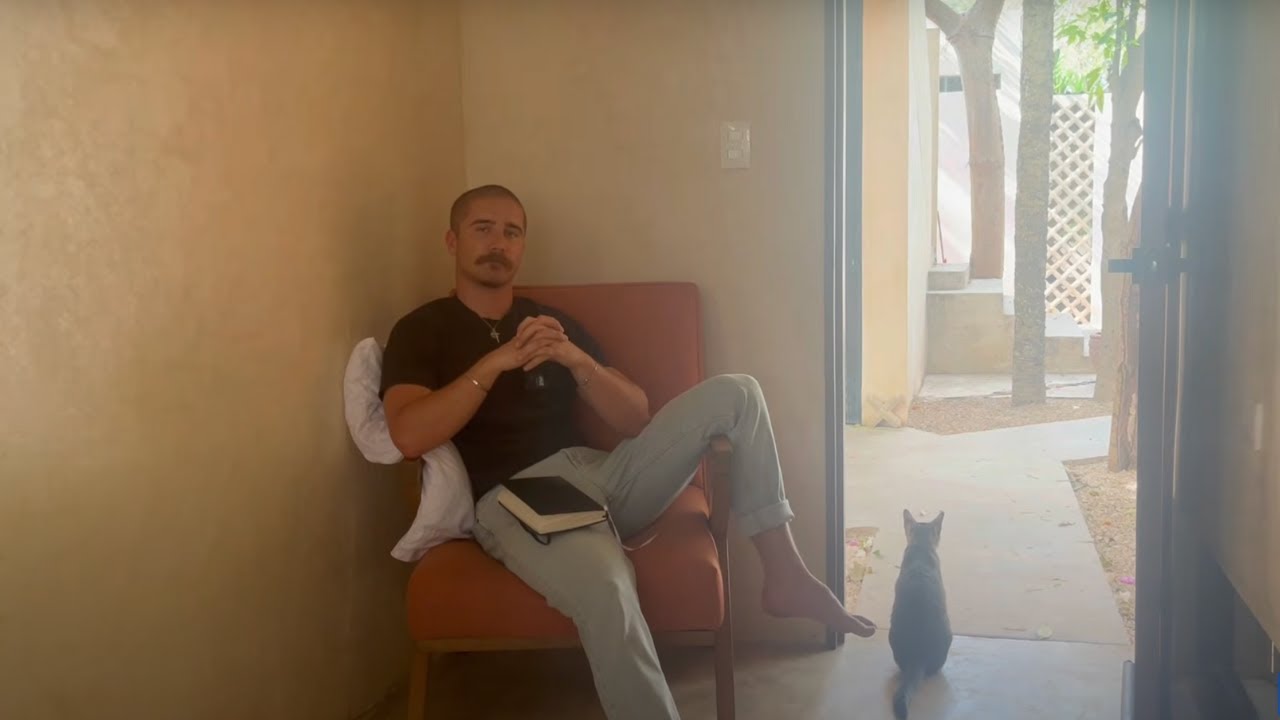
No cat today. Don't know where she is. Haven't seen her in a while.
Colorina. Hope she's all right. I've been making my own electrolyte drink as well.
Bit of lime, bit of orange, bit of honey squeezed into a big old bottle. This final principle before we get into the final final three principles is a chapter from one of my favorite books, The Way of the Superior Man. If you are a lady, do not worry.
Do not be put off by that title because there are so many principles and mental models from this book that apply to all humans. So this principle is know your real edge and don't fake it. What do we mean by edge?
Steady. Steady. Your edge is where you stop short or where you compromise your fullest gift and instead cater to your fears.
Now the chapter from this book, David Dada is the author of the book. What he goes on to explain within this chapter is the importance of building a relationship with your fear. And he says these I'm going to read out two to three quotes.
They're a little bit longer. They're going to take me about a minute to read out, but instead of paraphrasing it, I thought I'd give you the pure source. Here we go.
He says your fear is the sharpest definition of yourself. You should know it. You should feel it virtually constantly.
Fear needs to become your friend so that you are no longer uncomfortable with it. Rather primary fear. Was that primary fear or primal fear?
Rather primal fear shows that you are at your edge. Staying with the fear. Staying at your edge allows real transformation to occur.
Neither lazy nor aggressive. Playing your edge allows you to perceive the moment with the least amount of distortion. You are willing to be with what is rather than trying to escape it by pulling back from it or trying to escape by pushing beyond it into some future goal.
We continue. I had some thoughts I was going to expand, but I might as well finish. Honor your edge.
Honor your choices. Be honest with yourself about them. Now, this is the interesting part.
A fearful man who knows he is fearful is more trustable than a fearful man who isn't aware of his fear. And a fearful man who still leans into his fear, living at his edge and putting his gift out from there, is more trustworthy and more inspirational than a fearful man who hangs back in the comfort zone, unwilling to even experience his fear on a day-to-day level. A free man is free to acknowledge his fears without hiding them or hiding from them.
Live with your lips pressed against your fears, kissing your fears, neither pulling back nor aggressively violating them. Own your fear and lean just beyond it in every aspect of your life starting now. I loved that sentence of leaning into your fear allows you to embrace the present moment without distortion.
And again going back to that idea of we have evolved from human beings whose primary job throughout the day was to react to stimuli as it arose within the environment without routine without plan. Pure primal reactants linked to this we can understand that when we lean into our fears that is when we feel most alive. And by the nature of leaning into your fears, you develop a relationship with them whereby you interpret your fears as feedback for where your courage is calling you to bear your arms.
Analyze your life. What are the things I fear? There's three things in front of me right now.
These are three opportunities to cultivate courage because always remember returning to the definition of courage. Courage is the ability to act despite feeling fear. Now your fear becomes incredibly useful.
The call to arms and the call to cultivate that courage. I love that part of the book. Such a great book.
I really recommend you read it. The Way of the Superior Man. And I love the idea that a man who knows he is fearful and admits it is much more trustworthy than a man who denies that he's fearful.
I love that idea because I see it in myself as well sometimes. I think it's because I've when I was young, when I was about 16 or 17, I read a lot of spirituality books and I had it drilled into me that you should never say I you should never associate with your emotions or your thoughts and you should always maintain the rel or the perspective of the observer in the sense of don't say I am afraid you know say I feel afraid or even some people would argue it's bad to label your emotions at all because you give power to them. So, I noticed that sometimes if I'm about to if I want to face something that is currently making me feel afraid, I'll delay the process so much longer because I'm not admitting to myself that this thing makes me feel afraid.
It's probably a very machismo thing of, you know, oh, you know, I ain't got any fears. You know me, you know, fresh as a dove and all that. But now I'm realizing the complete opposite is true.
the more willing I am to admit that something is making me feel afraid. I'm not sure why, but then that then gives me permission to face it. And I now no longer lie to other people about whether something makes me feel afraid or not.
I openly admit it. Not going to lie, I'm actually quite nervous right now. Now, I had a salsa lesson the other day with a new tutor and we began a salsa lesson.
We had them dance with each other. Yeah. She's a lovely lady.
She's about 40 years old. Malefa, I can't pronounce her name, but And uh we began the session and she said, "Okay, tell you what, Louis, I'm going to close my eyes and I would like you to just lead me however you want in the dance so I can assess your level. " And before I would have said, "Okay, yeah, no worries.
" And I would have pretended that I was a lot more confident than I was. But within that moment, I said, "Wow, okay, that makes me feel a little bit nervous. " But by letting her know that I felt nervous, I then stepped into a energy of authenticity where I was in I was now working in congruence with myself.
You know, this thing we speak about so much, congruence. Your what you think, what you say, what you do, and what you feel is all in alignment. I struck an agreement of congruence with myself and it made the dance so much better and I felt a lot more humble for it as well rather than admitting not admitting that I actually felt afraid.
Went a bit off queue there. And finally, the reason why leaning into your fears works is because, to quote Mark Manson, being open with your insecurities paradoxically makes you more confident and charismatic around others, the pain of honest confrontation is what generates the greatest truth and respect in your relationships. Suffering through your fears and anxieties is what allows you to build courage.
Remember what we keep saying, your fears are the feedback that you need to pay attention to because they let you know where the opportunities in your life are to cultivate courage. So by admitting that you are fearful, you are giving yourself the opportunity to cultivate courage. If you don't admit, no courage.
Final three principles, as we always do, we need a backup plan. If none of these principles that we've covered so far work and you do face something and it goes all tits up, you know, you fail, you embarrass yourself, you make a mess, you spill milk all over yourself, whatever happens, you lose a leg, keep these final three principles in mind. It's either a good time or a good story.
I love this one because it frames no matter it frames anything you do in life as a win-win to quote the poet the Persian poet Roomie live as if everything is rigged in your favor and even just understand that understanding the simple principle of it's either a good time or a good story you give yourself more permission to try things because even if you do really really embarrass yourself and this thing goes horribly wrong. What a great story to tell other people. I've kept that principle very close in the sense of if I in the context of if I'm ambivalent towards making a decision I have allowed myself to become a lot more decisive by keeping that principle close at hand because I understand if I'm ambivalent towards making this decision usually that means no if I'm hesitating but if I make this decision anyway and it goes wrong well then I'll have a good story to tell and my next social gathering.
Number two, second to last, whenever you do fail, it is simply the price you pay for growth. That is probably the most cliche thing we've said all day. Again, I hesitated to write that down.
Anytime you fail, you've paid the price for learning. That is the way I frame failure because sometimes I I'll admit I do put a lot of expectations on myself to learn new things. For example, whether it's me learning Spanish or practicing myself skills or learning any new skill in general, no matter what I do, I put a lot of pressure on myself to do it really well, which means if I do anything less than well, I torment myself in my head.
But since understanding this principle, again, as cliche as it is, I understand that whenever I mess up, that is pushing me further towards progress. Won't comment on that too much more because don't want to make us all throw up from the clichess. Finally, failing absolutely everything that we've just covered, I would like you to understand this.
Sometimes the fear doesn't go away. So, you're going to have to do this thing afraid. Sometimes you just got to bring the fear along with you.
It's courage that he's going to push you out the door. But again, remember that doesn't mean that the fear is ever going to go away. So hopefully that allows you to develop a slightly different relationship with fear, no matter what it is you're currently afraid of.
trust in yourself and realize that we're all on this journey of cultivating more courage. And wherever your fear is is your opportunity to cultivate that courage. I got my dogs out.
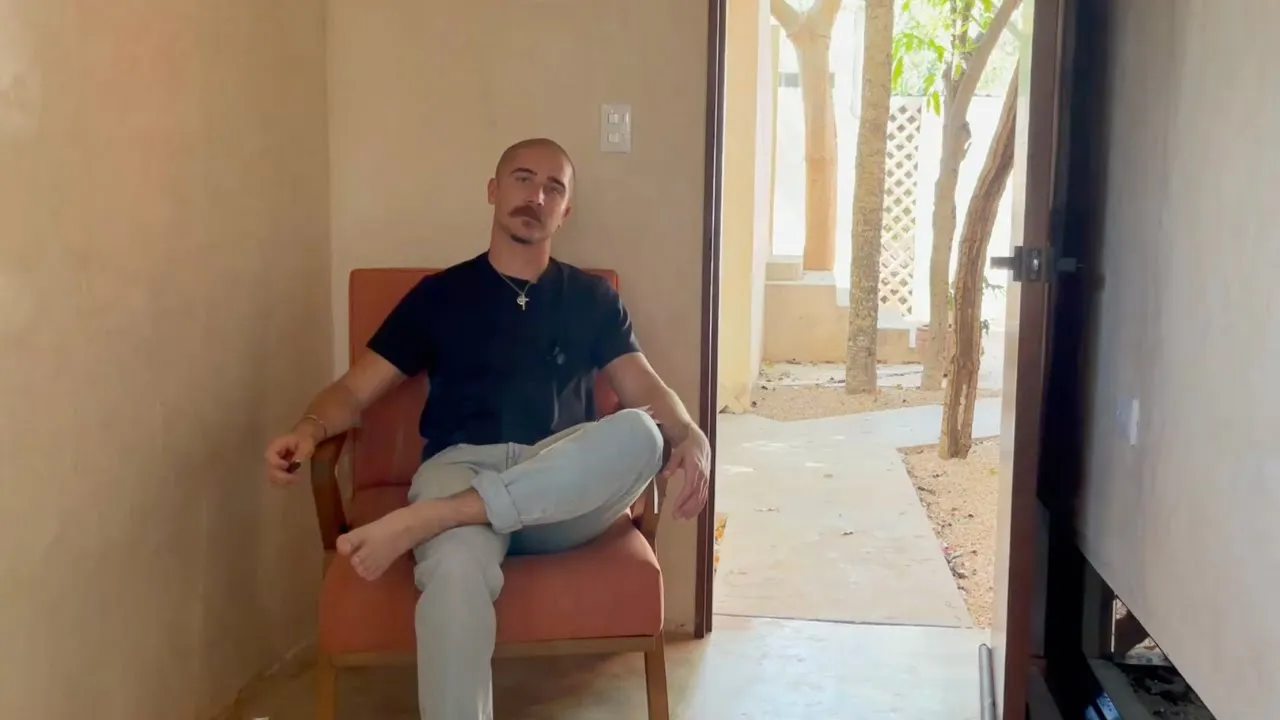
A warm breeze is coming through the door and I'm grateful we shared this time together. All right, enough of the poetry. Stay disciplined, playful and dangerous.