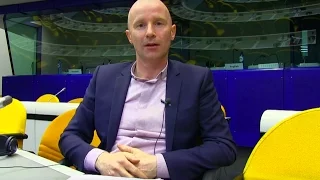
Hi my name is Nestor Wagner I'm the instructor in charge of teaching this lecture on why candidates fail interpreting exams I'm also the instructor in the state and federal code interpreter interpreting programs and also in the medical interpreting program today we would like to discuss what are the typical problems that candidates experience when they take state examinations interpreting State exams or federal exams this is applicable of both for court interpreting as well as for medical interpreting the first thing that we would like to talk about is we like to look at the general overview of
the exam and how the exam is actually graded it's very important for candidates to know how the candidates will be graded when they take the exam sometimes lack of knowledge in this regard is in this particular area tend to affect the Outcome of an exam simply because the candidate doesn't know or this cannot prepare for the exams so the exam taking techniques are not what the examiners are looking for first of all let me tell you that an exam is created of course an interpreting exam we can concentrate of course on the oral component of
the exam because that's usually where people fail the interpreting examination in any interpreting exam you will be tested on the three basic interpreting modes Multiple interpretation which are consecutive simultaneous and sight translation consecutive is said technique where you hear a question in English for example you dieter / and then you interpret that question and then you hear the answer and once the answer is finished then you interpret the answer so clearly in this particular technique you need to wait and to remember what was said simultaneous is that technique where you the interpreter Interprets at the
same time which is the one that most people are familiar with because they see that all the time and site translation is a technique where the interpreter is asked to read a document which is written say in English and as interpreter is written in the document in English the interpreter is saying that in Spanish into the opposite language and you also have in the exam a second section of this component where the document now is in Spanish and the Interpreter is asked to read in Spanish and say it in English so those are the three
components now in most interpreting exams when the main thing is accuracy but we have to be very careful with this because accuracy becomes essential in those components where you have time to be accurate what do I mean by that well in a simultaneous where you hear and interpret at the same time accuracy is important but it is not as important as in the consecutive where You had you have the whole question or the whole answer was given to you and you have enough time to put that answer in the proper with the proper syntax into
the opposite language so we can say that in simultaneous in that component the message delivering the message as accurately as possible is our goal but we shouldn't be too concerned if we miss a word here a word there we should not be that concerned at all we should be able to continue with it at no time During the exam you should stop when the in the simultaneous you have to keep going sometimes candidates think about a term I know that term I know that term and they keep thinking but that's not a very good strategy
for your exam because if you think too much then you're going to be missing the words that come afterwards however in consecutive and inside translation where you have some time to structure the Message then accuracy becomes essential all interpreting exams if you look on the screen now have what is known as key units and a key unit by definition it's basically something that the examiner considers to be very important and therefore the examiner will underline that key unit now by definition a key unit does not have to be a single term it could be a
whole sentence it could be a series of words one next to the other it could be whatever the examiner Considers that it is essential particularly particularly in the consecutive component and so if you look at this example jumped bought and brand new car it is a red convertible with leather seats he loves to drive it during the weekends what you see here underlined are considered to be key units so brand new car is a key unit red red is a key unit convertible is a key unit leather seats also a key unit and we can
say key unit In a consecutive in most interpreting exams the consecutive lasts approximately 20 minutes and there are will be approximately fifty five zero key units depending on which exam you may need to get either 70 or 80 percent of them correct what does that mean to get them correct say for example that brand new car you forget about well in this case if you forget about brand new then you really let's say you forget about brown new and you only brand new And the only no car and you interpret car instead of brand new
car so the interpretation is John we never translate or interpret proper nouns comprar una automobile and you forget no Tomo in the totalement de nuevo you just forget about that well if the key unit is worth at one point then you did the liver car but you didn't deliver brand new so the examiner will probably take about half a point from there so you do get some credit for the word that you Mentioned but not necessarily full credit for it because you didn't deliver the full segment or the full key pool key unit it is
a red convertible please note here that red is by itself sometimes the key unit could be just a single because it describes the automobile there is a big difference between a red convertible and blue convertible particularly when somebody has to describe what car the person was driving At the scene of the crime so this is considered to be either you know it or you don't know it so there's no partial credit if you don't know that it is red then you've got a problem so that will be a deduction of one point if this unit
is worth at one point and so on and so forth so that's the way the exam the examiners grade you and the same approach is used for sight translation the sight translation component of the exam can last anywhere Between I would say 10 and 14 minutes and that's because it has two components one document in English then you interpret that into you do a sight translation into Spanish and interlock you another document Spanish and then you do that into the opposite language into English we will see exactly how what how that technique works - later
on today but they have a certain number of key units for each document and usually in a site translation component the Number of key units will be 20 per document so if you need to get 70% then you need to get 14 right or 80% would be 16 right it doesn't you have to get all of it right because I screen as I explained earlier you may get partial credit for each one so you can look at it this way you start with 20 points in the site translation that's the maximum you can get and
every time there is a deduction they did that point for those deduct points from those 20 points and At the end of that component then if you ended up with 14 if the 70% is required or 16 if 80% is required then you you pass that component of the exam the other element that is important is accuracy and accuracy usually is developed with practice and not only practice but also good technique it's like playing sport if you don't have any formal training if you didn't have a coach who trained you how to play a particular
sport then Your technique is going to be weak at all times it may work fine sometimes but sometimes it may not work that great and by the same token even if you have a coach that trains you in a given sport therefore you have a technique if you don't have the practice then you will not have the ability to use that technique properly particularly under stressful situations such as the taking and examination so accuracy is define us how close it was to the original if for Example if it says if the original says he came
here at 8 o'clock in the morning and you interpret that Elron or GLS siete de la mañana then that's not accurate at all so there will be a full deduction for not knowing for not being accurate accurate and key units are pretty they go hand in hand because the way that the examiner determines if a key unit was delivery correctly is by looking at how accurate it was delivered now we have to be Careful with this idea of accuracy and we will see that later on sometimes people think okay it's all about interpreting words but
it really isn't about interpreting words so you always have to keep in mind that it is about interpreting messages and if you don't believe me how would you interpret for example he is on a tightrope well if you interpret words you will probably say ELISA in like what about tensa but that doesn't mean anything in Spanish because The dramatic expression Spanish is a less than like whatever flora you see it's the opposite so in one language is tightrope and the other one is quite a flora just the opposite however the message is what matters if
you tell somebody in in English he's walking on a tightrope hmm then they understand that he's you know he has to be careful and if you send Spanish they're like what are the flow craft then clearly clearly it means the same meet the same meaning That this person has to be very careful but if you say extend like what are the Penza what does that mean anything so this is an example of why why the technique as well as training is important because you need to know these differences you may know this one at this
point but you may not know expressions that are more into the medical or the legal fields and that those are important as well so there is another word called embellishment as you See here on the screen an embellishment by definition means when you add something to the original it's pretty common for candidates to listen to a segment let's saying the consecutive component and they know it's a long second but they just don't remember everything so what do they do they just create their own story and they they add things that were not in the original
that is not good at all as a matter of fact the rules are that if you for Example added something to the original and also omitted part of the original then there is a deduction for the omission and then there is a deduction for adding so please don't add things to the original if you think that the segment was too long and you don't remember you can simply ask for a repetition of that segment but don't start saying ok so this is not about matching the number of words or the duration in this segment is
about being Accurate in the delivery ok omissions of course it's self-explanatory in most interpreting exams they divide that into major emissions and minor omit omissions and a very serious omission for example in the in the in the example I gave you earlier we probably forget that the car was red that's a very very major omission and if you omit brand-new and you say car that would probably be considered to be a minor towards major but it is sort of in-between sometimes You can omit certain things like however and then you forget that that means sin
embargo then you forget you don't say that that will be considered to be a minor omission a minor omission is that it's defined as any omission that doesn't change the message and a major omission is this is defined as in your mission that does change the message style of delivery this is important up to a certain extent nowadays most interpreting exams are Much more objective and they really look at key units more than anything else however style of delivery is important and that means where you you in a simultaneous you're trying to interpret faster than
the original it's like somebody's is running after you somebody's it's actually trying to kill you so you go really fast that that's impossible you can't go faster than the original okay like in consecutive sometimes Candidates when the segment is short they know they just go very fast but when the segment is very long they go really slow and they start doing what we call a Doran's is like a you know it sound like I don't know it just doesn't sound too good this is that style of delivery and that's important up to a certain extent
it's always a good thing for examiner's to hear some and interpret who's pleasant and who has a good style of delivery because you can Also you should have you should think it this way the examiner is actually the person that you're interpreting for and the examiner is going to listen to you for about 40 minutes and what you don't want is the examiner after five minutes to see you know I'm tired of this tone of voice or the oldest utterances it's just really distracting me because the examiner will immediately think okay the person that will
be using this interpreter will also get tired after Five six seven minutes so we don't want that although it may not have any impact in your grade in this subjective portion things that you cannot measure but your whole idea of the interpretation that could be a factor okay the next thing that we will we want to talk about is the idea of registered and localization another interesting thing in most interpreting exams and where candidates have difficulties with a keeping what we call the register Register means that words can are classified into what we call groups
we have a group that we call low register where you will find all colloquialisms slangs and even foul language we have a group that we call regular register where you could will find words that the ones words that we use on a daily basis like table computer chair and we have words that we classified in groups that we call high register and their technical words medical terms legal Terms matching the register is important quite often candidates that don't have much training think that the interprets mission is to make sure that the person that you're interpreting
for understands but that's not your mission that's the mission of the one who is communicating with the with that person if it's a doctor talking to a patient the doctor uses very complicated terms you can be explaining medical terms to the patient you have to use very complicated terms In Spanish and if the patient doesn't understand the patient should say so and the doctor should tone it down a little bit because the patient is clearly not understanding the same thing is true in the legal setting a judge is using very we call high register legal
terms it's not your function to try to explain because you're not an attorney anyway so how could you explain those legal terms but it is your function as an interpreter to keep what we call the Same register so sometimes we are interpreting and we know the person is not understanding but is it our responsibility to make sure that this that person understands and users know is the responsibility of the individual initiating the conversation with that non-english speaking individual not our responsibility okay our responsibility is to transfer a message from one language into the other making
sure we keep the same register so that's an Important issue in your exam for example let's say that the original as you see here on the screen is he was with his buddies when the cops came and threw them in the can okay now we all understand what that means it means I was within some friends when the police arrived and then they arrested them okay but here this is set in English in a different format in a different register you see this is a lot of there are a lot of slangs here so When
we put this into Spanish for example if we were to say estaba con sus amigos cuando llegó la policía y los are esto although we are conveying the message but that message is partially correct because what we are not conveying is this land portion of it and sometimes the slang is important in a court of law as well as in the medical field because the slang denotes level of education and that's important so how would you transfer something like that Well you have to keep the same register lower register slang and now when you talk
about register particularly slang you need to decide okay but wait a minute buddy in Mexico is said one way in Venezuela different way in Colombia different way in Spain a different way and in all those countries Spanish is their main language yet if I use the term that they use in Mexico that may not be clearly understood in Venezuela and you are absolutely correct and That's the idea of localization that's what localization means you need to know who is going to be receiving the message to determine what is the proper transfer what is the proper
register so in most interpreting exams the localization principle there is a tendency to localize to Mexico and Central America throughout the u.s. those are the typical localization guidelines in the federal examination however localization is what they call universal if you use a Term that is using Colombia it's fine if you said term that is used in Spain it's fine so there is no requirement in terms of localizing to a given country but in most state jurisdictions for Court as well as for medical the localization tends to be more into Mexico and Central America so this
transferring that this will transfer into Spanish if we localized to Mexico it will probably transfer as Ori will trans rail as estaba con su Poitier's Cuando llegó la chota ela maternal vote and that expression estaba con su gratis cuando llegó la chota ill of maternal vote we have that very some Cuates cops chota there are many other possibilities placa union is leblanc as well and to throw them in the canned s metal-on-metal arsenal voted so those are the what we call if they if they were to examine us were to determine which ones are the
key units here they will definitely look at buddies to see Whether you know how to interpret that into the opposite language what this in this case if you localized to Mexico cops which is chota in this case if you localize to Mexico and to throw them in the can which will be made that loss in algo de which will be the right translation if you localize to Mexico you see that except interpreting exams have a little bit of problem with this localization issue because they don't explicitly tell you that you have to Localize to Mexico
or Central America but that's the assumption where what they do in the exam quite often is that you may see in Spanish something that it is at a low register and you're asked to put that into English because when you go into English we know that it localized to the US that's where we are so for example you can see in the exam estaba con mcwatt day cuando llegó la chota and that's what you see in the exam that might be the answer to a Question in the consecutive mode and they will say I was
there with my buddy when the cops arrived and that that type of situation is much more common than the opposite direction okay so we have to keep that in mind syntax is an important element in in an interpreting exam for example I just put an expression here it says in light of the fact that he did that in bad faith this is just to illustrate that the first thing that we should notice is That the expression in light of the fact in Spanish is not in lelou state it is not as alla Luce so well
but it says in in English yes but the expression in light of in Spanish is a la luce there okay so that's an important observation so Alleluia Leitch okay he did that le so I saw an in bad faith noise in Malave in Spanish is de Malafaia so here in this sentence you have in light of which in Spanish is a lelou state and in bad Faith which in Spanish is the Malafaia that's what syntax is it's this preposition changes that in English you have one preposition but in Spanish you have to have a different
one simply because the expression is like that and sometimes if we don't have a formal training we don't know there are a limited number of words like this that you will get in most interpreting trainings obviously but the truth of the matter is that under pressure with a lot Of stress and imagine in simultaneous where you hear and you have to interpret right away when you hear in light off you probably will say in la luz de unless unless you have been exposed to this expression many many times before you took the exam while practicing
in similar situations so that's why we will talk about at the end of this lecture it is essential for you to have access to laboratory in interpreting lab where you can do these practices it has been shown That it takes an individual about 20 times to actually have control of this type of transfers in other words the individual for the first twenty times when he hears that in the practice or she hears that in the practice will say en la Lu state instead of alla loser the individual will say at least 20 times the first
20 times we'll say in Malafaia instead of the Malave okay so that's why the practice comes in it's important and that's one of the Reasons why most people fail the interpreting exams they don't have enough practice they don't have enough training or if or they think that because they speak Spanish in English that's sufficient or they think that because they speak Spanish in English and took a seminar over a weekend that's sufficient this is much more complex and it cannot be learned in a weekend because timing is important why is it important You can't just
learn all this stuff in a weekend and then take the exam two days later it doesn't work like that because this is not written so you don't have time to think it has to be automatic it's like learning a new language if you think that you can take an interpreting exam after taking at one or two weekend course and pass the exam it's the same thing as thinking that you can take a one or two weekend course in a given language in meandering and be able to Speak the language and write it it's just impossible
yeah you do speak both languages but that's not enough that those are the two main elements now you need to be trained and you need to be developed as an interpreter and that's important to keep in mind so I always tell candidates don't take an exam if you are not ready don't think it's going to happen because it won't happen and to be ready means to have good training and it has to be a training that takes some Time it can be done in two months and furthermore make sure that you have enough practice so
that these things about this words this transfers are actually do take place properly during the exam and that pressure doesn't affect your ability to transfer it okay so let's see the next thing I want to talk about that where people have problems with or candidates have problems in the exam it's called language interferences these are all Technical words you know this is like a formal training I treat this lecture as a formal training you discussed we discussed this in most of our interpreting program of course but I need you to understand why candidates fail this
exam first so that you understand what you need to do to be able to pass it right so there is language interferences when you have an interference like the other language is interfering with the opposite language You know like syntactical for example the word order I mean of course in English is a red car so it will be own automobile Rojo in Spanish it will not be in Rockwall tomorrow that's in tactical this is something that you usually have because you speak both languages so that's work placement prepositions example of that is what I we
discuss a few minutes ago in light of is allelú stay in bad faith the Malafaia those are preposition changes and it's Also true in Spanish for example v1l descent of Kinsale Norte de la calle main in English is I live at not in 215 north main so the this is the important thing about syntactical interferences is that the prepositions do not always match we need to be careful with that as well and then obviously all these put together creates what we call distortions in the message and when the message is distorted then there is a
deduction because if that message is a Key unit then it's not considered to be accurate and if it is not accurate there is a deduction associated with it may not be a big detection but in a 40 minute exam trust me there are many of these tricks and they want to make sure examiner's want to make sure that you can control it you can handle this tricks and that can only happen again if you have been trained obviously linguistic interferences are what we call like false cognates and a False cognate is defined as two words
one in English one in Spanish they sound similar to each other but they don't mean the same thing like embarrass embarazada no embarrass a sovereign Salah embarrass Alice to be pregnant so those are called false cognates many people use those false cognates because English interferes with Spanish and it creates creates a mixed of things that it is not a very healthy mixture by the way as far as Interpreting exams is concerned so you need to know and the false cognates are not that simple sometimes in certain scenarios if a word is a false cognate where
whereas in another context a word the same word may not be a false cop for example take the word to discuss you can only use this good deed in Spanish when you when the parties that are discussing something have different points of view but if I say for example I'm going to discuss this in ten minutes from now I'm Talking about let's say consecutive component I'm going to discuss that in ten minutes you have no opinion you have no different point of view than I do I'm just going to discuss it in that context discuss
it's no longer discutir but rather is hablar mencionar platic are present are whichever you want that's important because you may not know that difference and then you go and take the exam and you say oh I did so great well You think you did great because you don't know these differences and then you get the results is oh my god I can't believe I couldn't pass well if you continue taking the exam without any training it becomes a cycle that you can get out of it and it takes forever for you to pass an exam
not to talk I mean it also takes you a lot a lot of money to be able to that each time you take an exam you have to pay for it so the message I want to send you is that be Prepared for it be prepared for it it's very important then we also have the linguistic problems with Spanglish that you get a word in English and you make it a Spanish Spanish English that's no no ok but under pressure even though you think you don't use it but under pressure you know when you hear
something you have to say right away it's very possible that you do use it ok so we need to that's what once again you need to practice so that you eliminate Those bad habits ok and it all comes with practice and lack of localization that another way of saying it is that you don't keep the same register me squat this is not my friends it's my buddies so that's important because although the deduction is not that much but it adds up throughout the exam okay localization let's talk a little bit about what that means we
basically already decided what it was but what it Is the first thing is we have to establish the rules we need to know into what country we are localizing translators for example which of course translation is in rate written form interpreting is variable translators where they translate document for a whole community they have no idea who's gonna read it there may be a family you know let's say that you work for school district one family comes from Mexico the other one from Venezuela El Salvador Colombia Ecuador Guatemala Panama república dominicana Puerto Rico the all of
them read the same document so usually in translations you don't localize you keep it localization neutral so instead of see you seen if it says in English I'm going to see my buddies you can say boy you wouldn't translate boy of enemy squad this you will say we are enemies amigos because amigos is clearly understood in all those countries but that's Translation this is interpretation and in interpretation you always most of the times you know who you're interpreting for particularly in medical and in the legal field you're interpreting for one individual maybe two or three
at the same time but you know where they come from so localization is a factor in interpreting localization can be found in the consecutive and the simultaneous and in the side translation and particularly the sight translation it's What we call it formal localization what does that mean you may get a document like it's a birth certificate in English and if you get a birth certificate and you have to interpret that as you read the birth certificate you're saying it in Spanish you need to use the same format that birth certificates have in Latin America but
where Mexico Guatemala and Salvador where well those are the guidelines you have to be Mexico or Central America in the federal exam it Could be anywhere so and and of course the difference is between a localized transfer and linguistic transfer and by the way a transfer is just the message you take it in English you put in Spanish the whole message I have a car the transfer is thing with Auto mode that's the message right that's the transfer a localized versus a linguistic transfer we saw examples of it for example it is raining cats and
dogs she read cats and dogs okay there's an S Missing there there it's raining cats and dogs alright so if it says it's raining cats and dogs and you say where we got those it burrows that sounds really awkward they're gonna think that you are under some type of medication how could you say to somebody meeting tengo cuidado porque mañana para SE que van a la verga to see burrows I don't know but that doesn't seem to correct in Spanish the translation the proper translation is And obviously wait a minute but before I give you
a translation didn't I internet interpret every single word it is raining cats and dogs absolutely I did yet yet it is wrong why because that's a linguistic transfer word-for-word the proper way of course is drybeck and arrows ah can't arrows Joey I can't arrows let me write that down for you Joey Gondar O's and trivia contest is the proper one oh let's see I don't remember That because you know I just don't use that expression that so I don't remember that so how can I say something else well yes you can say Joey mucho that's
okay there is going to be a deduction here they're going to take a fraction of a point if that is a key unit and it's worth at one point and you say Joey mucho you may get 0.8 so they took 20% okay so it's it's important for us to keep in mind that it's the message that matters and not Word-for-word that's why some people say well if I don't know something I just look it up in a dictionary well yeah sometimes that works but if what you don't know is part of his sentence sometimes it
doesn't work say for example you don't have to say cats so you look it up and you say oh I know everything else so I'm going to say Drive it got to see Paris well it's incorrect alright so be aware of that because many people actually fail the Exam because they are unable to express the message using the proper syntax and in an accurate manner into the opposite language that's important now consecutive component as I mentioned before it's that technique where you hear a question usually in English let's say the doctor is asking a question
to the patient you have to hear the whole question and then you interpret into the opposite language then the person understands that and the person answers The question you have to wait until the whole answer is provided to you and then you interpret that into English what are the typical mistakes made here lack of accuracy embellishing you add things that were not there you sort of create your own answer when it is pretty long and you see this often when the answer includes numbers and dates names descriptions quite often the interpreter has no tool to
remember all that it's too dense you know it may not be too Many a lot of words but it's too dense with information that is either black or white you know if he is tall is tall you can't just say anything else so that that's why in most interpreting training at least in our training program we emphasize accuracy in this particular component because you need to first you need to learn the technique and there are techniques to remember all that because you may say well how am I going to remember all that well you have
To learn techniques and not only the technique but then you have to apply the technique therefore you have to have practices available for you so that you can practice and it shouldn't be the same practice over and over again because then you memorize the practice and then you think oh okay now I'm pretty good at this I remember every single word well you do remember every single word because you have done that practice 10 times 15 times the point is That you do different practices at different times you cannot do a consecutive practice more than
three times because then you are actually memorizing it and then it's sending you the wrong message oh I know it when in fact you don't know so the optimal process in transferring messages using the consecutive mode what what does that mean well consecutive is a technique that it's basically a two-step process the first step is acquisition and the Second step is rendition what does that mean I tell you a message you have to understand at first when you talk to somebody when you're talking to somebody a friend in English are you thinking at the same
time that you're receiving the message are you thinking how do I say that in Spanish of course not what are you thinking I'm thinking about or wheel you are thinking about what's the message and I'm a visual I said I'm just trying to remember what you're saying Basically that's important in consecutive techniques because very often if I give you the same message but now is an interpreting exam using a consecutive technique as you get the message that I'm giving you you're thinking how do I say it in Spanish if the message is in English why
if you do that you are mixing the two main steps acquisition and rendition and you can mix them because if you're thinking how do I say it in Spanish then you're not Enough energy to remember the message so the steps are obtained information as you usually do when you have a conversation with someone and then when they when that person ends that statement or a question or an answer whatever it is then you interpret into the opposite language now as you are obtaining the information of course you can take notes you can use what we
call note taking techniques that we develop in our courses but then you have your Paper with some notes but then then you read those and what you remember whatever you remember from this segment or from that statement then you say it in the opposite language so then the main mistake that most candidates are interpreting students make in the consecutives that they are thinking about how do I say this when they are hearing the message how do I say it in the opposite language it shouldn't be like that Grab the message first okay I understand it
you may take notes while you take the message while you're getting the message that's called acquisition then that when it's over then render it don't think I mean don't worry if you don't know how to say a word because after all in the exam if you don't know how to say one word let's say the message is one two three four five just numbers okay and you know how to say one two you don't have to say three four and five but you Have to interpret one two three four five into Spanish so you say
uno dos three cuatro Cinco okay so you leave them the term that you don't know in the original language why do you do that because in the exam you're telling the examiner look I remember all five elements of this message I remember so my memory is good my note-taking technique is good but I don't know how to say three because if you say uno dos Quattro Cinque when you skip three the Examiner thinks that you not only don't know how to say it but also that you didn't remember so then the deduction is greater so
you always leave the term in the original language in consecutive in consecutive and also in sight translation but most important of all in consecutive in simultaneous on the other if you don't know it terms skip it and keep going because if you do say it in this Indy up in the same language it's going to slow you down and you're going To be missing more terms so just skip it don't say anything keep going I know it will leave a little gap there but you just keep going okay that's important as well so during acquisition
you get the message and you're in rendition you deliver obtain message here and then deliver now it sounds simple the transmit is not this is one of the most difficult interpreting techniques requires some techniques obviously and those are Called note taking techniques and then also you need exam taking techniques what I just mentioned leaving your term in the original language is an exam taking technique and their note taking techniques it depends usually you learn that about four or five weeks into a training program because the first four or five weeks the main goal is for
the training program to develop your short-term memory but then you start developing Techniques because the other thing is that you cannot develop a good consecutive technique if you don't have any short-term memory so all this is you know it's important because this is precisely why people fail the exam this is not about trying to remember as much as I can and deliver into the opposite language or paraphrasing or saying what I think is what he said you know that's not the way it is and incidentally when you interpret and you probably know this Already you
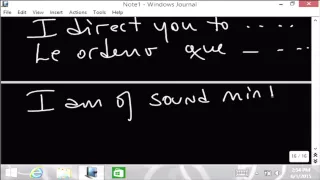
have to always use first person if the other person says George Darko mis amigos then you cannot you cannot say he says that he was with his friends that's a no-no you have to say I was with my friends exactly the same words that were used because we as interpreters we don't exist there we're just a conduit we get a message in one language and we say it in the opposite language all right important observation as well The other technique where people have problems with is in sight translation and many people fail the exam because
of sight translation believe it or not that's because they don't have formal training if there is a look for consecutive you need to learn technique and practices practice that's that's all you have to do for simultaneous vocabulary and practice and technique a little bit as well but for sight you have to have some Formal training because they'll register the level of the language in the sight translation component is pretty high so you need to know exactly what is the equivalent for example in the legal in the legal field just to give you an example if
they say your case is dismissed let's say the judge tells the defendant the person that is charged with a crime your case is dismissed well what you should not do is explain you shouldn't say to the defendant Jessica Otto Livadia su casa thomas una cerveza de salir con su familia borg an Aerodyne igual or mass that's a no-no huh that's not a professional interpreters I don't know what it is but it's not an interpreter you do have to say this in Spanish using the same register the difficult term here is dismissed and case some people
may use caso which is accepted in the exam it is way more formal to use causa so this segment transfers into Spanish is su causa que That sober it say that that's an e sobre say that Y because the verb to dismiss is so very sad you may say wait a minute defendants don't understand that well remember we are not there to make sure the defendant understands defendant has an attorney the attorney can explain or the judge can lower it the register and you say you know you're okay you can go home now then you
say Tavia Nara totally of en puestas su casa that's fine so inside translation you get a lot of These high register words and you can't really find them in the dictionary because regular dictionaries don't have legal terms and if you buy a legal dictionary sometimes the problem is that the words are not just single words but like a whole whole phrase for example if I say probation violation hearing probation violation hearing if you look at let me just write it for you probation violation hearing well you can look up each of these individual words And
sort of create the sentence but it really is an audience here that's the translation for hearing for all in complement oh de la libertad condicional you may say well can I see you Nabil accion no because the word violation transfers differently into Spanish depending on context if it's a violation of a section you can say Quran total a particular because you are specifically determined in a section of the law if you say violation of the law you are not Being specific you can save your national a violation of my rights violation the middle-ages that's fine
but then when you violate probation which is an agreement between two parties we usually when there is an agreement we say cannot comply ah con el acuerdo so that's why the wording complementor comes into play so that's not in if you look up the word violation in dictionary you're going to have all different translations you just can pick Any one has to be the right one based on context because the violation is of an agreement of probation probation which is libertad condicional you may find other translations contain a conditional liberty' de prueba there are many
translations okay that might be appropriate so that's why inside translation we need to be very careful of because of this high registers register and that absolutely transfers the message and the Styling the delivery is important as well because if you are hesitant or if you pass when there is no period like for example this is a typical example of somebody who is having a hard time comprehending that understanding the text en la casado Campari show in en este whose God Oh too slow broken utterances a not good it should be el acusado compa-ratio en este
whose God o we learn in class that if you have if when you are delivering this If you try to go too fast in the delivery it's not a good thing so you got to time yourself and find the right timing for you to deliver the sight that again is practice and training as well simultaneous component that's the component where you're hearing one language and you interpret into the opposite generally you hear in English and you interpret the Spanish that's usually how you are tested in most interpreting exams it's not used that Much in the
medical field it's used a lot in the legal field the first challenge is to be able to speak while you're listening and not only you are speaking at the same time that you're listening you're speaking in a different language you're processing what you hearing well in one language saying it in the opposite language that requires some practice as well it doesn't come automatic the other problem is that in simultaneous if you don't know the words Then you can really deliver them and most simultaneous practices or in most interpreting exams the simultaneous or in real life
actually simultaneous is used for very high register terms I have a defendant here I'm interpreting for the defendant and what am i interpreting simultaneously what the judge is discussing with the attorney they're going to be using hi legal terms so if you don't know that vocabulary you're going to get stuck and If you get stuck the message is not delivered and if the message is that deliver the key units are not going to be there and if you don't deliver those key units correctly you're going to fail your exam simultaneous is about knowing your terms
and having a lot of practice by the way there's it's also about increasing your speed because the Pramod simultaneous is that if you go very slowly like this then you might be able to interpret but if I increase the speed You might not be able to interpret generally when you know the vocabulary is not difficult to increase speed but there are techniques to increase your speed and that's something that is also covering the interpreting program recovery time is when you don't know a term you sort of hesitate how long does it take you to continue
with the rendition it shouldn't be more than two seconds anything over two seconds will create some problems in the delivery so These are all elements that will make you fail the exam if you don't do them correctly okay if you don't have the right technique for them the stress factor when you take an exam well one of the major stress factors is that you go and take an exam knowing that you're not prepared for it I mean that's it if you go to an exam knowing oh my god I didn't practice enough I didn't train
myself I took a weekend seminar or two weekends I mean how could you become an interpreter Doing that I mean how could you pass an interpret exam so those eventually the lack of training and practice will have an impact in your exam that creates a lot of stress on you so be prepared train yourself do a lot of practices and this element will become a positive one because when you're really prepared then you say oh my god I want to untag the exam I'll show them how much I know then use important to know where
you're going to take the exam and usually I tell Students they should go to the location where the exam will be held and just just look around make sure you can get there without any problems get there plenty of time not too much time but you know 40 minutes or so before the exam time is good or an hour even but look at the environment because if it's all new to you it adds stress to you the question is due to that should the student or the candidate steady until the very last Minute or should
the student take a few days before the date of the exam and studying nothing at all that depends really on you what you don't want to do is if you have an exam at 10 o'clock in the morning study until 4 a.m. that day you really need to be rested the day of the exam but I will leave this up to you I have some students who decided to study until the very last minute that means you know at least 20 12 hours before the exam time and it worked for Them some of them decided
to take a short vacation before and it worked personally I like to review before the exam but here's the catch if you do review you know like the day before make sure you're reviewing things if you're if you do practice excuse me if you do practice with with the online lab or whatever make sure you do the practices that you know you will do well because what you don't want at that time right before the exam is to affect your self Confidence and self control is important while you take the exam you got to control
yourself some people you know I know stories of some people that walk out of the exam some people cannot even remember their own names for Christ's sake some people have difficulties with basic vocabulary that's because they are not controlling themselves and this is something you know the way you we take care of this in our interpreting program Is that we have an examiner that contacts you twice during each course and over the phone you're you're on the spot and we put you under a lot of pressure and we give you ask you to interpret for
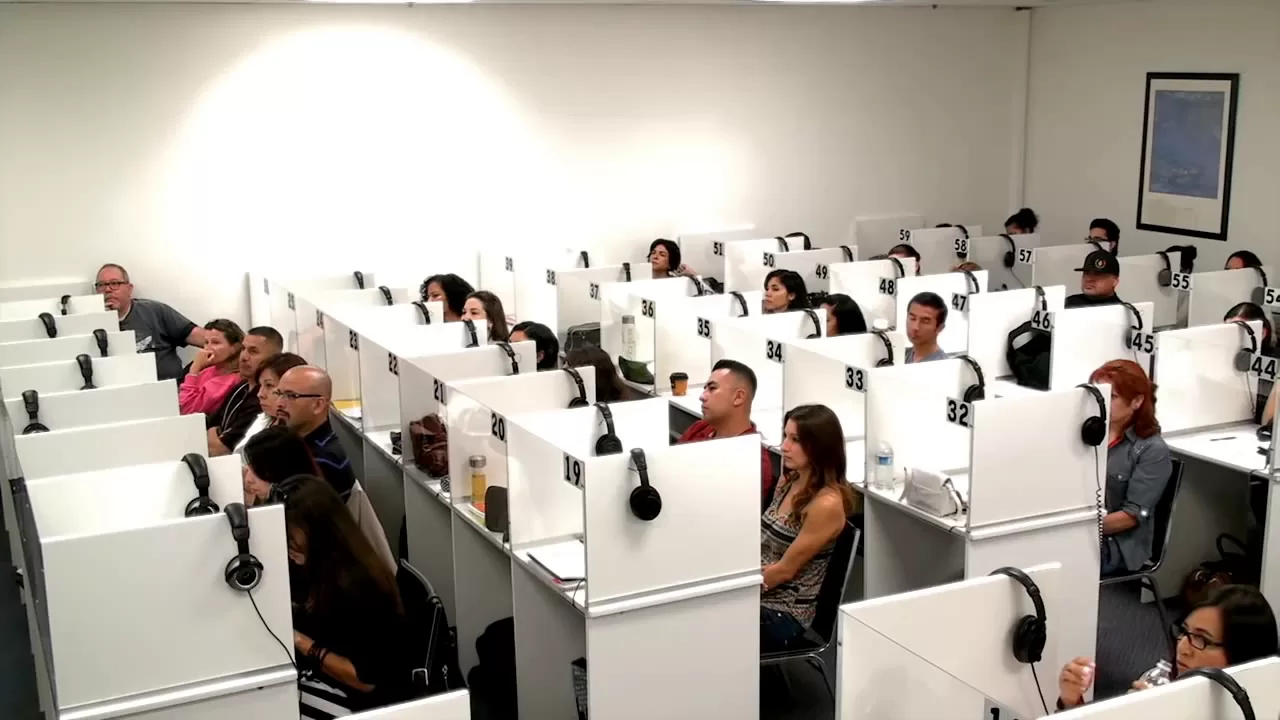
that examiner and so on and so forth so you become familiar with how it feels to take an exam you know what are the what are the how nervous you're going to get how stressful and then you can correct it as you do this more and more often okay as you do this We call oral assessments more and more over the phone okay now the last part is the importance of an online interpreting that I can't just not emphasize this enough if you think you can become an interpreter pass on interpret exam without practice it's
the same thing as thinking that okay I can pass a driving test by reading a book without actually being in the car and driving it's just impossible impossible and you may have some self-study kids and all that stuff That is okay but you know don't memorize the material there may not be sufficient it may be a good starting point but it may not be sufficient so it is critical that you have access to an online interpreting lab why online because you can access 24/7 it's very convenient you can access anywhere in the world and have
a schedule I'm going to do so many hours of practice per week and if you do take any of our online interpreting programs the instructor will tell you What that is and we of course monitor you and we want to make sure that you're doing what you're supposed to do so you will get email so you know the practices we gotta do the practices and so on and so forth it's important that we have you know in our online interpreting programs we know exactly what you're doing and you know it's more like an individual training
if you think about it hmm the lab will reduce the stress the day of the exam because you know that you're Prepared for it that already it's a positive thing reduces the probability of memorizing practices because we give you a lot of practice this is so obviously you know you're not going to memorize them it's very very difficult you know when you have a lot of hours of practice in your lab okay increases your self-confidence because you know that you know what you're doing it's not like I'm gonna go and take the test and maybe
I pass maybe I'm lucky no here you go And take the test and you're ready for it that's important and definitely will increase accuracy and speed in the delivery accuracy particularly in consecutive and speed in simultaneous because that's what that's what practice does is an excellent study tool and prepares you really for a level that is higher than the state exam or the federal exam the whole point is that you are prepared for this and the exam is at this level so that When you go and take the exam and you feel all that stress
then your level is going to drop but it should drop you know close it should still be above the level required to pass the exam that's important and you can only accomplish that if the training program emphasizes that and if it comes with an online interpreting lab that also makes you do practices that are much more complex than the actual ones that you will get in your exam and of course it's Convenient available twenty seven twenty four seven from anywhere in the world but with this I just finished this lecture on why candidates fail interpreting
exams hopefully you understand what the problems are why they fail and hopefully you decide to train yourself to take a training program of a course or a program so that you are ready for that but please make sure that it is a program that lasts at least nine months or a year because you Can't really become an interpreter in two months I know you're very anxious to pass the exam and even if you have been interpreting in court already even if you have been interpreting out there it's taking a test is different than interpreting okay
in real life so the training requires time it's not something that can be done in a couple of months even if you have a lot of experience doing interpretation and you have an interpreting for 20 years for The last 20 years usually that's even more difficult to pass the exam because you have bad habits that you need to get rid of because those are the bad habits that prevent you from passing the exam so if you do have any questions hi my name is Nestor Wagner and hopefully you will do very well next time you
take your interpreting exam thank you