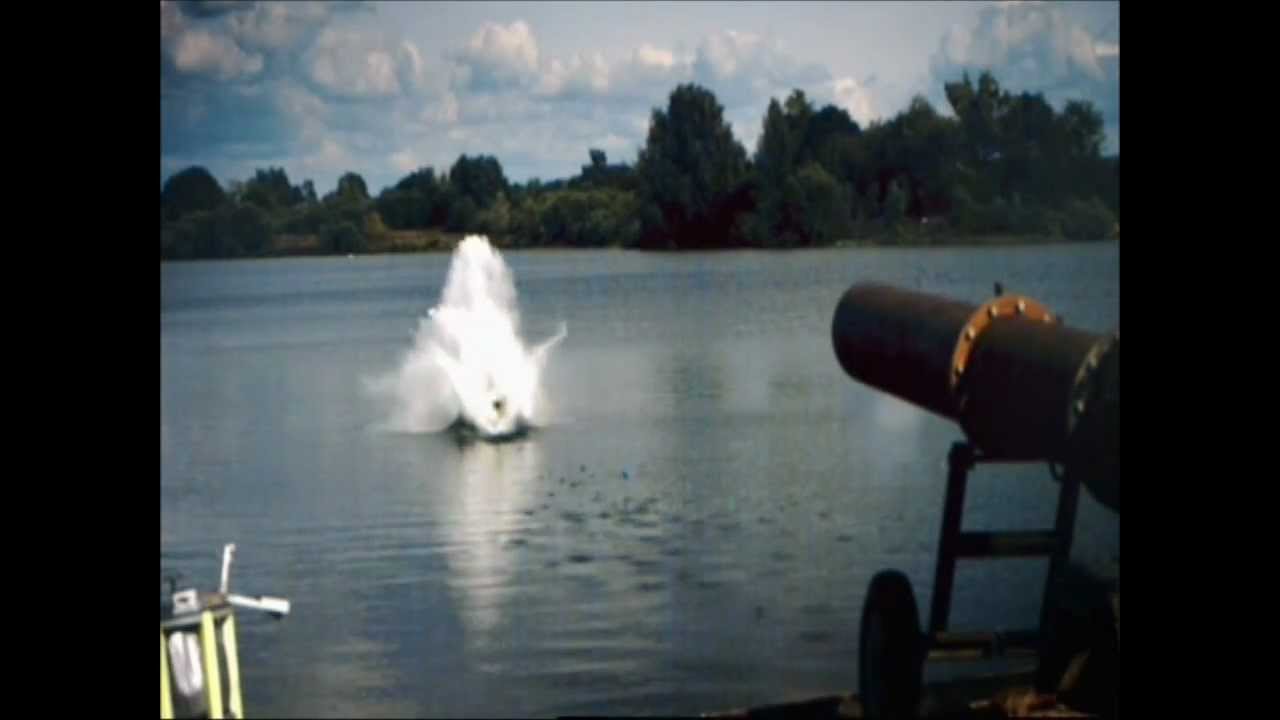
during World War two british engineer Barnes Wallis invented a bouncing bomb on the surface that might sound like a completely unnecessary invention but in reality it was vital to one of World War 2 s most famous rates in Wallace's bouncing bomb is also one of the most masterful pieces of engineering in history but why a bouncing bomb well specifically the bomb was designed to bounce on water the idea was that if you had a bomb that bounced across a body of water much like skipping a stone you could destroy the dams the Germans had built
all along the river valley if you could take out the German dams you could cause massive flooding take out a water supply and [ __ ] any hydroelectricity they were producing to go towards their war effort though many of the original documents and scientific calculations about the raid on German dams known as Operation chastise were coincidentally lost in a flood in the 1960s what is clear through other evidence and surviving anecdotes is that the Germans did consider their dams to be important enough to be a potential target for their enemies and took the time to
place torpedo nets in front of the dams to protect them so seeing as they were protected against torpedoes Wallace decided to come up with another way to bust the dams Wallace calculated that to do any meaningful damage a single four ton bomb had to be detonated right up against the dam wall at a depth of about 30 feet below the water but in those days the technology wasn't in place for aircraft to drop bombs from a high altitude with any reasonable measure of accuracy so simply dropping a bomb straight down in front of or on
top of the dam wasn't an option but what if you could bounce a bomb across the water just like skimming a stone another piece of the puzzle that was discovered in early experiments is that in order to bounce across the water with any accuracy and to be able to make it bounce while still dropping the bomb remain not suicidal height the bomb needed to have backspin just like a drop shot in tennis with backspin the bomb would be levitated by what's called the Magnus effect essentially the backspin would counter the downward pull of gravity causing
the bomb to hit the water more gently if it hit the water too hard it would just explode on impact and do no damage to the dam itself even with the backspin the Lancaster bombers would have to fly it just 60 feet above the water to get the job done initially since most of his experiments were done with marbles and golf balls Wallace thought that his bomb would have to be spherical even though it was easier to make cylindrical bombs they went so far as to make a spherical wooden casing to place the cylindrical bombs
into but after a few more tests they realized that they didn't need the sphere at all the cylindrical spinning bomb worked just fine on its own the actual raid happened on May 17th 1943 with 19 Lancaster bombers flying out to destroy some German dance the first plane landed self up on a dam flying at 240 miles per hour at an altitude of 60 feet to effectively deliver Wallace's bouncing bomb the bomb was released about a half a mile in front of the dam bounced five or six times and sank just short of the wall when
the bomb reached 30 feet under the water it triggered a massive explosion right next to the dam wall in the end it took five planes dropping their bouncing bombs before the first dam was breached though Operation chastises overall effect on the end result of World War two is open to interpretation what isn't open to interpretation is the genius level engineering and science that went into the build of the bouncing bombs thanks for watching this video be sure to like this video and subscribe to this channel for more of history's weirdness that you won't find in
your textbooks all those textbooks that you had to give back no one has their textbooks anymore right I don't have mine anyway there's this video here as this one here there's more stuff here there's more good stuff if you liked it stick around