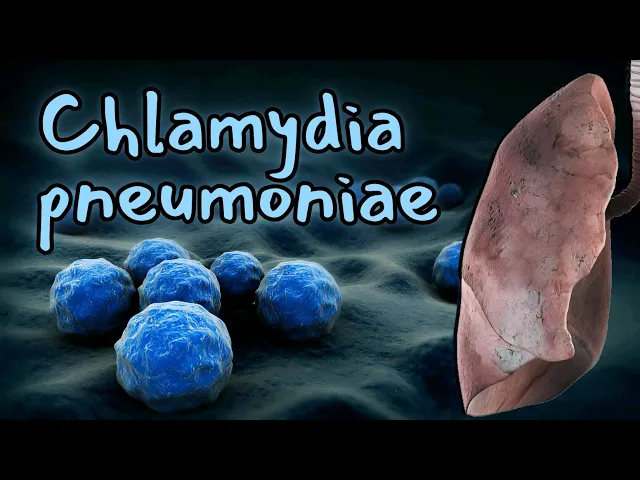
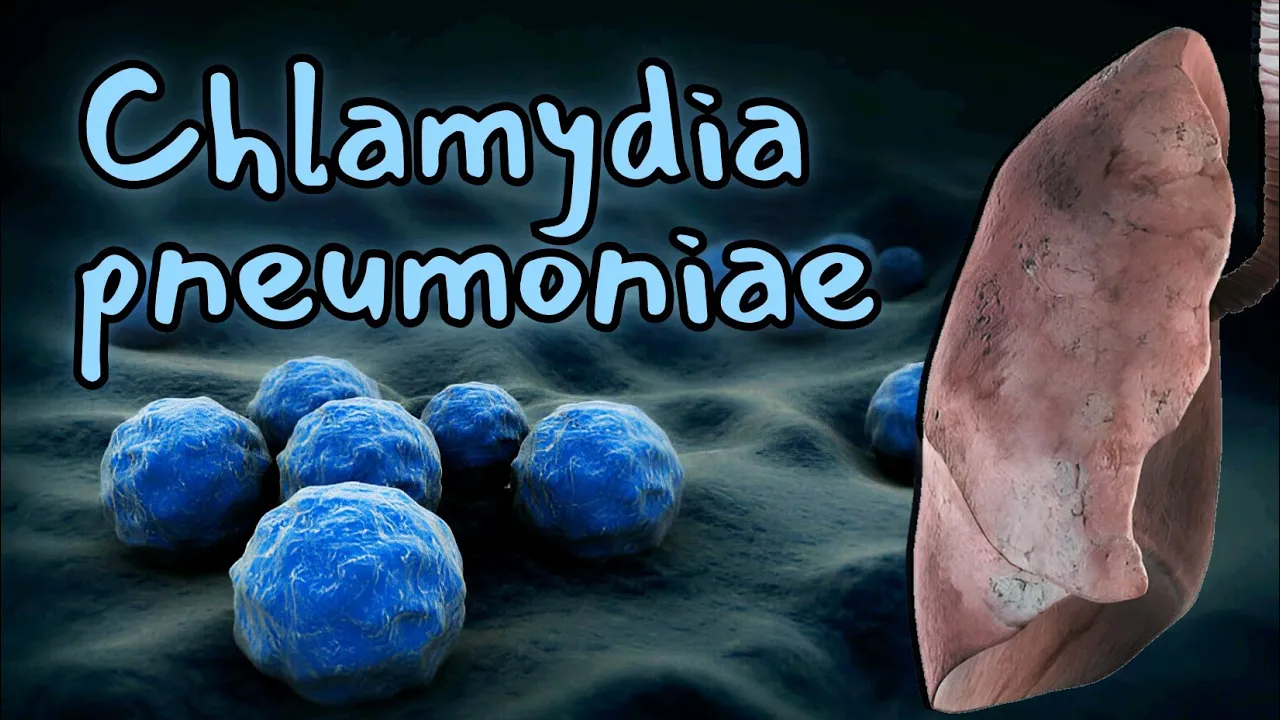
Chlamydia is derived from the word "cloak," and pneumoniae is, well, pneumonia. Chlamydia pneumoniae was once known as Chlamydophila pneumoniae. Thus, the bacteria that cause pneumonia in humans, Chlamydia pneumoniae, hide inside host cells, especially those of the respiratory system.
Because Chlamydia pneumoniae is unable to withstand the crystal violet dye used in gram staining, it is now traditionally regarded as Gram-negative. It also contains an outer lipopolysaccharide membrane, which is a feature shared by all bacteria that are Gram-negative. Chlamydia pneumoniae lacks the thin peptidoglycan layer that other Gram-negative bacteria have underneath their lipopolysaccharide membrane.
Chlamydia are more accurately referred to as atypical bacteria since they are unable to withstand the pink safranin dye used in Gram staining, which prevents them from being classified as Gram-negative bacteria. They must be seen using a Giemsa stain, which gives them a blue or reddish blue appearance. It is important to note that Chlamydia pneumoniae is a spherical, non-motile aerobe that depends on oxygen to survive.
Furthermore, Chlamydia pneumoniae are obligate intracellular pathogens, meaning they must rely on other cells for energy because they are unable to produce ATP. Chlamydia pneumoniae are not metabolically active when they are not within a host cell. This indicates that they need a host cell for growth and cannot thrive on synthetic media.
Alright, so Chlamydia pneumoniae goes through a life cycle in which it alternates between two different forms when it enters a host cell. The first is the small spore-looking form called the elementary body, and it’s the infective form of this bacteria. Once within the host cell, the elementary body is encased in an inclusion vacuole, where it changes into the reticulate body—a metabolically active, star-like form—after entering the cell.
By using the resources of the host cell, the reticulate body can divide. This process is known as binary fission, in which each reticulate body splits into two identical reticular bodies. Aside from that, if this sounds like mitosis, well.
Yes, it is! But the phrase binary fission is used to describe division of prokaryotic cells, which don’t have a nucleus, and hence several phases in replication are distinct from mitosis. Now, ultimately, binary fission results in a massive number of reticulate bodies, which then start converting back to elementary bodies.
As a result, the cell shrinks too much, bursts open, and releases a large number of elementary bodies into the surrounding fluids. These bodies then join to other cells to continue the cycle repeatedly. Once in the lungs, the elementary body is taken up by epithelial lung cells inside an endosome, through phagocytosis.
The elementary body changes into a reticulate body inside the endosome and starts to multiply. Inflammation brought on by the infection increases secretions in the airways and produces persistent hyperresponsiveness of the airways. Not only does Chlamydia pneumoniae enter the circulation and cause atherosclerosis, but it also commonly causes "walking pneumonia," a mild form of pneumonia.
Furthermore, when someone sneezes or coughs, respiratory droplets containing elementary bodies may be discharged into the environment. Another individual contracts Chlamydia pneumoniae if they inhale these droplets. It's also one of the main causes of community-acquired pneumonia in the elderly, and the chance of contracting the illness rises with age.
The term "atypical pneumonia" refers to the fact that people infected with Chlamydia pneumoniae frequently exhibit no symptoms at all or may exhibit nonspecific symptoms such as weariness, sore throat, moderate fever, and dry hacking cough. In addition, the patient might not feel particularly ill, in contrast to someone with another kind of bacterial pneumonia, who would undoubtedly be bedridden and experience more severe symptoms including dyspnea, or shortness of breath, fever, chest discomfort, and active cough. For this reason, a case of atypical pneumonia may sometimes occasionally be called "walking pneumonia.
" But in older people, these symptoms could be more severe. The recommended technique for diagnosing Chlamydia pneumoniae is now a polymerase chain reaction, or PCR for short. This test is known as a microimmunofluorescence test.
The Chlamydia pneumoniae antigen-specific serum antibodies are identified using the microimmunofluorescence assay. A sample, such as a pharyngeal swab, is obtained for PCR in order to detect Chlamydia pneumoniae DNA. Antibiotics such as azithromycin can be used to treat chlamydia pneumoniae pneumonia.
Tetracyclines, such as Doxycycline, are an alternative, however they shouldn't be used on infants or women who are pregnant. Summary Alright, to quickly review, Chlamydia pneumoniae is an obligatory intracellular pathogen that is a round, non-motile bacterium. Throughout its life cycle, Chlamydia pneumoniae has two transformations.
Two types of bodies exist: the reticulate body, which replicates, and the infective form, also known as the elementary body. With Giemsa staining, it is seen. Common signs of Chlamydia pneumoniae pneumonia include dry hacking cough, slight fever, and sore throat.
Azithromycin is the first-line therapy, and a microimmunofluorescence test is the gold standard for diagnosis.