Jonathan: We've already explored how Fellowship of the Ring can teach us radical acceptance, and that the Two Towers shows us how community can help us through the darkest of times. Today, we're going to talk about Return of the King and what happens when you're trapped in a pressure cooker environment facing extreme hardships with a limited number of people. Alan: So we're talking about my favorite character of all time, right?
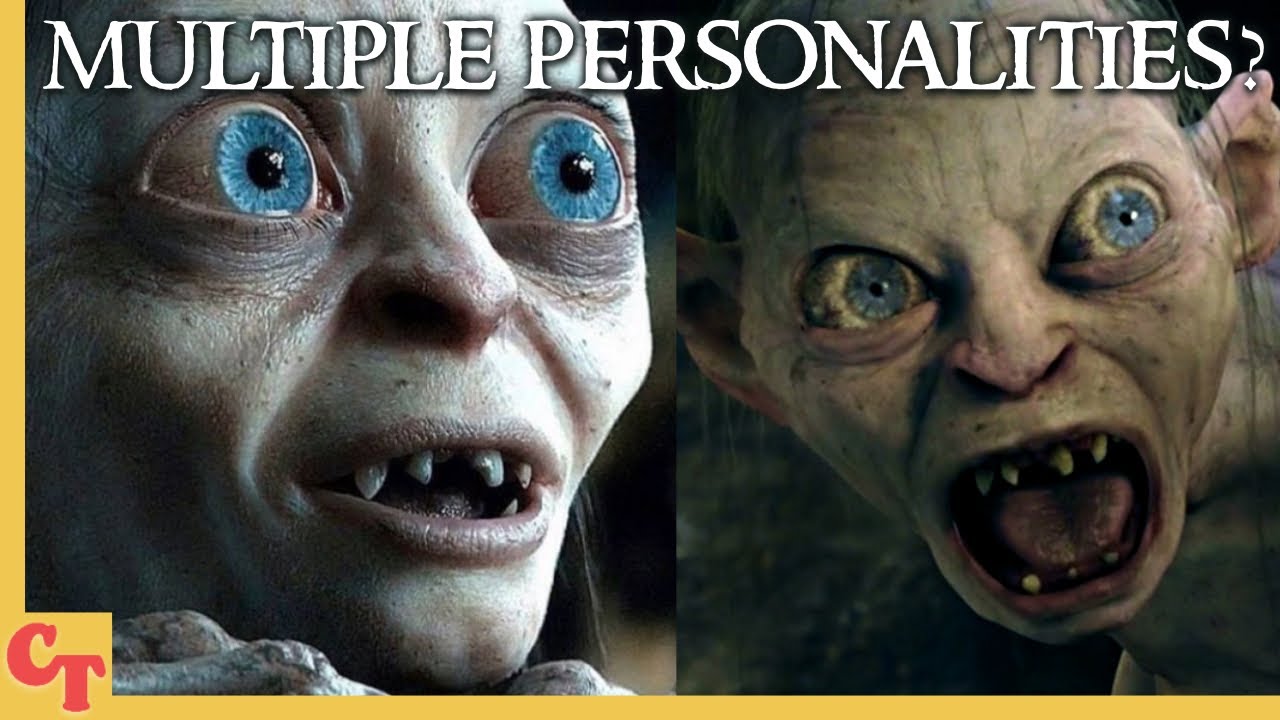
Like the one I actually named my son after, right? Right, Jono? Jonathan: You named your kid after Gollum?
Alan: No, S. . .
Sam. He does look like Gollum. Sam (Gollum?
): Myyyy preciousssss Jonathan: Wow. I'm Jonathan Decker, I'm a licensed therapist and I love movies, Alan: And I'm Alan Seawright, I'm a filmmaker and I need therapy. Jonathan: Yes.
Yes, you do. Welcome to Cinema Therapy. We use movies to help you develop skills to live your best life and unlock your inner strength based on principles of psychology and family therapy.
Alan: We're supposed to be doing this in a movie theater with, like, some props and popcorn to eat. Stuff like that. But.
. . Coronavirus.
So instead I'm doing this in my living room and Jono is doing it in a. . .
Swedish furniture store/prison cell? Jonathan: Wow. It's good to have you here, man.
I prefer this to flying solo. Alan: Oh, thank you, sir. So today we're talking about my favorite character of all time.
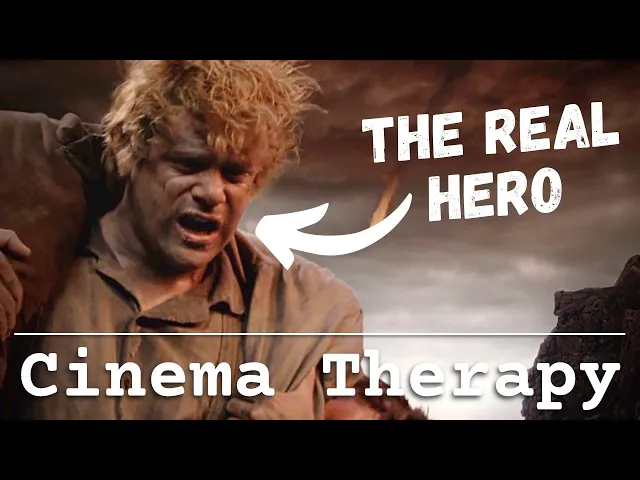
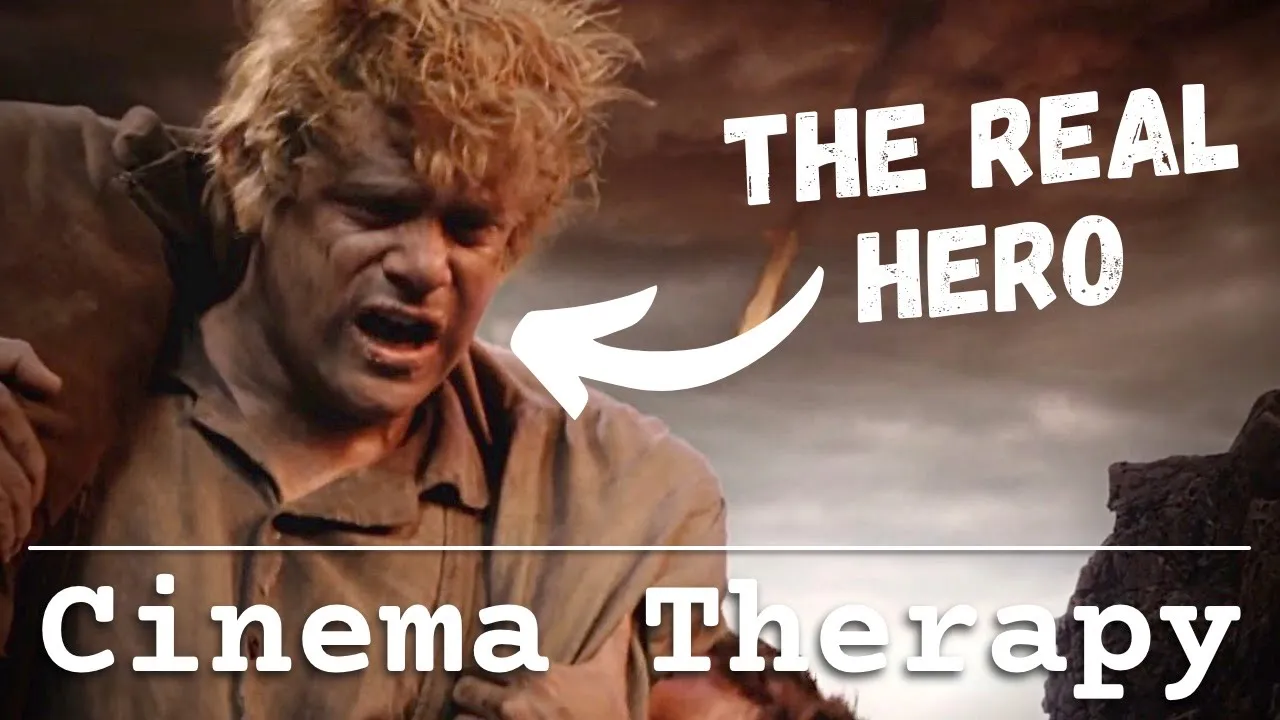
Jonathan: Yes, Alan, we are going to talk about Samwise Gamgee. Sam exemplifies 3 strengths, that will help us during this difficult quarantine period. Number 1: bravery.
Number 2: forgiveness. And number 3: persistence. Let's talk about bravery, which in terms of positive psychology, is described as not shrinking from threat, challenge, difficulty or pain.
Bravery is acting on convictions even if they're unpopular. Alan: And the number of brave things that Sam does in Return of the King is. .
. all of them. All of the things that he does.
He faces off against Shelob the spider despite an obvious size and limb number disadvantage. Sam: Let him go, you filth Jonathan: I've actually said that to my son while he was bullying my younger son. Now, Sam charges into a castle that, for all he knows, is full of orcs.
Alan: Right. And I love that this scene diffuses the tension of the loss of the ring and the literal end of the world, if that's the case with a silly sight gag about Sam's size. Sam: Arrrr!
Arrrghhhh! ARRRGGGHHHHHHH! !
! ! Alan: When Merry is outnumbered on the battlefield, he is rightly terrified.
When Pippin is facing Orcs and Haradrim, he is terrified. But when Sam is faced with many orks, bigger and stronger than him, he's just angry. Sam: And that's for my old Gaffer!
! ! Jonathan: Hmmm, reminds me of someone else I know, Christian "The Dark Knight" Bale: No, I'm not afraid.
I'm angry. Jonathan: Anger can be a powerful tool if it's not blind or out of control, right? That's what we call righteous anger.
You've got to keep a level head and channel your anger into something productive. Focused anger is great for workouts and civil activism. Not so great for parenting or marriage.
Alan: Uhh. . .
If only I could channel my anger into. . .
antibodies or something? I don't know how anger fights a virus. Anyway, Sam takes the ring at the height of despair, thinking he's lost his best friend and continues the quest to destroy it.
Jonathan: I love that he just pushes through even if it feels like he's lost everything. Sam: Don't leave me alone. Don't go where I can't follow.
Jonathan: Sam demonstrates the type of radical acceptance that we discussed in our Fellowship of the Ring episode. In other words, he accepts his crappy situation, Gorbag: This fellow ain't dead. Sam: Not dead?
Jonathan: And instead of denying it, he sets out to do as much good as he can do within it. When we want to despair and instead choose to do something good, that's not just radical acceptance. That's an act of courage.
Also brave. He acted on his conviction that Gollum was a conniving liar. Sam: He's poisoned you against me Jonathan: Even though it cost him at the time what was most important to him, his friendship with Frodo.
Frodo: Go home. Dumbledore: It takes a great deal of bravery to stand up to your enemies. But a great deal more to stand up to your friends, Alan: Wise words from Gandor.
. . the Dumbledalf.
. . Gandolf.
. . Can we just agree that these are actually the same character?
Jonathan: No, but we can throw in Obi Wan, Merlin and Colonel Sanders to complete The Pentaveret of white-bearded wisdom. Alan: Ah, yes. The Pentaveret Stuart Mackenzie: I hated that colonel with his wee beady eyes and that smug look on his face.
"Oh, you're gonna buy my chicken". Oh. .
. Jonathan: All right. Getting us back on track.
Number 2 is forgiveness, something that Sam is an incredible example of. Forgiveness is accepting the shortcomings of others, giving people a second chance and not being vengeful. Sam is so good at this.
Sam: That's a filthy lie. You stinking filth face! Frodo: Sam!
Stop it! Alan: Well. .
. pretty good. Jonathan: But Alan, Sam was right about Gollum, and he was devastated that Frodo would sent him away and questioned his integrity and loyalty.
But when he discovered evidence of Gollum's deception, he immediately returned to help Frodo. And when Frodo apologized, Sam didn't say "I told you so". He didn't attack or shame Frodo for treating him poorly.
He quickly forgave, let the relationship heal and got back on task. Sam: Come on, Mister Frodo. We best find you some clothes.
You can't go walking through Mordor in nought but your skin Jonathan: Now, had Frodo not apologized, Sam could still have forgiven him. That's because there is a difference between forgiveness and trust. Forgiveness is letting go of bitterness and anger.
It's something that we give freely. Trust, on the other hand, has to be earned. Forgiveness is necessary for personal peace.
Trust is necessary for relationships to be healed. We don't extend trust unless someone earns it by being accountable, as Frodo was. It's been said that holding a grudge is like drinking poison and expecting the other person to die.
Smeagol: It's my birthday and I want it Jonathan: Gollum is one of the greatest examples of this in all of cinema. Bitterness and hate consume him, caused him to betray those who could save him Gollum: Smeagol lied. Jonathan: And ultimately lead to his death.
Alan: And Samwise is maybe the best example of the opposite, he's not a saint. Sam: Not if I stick you first. Alan: He's a believable, relatable character who reacts in an understandable fashion just in a way that we should aspire to.
We certainly should not be blind to damaging behavior from others, but a little forgiveness and loyalty to people that we care about, even when we may get frustrated or hurt by them, especially since we're all on edge and a little bit stressed right now, goes a long way Jonathan: Now, throughout the trilogy, but especially in Return of the King, Sam demonstrates number 3, persistence, or finishing what one starts in spite of obstacles. He tries to encourage Frodo to finish that task Alan: Even at their darkest and most grim, Sam is Frodo's biggest cheerleader Sam: Do you remember the Shire, Mister Frodo? They'll be sowing the summer barley in the lower fields, and eating the first of the strawberries with cream Alan: He is the light shining into Frodo's dark world.
And you can hear this in the score. Just listen to this flute. And tell me that's not Sam giving courage to Frodo.
Jonathan: One of the best things that we can do as friends and advocates for others is to remind them of the bigger picture or what it is that they're fighting for. Frodo: I can't carry it for you, but I can carry you. Come on!
Jonathan: If you know someone who's facing a burden or trials right now, and we all do, you can't take it away. You can't make it better. But you can make their trial or difficulty easier to bear through your support, through your friendship, through your kindness.
Just like Sam couldn't take the ring from Frodo, but helped him to endure the hardship. Alan: The filmmakers do an outstanding job of highlighting this throughout the trilogy, but especially in this film. They let us know exactly how heavy the ring is using visuals, the sound of the ring, and the music.
The closer Frodo and Sam get to Mount Doom, the heavier it gets and the worse it is for Frodo. Frodo: They took the ring! Sam: Begging your pardon, but they haven't.
Alan: And we're going to jump back to one of the most touching moments that illustrates this. The moment where Sam has taken the ring thinking Frodo is dead And even Sam, perfectly loyal, guileless Sam struggles to give it up. Frodo: Give it to me.
Give me the ring, Sam. Alan: But he does, because of course he does. Frodo: You must understand.
The ring is my burden. It will destroy you, Sam. Sam: Come on, Mister Frodo Alan: And he realizes what he must do to help Frodo carry his burden.
He knows it's not his, but he knows he can help. Jonathan: Dude, I keep thinking about how tired Sam must be when he picks up Frodo and how agonizing steep mountain hike would be when you're carrying someone else on your back. But, Sam, he doesn't quit when it gets hard or even agonizing.
Alan: Not like me. I quit at the drop of a hat. Like, right now let's quit this video.
Jonathan: So that brings us to our action steps. Number 1: what challenge difficulty or pain do you feel like shrinking from? In what ways do you tend to hide or back down?
How can you step into them with bravery instead? Alan: How has carrying bitterness and anger towards someone affected that relationship and you personally? How will you get the poison of bitterness out of you and forgive the person who wronged you?
Jonathan: Number 3: who can you pair up with to hold you accountable, be your cheerleader and help you to follow through? Today, we're finishing off the Lord of the Rings trilogy. Alan: Whoa!
For now. Just like the Return of the King has 300 endings, we're going to come back to this trilogy so many times, it's going to make you very uncomfortable and realize that you have to get up and go pee. That doesn't seem right.
Jonathan: We will certainly return to Middle Earth again in the future. There are too many good characters and themes to learn from. Alan: And too much quality filmmaking.
Speaking of which, use the link below to rent or buy the movie on Amazon. That makes money for the filmmakers because, you know, they worked hard on it and we get a little kickback, and it doesn't cost you anything. So everybody wins.
If you like this video, please feed our algorithm overlords by hitting the like button. And if you want more of this sweet, sweet content, click Subscribe and hit the bell so that you get notified of all of our videos coming up. Jonathan: You can also like and follow Cinema Therapy on Facebook, and look for us on Twitter and Instagram @therapy_cinema.
And if you need more help than a YouTube video can provide, I offer telehealth counseling as well as online video courses. There's a link in the description to schedule a complimentary consultation with me. Alan: Please leave comments below, we read all of them.
Let us know what films you'd like us to watch, what topics you'd like us to cover and remember: mental health - it's not your fault Jonathan: But it is your responsibility. Until next time, take care, stay safe, connect with loved ones and. .
. Alan and Jono: Watch movies! Alan: Now, I'm sure all of you were thinking Jonathan Decker, licensed therapist, is a dedicated, hardworking professional with years of training, and that's all true.
But I can also tell you, as his former college roommate, that this happened Jonathan (Gollum. . .
? ): You don't have any friends. Nobody likes you.
Not listening. I'm not Listening! Jonathan: What are you.
. . ?
I'm trying to get people to take me seriously here, and you're just. . .
Alan: People need the truth, Jono.