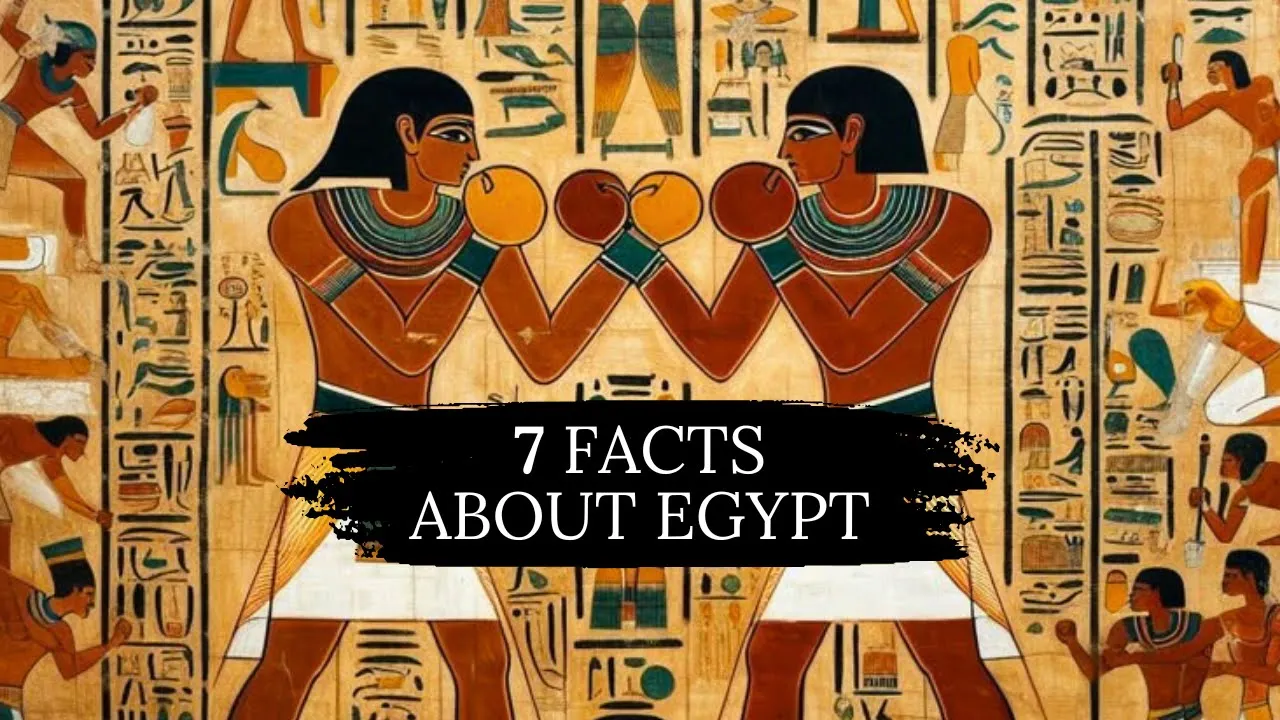
[Music] You don't need to excavate pyramids to find Egypt's secrets. They're in the gestures, in the names, in the symbols that still breathe within the stone temples and within ourselves. Egyptian spirituality wasn't a religion as we understand it today.
It was a science of the spirit, a mathematics of the soul. And behind the mummies, the pharaohs, and the hieroglyphs lies one of the most sophisticated visions of the relationship between humanity and the cosmos. In this video, you're going to discover curiosities that never make it into popular documentaries.
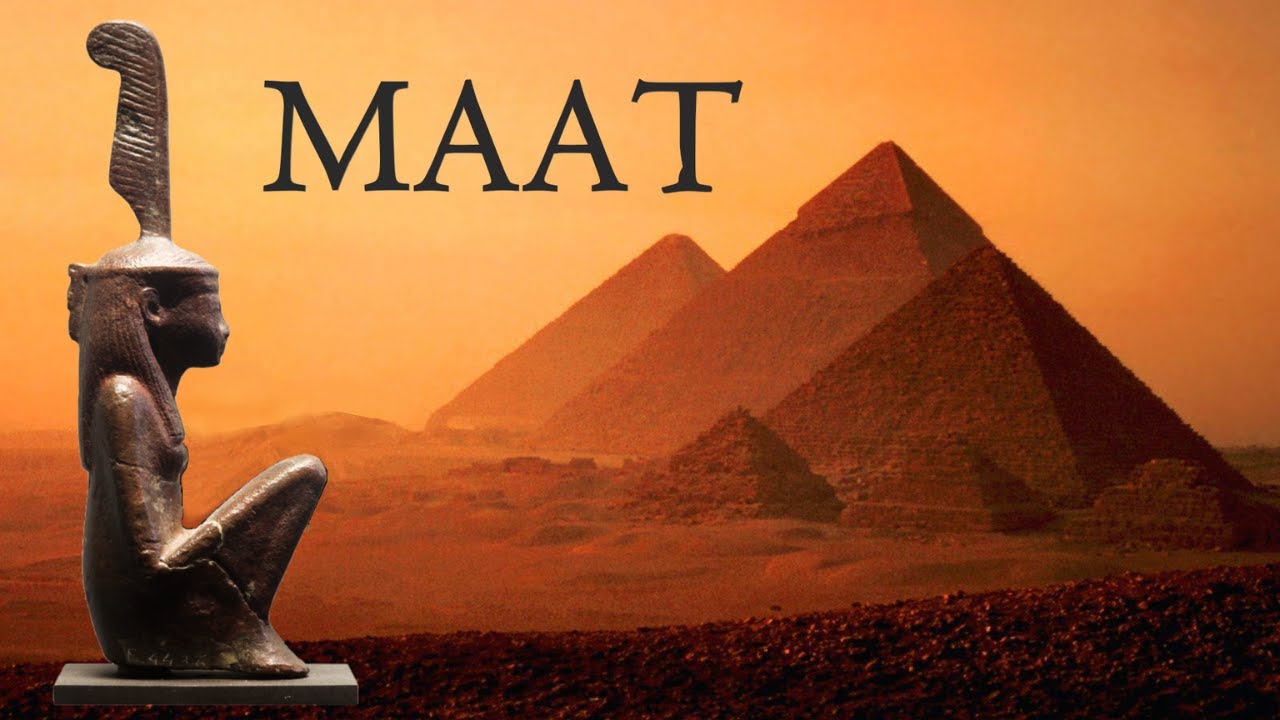
We'll gradually explore forgotten or hidden details like the hidden role of the goddess M, the living geometry of temples, the true symbolism of mummies, and the surprising connection between the heart and the judgment of the soul. [Music] At the heart of Egyptian spirituality was a principle that transcended all religious and political practices. Mat more than just a goddess, Mat was the very principle of universal balance.
The invisible force that kept the heavens, the earth, and the underworld in perfect harmony. The Egyptians believed the universe operated according to a precise order. And that order was M.
A cosmic code that had to be respected for everything to remain in its rightful place. Mott wasn't just worshiped in temples. She was lived in daily life.
She was present in the pharaoh's decisions, in legal judgments, in commercial transactions, and even in personal relationships. To live in Mat meant acting with justice, truth, balance, honesty, and harmony. The ideal was for every person from ruler to peasant to be an agent of order, never of chaos.
After all, the Egyptians deeply feared the return of Isfet, the principle of chaos and disorder that threatened to destroy the world if Mott were violated. But Mott's most mysterious role appeared after death. According toerary texts, when someone died, they were brought to the hall of judgment of Osiris, where they underwent the ritual of psychoasia, the weighing of the soul.
In this judgment, the deceased's heart, considered the center of consciousness, memory, and truth, was placed on a scale and weighed against Matt's feather. It was a decisive moment. If the heart was lighter or equal in weight to the feather, the soul was deemed pure and allowed to ascend to the fields of Aru, the Egyptian paradise, a place of peace and abundance.
But if it was heavier, laden with wrongdoings, lies, and transgressions against the cosmic order, the soul was devoured by Amit, a monster with the head of a crocodile, the body of a lion, and the hindquarters of a hippopotamus. Devoured, the soul vanished forever. A second kind of death, more feared than physical death itself.
This judgment wasn't seen as an arbitrary punishment by distant gods. On the contrary, it reflected a profound view of personal responsibility. There was no external judge deciding the soul's fate.
The very weight of the heart, the result of choices made in life, determined the final path. It's as if the Egyptians were reminding us that no one escapes the consequences of themselves. In a world where everything was a dance between order and chaos, the only way to remain light was to live with integrity, respecting the harmony of all things.
This concept resonates powerfully even today. How many of us carry heavy hearts? How many grievances, lies, guilts, regrets make our soul denser?
Egyptian spirituality invites us symbolically into a continuous process of inner purification so that one day we might have a heart light enough to float free from bondage and deep down Mott's question remains alive crossing millennia are you living in truth is your heart light or heavy perhaps the greatest judgment doesn't happen after death but happens every day in each choice we make every time we decide between acting with truth or feeding chaos. When we look at Egyptian mummies in museums, we often see only preserved bodies, relics of a people obsessed with death. But this view is superficial.
To the Egyptians, the body wasn't just a shell for the soul. It was a sacred temple, a living architecture that mirrored the cosmos itself. And mummification was much more than preserving flesh and bone.
It was a complex spiritual process designed to transform the body into a true machine for the soul's ascension. The Egyptians saw the human body as a microcosm of the universe. Every organ, every limb, every fluid had a specific spiritual and energetic role.
During the mummification ritual, organs were carefully removed and placed in kopic jars, each protected by a corresponding deity. But this wasn't done merely for hygiene or tradition. It was an alchemical ritual where the body underwent a symbolic controlled decomposition so that paradoxically it could be reborn in another form.
The skin was anointed with sacred oils. The tissues wrapped in layers that didn't just protect but sealed energies. Every amulet, every symbol placed between the wrappings had a magical function to protect, guide open paths in the invisible world.
The mummified body was in truth a spiritual capsule, a vehicle capable of carrying consciousness beyond physical death, traversing the regions of the duat, the Egyptian underworld, until it reached rebirth in the fields of Au. It's fascinating to realize how the architecture of Egyptian temples mirrored the human body itself. Temples like Luxor according to scholars like Schwaller Dubich were constructed as anatomical representations in stone where the entrance symbolized the feet, the corridors the belly and the innermost sanctuary corresponded to the brain or the pineal gland.
This reinforces the idea that the body was literally the temple of the soul. And just as initiates physically walked through the temple from outer darkness to inner light, the soul too had to traverse the corridors of existence, purifying itself until it reached the light of spirit. The mummy therefore wasn't a dead body.
It was a body prepared to continue functioning spiritually. It was like a sacred hardware programmed with symbols, prayers, and magic to maintain a connection between planes. The kai vital force, the ba, personality, and the akh luminous essence needed an anchoring point in the physical world to be able to move between dimensions.
The mummy was that anchor, a portal. For the Egyptians, preserving the body was preserving the possibility for the soul to return, to revisit, or even to complete unfinished work in the material plane. Unlike the western view that sees the body as disposable after death, Egypt viewed the body as indispensable to the soul's journey.
It was a sacred vehicle that even motionless, still held power and purpose. Today, when we see a mummy inside a sarcophagus on display, it might seem like we're looking at something inert, cold, lifeless. But the Egyptians would tell us we're standing before a temple at rest, awaiting the right moment to reactivate if the proper rituals were fulfilled.
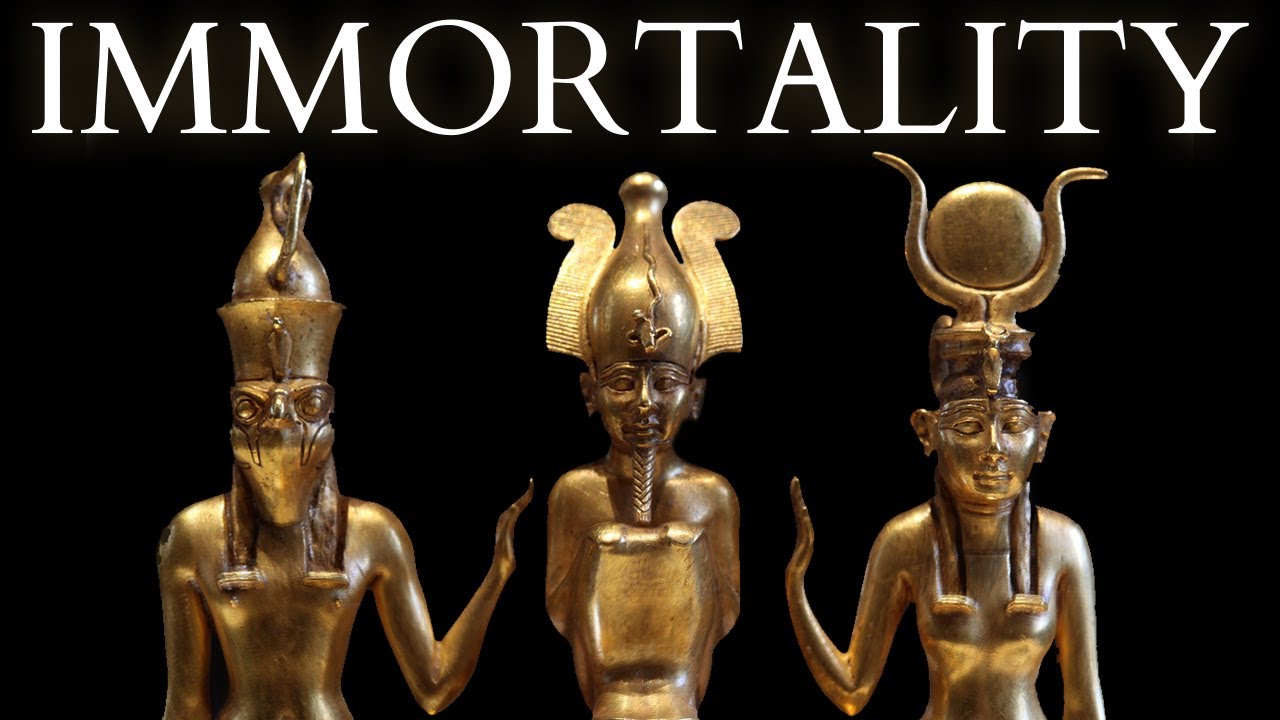
Among all the myths of ancient Egypt, none was as powerful as told and retold as that of Isis and Osiris. At first glance, it might seem like just a tragic story about a murdered god and a goddess trying to put him back together. But behind this narrative lies an initiatory map, a symbolic code that speaks of the soul's journey, of death, and of spiritual rebirth.
According to the legend, Osiris was a just and beloved king who taught humanity to cultivate the land and live in harmony. His brother Set, driven by envy and ambition, betrayed him, murdering him and scattering his pieces across Egypt. Isis, both wife and sister to Osiris, then embarked on an unceasing quest.
Gathering each part magically and lovingly, reassembling her husband's body. With the help of Anubis, she performed the imbalming rights. And through her enchantments, she brought Osiris back to life.
Not to the physical world, but as the king of the invisible realm, lord of the underworld, and judge of souls. But the myth doesn't end there. Isis mystically conceived their son, Horus, who would grow up to avenge his father and restore order.
This cycle, death, dismemberment, reassembly, rebirth, and the triumph of light over darkness was not merely a mythological narrative. To initiates, it was a mirror of the spiritual journey itself. The Egyptians believe that every human being carries an Osiris within, a divine essence that must die to the ego, be torn apart by the forces of chaos, so that it may then be reassembled by the loving intuitive soul represented by Isis.
The Egyptian initiatory path, especially in the temples dedicated to Isis, involved rituals of symbolic death, where the initiate passed through darkness, isolation, and trials, simulating Osiris's own dismemberment. Only by going through these dark nights of the soul could the initiate be reborn with new vision, new consciousness, a new being. In this context, Isis was not merely a mother goddess.
She embodied the very healing force of the soul, the intuition that guides the lost pieces of ourselves back to the center. And Osiris wasn't just the dead who returns. He was the principle of awakened consciousness, the ruler of the invisible who reminds us that there is life beyond matter.
It's fascinating to see how this myth echoed through many traditions across history. The cycle of death and rebirth appears in the myth of Dianisis among the Greeks, in Orpheus, in Christ, and even in the archetypes of the psyche described by Carl Jung. But in Egypt, it was lived ritually, both literally and symbolically inside the temples and woven into daily life.
The mysteries of Isis and Osiris were transmitted only to initiates through veiled language, symbols, and ritual enactments. The one who walked the path of Osiris didn't merely understand death. They learned to die while still alive, to let go of the ego, to lose what they thought was essential in order to find the part of themselves that never dies.
Perhaps at its core, the myth invites us to something very simple and at the same time tremendously difficult. To look at the broken pieces of our own story, to gather them with love and allow intuition to regenerate us. [Music] When we think of the temples of ancient Egypt, we imagine massive stone structures, towering columns, hieroglyphs eternally carved under the desert sun.
But to the Egyptians, a temple was not merely a building. It was a living being, a sacred body that breathed, pulsed, and channeled cosmic energies. Each temple was built with an intention far beyond architecture.
It was a replica of divine creation, a microcosm of the universe and at the same time a reflection of the human body. The inscriptions on the walls, the bass reliefs, the symbols were not there merely to be observed. They were vibrational keys, image sounds capable of awakening different layers of consciousness.
Passing through each room meant activating an organ of this temple body, tuning oneself to specific frequencies. There were purification chambers, rebirth rooms, corridors representing the challenges of darkness. The temple was a labyrinth of the soul where the initiate faced their shadows until reaching the light of the sanctuary.
Furthermore, the temples were aligned with astronomical precision. Every pillar, every corridor, every opening was synchronized with stars, constellations, solar and lunar cycles. This turned the temple into a cosmic antenna, a bridge between heaven and earth, capturing and radiating invisible forces.
It wasn't by chance. The Egyptians saw the universe as a living web of correspondences, and the temple was the convergence point of these forces. Even more astonishing is realizing that the priests themselves were called servants of the temple.
Not in the sense of mere servitude, but because they were the living cells of this greater organism. They maintained the rituals, the chants, the offerings, not to please the gods in a literal sense, but to keep the temple alive, pulsing, aligned with its spiritual mission. An abandoned temple wasn't just a ruin.
It was a body without a soul. A broken bridge between worlds. Today, many of these temples still stand, silent, imposing.
But do they still breathe? The Egyptians believed that as long as someone visited them with reverence, someone who read their symbols with an open heart, the temple would continue to live. Every step between the columns, every gaze upon the hieroglyphs is a small act of resurrection.
We often look at ancient Egypt through modern eyes and assume they had a religion, a set of gods, myths, and rituals similar to what we see in other ancient cultures. But this idea misses the essence of Egyptian spirituality. Egypt didn't have a religion in a dogmatic or institutional sense.
What they had was a deep initiatory system, a veiled spiritual science structured to guide the human soul toward a higher state of consciousness. Their relationship with the gods wasn't one of mere external worship, but an internalization of universal principles. Isis, Osiris, Horus, Thubis.
They were more than mythological figures. They were living archetypes, representations of cosmic forces and inner aspects of the psyche. Each god was a door, a mirror, a key.
By worshiping a god, the Egyptian wasn't simply asking for favors. They were seeking to awaken that force within themselves. The temples weren't places of worship in the modern sense, but mystery schools.
There were outer areas open to the public with visible rituals and inner areas restricted to initiates where the secret rights of spiritual regeneration took place. Every chamber, every step, every symbol in the temple was a stage in the soul's journey. Initiates physically walked through the temples as if traversing the deepest layers of their own being until they reached the innermost sanctuary, the place of union with the divine.
Egyptian priests were true scientists of the spirit, guardians of astronomical, alchemical, medical, and metaphysical knowledge. Their practices included fasting, meditation, chance in specific tones, manipulation of aromomas and symbols, all aimed at transforming consciousness, not merely performing external magic. The ultimate goal wasn't to win favors from the gods or avoid punishment, but to become an Osiris, one who had died to the ego and been reborn into the eternity of awakened consciousness.
This system was transmitted through layers of meaning from popular myths to the highest levels of initiation. To the common people, the myths of Isis and Osiris were beautiful stories full of emotion and morality. To the initiates, they were encrypted codes describing inner processes of symbolic death, dismemberment of the lower self, reassembly of the soul, and ascension into light.
The same myth could be read in multiple ways depending on the listener's level of understanding. What's most fascinating is that this initiatory structure wasn't just a set of isolated rights. It was embedded in Egypt's very social, political, and cultural life.
The pharaoh wasn't merely a political ruler. He was seen as the supreme initiate, one who had walked the mysteries and therefore could uphold M, the cosmic order in the kingdom. To govern was an extension of his spiritual role, an act of balance between heaven and earth.
One of the most fascinating and littleknown curiosities of Egyptian spirituality is that the most sacred texts weren't meant to be silently read, but to be sung, chanted, vibrated into the air. To the Egyptians, the word carried power far beyond communication. It was magical, creative, capable of shaping realities and opening portals between worlds.
For them, sound wasn't just physical vibration. It was a divine principle, a cosmic force in motion. According to their myths, the universe was created by the word or the utterance, a primordial sound spoken by the god Ta, bringing everything into existence.
That's why hieroglyphs weren't just graphic symbols. They were visual representations of sacred sounds. Each character carried a unique vibrational potency.
And by pronouncing them correctly, the priest was activating invisible forces, awakening dormant energies, communicating directly with the spiritual world. The hymns of the book of the dead, for example, were carefully recited in specific tones during rituals. It wasn't just any voice that could chant them.
The priest had to be trained not only in the meaning of the words, but in the power of sound. Each syllable was a note. each word a spiritual chord.
The goal wasn't merely to read the soul's instructions for the afterlife. It was to vibrate the path, to build a sonic bridge for the soul's safe passage through the underworld. This practice reveals an extraordinary view of language not as something dead and fixed, but as something living, dynamic, energetic.
To speak was to create, to chant was to activate. To recite was to open portals. Sound had the power to order chaos, to harmonize energies, to restore lost balance.
And this wasn't a metaphor. It was a lived practice, a spiritual technology applied in daily rights and major rights of passage. Even the temples themselves were built with specific acoustics.
Some chambers, like those in the temple of Dendera or the inner spaces of the Great Pyramid, have such peculiar resonances that they amplify or prolong certain tones, creating a deep echo effect. These sound effects weren't architectural accidents. They were part of the ritual.
The sound reverberating in the temple wasn't just heard. It was felt in the body penetrating bones, viscera, mind and soul. It was a form of spiritual synthesia where sound crossed the barriers of matter and touched subtler dimensions.
That's why the Egyptian priest was also a musician, a master of sound, a keeper of sacred melodies passed orally from generation to generation. He knew that a sound chanted out of tune could lose its power or even open undesirable forces. It wasn't a performance.
It was a cosmic responsibility. This deep knowledge of sound has echoed across the centuries surfacing in later traditions in Gregorian chants, Eastern mantras, shamanic songs. But in Egypt, it was at the heart of spiritual practice.
inseparable from magic, healing, and initiation. Perhaps one of the greatest misconceptions we make when looking at ancient Egypt with modern eyes is imagining that for them, the gods lived up there in a distant sky, separate from human experience. But the Egyptians never imagined their gods this way.
The gods didn't live in the sky. They lived inside. They were inner forces, living aspects of the soul, archetypes dwelling in the human heart.
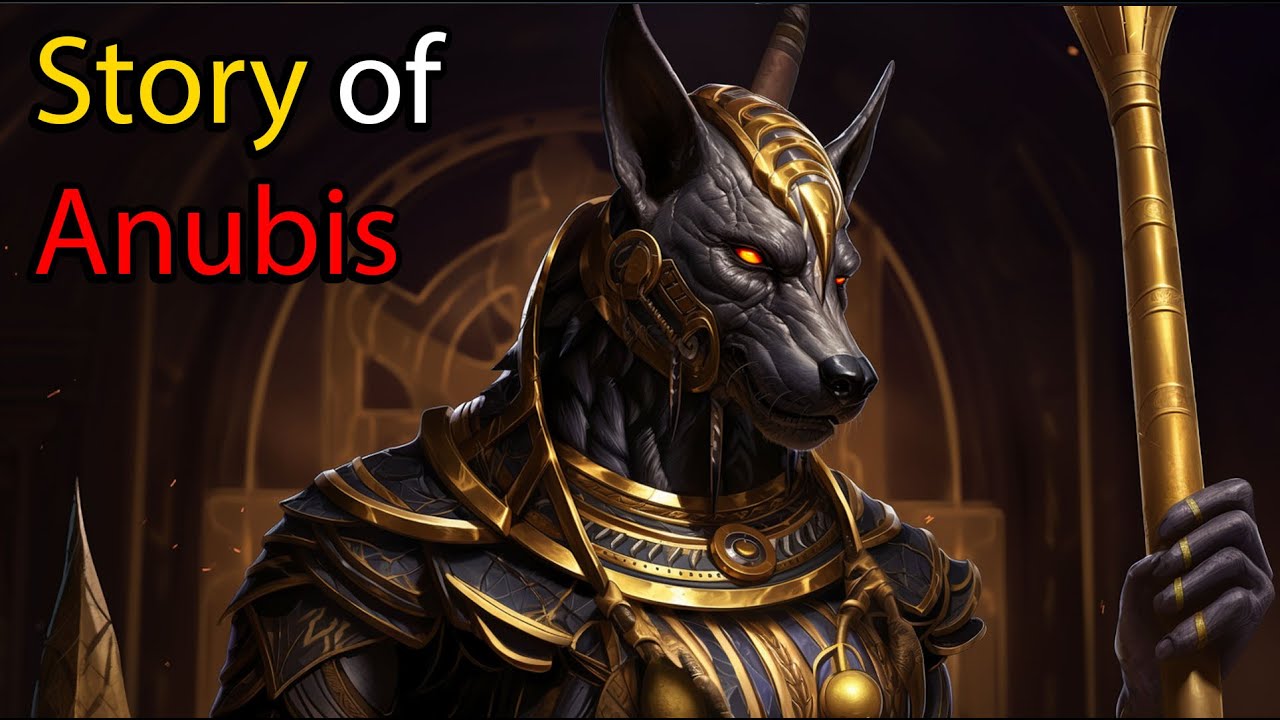
Each god represented a cosmic energy, but also a state of consciousness. Anubis, the jackal-headed god, wasn't just the protector of tombs. He was that part of us that guides our journey through shadows, that helps us face the fear of death, the unknown, the unseen.
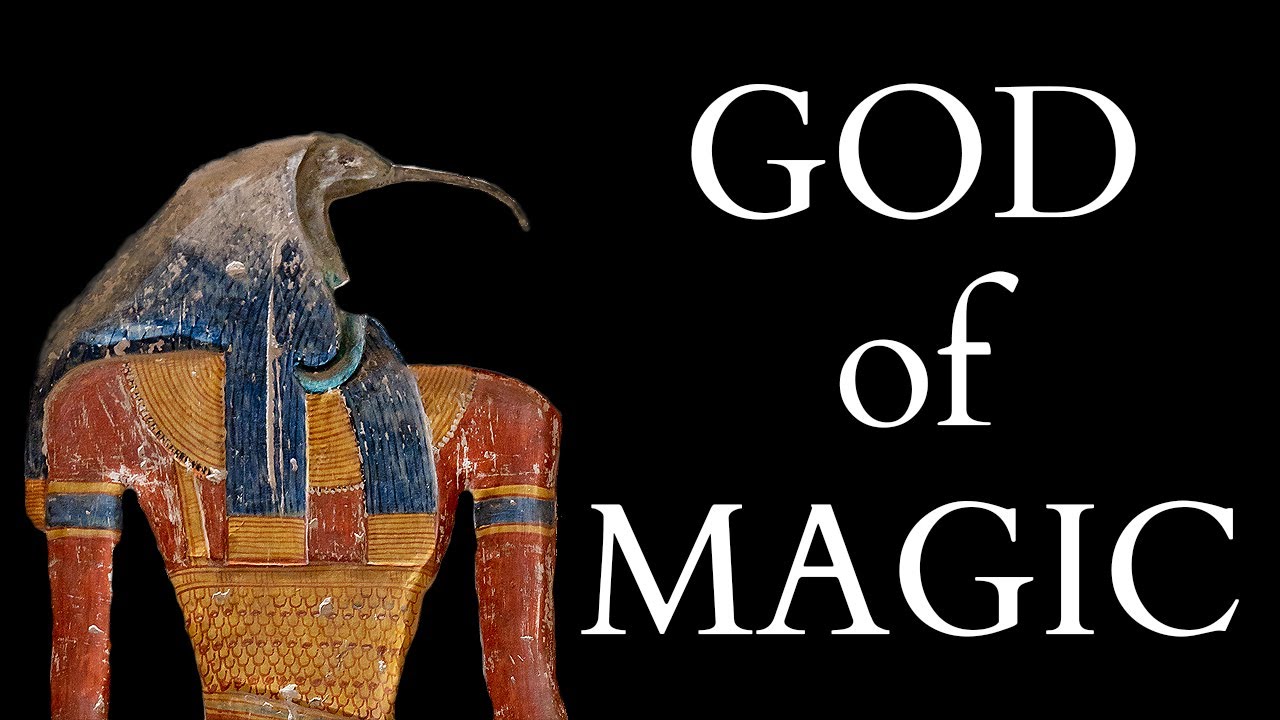
Thring and wisdom, wasn't merely the inventor of hieroglyphs. He was the illuminated mind, the higher thought, the intuition that organizes mental chaos into sacred knowledge. Isis, Osiris, Segmet, Horus.
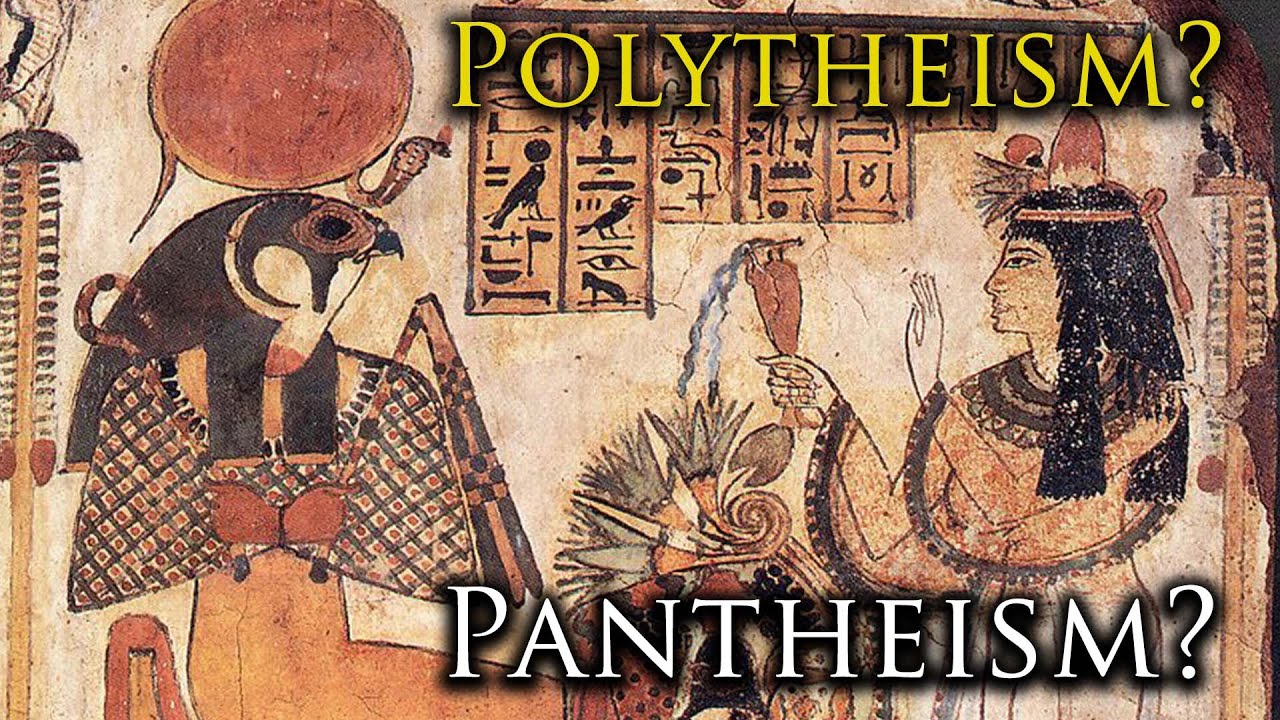
They were at once cosmic beings and mirrors of the human psyche. The Egyptian pantheon was a true inner map, a ctography of the soul. To invoke a god wasn't just an act of external worship, but a call to activate that force within oneself.
It was like saying in this moment I call upon Seekmet for I need the fire that purifies. I call upon Isis for I need the love that rebuilds. I call upon Thoth for I need the wisdom that reveals.
This vision is so powerful because it dissolves the separation between the human and the divine. The Egyptians weren't seeking a god out there, but a god through. The rituals, the hymns, the images, all were meant to awaken the divine within, to stir the gods already latent in the soul.
That's why divine representations were hybrid, half human, half animal. This wasn't primitive superstition. It was a sophisticated symbolic language expressing that the divine isn't limited to human form.
It transcends, integrates, unites instinct and reason, body and spirit, nature and culture. The gods were totalities, paradoxes, bridges between opposites. This lived spirituality meant that daily life itself was a temple in action.
Every act was a ritual. Every choice a ripple in the cosmic fabric. To eat, to sleep, to work, to love, to celebrate.
Everything could be done in m in harmony with the cosmic order. Spirituality wasn't a compartment of life. It was life itself, illuminated by the awareness that the sacred inhabits all things.
And perhaps the greatest secret of Egyptian spirituality is exactly this. There is no distance between the human and the divine, between the visible and the invisible, between the self and the cosmos. Each of us carries an entire pantheon within the chest, a constellation of forces waiting to be recognized, honored, integrated.
And so Egypt whispers to us across the millennia, "Don't look to the sky in search of the gods. Close your eyes. Dive into your heart.
That's where they've always dwelled. " Thank you for watching.