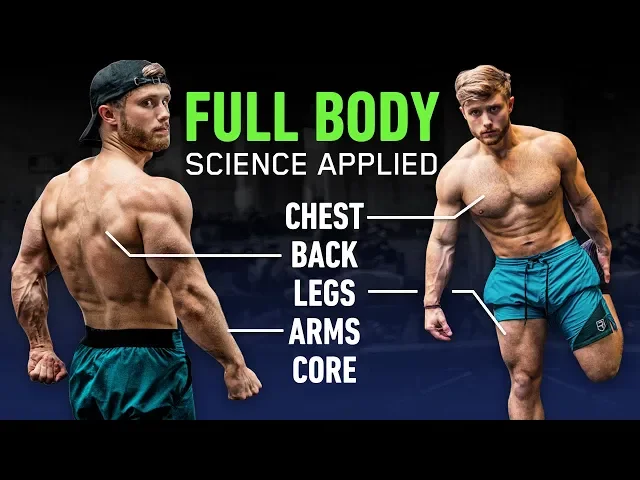
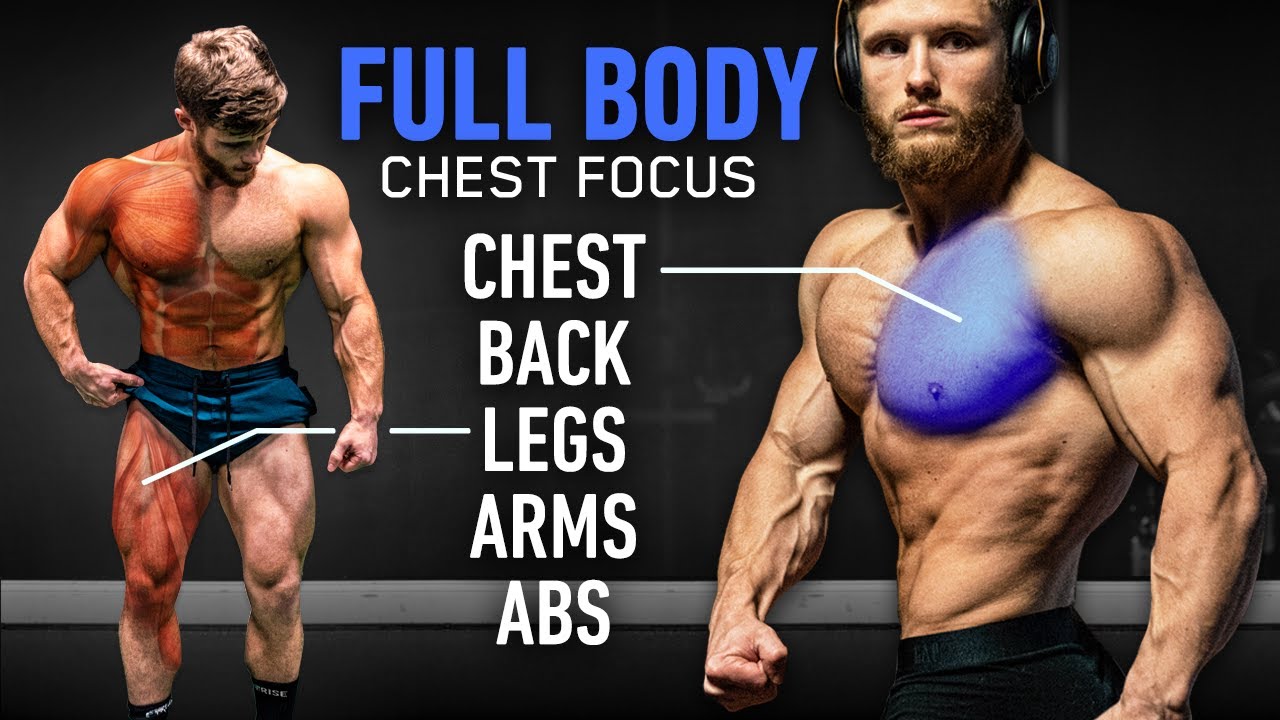
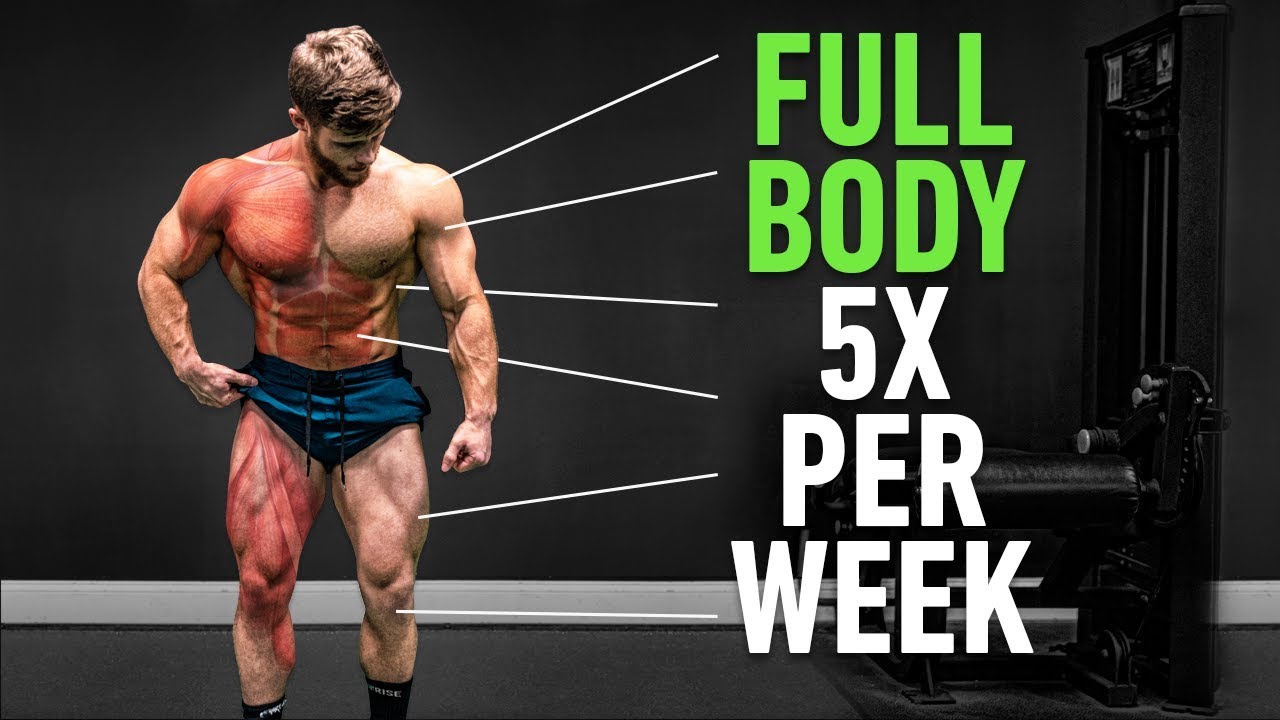
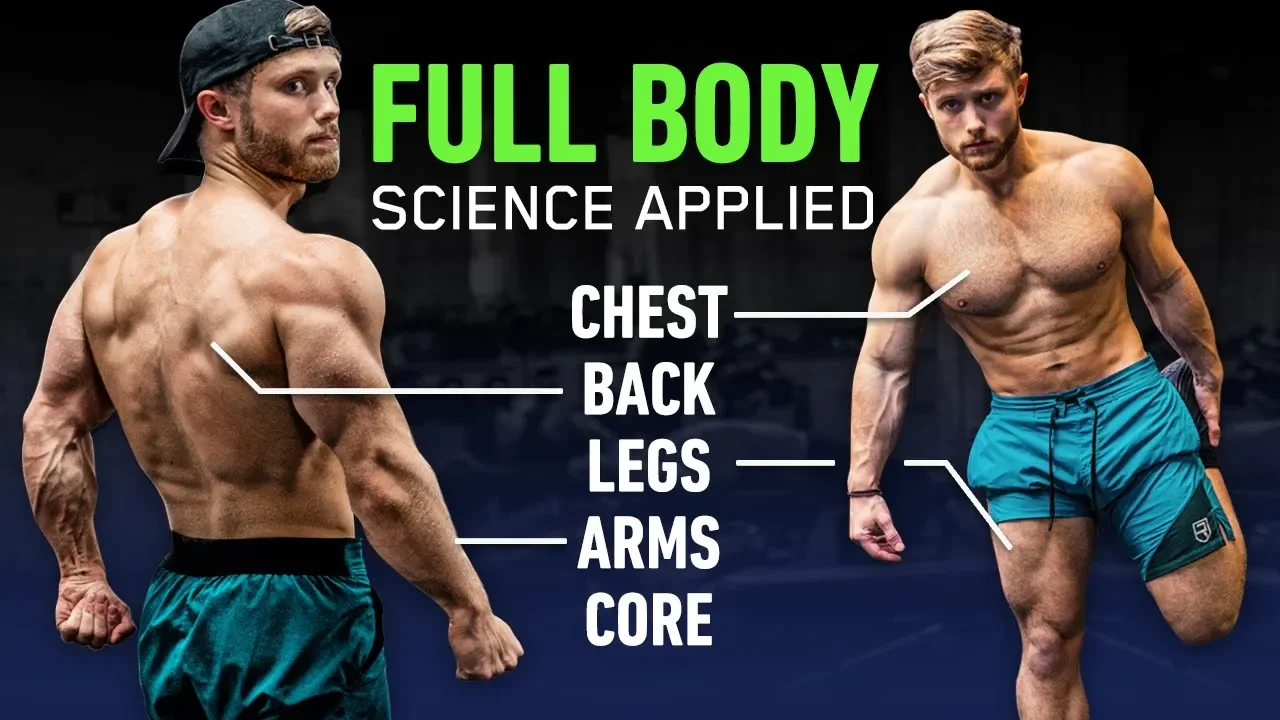
[Music] okay welcome everyone to the first episode of the full-body science applied series it's great to be doing these videos again so in the series I want to go through five full-body workouts as part of my new high frequency split that I talked about in my last video where we're pretty much hitting every body part every training day so if that sounds totally crazy to you make sure you check out my last video for some context on that first so the way I've set this up is that each of the five workouts will have a
specific body part focus so we'll be prioritizing one muscle each day with slightly more emphasis and we'll be starting today with the first leg focused workout so our main focus today is going to be the quads hamstrings and glutes now as always a kick off every workout with a quick warm-up routine so I'll do about 5 to 10 minutes on the elliptical or Stairmaster and three to four minutes of dynamic stretching and then I'll foam roll out any tight areas and I already did a full science of 5 video on my warm-up routine and I'll
link that down below so at first we're doing 4 sets of 4 reps on the squat using 80% of our 1 rep max now it's really important that these sets not feel super difficult so by the time you get to the fourth set you should still have about 2 or 3 reps left in the tank and that's because going to complete failure on heavy compound lifts is especially bad when running a high-frequency split because if you push it too close to failure it can really mess up your training the next day so remember squats activate
a ton of muscle mass including the spinal erectors of the back meaning they have a pretty high potential to interfere with other exercises you might have planned the next day so instead of going for max effort you really want to hone in on using perfect technique at the assigned intensity now I want to quickly look at squat depth here because that's something a lot of people struggle with a few years back I used to think that you should always squat as deep as possible because 1 2002 study found higher glute activation on the full squat
than the parallel squat and the partial squat however the study was limited by using the same weight for all three variations and when it was replicated by Contreras and colleagues using relative loading they found no difference between parallel squats and full squats not only for the glutes but for any of the muscles tested so this implies that as long as you're going to at least parallel you're in the clear if your goal is hypertrophy now that doesn't mean you can just get on the Baron do knee bends as previous work from Bloomquist and colleagues found
that very shallow quarter squats paled in comparison to parallel squats for leg gains so for people like myself who can get all the way down with just a little bit of butt wink I'd say to go for it but for those with more limited hip or ankle mobility apart from doing specific mobility drills to open those joints up I'd say settling for a parallel squat is probably your best bet now one cue I've been using on the squat lately that you can try is to think about screwing your feet into the floor so after you've
set the bar on either a high or low bar position walked it back two or three steps set your stance to a width that feels comfortable to you and taking a breath deep into your gut not up into your chest you might get even tighter by screwing your feet into the floor causing your foot to make firm contact with the outer wall of your shoe creating a more stable base of support and this cue can help prevent the knees from caving in as well and for the squat we're running a weekly undulating progression where the
load alternates between heavy weeks and light weeks so in week one we're doing a heavy four by four then and b2 dropping back to a lighter three by six then it's back to fours and week three but with heavier weight a lighter three by six again in the fourth week and the idea here is to strike a balance between gaining strength while still getting in enough a so called effective reps for hypertrophy okay so after squats were moving on to three sets of eight on the incline dumbbell press so rather than moving on to our
next leg movement right away we're hitting an upper body movement first to allow the lower body to recover a bit this approach is based on findings from a 2017 systematic review which found that longer rest periods tend to promote greater hypertrophy because they allow for higher overall volume load so in my eyes the more rest you can get between exercises for the same muscle groups the better so we'll hit some pecs delts and triceps while the legs rest of it and we're choosing an exercise here that targets all of the pushing muscles quite well as
we're able to stimulate three muscles with a single exercise incurring less recovery demand per unit of time now when it comes to muscle stimulation we know from some EMG data that not only is there more upper chest activity with the incline press there's also a more deltoid activity with increasing bench inclination as well especially when using a wider grip this means that we can get a very nice mix of pecs and delts with this single move and we're opting for a free weight dumbbell press over a machine press here mostly because the lateral delts will
be much more active with the free weight variation according to data from chicken colleagues even though there wasn't much difference between free weights and the smith machine for the anterior delts and the pecs clearly the lateral delts were far more active when using free weights this is most likely because the lateral delts perform a stabilizing role to help keep the dumbbells from tipping backward or forward also because we're not isolating the triceps on day one I'm bringing the dumbbells a bit more down into the front with my elbows more tough than usual and this is
gonna target the upper pecs a bit more as well since it's emphasizing shoulder flexion so to get the most out of this you want to think about bringing the dumbbells down and forward and then pressing them up and back toward your face okay up next we're hitting three sets of ten on the lying leg curl now we know from basic bio mechanics that the squats we just hit didn't do a good job of hitting the hamstrings because they were lengthening at the knee while shortening at the hip also even though an exercise like the Romanian
deadlift which is coming up on day two does hit the hamstrings through hip extension one of the heads of the hamstrings the biceps femoris short head only crosses the knee joint meaning it's biomechanically impossible for it to contribute to hip extension this means that if you want to hit all four heads of the hamstrings you simply need to do some kind of knee flexion based movement like a leg curl now remember we're hitting our deals on day two so we want to choose an exercise that isn't gonna have your hamstrings feeling too sore for those
the next day so we want to pick it less damaging exercise here like the lying leg curl or something like the glute ham raise which is gonna load the hamstrings in a more highly stretched position so as you can probably tell how you sequence your exercises throughout the week it becomes a much more important on high frequency full-body split so you avoid that interference with what you have planned the next day all right up next we've got three sets of ten reps on the lat pulldown again here the key is stimulating the desired muscle group
without generating too much overall fatigue so you could argue that well pull-ups might be a better choice as an overall back builder but when programming a heavy exercise like the squat and a pretty heavy dumbbell press as well on the same day it'd be tough to then also hit heavy weighted pull-ups I mean that would be fine if you were only hitting your body two or three days a week since you've had plenty of time between those workouts to recover when hitting a high frequency full body split I try to only have one or two
highly demanding movements per day to avoid those recovery issues granted will still be hitting heavy pull ups on our back focused full body workout because I do think they're worth including on a day that's actually more focused on prioritizing the back we're also not hitting any horizontal pull or row on this day including both a vertical pole and a horizontal pull five days a week which is add up to way too much weekly volume for the back so I tend to alternate a vertical pole like a pulldown with a horizontal pole like a row or
a face pole from day to day throughout the week okay up next we're gonna hit our first advanced intensity technique with three sets of a twelve twelve drop set on the EZ bar bicep curl I definitely don't like to use a lot of intensity techniques on a high frequency split just because they do impose a higher recovery demand than just straight overloading sets however because the biceps are such a relatively small muscle they simply won't generate as much fatigue on a drop set as something like the quads or the lats would so because this technique
isn't likely to impair performance over the next few training days I think it makes sense to push it here so we can stimulate more muscle fibers per working set so this is the only exercise we'll be taking to failure on day one and what I've been focusing on here is swinging the bar out in an arc rather than curling it back toward my chest and I also q4 supination by thinking about driving my pinky up into the barbell as I curl and we're gonna round out this workout with three sets of hanging leg raises I
think any complete ab routine should include at least one exercise that brings the legs up toward the chest like a leg raise and one that brings the upper body down toward the legs like a crunch and remember that research tells us that contrary to popular opinion the squat actually doesn't activate the rectus abdominus or external obliques much at all so if you want to maximize development of the ABS it's important to hit them directly and that's gonna finish out the workout now for the record if you guys are oppressed on time you can run each
pair of exercises we just covered as supersets I'm so for example for the first two exercises you can hit one set of squats rest a minute or two hit a set of incline dumbbell press rest another minute or two then go back to squats and so on but since I'm not really limited on time myself I prefer to just hit each exercise one at a time and if you're interested in putting this together into a complete 10-week training program you can check out my new high-frequency full-body program over on Jeff never calm and I decided
I'm going to extend the launch for this sale for one more week so you can still get it for twenty five percent off but until next weekend and then it'll go up to $39.99 from there and I'd say it'll probably be another four or five weeks before I get all the workouts up here on the channel and also I should say this program is designed for intermediate to advanced level lifters so if you only have a year or two of training experience I definitely recommend running my fundamentals program first instead which also uses a full-body
split but it only has you in the gym three days per week instead of five so I'll put a link to the new full-body program over here next my head if you guys would like to check it out don't forget to subscribe so that you don't miss the rest of the series leave me a thumbs up if you enjoyed the video and I'll see you guys all here in the next one