NARRATOR: Next on "Unsolved Mysteries," a brothel that seems to operate with the support of the local police. Then, two of the girls are mysteriously murdered. Be still, devil.
[inaudible] NARRATOR: Exorcism, can it really help this woman who says that she's possessed by the devil? The shooting death of rock star Kurt Cobain, most say suicide. Some say murder.
In a remote Arizona forest, a trucker terrorizes campers then disappears. You're about to experience a whole new generation of unsolved mysteries. Our team continues to track crimes, wanted fugitives, and cases of the paranormal.
In a moment, five true stories with strange clues and bizarre twists and some updates you would never expect. I'm Dennis Farina. And this is "Unsolved Mysteries.
" [music playing] NARRATOR: Seattle, Washington, April 8, 1994. Music fans were horrified to learn of the death of local rock star Kurt Cobain, lead guitarist and singer songwriter for the popular grunge band Nirvana. Cobain apparently died of a shotgun blast to the head.
An autopsy later revealed a nearly lethal dose of heroin in his bloodstream. The official ruling was suicide. TOM GRANT: I don't believe Kurt Cobain committed suicide.
I believe there was someone with him in that room. I believe it was someone that he knew. They were doing heroin together.
I believe at a certain point, more heroin was injected into Kurt Cobain than what he wanted injected into himself. And after that point, he was shot with a shotgun, once he had become totally incapacitated. There was a very thorough, comprehensive investigation done from the very beginning.
And everything that the detectives encountered indicated to them that this was a suicide. We actually found nothing to indicate that this was anything but a suicide. NARRATOR: However, this wasn't Cobain's first brush with death.
A month earlier this photograph was taken as Cobain was being rushed to a hospital in Rome, Italy. He had overdosed on sedatives and alcohol and nearly died. His family and friends persuaded him to check into drug rehab.
But after two days, he walked out and disappeared. The next day, Cobain's wife, fellow rocker Courtney Love, is said to have contacted Tom Grant, a Los Angeles based private investigator, and asked him to find her husband. Courtney asked us of course not to contact him, not to make any contact with him, just to report back where he was and what was going on.
NARRATOR: But Tom Grant didn't find Cobain soon enough. Kurt's lifeless body was discovered by an electrician working at his house, three days after he died. I contacted the police the day the body was found.
They basically told me on the phone, hey, we know a suicide when we see a suicide. NARRATOR: Grant quickly switched from surveillance to investigation. The more he discovered, the more he became convinced that the official cause of death was wrong.
Grant believes that he has found important inconsistencies in the case. Number one, Cobain's credit card appears to have been used after his death. TOM GRANT: There was an attempt made on April 6th.
There was another attempt made on April 8. Curt had died sometime on April 5th. Who was using the credit card?
The information we've been able to receive from the bank has only been able to identify for us when the information was logged onto their mainframe computer and not specifically when the attempt was made or who it was made by. TOM GRANT: Now after the body was discovered, two other cards were found in the wallet. But the actual credit card that someone was attempting to use after we now know Kurt was already dead was not found.
NARRATOR: A second inconsistency, the autopsy showed Kurt Cobain's blood contained 1. 52 milligrams per liter of the tranquilizer diazepam and [inaudible]. .
Some medical experts say that much heroin could kill a person three times over. Could he, with that much heroin and diazepam in his system, could he even pick up that shotgun? Wouldn't he be incapacitated within seconds?
NARRATOR: Dr Donald Reay inspected Cobain's body at the scene. It's really an issue of tolerance. How much is this person used to?
If a person is gradually over the months or years increase the dose, a person could function with that amount of drugs, narcotics, or whatever it is present in the system. Again, it-- so much of it depends upon individual tolerance over a period of time. NARRATOR: A third inconsistency, police found no legible fingerprints on the shotgun, the shotgun shells, or the pen used to write the note.
Could they have been wiped clean? The official interpretation is-- Well I think it's clear that anyone who is familiar with firearms and their use would know that as they hold a weapon that frequently that weapon will move in their hand. Additionally, when that weapon is discharged, that causes a jerking motion, which causes the hands to move over the surface of the weapon.
And all of those factors could cause any fingerprints that may have been left on the weapon to be unusable. NARRATOR: Inconsistency number four, the alleged suicide note. Tom Grant believes it was actually a retirement letter to Cobain's fans.
There were rumors that Cobain was feeling burnt out and was planning to adopt a lower profile. He had just recently pulled out of the annual Lollapalooza tour. This is a copy of the note that has been widely circulated.
Tom Grant suggests that only the last four lines indicate suicide. They read, please keep going Courtney for Francis, for her life, which will be so much happier without me. I love you.
I love you. We asked handwriting expert Marcel Matley to compare a copy of Cobain's alleged suicide note with two pages of lyrics hand written by Cobain. Matley believes the bulk of the note was written by Cobain.
However-- As to the last four lines, there are more than a dozen differences that should give us pause. And we would have to reasonably explain these differences before we can conclude that the same person wrote the four lines that wrote the body of it. Another-- NARRATOR: Handwriting expert Reginald Alton also compared copies of Cobain's handwriting to a copy of the note.
In a five page written report, Alton pointed out more than a dozen discrepancies. He believes the bulk of the note was written by Cobain but raises questions about the first line and the last four lines. His report states, there are many indications that there may have been a second hand at work.
We did take the note from the scene and have it examined at the Washington State Crime Lab. And their handwriting analyst has indicated that it is her belief that this note was written by Mr Cobain. TOM GRANT: Kurt Cobain had made an important decision in his life.
He wanted out of the entertainment business. He didn't want to tour anymore. He didn't want to perform anymore.
He wanted to be left alone. He never liked that aspect of being a performer. This decision that he had made was going to affect a lot of other people.
He was no longer the money machine that he once was. Now Cobain was worth more dead than he was alive. NARRATOR: But who would have wanted Cobain dead?
Could it have been the mysterious user of his credit card? And did that same person add critical lines to Cobain's alleged suicide note? For now, those questions remain unanswered.
The Seattle Police consider the case closed. Tom Grant does not. He believes that the investigation should be reopened, and the inconsistencies resolved once and for all.
NARRATOR: Next, murder at a massage parlor with the police involved. And later, a feud over drug money spirals out of control. Our next story is about sex, murder, and charges that the police may be involved in the killing of two prostitutes.
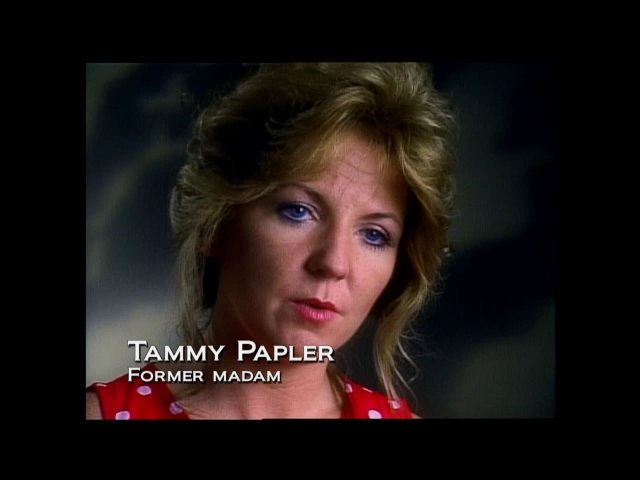
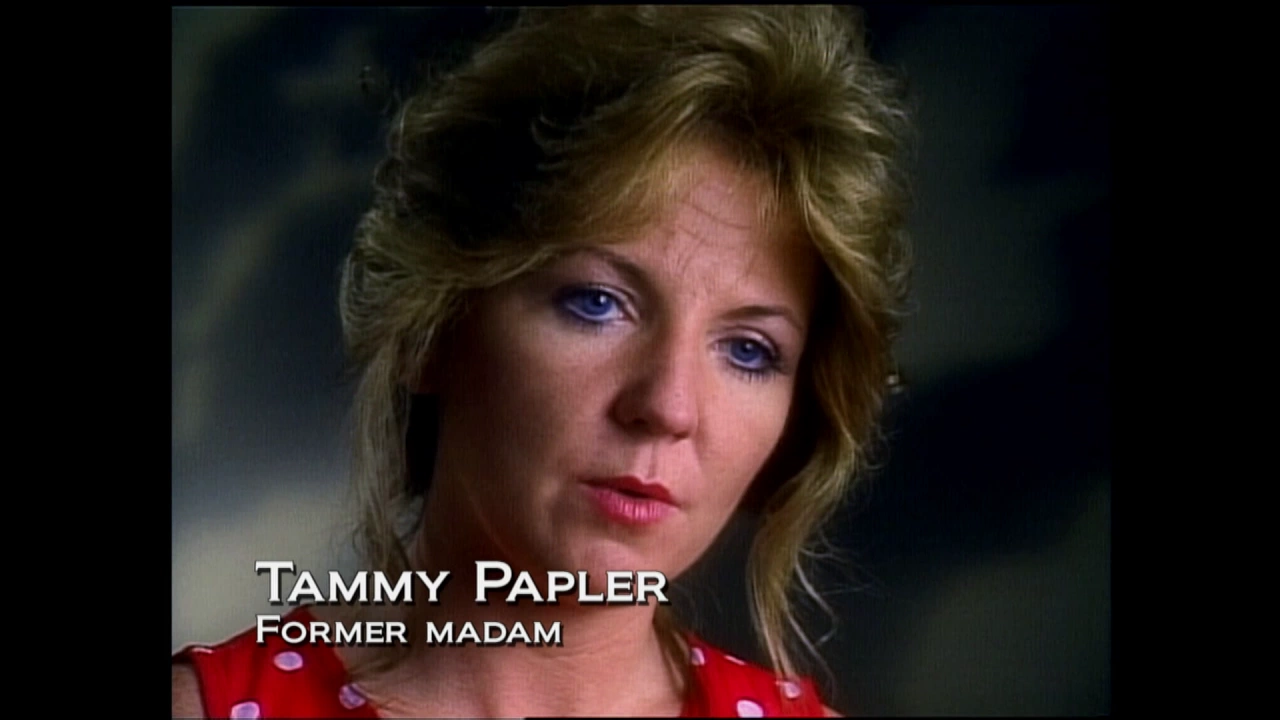
At the center of this unsolved crime is a madam who won't stop until she gets some answers. TAMMY PAPLER: I don't think the murders were ever meant to be solved. They thought if it got solved, it would be a really big embarrassment to have police officers arrested for killing two prostitutes.
Bring somebody the proof and the evidence needed for indictments or convictions, I will assist any agency in their apprehension. Until then, I'm not going to point fingers at anybody. NARRATOR: Straddling the border between Kentucky and Tennessee is Fort Campbell, Kentucky.
It's one of the largest army bases in the world. And just down the road is the little town of Oak Grove, home of the New Life Massage Parlor. - Hi.
- Hi. Welcome to New Life. NARRATOR: Here, a handful of girls give comfort to the troops.
Tammy Papler is the owner of the New Life Massage Parlor. OK, Bebe. NARRATOR: Though prostitution is illegal in Kentucky, Tammy says the police didn't bother her, because, well, they got quite a few benefits.
TAMMY PAPLER: The police department would pick out specific things for us to buy, and they would order them. I know there were lights for just about every car, shoes, uniforms, canine t-shirts, Christmas parties, Christmas bonuses. They get basically what they want.
Those little seven or eight police officers and the mayor run the whole town. Hi, Ed. NARRATOR: Tammy says one Oak Grove police officer, Ed Carter, took excessive advantage.
Carter has denied the accusations you are about to hear. So what can we do for you today, Ed? Oh well I was just in the neighborhood and-- TAMMY PAPLER: Ed Carter would ask a lot more than the other officers would.
Because he wanted services, and it was like, well, I know what's going on. You know, I'm a police officer who are they going to believe, you or me. NARRATOR: According to Tammy, once Carter got started he didn't stop.
He insisted that she contract with him for janitorial services. And when she went on vacation, Tammy says Ed Carter virtually took over control of the massage parlor. Ed, what are you doing?
Hold up. I'm just making sure-- Put down my money, Ed. - Calm down.
- What's going on? TAMMY PAPLER: It was like he was the madam. I wasn't the madam anymore.
It was actually like he was. He was the one that was in charge of the parlor. He was running it.
Ed, put down my money. Look, I've helped you from day one. Ed, how much money of mine have you taken?
TAMMY PAPLER: I was furious with him. I didn't want him around my business anymore. I didn't want him around the girls.
I informed the girls, you keep the door locked. If he comes in, you just shake your head no. Don't allow him to come inside this business.
Get out of here. TAMMY PAPLER: I told him, don't ever come around here again. You stay away.
And I made sure we had had a meeting. And I informed each and every one of them of this. You do not allow him around here anymore.
It's the end of it. NARRATOR: A few weeks later, the bodies of 22-year-old Candy Belt and 18-year-old Gloria Ross were discovered in a back room of the brothel, both were shot execution style-- [gunshots] --and both had their throats slashed. Earlier that same evening, Ed Carter stopped by the massage parlor.
Good evening, ladies. Slow night, huh? NARRATOR: He told investigators that he went home to his wife at 3:00 AM, well before the murders which occurred around 4:00 AM, according to the coroner's report.
Carter and his wife have since been divorced. She now claims that he got home well after 3:00 AM. CAROL MORRE: He came in a few minutes after 4:00.
I made it a habit of looking up at the clock when he came in. Mary and I are going to grab some drinks. You want to go with us?
- No. No, thanks. NARRATOR: The two women were shot with a small caliber gun.
[gunshot] Ed Carter told police he owned no such weapon. Again, his ex-wife disagrees. CAROL MOORE: Ed did own a small caliber gun.
He kept it under the mattress for my protection. It was not there that night. I had not seen it from the Christmas before the shootings.
NARRATOR: Ed Carter voluntarily took a polygraph exam a few weeks after the murders. BILLY GLOYD: I can't tell you whether or not he passed or failed his polygraph. The only thing I can tell you is that he did resign from the police department and that he did secure an attorney after the polygraph.
Mr Carter's never run. He's never fled the area. He's never left the area.
Whenever he was questioned, he always cooperated. I feel like Ed Carter killed them. I honestly do.
I feel like he is the one who actually pulled the trigger. NARRATOR: Soon after the murders, Ed Carter quit the force and moved to another part of Kentucky. The case went cold.
State your name, please. NARRATOR: And Tammy got so angry that she finally went public with her suspicions at a city council meeting. There were two girls killed in the massage parlor.
TAMMY PAPLER: I feel like they don't think these lives were important. But I just feel like, they felt they didn't have to investigate it, because no one's going to ask any questions. They were just two dead prostitutes.
And no one's going to care about it. I have returned canceled checks. NARRATOR: But at least one person at City Hall did care.
And she shocked the town with what she had to say. I announced to everybody that her allegations of police corruption and things of that nature were true. That I'd known about them, about them coming in the parlor.
And the reason I know about that is because I used to work there. NARRATOR: Patty Belew had worked at the New Life Massage Parlor for two years. PATTY BELEW: I always felt that the police officers were involved.
They were there all the time. They knew the routine. They knew everything.
They knew the ins and the outs about the place. There's so many things that just kept pointing towards them. JOHN STEWART: Ed Carter did work at this facility as a janitor.
But Ed Carter did not commit these murders. He wants to have this matter, as far as he's concerned, brought to closure. He wants to see the final chapter written, where it can be stated, without a doubt, that Ed Carter had absolutely nothing to do with the murders.
NARRATOR: Two young women dead. Two families destroyed. And a killer walking free.
I hope that justice will be served. I hope that they charge the police officers. I hope they clean up the corruption.
And I hope they start the town all anew. But most of all, I want Gloria and Candy to know that we fought for them, and that we're going to see justice is served for them. NARRATOR: If you have any information about Candy Belt and Gloria Ross, please log on to unsolved.
com. Along the edge of the water at Lake Juliette, Georgia, Michelle Cartagena and Grant Hendrickson were stopped at a popular parking spot called The Point. Unfortunately for them, it was the wrong place to be that night.
[gunshots] [screaming] It was a brutal double murder. No one can make sense of it. Michelle and Grant, two Dean's list college students, had been killed in a barrage of semi-automatic rifle fire.
Michelle's body was dragged from the car and her clothing left in disarray. One eyewitness reported seeing a Honda CRX speeding from the area just after the murders. At the scene, the only clues were spent shells from a Colt AR-15 semi-automatic rifle.
Update, for two frustrating years, investigators check the records of every pawnshop and gun dealer within 150 miles of Macon, Georgia, looking for the sales of the Colt AR-15. The first 2000 leads turned out to be dead ends. And then-- One of the agents found some pawn records on an assault rifle that he was following up.
When he followed up those records, that's where he located Mr Andy Cook. NARRATOR: 22-year-old Cook had also owned a Honda CRX. Authorities put Cook under surveillance.
Within a week, he managed to get himself arrested on a hunting violation. Cook's father, an FBI agent, called authorities later that day. His son confessed to the double murder.
A ballistics test confirmed Cook's kill. Police say slugs from his rifle matched those that killed Grant and Michelle. Andy Cook allegedly told his father that something or someone took control of him that night.
Still, the jury found him guilty on two counts of first degree murder. He was sentenced to death. Next, a teenager is snatched off the street by his friends and held for ransom, then everything goes wrong.
[gunshot] Just north of Los Angeles in West Hills, California Nick Markowitz celebrated his bar mitzvah with dozens of friends and loved ones. It would be the less joyous occasion before tragedy ripped the Markowitz family apart. Ladies and gentlemen, let's give it up for the Markowitz family.
NARRATOR: It all started with Nick's half brother Ben who was seven years older. For most of his life, Ben was in trouble. Soon, young Nick would be dragged into a world of drugs and betrayal.
Ben owed $1,200 to this man, Jesse James Hollywood, who was given his notorious name at birth. I told you I will get your money, all right. Stop coming to my house like this man.
To your house? What are you smoking? Here's your last chance.
You got that. NARRATOR: Jesse allegedly decided to pursue Ben and collect his money, by any means necessary. Jesse grew up an innocent little leaguer in West Hills.
But as he got older, police say he turned to drug dealing. By age 19, he apparently had amassed enough drug profits to buy his own home. Jesse James Hollywood was driving expensive cars.
He was partying with his friends on nearly a daily basis. And he was living a rather lavish lifestyle for a young man without any legitimate means of employment. NARRATOR: In an unexpected twist, Jesse's life, in this case, would become the subject of a major motion picture, "Alpha Dog," starring Justin Timberlake.
According to reports, Jesse and his friends cruised the West Hills area of Los Angeles looking for Ben to collect a debt. They couldn't find him. But they did find his younger brother, Nick.
[music playing] Nicky. - Hey guys. - Where's Ben?
- I don't know. - Huh? I don't know.
I think you know. BRUCE CORRELL: Witnesses say that they saw the van pull over and there was a physical confrontation, and that young Nick was forced into the van. And the van left.
[music playing] On that day he was simply a young man who-- his only problem was he had an older brother who had provoked the wrath of Jesse James Hollywood. I was making Nick breakfast and went upstairs to get him. And he was not there.
I paged him. And he did not return my page. I guess I must have paged him 100 times.
I knew something was wrong. NARRATOR: Police believe that Nick could not return his mother's calls, because he had been kidnapped and was taken to a home in Santa Barbara. There, he would remain a hostage until his brother Ben paid his debt to Jesse James Hollywood.
But Ben was in no rush to pay up. BEN MARKOWITZ: He's a real little guy, very obnoxious. Just the type of guy you'd want to take his stuff.
I didn't fear him. He was, like I just said, he was just-- Jesse was just a little man. I was like $1,200, yeah, sure, I'll get you later buddy.
NARRATOR: On the following day, witnesses reported seeing Nick at the Santa Barbara home. Jesse was not at the house. Nick was no longer bound nor gagged.
In fact, Nick's captors seemed to treat him like a guest. BRUCE CORRELL: Nick was free to move around the residence. Young people that did come and go from the residence, although they were told that he had been in essence kidnapped, by his demeanor there he was not acting as they might expect someone that was-- had been kidnapped would be acting.
I personally feel that Nick had the expectation that at some point in time, he would be freed. Don't worry about it. NARRATOR: Police believed that Jesse waited a few days and then called his lawyer.
He came to a disturbing realization. If Nick was released and he told authorities about his kidnapping, Jesse could spend the rest of his life behind bars. That long.
Oh no, it can't be. BRUCE CORRELL: Who believed that, as a result of that conversation, Jesse came to the conclusion that he would be in a better situation to kill Nick as opposed to trying to return him. NARRATOR: Authorities theorize that Jesse then contacted this man, Ryan Hoyt, a 21-year-old acquaintance who also owed Jesse money for drugs.
In this home video, taken by Jesse, he can be heard demanding payment from Ryan. JESSE JAMES HOLLYWOOD: You're saying you're going to give my money back on Monday. What's saying I'm going to be there tomorrow.
I'm serious, man. Stop recording. JESSE JAMES HOLLYWOOD: What's going to be in the bank?
You never answered yet. I want to know. $500, at least $500.
Now stop [bleep] recording. NARRATOR: Police say Jesse offered Ryan a way to pay off his debt. RYAN HOYT: Hello?
- Hey, Ryan. RYAN HOYT: Yeah. It's Jesse.
RYAN HOYT: Yeah. What do you want? Listen, I got a proposition for you.
NARRATOR: Police believe that Ryan Hoyt and two friends lead Nick to Lizard's Mouth, a remote area in the Los Padres National Forest. [muffled screaming] [inaudible] let's go easy, just get him in. [music playing] [heartbeats] [gunshots] NARRATOR: Nick's body would not be found for four days.
SUSAN MARKOWITZ: Nightmares you wake up from. This is worse than a nightmare. They've destroyed me.
They've gutted me. I am soulless. I am lost.
NARRATOR: Within days, police arrested Ryan Hoyt and three accomplices for the crime. Police were tipped off by a teenager, who had seen Nick and his captors at the home in Santa Barbara. But Jesse James Hollywood was nowhere to be found.
Authorities believe publicity about the murder caused Hollywood to flee. At their trial, each of the four suspects claim that they acted out of fear of Jesse James Hollywood. But that didn't stop the jury from convicting each of them, with crimes ranging from aggravated kidnapping to murder.
But Jesse James Hollywood was nowhere to be found. NARRATOR: Update, in a little coastal town 60 miles east of Rio de Janeiro, FBI agents finally tracked him down. Jesse James Hollywood and his pregnant girlfriend were on their way to visit his cousin, when Brazilian police swooped in and grabbed him.
He was turned over to US authorities and flown back to California. He was later convicted and sentenced to life in prison. Coming up, it's an actual exorcism caught on tape by our cameras.
Is demonic possession real? Demonic possession, can someone really be possessed by the devil? Well, you're about to meet a woman who believes that she was.
And she turned to an exorcist for help. [inaudible] Be still, devil. Listen to the prayers.
No, I hate your prayers. NARRATOR: In a hidden room near Hartford, Connecticut, a secret ceremony is taking place. This is not a reenactment.
[inaudible] [inaudible] NARRATOR: A 29-year-old woman, who we'll call Kathie, is convinced that she is possessed by demons. Kathie has undergone years of medical and psychiatric treatment. No.
KATHIE: I have been through the ringer. I had been in hospitals. I had people pray over me.
I had-- I had pretty much done everything. NARRATOR: Kathie turned to a group based in Hartford, Connecticut called HOPE, the Hartford Office of Paranormal Exploration, to set up the exorcism. [inaudible] for too long.
NARRATOR: First Kathie was interviewed to determine whether exorcisms might help her. When all of this started. Probably in my teens.
NARRATOR: Dr Joseph Klimek is an internist and the head of the Department of Medicine at Hartford Hospital. He co-founded HOPE. You can't explain everything with science.
Everything is not black and white. Everything is not in a scientific textbook. NARRATOR: The HOPE team also includes, among others, a social worker, a psychic, and a registered nurse.
We want to help the clients that are already beset by demonic entities, to know that we're here and that we can help them. NARRATOR: Once again, this is not a reenactment. Have there been tragedies in the family?
I don't want to [inaudible] JOSEPH KLIMEK: Some of the people that we have been working with are possessed by an evil, demonic spirit that physically abuses them, spiritually abuses them. And we can get rid of it. NARRATOR: Most psychiatrists, however, reject exorcism as a cure for anything.
And many believe it does more harm than good. These people believe that exorcism is the treatment. I see these disorders in a very different way.
There is some psychotic process going on, where they're delusional, believing that they're possessed by some other personality. And clearly there are other forms of treatment to try to help these people. [screaming] [inaudible] Push it out.
NARRATOR: Is it mental illness, or can a person indeed become possessed? I just remember my freshman year looking in the mirror one day, and just thinking I don't recognize who I'm looking out or what I'm looking at. And it was a darkness that I saw through my eyes that I had never seen before.
Basically that's when the paramedics were called. The police were called. And I was taken to the hospital, because they thought I was suffering from psychiatric disorders.
WAYNE SANDLER: People would like to believe that it's not them. And it's the devil and it's possession. But it really is more of a psychotic disorder that may be a biochemical imbalance, that could be genetically linked or can be triggered by certain life traumas.
And you would need to evaluate that. NARRATOR: Kathie claims that over the years she has been diagnosed as suffering from depression, anxiety, and schizoaffective disorder. She has tried the traditional treatments.
But she says, they didn't work. That's when I knew this was not something in my mind. This is something that is beyond my understanding.
And that's when I began to seek spiritual health. NARRATOR: The HOPE group advised Kathie to undergo a series of exorcisms. What you are about to witness is her second exorcism.
Bishop Robert McKenna is in charge of the procedure. He's an ordained priest in an order of Catholicism that is not part of the Roman Catholic Church. Before the exorcist performs the exorcism, he has to prepare himself.
[non-english speech] JOSEPH KLIMEK: The Bishop will fast for three days. In fact, in the old literature it's called the black fast. He also says a number of prayers to prepare himself for the battle that he's about to engage.
What keeps you in there? [screaming] Tell me your name. In the name of God, answer my question.
JOSEPH KLIMEK: During the exorcism, he uses a number of sacramentals. Sacramentals are objects in the Catholic church that have been made holy. And holy water is one of them.
Holy water is sprinkled on the person. It's also sprinkled in the environment. And anything evil hates it.
Be still, devil. Now listen to the prayers. Be still.
Keep your foul mouthed shut and listen to the prayers. NARRATOR: Kathie is tied to the chair to keep her from hurting herself or others. KATHIE: I can feel this strength come through me that is not my own strength, from whatever supernatural force this is, fighting whoever is trying to help me.
- I believe in God. - No. No.
- Yeah, say it. No. No.
Yes. The name of God, repeat it after me. No, no.
I believe in God. I believe in God. The Father Almighty.
The Father Almighty. The creator of heaven and earth. The creator of heaven and earth.
Repent for your sins, devil. I can't. Come on [inaudible] NARRATOR: An hour later, it was over.
Kathie told those present that she felt the demons leave her body. Bishop McKenna warned her, however, that they may not be completely gone, in which case he would recommend a third exorcism. JENNIFER BANEVER: It's very, very difficult to name the exact time when a person has been cured of a demonic entity.
It is a process that takes months. It does not happen overnight. We often say-- we all say to our clients, when you get out of the chair after an exorcism, do not expect to be cured.
KATHIE: There's definitely some improvement. Something the Bishop said to me, he said, as hard as it is, he said, this is in God's timing not ours. NARRATOR: Since we taped Kathy's exorcism, she reports significant improvements and has a job for the first time in 12 years.
She has not felt the necessity to undergo a third exorcism. Next, a truck thunders through the forest, terrifying campers and drivers alike. Suddenly, the driver disappears forever.
It was Memorial Day weekend in Arizona's Tonto National Forest. The silence of the forest was suddenly broken by a 10-ton semi truck crashing through the woods. Linda, look at this.
LYNN YARRINGTON: Kind of astonished to see a large truck like that on those roads, because the roads are not that passable by that large of a vehicle. Usually most of the vehicles we have up there are four wheel drive. NARRATOR: The 18-wheeler thundered back and forth several times that morning.
Two other campers had a dangerously close encounter. What's he trying to do, kill us or something? LYNN YARRINGTON: They said he never looked at them as if he recognized there was someone there.
There was no expression on his face at all. God, this guy's coming like a madman. LYNN YARRINGTON: He didn't attempt to slow down, or look over to see if they needed help or anything.
He just kept on going. NARRATOR: Later that day, a carload of picnickers came upon the truck, now mired in a field. They spoke with a man who they believed to be the driver.
Hey. How did you get in here? I'm never getting out of here.
I'm going to jail. CHARLES HALL: When he said whatever it was with jail as his last word, I envisioned a hostage situation, a hijacking, kidnapping, whatever, a jailbreak maybe. And someone had a gun on someone in the cab.
He made no effort to keep us there, no effort to ask for help, do anything for him. NARRATOR: Late Sunday afternoon, Deputy Dean Wells followed up on a report of a 48-foot semi marooned in the forest. DEAN WELLS: When I initially got the call, it really surprised me that an 18-wheeler would go down that road.
When I actually came on to the 18-wheeler, it was kind of a matter of awe. It was extremely strange to me. NARRATOR: When he got there, he found 1,200 boxes of lettuce and strawberries, intact and undisturbed.
The refrigeration unit was running. The cab was locked. The driver was gone.
When Deputy Wells checked the National Crime computer, he found no reports of either a missing truck or driver. I did not find any indication of foul play there at the scene. The inside of the cab appeared to be very clean.
I could not answer at all why the 18-wheeler was back in there. Hey, mister. Can we help you?
NARRATOR: Lynn Yarrington and her husband were the last ones to see the confused young man. I think we should leave. Let's go.
NARRATOR: That same day a long distance trucker named Devin Williams was reported missing. Williams was 29 years old, a husband, and a father of three. By all accounts, he was not the type to dump a fully loaded rig in the middle of the forest.
But this was Devin's truck. Six days before his wild ride in the forest, Devin Williams left his home in Kansas and headed west. It was a route he had taken many times.
Williams delivered his load in California on schedule. He picked up new loads for the return trip and checked in as planned with his boss, Tom Wilson. OK.
Well, call me in the morning then. OK. Thank you.
Looking back, I can't see anything out of the ordinary to make me suspect anything. Everything indicated it was just a very normal trip in the time frame. And that everything was going real good.
NARRATOR: Saturday evening, Williams rode into Kingman, Arizona. From there, he telephoned his headquarters for the last time. I couldn't sleep.
I want to get back on the road. NARRATOR: By Sunday morning, Devin Williams was off the map, barreling through the woods miles from any highway. To this day, no one knows why.
None of the theories make sense. Something happened. It was not like him to even go off the route, let alone to be that irrational.
NARRATOR: Reports that Williams was disoriented and incoherent prompted suspicions that he was on drugs. But that didn't fit Devin Williams. We'd had no drug problem with him.
He had passed his drug test and everything all along and with no problem. We were at the happiest point I think we had been in our marriage. We had just bought a house.
We had so many plans. And we had been arguing whether to put linoleum or carpet in the dining room. NARRATOR: If Devin Williams didn't run off, then where was he.
Foot patrols, canine search and rescue teams, and off-road vehicles returned empty handed. Hunters and hikers in the area never reported finding so much as a bone fragment or a scrap of clothing. Update, nearly two years after Devin disappeared, and just a half mile from where he had last been seen, hikers discovered a human skull.
Dental records confirm the skull did belong to Devin Williams. Oddly, it was found in the remote area that had been thoroughly searched two years before. The cause of Devin's death and his bizarre behavior is still an unsolved mystery.
If you have any information about Devin Williams or any of the other cases we profiled, please log on to unsolved. com.