- Hey, everyone, it's Neil Patel, and today is another day of Content Marketing Unlocked. And today, we're going to be discussing topic clusters. Topic clusters work.
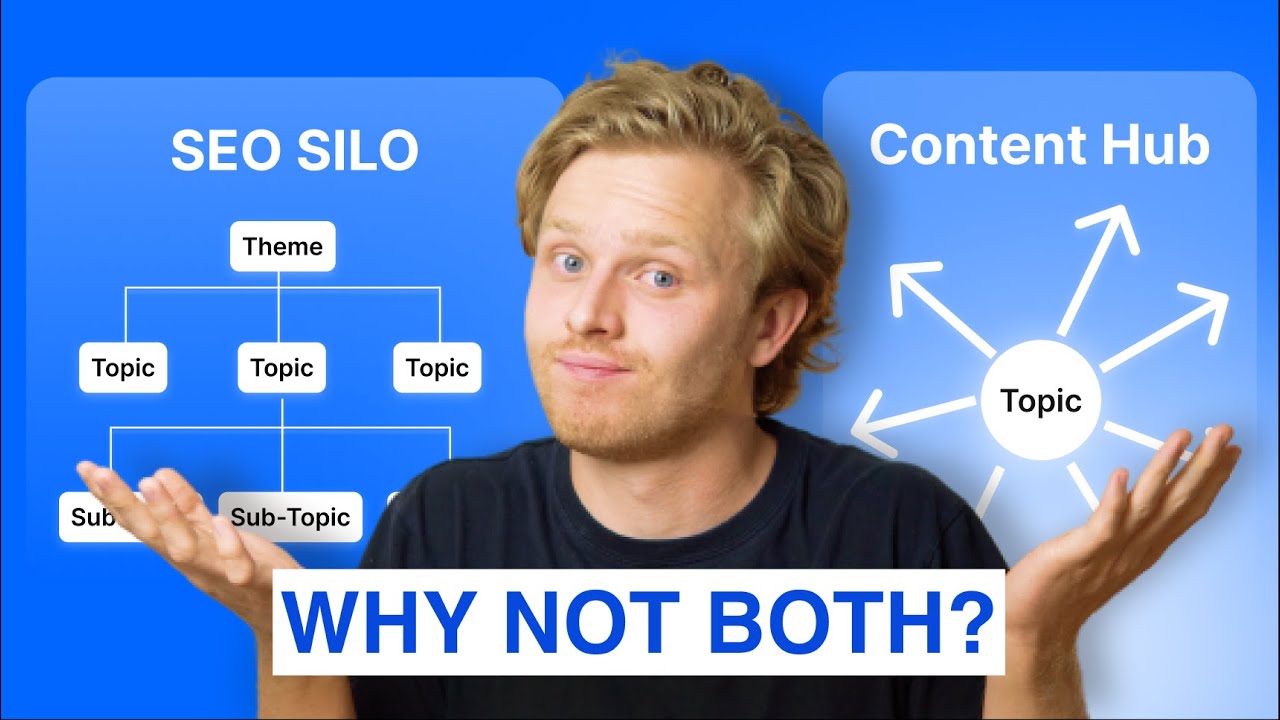
What they are is, think of a book. You may have a book on the subject like SEO, and then there's multiple chapters. So online, the way a topic cluster would work is you have a main page about the overall topic, like SEO, and then it goes into multiple sections, like link-building, on-page SEO, how to rank on Google really fast, how to create a site map.
That's an example of a topic cluster. And if it works for me and other people in some of the most competitive niches, like SEO, it will work for any other niche out there. So here's an example.
I rank for some of the most competitive keywords on Google. That shows you that content clusters or topic clusters work extremely well. And you can see it behind the scenes when you look at things like my overall blog and you're really going down and digging into the pages, you can see that there's a lot of pages that just generate a ton of traffic over time and it works extremely well if you leverage this formula.
And I'm going to go into it step-by-step. So how does it work? Well, you need one main page on that subject and you may cover what is that topic, how it works, why it's important, and then you link out to other subpages that are more detailed, that cover specific topics within that niche.
Again, I could have a page on making a cake and I can, you know, have a page on making a cake and a subtopic could be making a wedding cake, or making a multilayered cake. Another subtopic could be making a ice cream cake. Another subtopic could be making a cookie cake.
I don't know if there's such a thing called the cookie cake, but I'm making it up. But you see how, in essence, you're covering one main topic and then you go more in-depth into specifics within that topic. And that's really how it works.
And those other pages also will link back back to the main page on, let's say, how to make a cake. And if you use this strategy, you can end up outranking your competition. So here's what you need to do.
First, you go to Ubersuggest and you type in a keyword like how to trade stocks or whatever sector you're in, and then you want to click on the Content Ideas report in the left-hand navigation side. You'll see all the popular pages, content around that topic based on social shares, like Facebook shares, Pinterest shares, backlinks, how many people are linking to that site, and how many estimated visits is that article getting from Google organic traffic. Then from there, you want to click through, go to some of those articles and see, all right, here's what this page is on.
And look for themes. Do you see how many of the different topics cover different aspects of that subject? And if so, you can bring a lot of that content in, rewrite it, make it better versions of it, and create multiple subtopics around that main topic and bring it back up into the main article.
And I know what I'm saying could be a little bit confusing so we have a diagram here for you. Like, let's say you have an article on cats or kittens, right? You can end up having one page on cats or kitten, and then you could have many subpages on, like, how to bathe your cat, how to feed your cat.
What do you do when your cat gets lost? But do you see how they all roll up into cats, because they're all about cats? And when you get very specific around that with your keywords, and you're focusing each subtopic, like, how much food to give a cat, or the proper diet for a cat, when you create topics like that, they're all more likely to rank higher because they're all feeding into one topic.
And that also helps you build a lot of EAT, which is expertise, authority, and trust, which is part of Google's algorithm. You want to be seen as an expert, you want to be authoritative, you want that trust. By using topic clusters, what you're going to end up finding is it'll help with your expertise, authority, and trust.
Now here's another example for you. Here's an example of a cluster that only has four pages. You could have a main page on dog collars and that main page on dog collars can talk about what a dog collar is, why it works, what do people use them for, why it's important, is it required by law, is it not, how they can help if your dog gets lost, et cetera.
Like, the purpose of it. And then you can go really specific, such as, you can have another subsection on, like, blue dog collars for animal lovers. Then another one could be ownership 101, how to get the perfect dog accessories for your furry friend.
Another one could be how to select the perfect dog collar for a Rottweiler, because there could be different types of dog collars for different types of dogs. I don't have a dog so I don't know too much about them, but hopefully this helps you understand how content clusters works. And if you want some examples for this, I have quite a few of them on my blog on neilpatel.
com. Typically my guides on, like, what is SEO, what is content marketing, some of those have clusters in them. Here's some more, like, beerbrand.
com/blogs/urbanbeardsman. And you can just go to a few of these places because some of these websites have topic clusters and you can check them out, and from these URLs, you can find quite a few of them. As I mentioned, right, my one on SEO, that's an example of one of them.
I even have things like within this article on what is SEO, on topics like link-building and on-page SEO, which then allows my on-page SEO article or my link-building article to rank higher as well. So let's play a little fun game. What is the basic theme of your topic cluster, right?
You should have a theme. If you don't, you're not going to do well. What resources can back up your theme?
So, what places can you cite, source? This gives you the authority. Remember EAT, expertise, authority, trust.
Who do you have as expert quotes? This is, again, citing sources. This makes you more credible.
Can you back up your data? And, who's your demographic? This will all give you ideas on how you should be creating your content clusters out there.
Of course, when you're creating these, you need to have the optimal link structure. You should, from your main page, you should link to the internal pages. And then from the internal pages, you should link back up to the main page.
Your anchor texts could contain the keywords, but also make sure it's natural as well. When you're creating these pages, make sure you also optimize for SEO from your metadata to including the keywords within your body, to using all tags for images, to technical code, to schema markup. If you're not sure on how to get the most out of SEO, check out neilpatel.
com/training and click on SEO Unlocked. I have a whole course that breaks down how to do SEO and even videos and cheat sheets and PDFs that teach you how to do on-page SEO as well. So, next up for you, I want you to download the Pillar & Cluster Pages Workbook.
You can find this at neilpatel. com/training. Click on Content Marketing Unlocked, go to week two, video two, where you can download that.
In addition to that, what I want you to also do is use the Content Clusters Template to help you build more topical content, and you can find these cheat sheets in Action items within neilpatel. com/training and click on Content Marketing Unlocked week two, video two. Now, if you have any questions, feel free and leave a comment below.
Or if you enjoyed the video, like it, share it, tell your friends about it, make sure you subscribe to my channel. And if you need help with content clusters or topic clusters for your business, check out my ad agency, Neil Patel Digital.