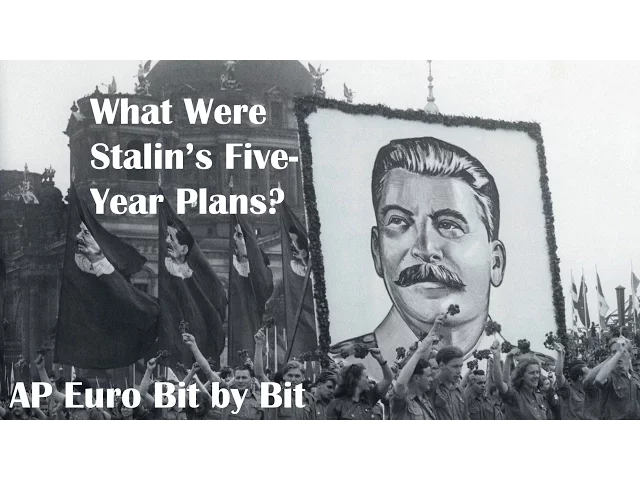
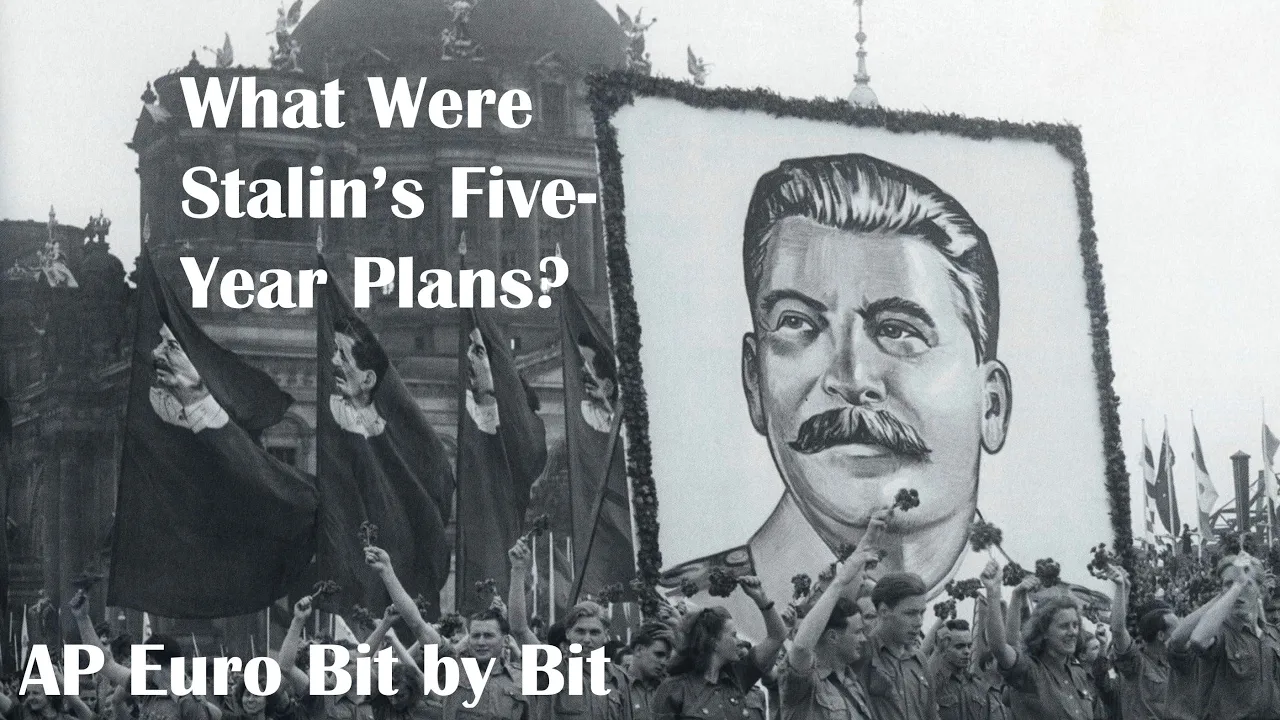
hi my name is paul sargent welcome once again ap euro bit by bit the series in which i'm trying to teach you modern european history in small bite-sized pieces so that you can better understand it today we're going to follow up on last time's lesson about lennon and this time we're going to get into stalin yes joseph stalin is here and we're going to take a look at his five-year plans let's get started so in 1928 stalin introduced the first of his five-year plans this was to replace the new economic policy and the idea was
sort of communism from above this was not going to be marx's communist revolution in which people kind of took over in a classless society came out oh no this was going to be the government telling everybody exactly what they should do and the reason was that stalin realized that russia was significantly i'm talking decades behind every other major power in europe they had learned that in the russo-japanese war they had learned that in world war one my gosh you could go back to the crimean war you could keep on going backwards they always seem to
be behind and he wanted to make up the difference and the main push of this is the technological difference that he saw between himself and all of the enemies of communism and so the five-year plans were designed to try and bring russia up to the par of the western democracies well what did it entail it entailed a series of quotas that we're going to set numbers on how much was going to be produced and how much production was going to be increased and the numbers were huge i mean we're talking three and 400 percent increases
in the span of five years that's unheard of it's like i don't know who else would do this until you know 1961 when you know a guy named kennedy just said hey we're gonna go to the moon and we're gonna do it by uh you know the end of the 60s we did got there in 69 summer of almost but we made it so a major part of this plan had to do with the collectivization of farms really in order to be able to increase production of tech technology you had to have more people in
the cities and therefore farming needed to be more collective and less individualized in other words we're going to turn back all of the stuff that that lenin put in in the new economic policy and we're going to make it all oh yeah communist but from above forced down on the people and so it's going to require all of these people to work for exactly the same sort of industrialized factory-like system that people were working like in the cities and it's going to force a lot of them into the cities so the farm collectivization meant that
we're going to use more farm machinery in russia which is going to require fewer people and the government was going to take away the private land holdings of individual peasants and create large state-run farms which were going to be worked by the farmers who used to own the land and they were going to be held to strict production quotas that were going to be set by the government and that were going to be enforced through well you know stalinesque style terror a lot of people are gonna die anyway the real kicker of the whole plan
was that these people would work the quotas and they were not allowed to eat any of the food themselves until they had filled the quotas set for set by the government in other words here's how much you have to make and give to the government if you don't get it you don't eat if you what if you over produce what we tell you to then you get to eat that's how it works and what it does is it ensures a stable food supply for the cities where the factories are that are making the stuff which
stalin's five-year plan really emphasizes steel production and stuff like that well in a way the collectivization worked because it did give a food supply to the cities but boy the countryside suffered because there were of course resistance and rebellions to this policy stalin wasn't exactly linen he wasn't gonna try and change the thing he simply said we need to eliminate these people and at the hands of the stalin government about seven to eight million people died in the collectivization effort some estimates have it up around 10 million that's a lot of people and they die
largely through forced starvation methods especially in some of the colder regions so what were the results of the five-year plans well under the first five-year plan there was a huge increase in the amount of production of these massive building projects and materials and things like that and it looked to be a success by the second one ending in 1933 it looked like communism may be winning over capitalism which was experiencing a great depression and meanwhile everyone in communism was at work but while they met production quotas it has to be stressed and this is going
to push through for the rest of russian history under the communist regimes the quality of the materials was substandard they were hitting the numbers but they were making bad products and along the way in order to get to the numbers which is the problem with any command economy so in summary stalin's five-year plans were an attempt to try and bring the soviet union up to the standard of its non-communist western not so soon to be maybe sort of allies they're going to be allies hitler will make them allies then they won't be allies but anyway
it's a success on some fronts it's a failure on others costs a lot of lives in the meantime that's uh kind of a sour note to end on but anyway i hope you now understand stalin's five-year plans my name is paul sargent this is ap euro bit by bid as always please subscribe to my channel and share and comment and let me know what you think of these videos and have a wonderful day i'll catch you next time