Hey guys, I'm Heidi Preb. Welcome back to my channel or welcome if you're new here. For the past couple of months on this channel, we've been talking about resilience.
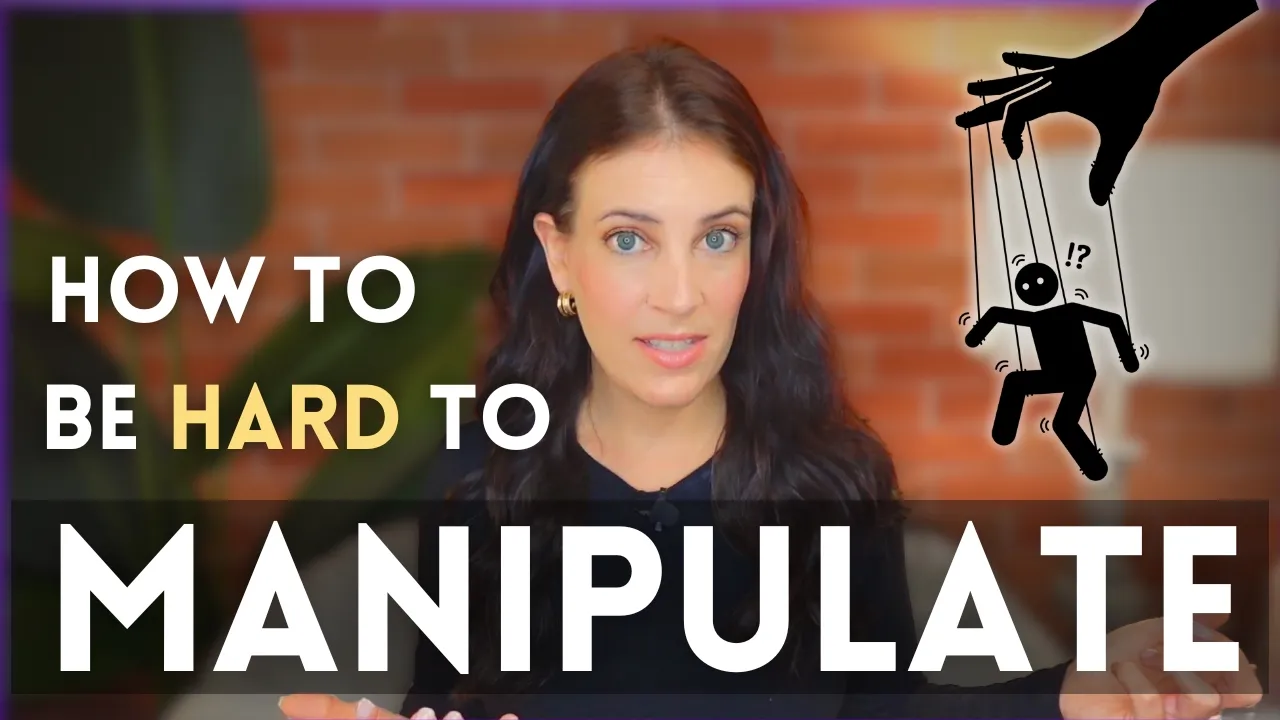
And to start rounding off this series, I want to talk today about which traits make someone hard to manipulate. And before we get into the meat and potatoes of this, I want to just offer up the perspective that a lot of things that happen, particularly inside of relationships that involve two insecurely attached people that are manipulative, are not necessarily intentional. So, if you want to get incredibly technical, all insecure attachment styles are are ways that we have learned to unconsciously manipulate our environments to get our needs met.
And this does not mean that the people doing this manipulating have bad intent or are actively aiming to kind of take over somebody else's autonomy. But what we're going to go over today, these traits that make us resilient in the face of manipulation are likely to go a long way in serving the health of both the person using them and the health of their relationship. Because essentially what these strategies are are strategies for getting back into secure functioning.
So this is going to protect us both against overt forms of manipulation that might be more intentional but also against more unintentional ones that are just kind of the natural outflow of insecure strategies doing the best that they can to connect. And the other thing I just want to touch on before we get started is that sometimes our attachment systems or our early trauma patterns can lead us to overperceive of things as manipulative when they are in fact offerings that are made in good faith. And so we're also going to look at areas where we might be prone to interpreting things as manipulative that might actually not fit that bill.
So those are the two kind of caveats I want to give before we dive into this. But without further ado, we'll talk about five things you might want to work on if you want to become impervious as much as you can be to manipulation. The first thing you want to do is you want to look at closing the gap as much as you're able to between the way that you like to think of yourself or the way that you might even need to think of yourself in order to stay regulated most of the time and the way that you actually are.
So to be insecurely attached in any form means to have a lot of blind spots. So a lot of areas where you haven't done that shadow work and gotten comfortable with the parts of yourself that are not cleanly aligned with your kind of ego story about yourself. And generally when we have these big blind spots, what happens is that we have kind of fixed or rigid identities because when we need to think of ourselves in very narrow and particular ways in order to stay regulated and in order to keep respecting ourselves, the problem is that anytime we happen into a situation where a trait that is not congruent with our ego or the way that we like to think of ourselves is in fact the best trait to use to navigate that specific scenario, we are going to default to the trait that we like more and then feel manipulated or in a lot of cases actually get manipulated.
So what does this look like in concrete terms? What this looks like is, for example, if I need to always think of myself as a kind and generous person, all somebody has to do to manipulate me consciously or otherwise is to present me with a situation where a kind and generous person would necessarily do the thing that they want me to do. And if I absolutely need to think of myself as that kind of person in order to keep feeling okay about myself, I'm going to feel like my hands are kind of tied in terms of the choices that are available to me in that situation.
And so this could be something that turns into a real way that people manipulate us. Or it could be one of those areas where we feel chronically manipulated even though there actually was another option available to us. On the flip side of the attachment spectrum, let's say you have a scenario where the options are be dependent on some person or institution in some significant way or branch off and do things your own way.
If the only way you are capable of self-regulating is knowing that you are in complete control at all times, you are almost always going to choose that latter choice. And if someone wanted to manipulate you in some conscious or unconscious way, it's likely that all they would have to do is present you with a forced choice where those are your two options. And the thing that they want you to do is the thing that would provide you with more independence.
And once again, this can also lead us into scenarios where we feel manipulated when in reality other people are able to accurately perceive the choices that were available to us that we did not even consider as options because they were so non-ongruent with our egos. So the opposite of this trait of having a very fixed identity is having a flexible identity. And this is generally what we develop once we have done that shadow work of excavating the parts of ourselves that include the ways we really do not want to think of ourselves as.
So finding the parts of us that are in fact selfish under the right conditions that are in fact dependent and trusting under the right conditions and then learning that we can pull those parts of ourselves out when they are needed. And when we're able to do that and we're able to access all parts of our personality, not just the parts that we need to feel like we consistently inhabit, then we're going to be much more impervious to any form of coercion that comes from outside of us because we now have an adaptable and flexible skill set that allows us to show up differently based on what the situation calls for. Second thing we can do that works in the direction of being hard to manipulate is become incredibly aware of what flips us into a 4F response and what it feels like to be in one versus to be regulated.
So when I say a 4F response, I'm referring to fight, flight, freeze, or fawn responses. And these are all layers of trauma programming that come online in our systems when we feel incredibly threatened. Now, the first thing I want to make clear is that we need these responses.
We do not want to get rid of the instinctual part of ourselves that's able to respond appropriately and swiftly to danger. But for those of us who have trauma patterns in our past, very often what happens is that we flip into one of these four responses in scenarios where the danger that our body thinks it's protecting us from is in fact not present. The problem is that when we have these responses come online, the first thing that gets hijacked is the critical part of our minds that's able to reason well about the situation at hand.
And we might instinctively go into either a fight response, so trying to overcome our environment with force, a flight response, so trying to escape the situation at hand, a fawn response, so giving into whoever it is that we believe has the most authority around us, or a freeze response, so kind of losing our sense of autonomy and staying immobilized inside of a situation that it might be better for us to mobilize within. Now there are two main reasons why it's good to be aware of when we are in these states. One very cleanly is that we don't want to be decisionmaking on any important things that have long-term consequences when we are in one of these states.
So what we don't want to be doing is signing business deals or making major decisions about a relationship when we are operating from an unconscious trauma response. At least not most of the time. Those are likely to be decisions that might get us out of the present- moment situation that feels threatening, but that is unlikely to integrate well into the rest of our lives because we made those decisions from an unintegrated place.
So if we can start noticing when we are in one of these states and develop strategies for delaying any important forms of decision-m until we are out of this state, it is going to give us a lot more flexibility and prevent us from potentially making choices under pressure that we are not actually comfortable with. So, this might mean noticing over a period of time that you tend to go into a fawn response when you're pressured to make decisions quickly and learning to compensate for that by developing strategies for what you will do when you feel that pressure coming on and maybe having a go-to phrase you use like I like to give myself 24 to 48 hours to think through any major decision I make. So, I'm going to get back to you on this, which is going to help you in a lot of things like sales calls.
And often when we have these strategies in place for ourselves, it actually allows us to go into situations feeling more relaxed and authentic in the first place. So during the brief period of my life where I went on a couple of first dates from dating apps, I used to have a strategy that I would use because I would feel so uncomfortable at the thought of kissing on the first date that I would preoccupy myself with the fear of it throughout the entire date. And then I started telling people before meeting up with them that I just have a policy that I don't really like to kiss or even have a lot of touch on first dates and just checked in to make sure they were okay with that before meeting up.
And that allowed me to actually relax into the experience and not get stuck in those moments of freeze because I knew that I'd set up my boundaries proactively in a way that would prevent me from going into one of those potential 4F responses. And of course, we can't always do this perfectly. But there's a second reason why we want to start being more aware of our 4F responses in relation to manipulation.
Unfortunately, one of the easiest ways to kind of get inside of somebody's head is try to convince someone that their trauma response is who they are. Now, what I want to be clear about here is that yes, our trauma responses are absolutely parts of who we are, but they are unintegrated parts of who we are. So, if we come out with a whole bunch of force when we're in a fight energy, that does not mean that the core of our personality is a selfish and borish person who wants to fight all the time.
But it's easy to start getting a kind of confused sense of identity. Like, who am I? Am I this angry, abusive person or am I this kind, well-meaning person?
And any place where we are very disregulated around what our own identity is and who we are as a person is going to be an easy spot for someone else to manipulate us from because all they have to do is guilt us in a regulated state into believing that who we are when we're disregulated is who we actually are. And that's going to kind of play on all of these insecurities and fears that we might have about oursel. Now, what I want to be super clear about here is once again, we do want to be taking responsibility for and owning what we do in a trauma response.
But the way to do this properly and safely is to become trauma aware. So, if the trait here that makes you easy to manipulate is being traumablind, the reverse trait is being traumainformed. So, the cleanest example I can think of, I was once having an argument with a friend and I flipped into one of my four F responses and I became quite disoriented.
I was kind of fawning and saying things that honestly didn't make clear sense. And the next day, that same friend texted me and said something kind of mocking about the text that I'd sent the night before in a disregulated state. And this was one of the first times when I was actually quite aware that what had happened was I was dregulated at the time that I'd sent that text.
And then overnight waking up the next morning, I'd return to regulation. And so I responded to the text saying, "Yes, last night I sent that text that didn't make a lot of sense when I was in a really disregulated state. But now I'm regulated and I don't like the way that you are speaking to me about it.
I'm uncomfortable with the mocking tone. " And that shifted the tone of the conversation very quickly. And this is precisely what happens when we develop a meta awareness of our own psychology.
And we can notice when we are in a triggered or disregulated state versus when we are in a calm, regulated one. And we can communicate that clearly and with dignity to other people. Again, this does not mean we avoid responsibility, but it means we refuse to collapse into narratives that blend our trauma responses with our deeper intentions or true character.
And the better we get at this, the better we get at navigating situations like this as a whole. Because when we can separate out our trauma responses from our deep sense of integrity that guides our decisions when we are regulated, we can start working with both of those things much more effectively. Third thing that's going to make you very hard to manipulate.
Learn to stand behind your feelings simply because you care about the way that you feel. So one of the biggest traps that I see people getting sucked into, particularly those of us who air insecurely attached in any form once again is thinking that we cannot act on our feelings until we can explain them perfectly logically. And that's generally because we do not have that internal compass built in the way secure people do that allows us to just kind of trust that gut feeling when something is off or at the least hold a strong grain of salt in place when that gut feeling is off.
So the cleanest example I can think of with this. I once dated someone who when I was getting to know them was really wonderful and lovely. But as our relationship deepened, I noticed that there were some things they would say or do that felt like very subtle digs and I couldn't really tell, am I just being oversensitive here or are they genuinely taking kind of stabs at me?
And when I tried talking to them about it, they had a lot of excuses and defenses. And so I really started sitting with it and going, "Okay, what's going on here? " And I went online and I started looking things up like signs of emotional abuse.
And I got really in my head about this question. what's going on here? Is this person displaying narcissistic patterning?
Is this emotional abuse? And it felt like there was tons of potential evidence on either side of the debate. But when it came down to it, when I was really quiet with myself, there was something I knew for sure, which was that around this person, both on a day-to-day basis as well as when I tried to raise issues with them, I just didn't feel very good about myself.
And when I was with myself or around my friends, I generally did feel pretty good about myself. And I realized that that was justification in and of itself for me to end the relationship. I didn't have to be able to place someone definitively into some category in my head in order to value the way that I felt.
I just felt bad around them. And I didn't want to feel bad most of the time in the relationship that I spent the most time in. And so the trait that we're looking at here that makes us easy to manipulate is the trait of deference of always needing what we feel to be confirmed by some outside authority in order for us to decide that we can make a decision based on it.
And the opposite of this trait is the trait of selfrespect. So being able to say to ourselves and other people, I don't need to be able to perfectly explain what I want or what I'm feeling in order for me to take the way I feel as valuable information and to make decisions on it. This is always going to be the trump card in situations where people are trying to manipulate us by finding ways to trap us in whatever logic we present to them.
The only trump card that always wins in that argument is I am doing this because I want to or I am not doing this because I don't want to and I don't feel the need to explain my reasoning beyond that. There is very little that someone can argue back around that. But it takes that sense of dignity and self-respect to be able to say to ourselves and other people, I am making a decision based on how I feel, not based on how anybody else perceives this or needs me to explain it.
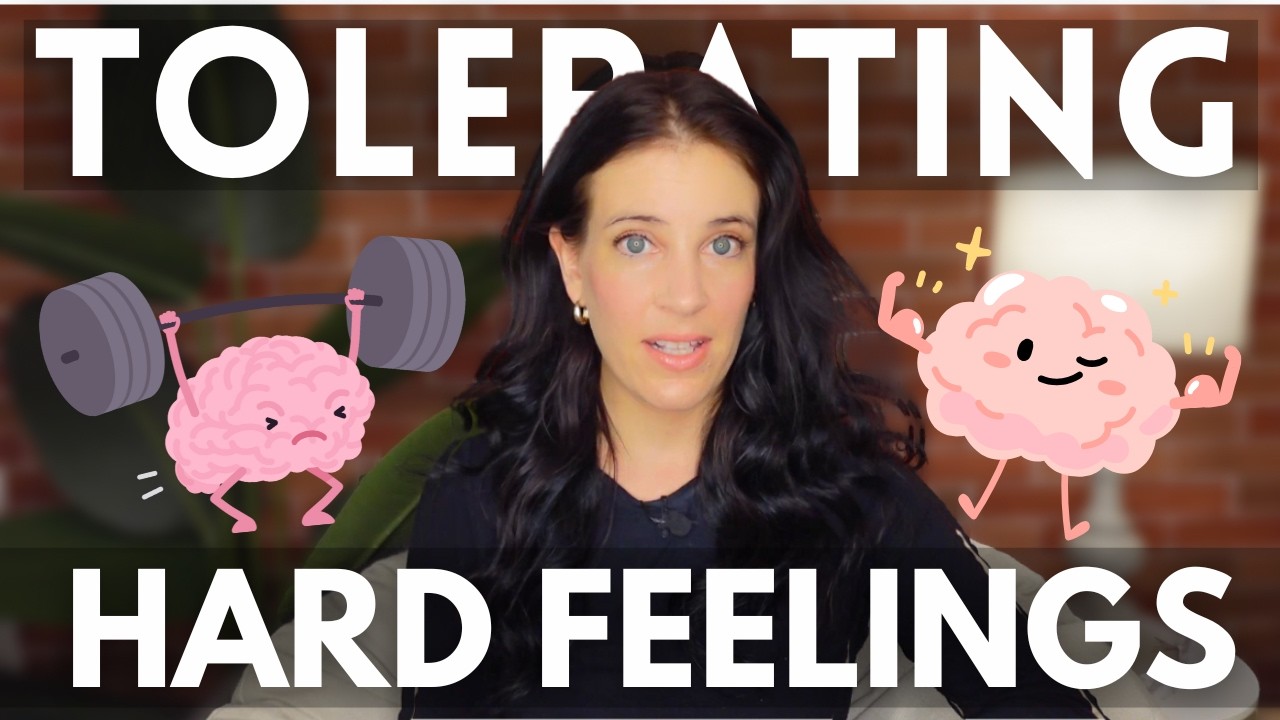
Fourth trait that makes people very hard to manipulate is being able to tolerate being disliked, misunderstood, or left alone. These are three massive trigger points for a lot of people that anyone who wants to be intentionally manipulative is likely to try capitalizing on first. And the reason why these are so easy to capitalize on is because these three emotions are pretty distressing and hard to tolerate for most of us, but especially so for those of us who have extra wounds on top of these areas.
And this does kind of hark directly back to point number one. We want to make sure that we are integrating the parts of ourselves that we find difficult to tolerate or be with. But I want to touch more directly on some examples of what that might look like because again, these three are major pain points for a lot of us.
So, I'll never forget a workshop I went to one time where one of the participants in the workshop said something to me in a group setting that I felt was a gross misinterpretation of what I'd just said. And I noticed instantly a kind of panic response starting to come online in my body. and I automatically wanted to launch into overexlaining myself so that we could get back into shared reality.
And the instructor made a really cool move. And he went, "Can you pause for a moment and just be present with your body before responding? " And I said, "Well, I'm struggling cuz I just feel really misunderstood and I just want to clarify what I meant.
" And he went, "That's fine. Before you do that, can you pause and notice what it feels like in your body to be holding the tension of feeling misunderstood? And I sat with it and I noticed how deeply uncomfortable it was for me to be with that sensation of being unable to communicate what I wanted to communicate.
How it made me kind of clench all of my muscles and how the energy was just coursing through my body rapidly. And I will forever think back to that moment as the first of a long series of reps that I started doing to train the muscle of being misunderstood without instinctively responding. Now what happened in that scenario and in a lot of future scenarios was that I eventually did respond to the person and got in the shared reality with them.
But it was very cool to even conceive of the idea that there was value in being able to tolerate the feeling of being misunderstood, of being able to sit with that feeling, be present with it, and notice that I was surviving it. The greater we build up our tolerance for staying with distressing emotions without immediately needing to rectify them, the more we are at choice about how we end up responding to them. So if we cannot tolerate the idea that someone might dislike us or misunderstand us or abandon us, if we think that that is so intolerable that we instinctively react the second we feel even remotely threatened that any of those things might happen, what we're once again probably doing is responding from one of those 4F responses.
And once again, this is very often the place where we end up making decisions we regret from. So the opposite trait to this is the trait of selfrestraint. So if we want to be more resilient in this area, what we want to do is start training that muscle that allows us to stop, pause, hold the discomfort in our body, and then be at choice about responding to the scenario.
Because if someone knows that we cannot tolerate being misunderstood, what's the simplest thing they can do to get us in a 4F response? They can deliberately say something to us that makes us feel misunderstood. And now our nervous system is hijacked and we are more likely to make whatever decision they want us to make when we are in that state.
Same goes if you are terrified of abandonment. All someone has to do to put you in a fawn response is probably threaten abandonment subtly or overtly. And so the more we can train these muscles, the more agile our response system becomes and we can stop and ask ourselves the question, is this something that is truly a misunderstanding or am I being baited here?
And do I want to go into that trigger response or do I maybe want to remove myself from this situation and come back to it when my distress level is lower? And of course, this is not limited to those three emotions. Essentially, any distressing feeling that you cannot tolerate without immediately responding to is a button you have that someone else is going to be able to press if they notice it to get you into one of those 4F responses.
So, notice what it is that you are most afraid of, that you become most panicked around, and learn to stay present with the distressing feeling in your body for at least 5 to 10 seconds. And then you can gradually increase your tolerance level before responding. It is going to go a very long way in helping you not get hijacked by your nervous system in moments where you really want that reasoning part of your brain to stay online.
And then fifth thing you're going to want to work on if you want to become hard to manipulate is learn to desenter yourself from your narratives about why other people are doing what they're doing. So, I have a whole YouTube video on this called How to Stop Taking Things Personally. But the idea behind it is that we can accidentally end up in a lot of fake power struggles in life by inaccurately projecting intent onto other people.
And I believe this is one of the biggest reasons why people tend to perceive manipulation in areas where it doesn't truly exist. Because for some of us, it is actually less threatening to think that somebody was maliciously and intentionally trying to hurt us than it is to think that they were actually not thinking that much about us at all. And the way that they hurt us was just collateral damage to something else that they wanted to do.
And I think that this is probably one of the biggest things that get people locked in power struggles that never resolve is the assumption on behalf of one or both people that the thing the other person did to hurt them was intentional rather than the unfortunate byproduct of something else. And so to get better at this, what we want to do is develop the skill of differentiation. Differentiation is when we are able to hold ourselves and our own response patterns in conscious awareness when we are in connection with someone else.
This is going to help us start separating out what is happening here because of what I'm bringing in. What is happening here because the other person is bringing it in and where are those things overlapping. So those of us who come from the more anxious side of the spectrum and have more inshment patterning tend to have a bias towards believing that most of how other people make us feel was intentional in some way.
And those of us on the avoidant side of the spectrum tend to have the kind of opposite bias, which is that everybody is just out for their own good and that relational dynamics are not really co-created in any significant way. And so what we want to start doing here is getting really accurate about it. So checking with other people when we have an assumption about why they did something, why they may have done that, or even just as a thought experiment, asking ourselves, is there a reason they might have done this that was not malicious or directly targeted at me?
And what might that reason be? And again, this might surprisingly bring up the fear of abandonment. Because once again, it is often more threatening to think of ourselves as absent from someone's worldview than it is to think of ourselves as a target of their worldview.
And what I'm not saying here is that there is never situations where people are targeting us in any way. But I do think that this is one of the most common and persistent mentalizing errors that people with insecure attachment patterns tend towards that end up creating power struggles that are false because what's actually happening gets missed in the midst of a series of projections that this tends to evoke. So just to quickly recap those five traits, what we want to start developing inside of ourselves if we want to be very resilient in the face of real or unintentional manipulations, we want to do that shadow work and start getting comfortable with the parts of ourselves that are not automatically egoongruent.
We want to become trauma aare and start working with those 4F responses so that we can notice when they're coming online and have strategies we employ for not getting hijacked by them and minimize the decisions that we end up making from a traumatized space. We want to develop that selfrespect and the capacity to stand up for ourselves simply because we know what we want and don't want without needing to explain ourselves perfectly. We need to be able to practice self-restraint, the ability to be with unpleasant feelings before automatically responding.
And we want to get good at differentiation, understanding other people's worlds without placing ourselves at the imagined center of them. So, as always, if you have any questions or any comments coming up as you go through this video or any traits that you would recommend curating and developing inside of yourself in order to be harder to manipulate, please leave them below. As always, I love you guys.
I hope you're taking care of yourselves and each other. And I will see you back here again really soon.