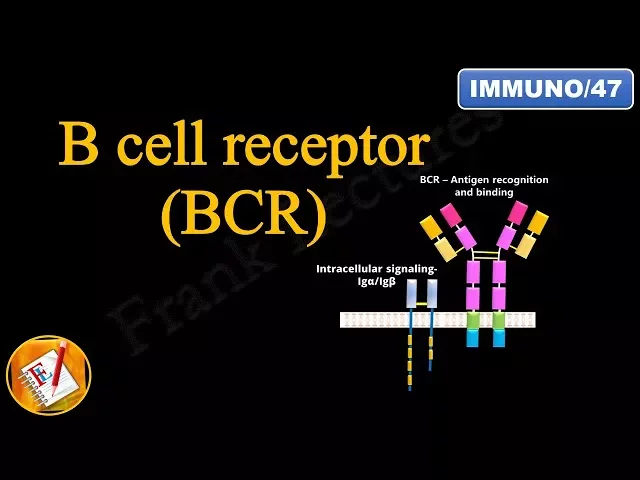
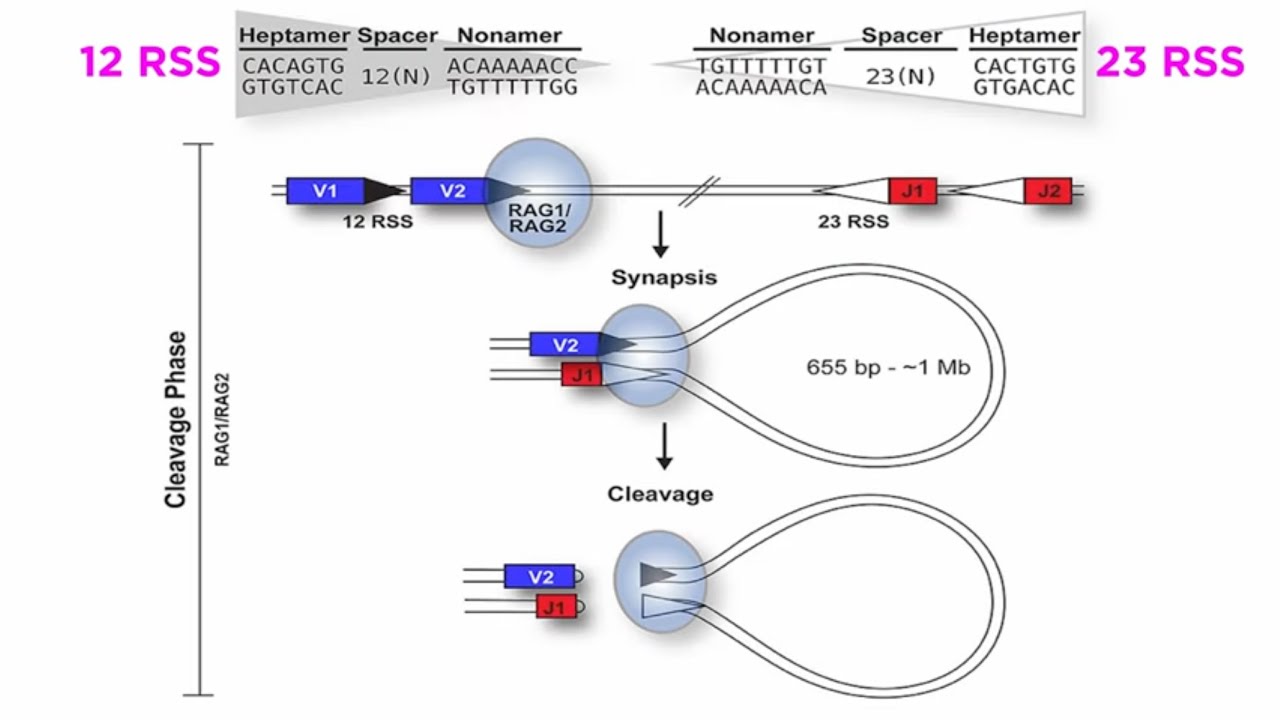
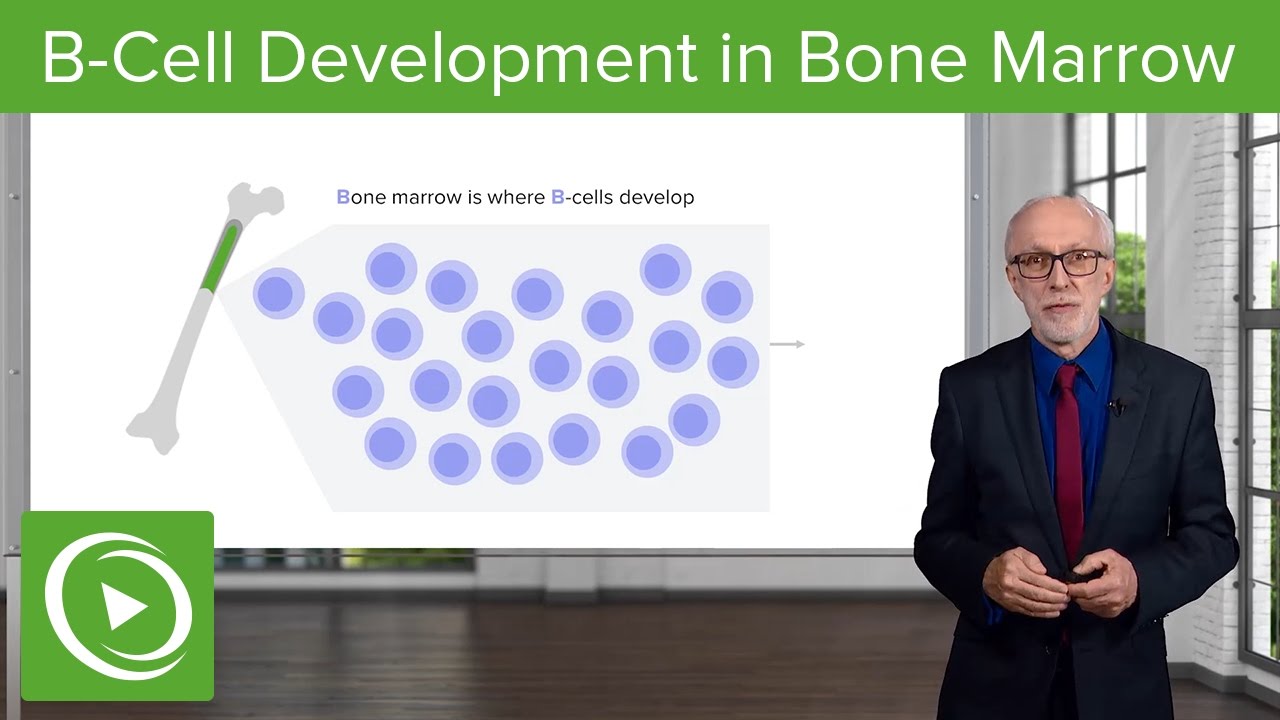
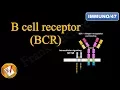
you [Music] we know that these cells originate and mature in the bone marrow in the previous video lectures we also studied vdj recombination vdj recombination occurs during the early development of b-cells the light and heavy chains are selected by gene rearrangement and they together form the B cell receptors that are expressed on the cell membranes of the B cells b-cell receptors are also known as membrane-bound immunoglobulins this is because their structure is almost identical to the secreted antibodies one difference is that b-cell receptors have an extra protein sequence at the C terminal of each heavy
chain this sequence anchors B cell receptors to the B cell membrane it consists of a transmembrane domain and decide a plasmic domain note that these extra domains are absent in the secreted antibodies each mature naive b-cell Express membrane bound immunoglobulin M and membrane-bound immunoglobulin D as its b-cell receptors both of these receptors are of same antigenic specificity this means both recognize the same epitope on an antigen so the function of these b-cell receptors is to recognize and bind the specific antigen for b-cell activation the nucleus of the b-cell should get the signal that specific antigen
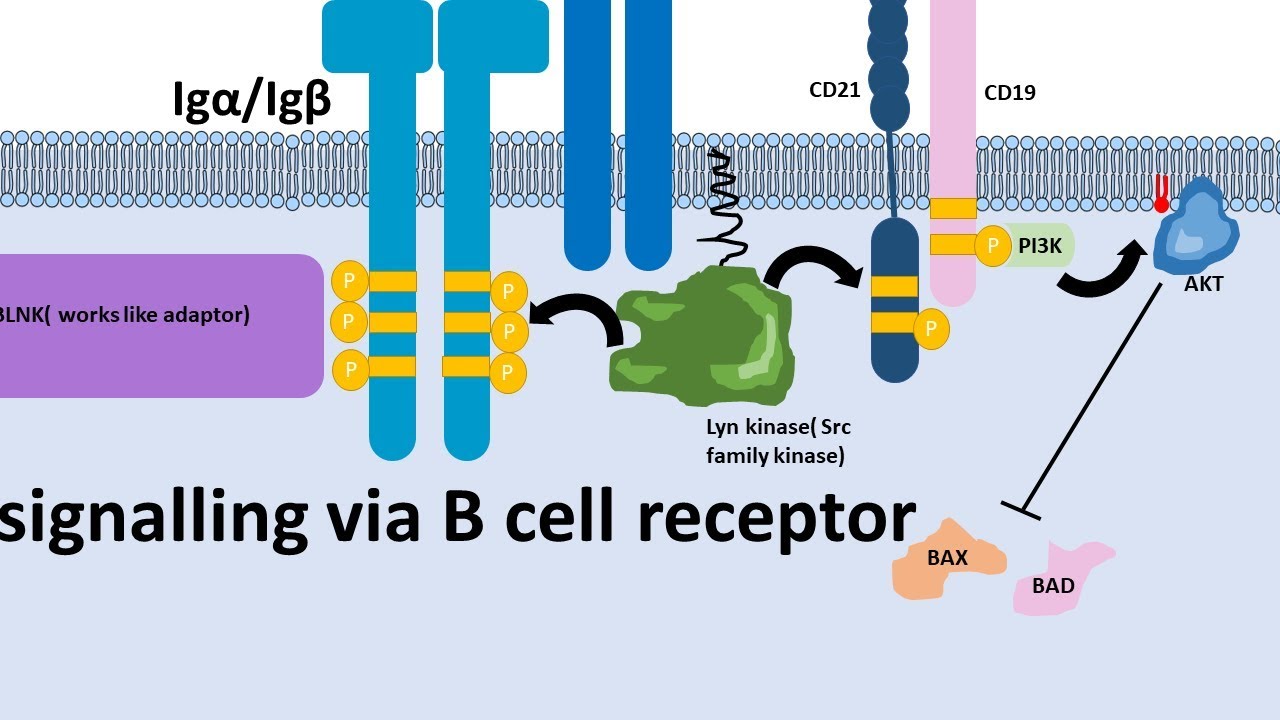
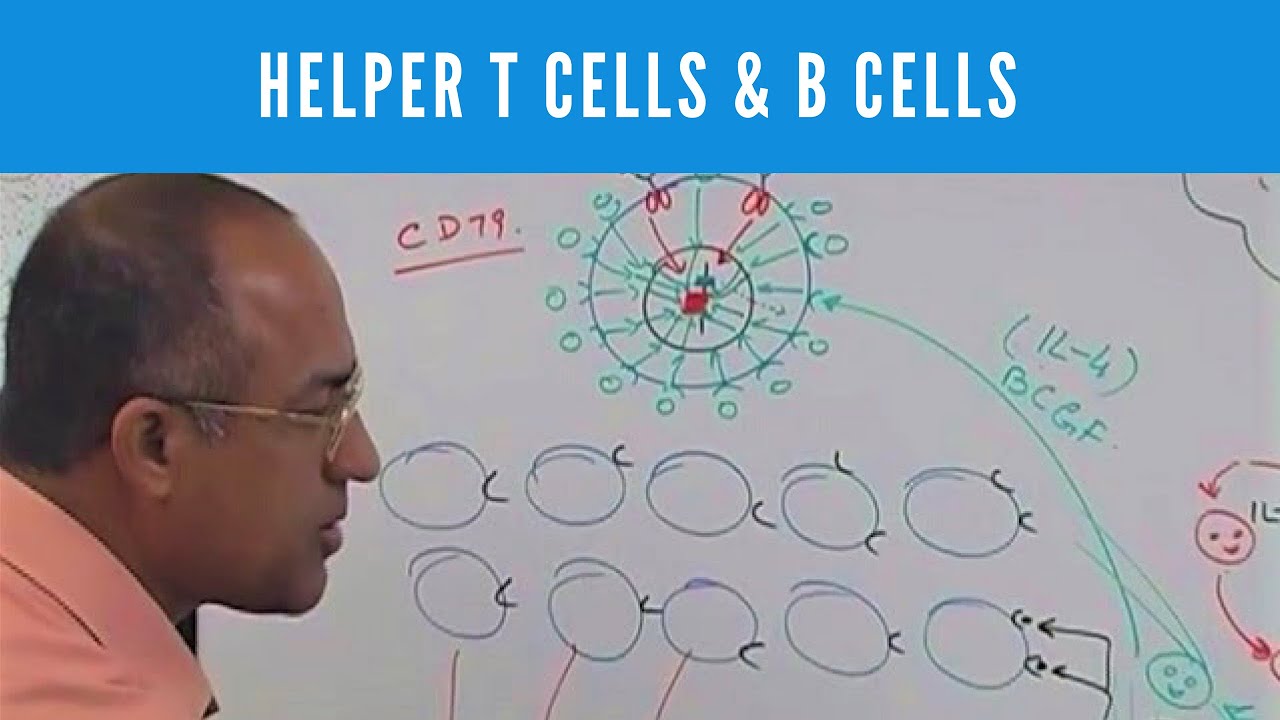
has been recognized and bound by the b-cell receptors but the cytoplasmic tails of b-cell receptors are very short they cannot convey antigen recognition signal to the nucleus by themselves signal to the nucleus is conveyed by two accessory proteins which are associated with these b-cell receptors these accessory proteins are IgE alpha and IG beta together they form a heterodimer held together by a disulfide bond IgE alpha & IG beta chains are glycoproteins and as you can see in the image they are transmembrane molecules they're extracellular portions consist of single IG like domain this Attero dimer conveys
the intracellular signals indicating that antigen has been found note that I GE alpha and IG beta molecules are expressed only in these cells the designation IgE in these accessory proteins represents that these proteins are associated with the immunoglobulins so now we understand that b-cell receptor complex is made up of a membrane bound immunoglobulin and IG alpha IG Beta heterodimer antigen recognition and binding is performed by the membrane bound immunoglobulin that is the b-cell receptor and signal to the nucleus is conveyed by heterodimer IG alpha IG beta another important requirement of you cell to generate the
activation signal is that multiple b-cell receptors must be brought close together on the surface of the B cell let's understand this by illustration sajin generally has multiple copies of the same epitope on its surface each epitope can bind adjacent b-cell receptors on one b-cell once bound surface b-cell receptors begin to cluster this process activates the accessory proteins like GE alpha and IG beta and initiate the signaling process [Music]