Cashier Denies Undercover Owner to Use Restroom, Regrets When He Reveals His Identity Martin Hayes drummed his fingers on the polished mahogany of his desk. The quarterly reports spread before him like a disappointing deck of cards. The numbers were excellent: profits up 12%, market penetration increasing in three new states.
But the customer satisfaction metrics told a different story. For the third quarter in a row, complaints had risen—not dramatically, but enough to create a disturbing trend that no amount of profit could mask. "These mystery shopper reports are concerning," Rachel Martin said, looking up at his Chief Operations Officer, who stood on the other side of his desk with arms crossed defensively.
"We've implemented the new training modules you requested," Rachel replied, her voice carrying the practiced calm of someone who had prepared for this conversation. "Customer service scores should improve by next quarter. " Martin ran a hand through his salt-and-pepper hair and leaned back in his chair.
At 58, he had built Fresh Mart from a single grocery store into a chain of 200 locations across the country. He hadn't done that by waiting for quarterly reports to tell him what was happening on his front lines. "Training modules don't change culture, Rachel.
Something's happening in our stores that these reports aren't capturing. " Rachel shifted her weight. "Perhaps we could increase the frequency of mystery shopper visits.
" Martin stood up suddenly, walking to the floor-to-ceiling window of his corner office, below Chicago's downtown, spanned in gleaming glass and steel. But his mind was elsewhere—on the stores that bore his company's name, on the customers whose trust he'd earned over decades. "No," he said finally, "I think I need to see for myself.
" "You want to visit stores? I can arrange a schedule. " Martin turned, a smile playing at the corners of his mouth.
"Not as Martin Hayes, C. E. O.
They'll put on a show, bring in extra staff, make everything perfect for the boss's visit. I need to see what our customers see. " Rachel's eyes widened as understanding dawned.
"You want to go undercover, like that TV show? " "Exactly like that, but with one difference—nobody knows, not even the regional managers. " "Martin, with all due respect, you're one of the most recognized viable faces in retail.
Your picture is in the employee handbook. " He chuckled. "That picture was taken 12 years ago.
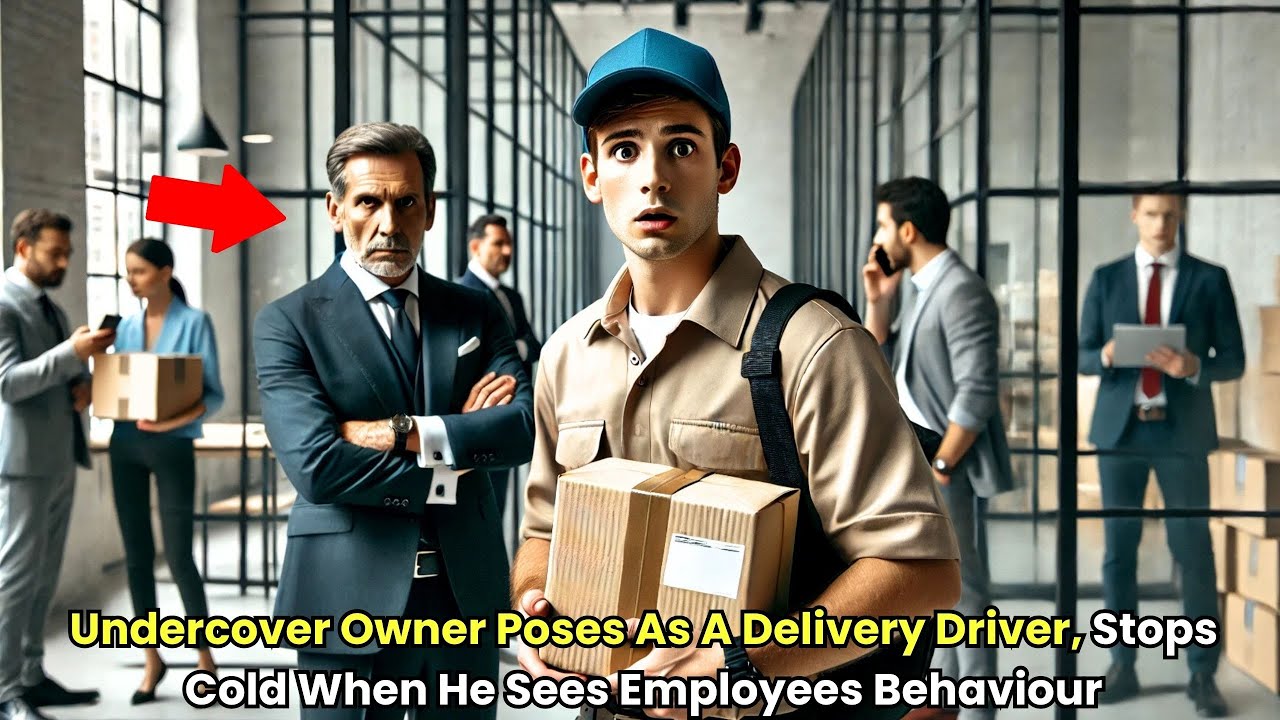
Besides," he gestured to his tailored suit and designer watch, "they're looking for this Martin Hayes, not the one they're going to meet. " Three days later, Martin stood in front of his bathroom mirror, barely recognizing the man who stared back at him. The theatrical makeup artist he'd hired, sworn to secrecy with an ironclad agreement, had done remarkable work.
His normally trimmed silver hair was now disheveled and thinning, with a receding hairline that added years to his appearance. Latex appliances created sagging jowls and deep wrinkles around his eyes. Wire-rimmed glasses sat crookedly on his nose, and his posture—practiced over the past few days—was stooped and uncertain.
Most importantly, gone were the bespoke suits and Italian leather shoes; instead, he wore faded jeans that hung loosely on his frame, scuffed work boots, and a warm plaid jacket with frayed cuffs. A small voice recorder was hidden in his breast pocket. "What do you think?
" he asked his wife, Catherine, who stood in the doorway watching his transformation with a mixture of amusement and concern. "I think you're crazy," she said fondly, "but also brilliant. I wouldn't recognize you on the street, and I've been married to you for 32 years.
" Martin practiced shuffling across the bathroom, adopting the slow, careful gait of someone 30 years his senior. "Today, store number 147. Their complaints have tripled in the past year, but their manager insists it's just entitled customers expecting too much.
" Catherine frowned. "Be careful, Martin. Playing homeless isn't a game.
" "I'm not playing homeless," he corrected her. "Just invisible. The kind of customer who comes in, doesn't spend much, and whose staff might think they can dismiss without consequences.
Just remember that for some people, that's not a disguise—it's their life. " Martin nodded soberly. "That's partly why I'm doing this.
Everyone deserves respect in our stores; that's been our mission from day one. " The bus dropped Martin off two blocks from Fresh Mart number 147, located in a suburban shopping center that had seen better days. He shuffled toward the familiar green and blue sign, rehearsing his role in his mind.
From the outside, the store looked acceptable: clean windows, a reasonably tidy parking lot. But Martin had learned long ago that customer experience was built on details invisible from a distance. As he entered, he immediately noticed the understaffing; only two checkout lanes were open despite a substantial line at each.
The produce section, once the crown jewel of Fresh Mart's brand promise, looked picked over, with several empty spots in the normally bountiful displays. Martin grabbed a small hand basket and slowly made his way through the aisles, noticing expired sale tags, misplaced items, and the occasional spill that nobody had bothered to clean. He observed the employees; most looked harried, avoiding eye contact with customers, focusing only on the immediate task at hand.
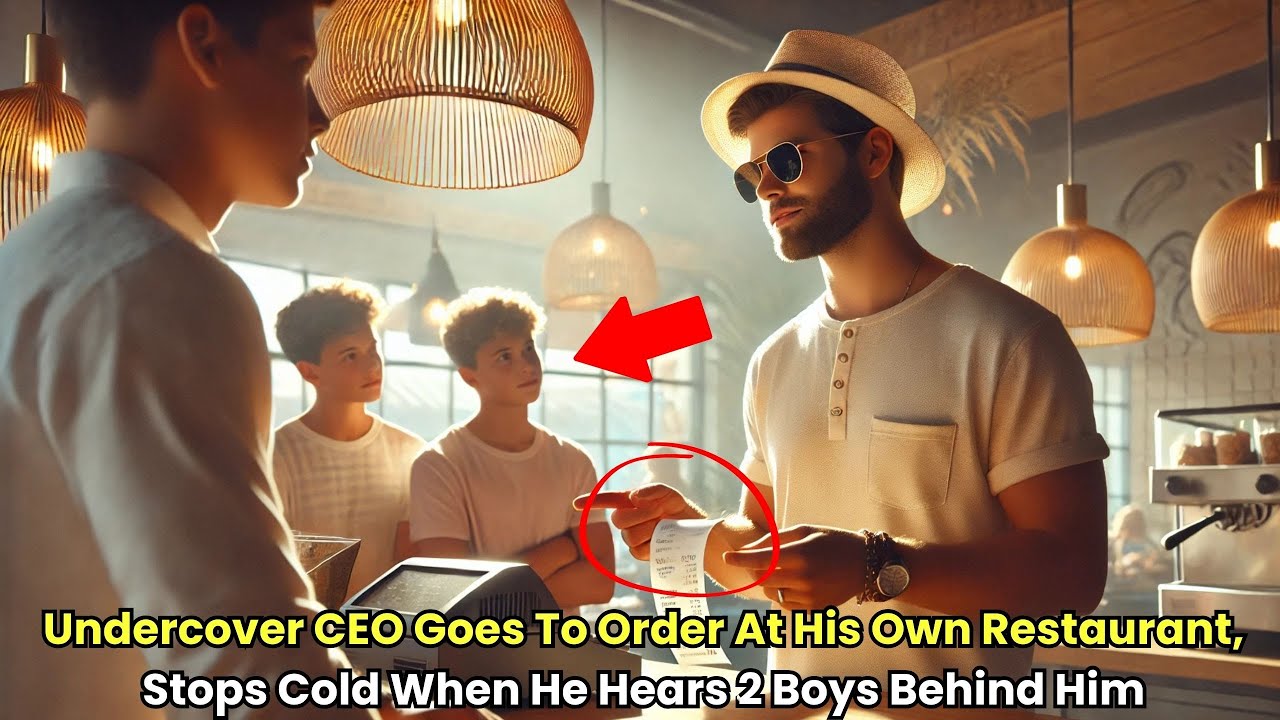
This wasn't the Fresh Mart experience he had built his reputation on; this was unfunctional at best, depressing at worst. After 30 minutes of observation, Martin approached the front checkout area; his bladder was genuinely beginning to protest—one downside of his age that required no acting. He shuffled toward the main customer service desk, where a young woman with "Lisa" on her name tag was scrolling through her phone between customers.
He noticed her quickly hide the phone as he approached, plastering on the kind of smile that never reached her eyes. "Excuse me," Martin said, his voice deliberately shaky, "could you please tell me where the restroom is? I'm having a bit of trouble today.
" He gestured. vaguely to his leg, implying some sort of difficulty, Lisa's smile evaporated as she looked him up and down, taking in his shabby appearance and aged face. Her eyes flicked to his empty basket.
"Restrooms are for paying customers only," she said flatly, loud enough for nearby customers to hear. Martin blinked in surprise. This was explicitly against company policy; restrooms were available to all, with special consideration for elderly and disabled individuals.
"I understand," he said gently, "but I'm having a difficult time today. I just need a moment, and then I'd be happy to do my shopping. " Lisa sighed dramatically.
"Look, we've had issues with people using our bathrooms to wash up, and lower store policy," she turned her attention to the next customer in line, dismissing Martin entirely. From the corner of his eye, Martin noticed a young man with an assistant manager badge—Jason, according to the nameplate—watching the interaction from nearby. For a moment, it seemed like he might intervene, but then he simply turned and walked away, busying himself with a display that needed no adjustment.
Martin stood there, genuinely stunned. In all his planning, he hadn't expected such a blatant violation of policy, nor such casual cruelty. The rejection stung more than he'd anticipated—not because he actually needed the restroom (though he did), but because of the profound disconnect between what FreshM claimed to stand for and what was happening in this moment.
With a quiet nod, Martin shuffled toward the exit, feeling the eyes of other customers on him. His shuffle slowed as he exited the automatic doors at FreshM number 147. The afternoon sun caught on his fake glasses, momentarily blinding him as the full weight of what had just happened settled in his chest.
He knew there were problems; that's why he was here. But experiencing that level of callousness firsthand had knocked the wind from his sails. "Sir, are you okay?
" Martin turned to see a young woman with a toddler in a shopping cart looking at him with concern. "There's a coffee shop next door," she said, pointing. "They'll let you use their bathroom.
The staff here can be difficult. " "Thank you," Martin replied, remaining in character despite his churning thoughts. "I appreciate your kindness.
" As he made his way across the parking lot, Martin's initial shock crystallized into something sharper, more focused. This wasn't just a customer service issue; it was a fundamental failure of the values he'd spent decades instilling in his company. Inside his car, parked well away from the store, Martin carefully removed his glasses and pulled out his phone.
He dialed a familiar number. "Rachel, it's worse than we thought—much worse. " Meanwhile, inside the store, Lisa had already forgotten about the old man.
She was too busy complaining to her coworker, Dany, about the endless stream of problem customers they had that day. "I swear, if one more person asks me if we have something in the back when the shelf is empty, I'm going to scream," Lisa said, leaning against the counter. "It's like we're hiding the good stuff from them on purpose.
" Dany nodded sympathetically while restocking the plastic bags. "At least your shift's almost over. " "I'm here until closing.
Thank God," Lisa sighed. "Jason's been on my case all week about customer interaction metrics—whatever that means. " As if summoned by his name, assistant manager Jason appeared from the dairy section, his perpetually worried expression more pronounced than usual.
"Lisa, do you have a minute? " he asked, gesturing toward the small office behind the customer service desk. Lisa rolled her eyes at Dany before following Jason.
The cramped office, with its outdated computer and stacks of inventory reports, always smelled faintly of the tuna sandwiches Jason ate for lunch. "What's up? " Lisa asked, not bothering to hide her impatience.
"I saw what happened with that elderly gentleman earlier," Jason said, his voice lowered despite the closed door. "You know our policy about restroom access. " Lisa folded her arms defensively.
"He wasn't a customer; just another homeless guy looking to camp out in the bathroom. Last week, someone used the sink to wash their clothes and flooded the whole place. Who do you think had to clean that up?
" Not you! Jason removed his glasses and rubbed the bridge of his nose. At 32, he already had the defeated posture of someone decades older, crushed under the weight of a job he had neither the authority to do properly nor the courage to leave.
"Lisa, I get it, but that man was elderly—possibly disabled. The policy clearly states—" "The policy! " Lisa mimicked.
"I'm on the front lines, dealing with these people every day while you and regional management hide behind policies that don't work in the real world. " Jason's face flushed. He'd been an assistant manager for five years, passed over for promotion twice in favor of outside hires.
His dream of running his own store seemed to recede further with each passing month. The last thing he needed was trouble from an employee who, despite her attitude problems, was at least reliable about showing up for shifts. "Just try to be more accommodating," he finished lamely, "especially with elderly customers.
" Lisa knew she won again. "Sure thing, boss," she said with a smirk as she turned to leave. "Customer service is our number one priority.
" Jason watched her go, a sinking feeling in his stomach. He should have done more, said more—to both Lisa and to help that old man. But confrontation made him uncomfortable, and besides, the regional manager never followed through on complaint reports anyway.
What was the point? He returned to the floor with a sigh, already anticipating tomorrow's tedium. Another day at FreshM number 147, another day of cutting corners to meet impossible budget constraints while pretending everything was fine.
Little did he know that tomorrow would be anything but ordinary. His penthouse, Martin peeled away the latex wrinkles from his face with careful, deliberate movements. Each piece removed transformed him back into the powerful CEO, but his mind remained fixed on the humiliation he’d experienced.
"You should have seen her face, Cat," he said to his wife as she helped him remove the spirit gum from his hairline. "Not a shred of empathy. And the assistant manager, Jason, he just walked away; didn't say a word.
" Catherine placed a comforting hand on his shoulder. "People can surprise you with both cruelty and kindness. That woman who helped you in the parking lot, she's a Fresh Mart customer too.
" "That's just it," Martin said, wincing as a particularly stubborn piece of adhesive pulled at his real skin. "For every customer who complains, how many just silently take their business elsewhere? How many stores have staff like Lisa and managers like Jason?
This isn't just about one bad apple; it's symptomatic of something deeper. " He stood up, fully himself again, and walked to the window. The Chicago skyline glittered below, the Fresh Mart corporate tower prominently visible among the skyscrapers.
He built all of this, but what did it mean if his company treated people the way he'd been treated today? "What will you do? " Catherine asked, knowing her husband well enough to recognize his determination.
"I'm going back tomorrow," Martin said, his voice steely with resolve. "Not as the old man I am, but as the idealistic grocer who once promised to build a company where every customer was treated with dignity, no matter how much they spent. It's time for some direct intervention.
" He continued, "I've been too removed, too willing to believe that policies and training programs could fix cultural problems. Tomorrow, Lisa and Jason are going to learn exactly who they turned away. " "Should I be worried?
" Catherine asked with a small smile. "You have that look you get before you do something radical. " Martin's expression softened slightly.
"Not radical, necessary. Sometimes people need a dramatic wake-up call to change their perspective. I'm not looking to punish them; I want to transform them.
And if they can't be transformed. . .
" Martin's jaw set firmly, "then they can't work for Fresh Mart. It's that simple. " He picked up his phone and sent a text to Rachel: "Operation Second Chance begins tomorrow.
Have HR send me everything we have on Lisa Chin and Jason Merc from store number 147, and make sure my schedule is clear for the next week. " The reply came almost instantly: "Should I alert store management that you're coming? " "Absolutely not," Martin typed back.
"The element of surprise is essential. " He placed the phone down, a plan already forming in his mind. Tomorrow would indeed be a very different day at Fresh Mart number 147—a day that Lisa, Jason, and the entire staff would never forget.
The morning shift at Fresh Mart number 147 began like any other. Lisa arrived 10 minutes late as usual, hurriedly tying her green apron while mentally rehearsing excuses about traffic. Jason was already there, of course, anxiously checking inventory sheets and trying to figure out how to cover the day shifts with three people calling out sick.
"Morning," Lisa muttered as she punched in, not waiting for Jason's response before heading to her register. The first unusual sign came at 8:47 a. m.
when Lisa noticed two men in suits walking through the aisles, clipboards in hand, speaking in hushed tones. Not the usual regional manager types; these men had the polished, alert look of corporate executives. "What's going on?
" she whispered to Dany, who was stocking candy bars nearby. Dany shrugged. "No idea.
Jason's been running around like his hair's on fire since they showed up. " By 9:15, the entire morning staff had noticed the suited visitors. Hushed speculation spread through the store: a buyout?
A health inspection? Secret shoppers? At 9:30, a sleek black Audi pulled into the reserved spot near the entrance—a spot usually empty since the store manager was on vacation.
Out stepped a distinguished-looking man in his late fifties, wearing a bespoke navy suit that even Lisa, with her limited knowledge of men's fashion, could tell cost more than her monthly rent. Inside, Jason's phone buzzed with a text from the front door greeter: "Someone important just walked in. " Jason rushed to the front, straightening his tie and smoothing his rumpled shirt.
He froze mid-stride when he recognized the man now standing in the entryway, surveying the store with sharp, intelligent eyes: Martin Hayes, the Martin Hayes—founder and CEO of Fresh Mart. In 15 years with the company, Jason had seen him exactly once at a regional management conference, where Hayes had given a keynote speech from a distant stage. Having him suddenly appear unannounced in store number 147 was like having the president show up at a small-town post office.
"Mr Hayes," Jason stammered, extending his hand. "Jason Mercer, assistant manager. What an unexpected honor!
" Martin's handshake was firm, his smile courteous but reserved. "Mr Mercer, I believe we have some things to discuss. But first, I'd like to speak with all available staff immediately.
" Jason nodded frantically. "Of course, of course. We can use the break room.
" He grabbed the store intercom microphone with trembling fingers. "Attention all Fresh Mart staff: immediate meeting in the break room. All available personnel to the break room now!
" Lisa looked up from her register with annoyance. "Who called a staff meeting in the middle of the morning rush? " She hastily hung the register closed sign and made her way to the back, unaware that her life was about to change dramatically.
The break room fell silent as Martin Hayes walked in. Most employees recognized him immediately from the company website and training videos. Those who didn't quickly picked up on the differential way others were behaving.
Lisa slipped in late, as usual. Squeezing into a spot near the back wall, she noticed Jason looking particularly pale, standing rigidly beside the SE. "Good morning," Martin began, his voice carrying effortlessly through the room.
"For those who don't know me, I'm Martin Hayes, the founder and CEO of FreshMart. " He paused, allowing his gaze to sweep across the assembled staff, seeming to make eye contact with each person. When his eyes met Lisa's, she felt an inexplicable chill.
"Yesterday, I visited this store," he continued, "not as the CEO, but as a customer—an elderly customer, to be precise. " Lisa's blood ran cold as Martin reached into his pocket and pulled out a pair of wire-rimmed glasses—the same glasses the old man had worn yesterday, the same old man she had dismissed so rudely. "I've been concerned about declining customer satisfaction scores across our stores, but particularly at this location," Martin said, his voice level but intense.
"So I decided to experience your customer service firsthand—incognito. " He put on the glasses, and despite his expensive suit and confident posture, Lisa could suddenly see the resemblance to the shabby old man. Her stomach dropped to her feet.
"I came in disguise to see how you treat ordinary customers—not the CEO, not mystery shoppers who you might recognize, but regular people who depend on FreshMart for their daily needs. " Jon looked like he might faint; he had witnessed the incident and done nothing. Now he realized with horror that he had stood by while the company's founder was mistreated in his own store.
"I approached the customer service desk," Martin continued, his eyes finding Lisa again, "and asked to use the restroom, explaining that I was having difficulty. I was told, rather dismissively, that restrooms were for paying customers only—a direct violation of company policy. " Lisa felt every eye in the room turn to her; her face burned with humiliation.
"When I attempted to explain my situation, I was cut off and essentially dismissed as though I were a nuisance rather than a human being deserving of basic dignity. " Martin removed the glasses, tucking them back into his pocket. "I founded this company 30 years ago with a simple premise: everyone who walks through our doors deserves respect.
Everyone, whether they're spending a dollar or a thousand dollars, whether they're wearing designer clothes or secondhand ones. " He paced slowly across the front of the room. "I'm not here to shame anyone specifically; I'm here because what happened yesterday represents a failure—my failure as a leader to ensure that the values of this company are lived every day, in every store.
" Lisa wished the floor would open up and swallow her. She had been singled out without being named, but everyone knew; everyone had seen her at that desk yesterday. "So," Martin said, clapping his hands together once sharply, "here's what happens next: Jason Mercer and Lisa Chun, I'd like to speak with you privately in the manager's office.
The rest of you, please return to your duties with this reminder: how you treat the most vulnerable customer who walks through that door defines who we are as a company. " As the staff filed out, murmuring in shock, Lisa remained frozen against the wall, her mind racing through possible escape plans—quit on the spot, fake an illness, run for the exit. Before she could decide, Martin's voice cut through her panic.
"Miss Chun, shall we? " With leaden feet, Lisa followed Martin and Jason toward the manager's office, certain that her career at FreshMart, possibly her entire retail career, was over. What she didn't expect was what awaited her behind that door.
The store manager's office felt impossibly small with the three of them inside. Martin settled into the worn chair behind the desk—a desk that technically belonged to store manager Dave Reynolds, currently on his second week of vacation in Florida. Lisa and Jason remained standing, neither daring to sit without permission.
"Please sit," Martin said, gesturing to the two chairs opposite the desk. Lisa perched on the edge of her seat, hands clasped tightly in her lap. Jason sat ramrod straight, his face a mask of professional dread.
Martin studied them both for a long moment. "I've reviewed your employment records," he said finally, tapping a folder on the desk. "Lisa Chun, 6 years with FreshMart, started as a checkout clerk, promoted to lead cashier 2 years ago—multiple customer complaints in the past 18 months, but also the fastest checkout times in the district.
" Lisa swallowed hard but remained silent. "Jason Mercer, 15 years with the company, assistant manager for the past five—consistently meets basic performance metrics, but no standout leadership moments, three failed applications for store manager positions. " Jason flinched as though he'd been slapped.
Martin leaned back in his chair. "By all normal HR protocols, I should fire you both immediately. " Lisa's eyes darted to the door, calculating her escape route.
"Lisa, your treatment of me—or rather, the elderly gentleman you thought I was—violated not just company policy, but basic human decency. And Jason, your failure to intervene when witnessing such treatment makes you equally complicit. " "Mr Hayes, I want to apologize," Jason began.
Martin held up his hand. "I'm not interested in apologies prompted by fear of consequences; those are meaningless. " "So we're fired," Lisa blurted out, her voice brittle with tension.
Martin's expression softened slightly. "Not necessarily. " Both Lisa and Jason looked up in surprise.
"I believe in second chances," Martin continued, "not given freely, but earned through genuine growth and change. So I'm offering you both a choice. " He turned to Lisa first.
"Option one: you submit your resignation effective immediately. I'll ensure you receive 2 weeks' severance pay, and your employment record will simply show that you resigned—no formal termination. " Lisa blinked rapidly, fighting back unexpected tears.
"Six years gone, just like that. " "Option two. .
. " "Two," Martin continued, "is considerably more difficult. You'll spend one week working directly with me as my personal assistant.
You'll shadow me, learn from me, and understand what FreshMart is supposed to represent. If at the end of that week I believe you've genuinely learned and grown, you'll return to your position here with a clean slate. " Lisa's mouth fell open in disbelief.
"You want me to be your assistant for a week? " "Think of it as the most intensive customer service training program ever developed," Martin replied, with the ghost of a smile. "You'll work the same hours as I do, which, I warn you, begin at 5 a.
m. and often end after 9:00 p. m.
You'll assist me with meetings, handle customer communications, and perform whatever tasks I assign. " "But why? " "Why not just fire me?
" Martin's expression grew serious again. "Because firing you would be easy for both of us. You'd leave angry, convinced you were treated unfairly.
I'd have solved an immediate problem but done nothing to address the underlying issues. Nobody grows; nothing changes. " He leaned forward.
"I don't think you're inherently unkind, Miss Chin. I think you've developed bad habits in an environment that hasn't properly reinforced our values. I want to see if those habits can be broken.
" Lisa sat in stunned silence, unable to process the choice before her. Martin turned to Jason, who had been watching the exchange with mounting anxiety. "As for you, Mr Mercer, I have a different proposition.
" Jason straightened, bracing himself. "You've applied for store manager positions three times. Each time, you've been passed over because your leadership assessments indicate, and I quote: 'reluctance to address conflict' and 'insufficient initiative.
'" Jason winced, the assessment hitting too close to home. "You'll retain your position as assistant manager, but for the next month, you'll participate in our executive leadership program at headquarters—something normally reserved for store managers and above. You'll be evaluated daily on your willingness to make difficult decisions and hold others accountable.
At the end of the month, if you've shown improvement, you'll be considered for the store manager position that's opening in Westfield next quarter. " Jason's eyes widened. The Westfield location was newer, more prestigious than store number 147.
"If you fail to demonstrate growth," Martin continued, "you'll be demoted to shift supervisor, with a corresponding reduction in salary. The choice is yours. " A heavy silence filled the office as both employees contemplated their options.
For Lisa, it meant a week of exhausting work directly under the watchful eye of the CEO himself. For Jason, it meant facing his greatest weakness—confrontation—on a daily basis, with his career trajectory hanging in the balance. "Why are you doing this?
" Jason finally asked. "Most executives would just clean house and move on. " Martin's expression softened slightly.
"When I opened my first store, I made a terrible mistake that nearly cost a customer her prescription medication. My mentor, the owner of the pharmacy where I'd worked previously, could have fired me. Instead, he made me spend a month personally delivering medications to elderly customers, learning their stories and understanding the real impact of our work.
" He stood up, straightening his suit jacket. "It transformed me. It made me see that business isn't just about transactions; it's about people.
Sometimes, people need a chance to see their work and themselves differently. " Lisa found her voice at last. "And if we refuse?
" "You'll leave with your severance, and I'll wish you well," Martin replied simply. "But you'll have missed an opportunity that few people ever get—a chance to learn directly from someone who built a company from nothing and who still remembers what it means to serve others. " He checked his watch, a subtle but clear indication that their time for decision-making was limited.
"I'll need your answers now. I have a car waiting outside to take us back to corporate headquarters if either of you chooses option two. " Lisa and Jason exchanged glances, each seeing their own uncertainty reflected in the other's eyes.
The choice before them wasn't really about keeping their jobs; it was about who they wanted to be, professionally and personally. And in that moment, two lives hung in the balance, awaiting decisions that would alter their courses forever. Lisa stared out the window of Martin's sleek company car as it pulled into the underground parking garage of FreshMart headquarters.
The towering glass building in downtown Chicago seemed a world away from store number 147's fluorescent-lit aisles. "We'll start with customer complaint reviews," Martin said as they rode the elevator to the executive floor. "Every morning, I personally read a selection of customer feedback from across all stores.
" Lisa nodded numbly, still processing her decision. She'd chosen this path over resignation partly out of financial necessity, partly from stubborn pride, and partly from genuine curiosity about the man whose company had employed her for six years. The elevator doors opened to reveal a bustling open office space that defied Lisa's expectations.
Instead of private executive suites, the layout featured collaborative workspaces with glass-walled meeting rooms lining the perimeter. Employees of all ages moved purposefully through the space, dressed not in formal business attire but in smart casual clothing, many wearing the same green FreshMart aprons she wore at the store. "Surprised?
" Martin asked, noticing her expression. "I believe executives should stay connected to the frontline experience, hence the aprons. " He led her to a modest corner office—large but not ostentatious—with a spectacular view of Lake Michigan.
One wall was covered entirely with framed photographs of store openings, from a grainy image of a young Martin cutting a ribbon at the first FreshMart to the most recent location in Seattle. "Your desk is here," he said, indicating a small workstation just outside his office door. "First task: review these.
" He handed her a tablet with a database of customer complaints already filtered for her store. Make two. Columns: systemic issues versus one-off incidents.
Then we'll discuss for the next three hours. Lisa sorted through complaints she'd never seen before. Some were petty; the bananas were too ripe.
But others made her wince in recognition: "Cashier was rude when I asked where to find gluten-free products. " Her own name appeared with disturbing frequency. At noon, Martin emerged from a video conference lunch.
He announced, "Bring the tablet instead of the executive dining room. " Lisa had expected this; Martin led her to the company cafeteria, where they stood in line with everyone else. He greeted employees by name, asking about their families and projects with genuine interest.
"Thirty minutes," he said as they sat with their trays. "That's how long most people have for lunch. If we make them wait ten minutes at checkout, that's a third of their break gone.
That's the real cost of understaffing or inefficiency. " Lisa had never considered this perspective before. To her, slow checkout lines were just part of the job's stress—an annoyance for her, not a meaningful loss for customers.
"Your analysis of the complaints? " Martin prompted. Lisa hesitated before answering.
"Honestly, most issues at our store are systemic: understaffing, poor training, low morale. The individual rudeness complaints, including mine, seem like symptoms of those bigger problems. " Martin's eyebrows rose slightly, a hint of approval in his expression.
"Excellent observation. Now, why do you think the store manager hasn't addressed these issues? " "Dave just seems beaten down," Lisa admitted.
"Regional keeps cutting our budget but expecting better metrics. He stopped trying to square that circle. " "And how does that affect you and your colleagues?
" Lisa stared at her half-eaten sandwich. "We feel like nobody cares, so why should we? " Martin nodded gravely.
"The first truth of leadership: cultural problems flow downhill, but cultural solutions flow uphill. If I've failed to inspire your regional manager, and he's failed to support Dave, and Dave's failed to motivate you—who ultimately suffers? " "The customers," Lisa replied quietly.
"Exactly. Now let's go see what 'nobody cares' actually costs. " The afternoon was a blur of meetings that left Lisa's head spinning.
In the finance department, she learned that a 5% decrease in repeat customers translated to nearly $300,000 in lost annual revenue for a single store. In marketing, she discovered that acquiring a new customer costs seven times more than retaining an existing one. Most importantly, Martin explained as they reviewed the data, "A loyal customer tells an average of three people about positive experiences, but nine people about negative ones.
" By 7 p. m. , Lisa's feet ached and her brain felt overloaded, but Martin showed no signs of slowing down.
"One more stop," he said, leading her to a small conference room where a woman waited with several file boxes. "This is Elaine from our customer research team," Martin introduced. "She's brought something I want you to see.
" Elaine opened the boxes to reveal hundreds of handwritten comment cards. "These are from the first five years of FreshMart," she explained. "Before digital surveys, Mr Hayes kept every single one.
" "Why? " Lisa asked, genuinely puzzled. Martin carefully lifted a faded card from the box.
"Because these aren't just comments; they're people's lives intersecting with ours. Listen to this one: 'Your cashier noticed my daughter was upset and gave her a sticker. It was the anniversary of her mother's death, and that small kindness was the first time she smiled all day.
'" He handed her another. "'Your staff helped me when I forgot my wallet, allowing me to take my groceries and pay. Okay, next time I'm elderly and the walk is difficult, this meant everything to me.
'" One by one, Martin shared stories of small moments that had profound impacts—moments where FreshMart employees had chosen kindness over convenience, humanity over rigid policy. "This is who we are supposed to be," he said softly, "or rather, who I built this company to be. " Lisa felt a lump forming in her throat.
"I didn't know. " "How could you? Somewhere between my vision and your checkout lane, this message got lost.
That's my failure as much as anyone's. " As they left the building that night, Lisa felt a shift in her perspective—small but significant. The elderly man she dismissed was no longer just an embarrassing incident that had jeopardized her job; he represented every customer whose humanity she'd failed to honor.
"Tomorrow," Martin said as his driver pulled up, "we visit a competitor who is taking our market share by emphasizing customer experience. 5:00 a. m.
pickup. Be ready. " Lisa nodded, exhausted but, for the first time in years, genuinely curious about what the next day would bring.
What neither of them knew was that tomorrow would test them both in unexpected ways—ways that would reveal whether Lisa's emerging awareness could translate into genuine change when faced with real-world challenges. The final day of Lisa's week with Martin dawned with unexpected news. During their morning coffee briefing, Martin received an urgent call from Rachel.
"What do you mean, 'walked out? '" Martin frowned, setting down his cup. The entire morning shift?
Lisa watched his expression darken as he listened. "We'll head there immediately," he concluded, ending the call. "Change of plans: the entire morning shift at store number 147 has quit, apparently in solidarity with Dave, who resigned last night after receiving feedback about his leadership from Regional.
" Lisa gasped. "Everyone? " "Everyone, except the night crew who haven't heard yet, and Jason, who's still in the leadership program here.
The store is due to open in 30 minutes with no staff. " For the first time all week, Martin looked genuinely rattled. "I've built redundancies into every system except this one.
I never imagined an entire shift would walk out simultaneously. " Lisa felt a strange calm settle over her. "I know who we can call.
" Martin raised an eyebrow. "You have a solution? " "Maybe," she pulled.
. . Out her phone and dialed a number from memory, “Danny, it's Lisa.
I need your help. Can you get in touch with Miguel and Serena from night shift and Tyler from produce? ” She paused, listening.
“Yes, emergency pay rate, two hours. Great. ” She made three more calls before looking up at Martin, who was watching her with interest.
“Five people from various shifts can come in. They're contacting others; we should have enough to open, though it'll be rough. ” Martin's expression shifted from concern to curiosity.
“That was impressive! How did you know they'd agree to come in? ” Lisa shrugged.
“Despite everything, they're good people, and they need the hours. Store number 147 isn't just a problem location; it's full of people trying to pay rent and feed their families. ” “Then let's go help them,” Martin said, already heading for the door.
By noon, store number 147 was functioning at a basic level. Lisa had been running register 3 without a break while Martin himself worked alongside the skeleton crew stocking shelves and bagging groceries in his suit. Customers were startled to see the CEO's face, familiar from the company website, asking if they needed help finding items.
During a rare quiet moment, an elderly woman approached Lisa's register. Something about her seemed familiar. “Excuse me,” the woman said softly, “could you direct me to the pharmacy section?
My husband needs his medication, but I'm having trouble finding it. ” Lisa instantly recognized the frail voice and uncertain posture. This was the same type of vulnerable customer she would have dismissed a week ago, perhaps even the woman who had helped Martin in the parking lot.
“I'd be happy to show you,” Lisa said, closing her register. “In fact, let me help you find exactly what you need. ” As she walked the woman to the pharmacy, patiently answering questions and offering her arm for support, Lisa felt Martin's eyes on her from across the store.
This wasn't a test, not an orchestrated scenario to evaluate her growth; this was simply a human being needing help and another human being choosing to provide it. After helping the woman complete her shopping and escorting her to her car, Lisa returned to find Martin waiting by her register. “That was kind of you,” he observed, “especially given how short-staffed we are.
” “It wasn't kindness,” Lisa replied thoughtfully. “It was just right. That's what we're here for, isn't it?
To help people, not just process transactions. ” Martin smiled, the first genuine, unreserved smile she'd seen from him all week. “I believe that's what they call a breakthrough.
” The following morning, Lisa and Martin sat in the rebuilt office of store number 147. The past 24 hours had been a blur of emergency hiring, shift reorganization, and Martin personally calling former employees to address grievances and invite them back. “So,” Martin said, folding his hands on the desk between them, “your week with me is officially complete.
Time for your evaluation. ” Lisa sat straight-backed, no longer perched on the edge of her seat as she had been during their first meeting. Whatever the outcome, she knew she had changed—not just her behavior, but her perspective.
“You've exceeded my expectations,” Martin said simply. “Not because you've become perfect, but because you've demonstrated the capacity to grow. You've shown initiative, compassion, and leadership when it mattered most.
” He slid a folder across the desk. “I'm offering you a choice: option one, return to your position as lead cashier with a clean record and my personal recommendation for future advancement. ” Lisa nodded, already grateful for this outcome.
“Option two,” Martin continued, “accept a promotion to assistant manager, working alongside Jason when he returns from his training. He'll need a partner who understands what real customer service means. ” Lisa's eyes widened.
“Assistant manager? But I'm not qualified! ” “Leadership isn't about qualifications on paper,” Martin interrupted gently.
“It's about inspiring others to care as much as you do. Yesterday, you brought a team together during a crisis. You put customers first without being told to, and most importantly, when faced with that elderly woman, you chose compassion instinctively, not strategically.
” Lisa sat in stunned silence, the possibilities unfurling before her. “You don't have to decide immediately,” Martin added, “but I believe in betting on people who've proven they can change. ” “I'll take option two,” Lisa said firmly, surprising herself with her certainty.
“I want to help rebuild what we lost here. ” Martin smiled, extending his hand. “Welcome to your second chapter at Fresh Mark, assistant manager.
” Three months later, store number 147 had the most improved customer satisfaction scores in the district. The turnaround had made headlines in industry publications, with Martin proudly sharing credit with his exceptional leadership team on the ground. On a routine Tuesday morning, Lisa watched as a new cashier, barely 20 and clearly nervous on her first day, struggled with an impatient customer.
Without hesitation, Lisa stepped in, demonstrating both efficiency and empathy. “Remember,” she told the young woman afterward, “the most important thing isn't how fast you scan their groceries; it's how you make them feel. A company is only as strong as the respect it shows to the smallest of people.
” From across the store, Jason caught her eye and smiled in recognition of Martin's words—now part of their shared philosophy. The second chance test had transformed not just their careers, but their understanding of what it meant to truly serve others. And somewhere in Chicago, Martin Hayes was already planning his next undercover visit—not because he expected problems, but because he never wanted to forget what it felt like to stand on the other side of the counter, waiting for someone to simply see his humanity.