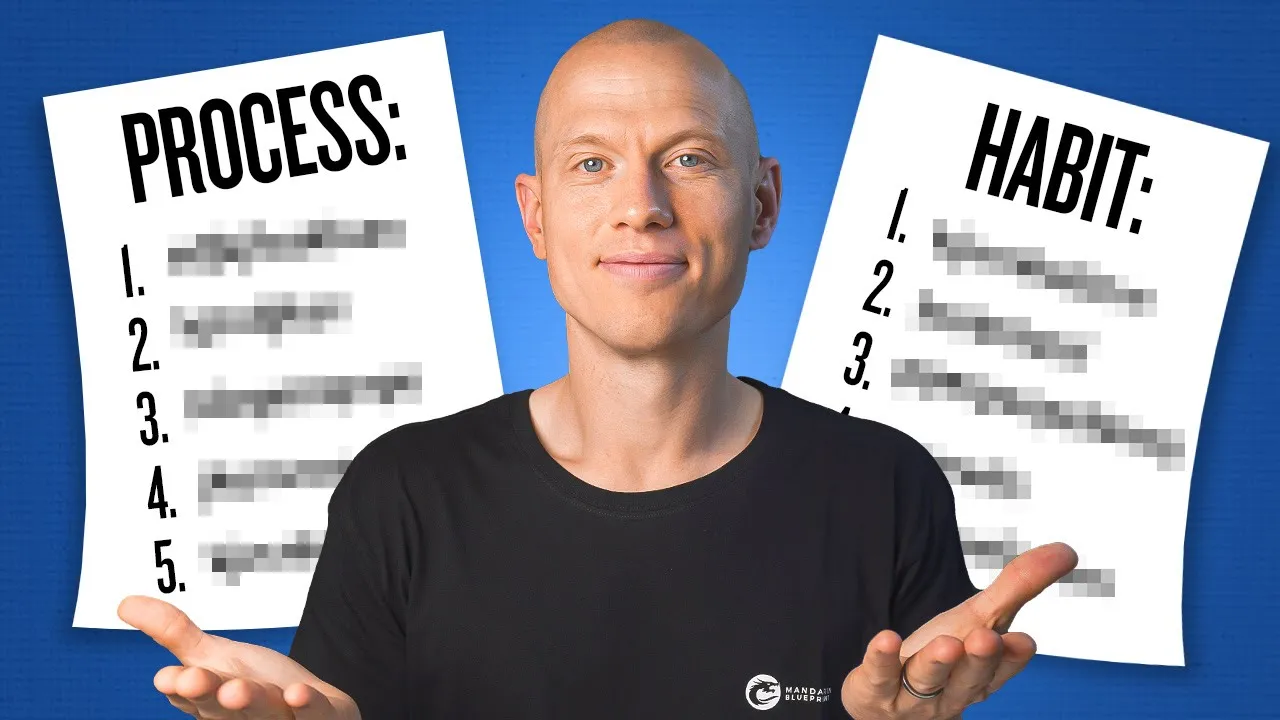
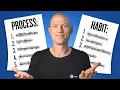
fore so if I were going to start from scratch and learn Chinese all over again there are 10 key steps that I would take which would be split into two major categories the first category process this is the overall strategy and tactics that I would employ at each stage of learning the second category is habit that's how I would stay consistent and invest the time required and this is arguably the most important step cuz after all you have the best methods in the world which you're going to have after the end of this video but
it doesn't matter if you don't actually show up and do the work right oh and if you stay until the end I'll also share my tools and resources that includes the apps courses and websites I would use today I'll also throw in a study plan at the end of the video that's including how many total hours roughly fluency should take using this unique approach hint hint it's way less than you think my name is Luke Neil I'm a fluent Mandarin speaker I co-founded Mandarin blueprint with my friend Phil cmans and we create amazing Chinese courses
that get you to University level Chinese in a fraction of the time so without further Ado let's get into step one to nail pronunciation so pronunciation was one of the very few things that I did right I focused heavily on listening and repeating I used a program called pimsler and as a result of that my first trip to China when I was 19 years old I had an amazing time I was able to get loads of compliments my motivation and confidence as a result of that another often overlooked benefit of great pronunciation or very good
accurate pronunciation is the Boost you get to your listening ability you're able to identify the sound sooner and therefore able to get comprehensible input sooner and comprehensible input is like key to your success with this language so really it's about 5% Theory and 95% practice that 5% theory is quite important knowing where to put your tongue CU it doesn't come naturally to everyone so you can go ahead and check out my full guide to pronunciation on our YouTube channel if you want to get that theory it'll do wonders for your tones and for your general
pronunciation now speaking of tones that's probably the biggest problem for Learners right listening and repeating just like Chinese native speakers do when they're children so you get most of your results from that from just listening and repeating but there are a few little hacks you can do one big one is learning characters using Memory Palace techniques that I'm going to share with you in a moment so once you've started to grasp pronunciation you know how to say all the sounds the tones the tone pairs of which there are 19 that you need to get used
to you can jump straight into reading learning characters building a base vocabulary of at least a th words and this will grant you the ability to be able to consume Chinese content which is really our goal but let's not jump the gun here so step two learn how to read as soon as possible I ignored reading for well over a year and it was to my detriment I said out loud to people I was like I'm not going to learn those silly squiggles but I'm going to do Chinese in a year as as in become
fluent in one year well after that one year I was not only not fluent I was just not able to put much of a sentence together at all I'd spent most of that year cramming words into my brain using a website called memorize.com I spent about 3 hours a day for 9 months built up 16 and a half million points on this thing and pretty much all I got from it was just a hodg podge of random words attached to an English definition that's how I learned them I didn't learn them in context and I
didn't really learn the individual characters of the words most Chinese words are compound words as in two characters so I wasn't learning the characters individually I was just learning the word as a whole and trying to just memorize the squiggles for each individual word super inefficient way of learning but once I did learn the 3,000 characters that are kind of the minimum for advanced fluency and I started to consume Chinese sentences by reading and listening to them all these random words just started piecing themselves together so I went from not being able to string a
sentence together after my first year to the end of my second year achieving B2 fluency and passing the hsk 6 exam that's how powerful reading is so there's no need to wait until you get to 3,000 by the way before you start diving into Chinese sentences once you've learned a few hundred of the most common ones you'll be ready to start understanding a ton in fact the first 500 common characters in Chinese make up 80% of The Language by frequency so you'd be surprised what you can do with just a few hundred characters now learning
characters of course gives you the power to start reading which is really good but also it will remove that confusion that is really common in the early days with caused by all of those homophones in Chinese you see there are only 400 or so different sounds you know like sh is a sound in Chinese or is a sound there's only 400 or so 1,200 or so if you include the tone combinations as well so really not very many compared to english's 10,000 so what that does is while pronunciation is really quick to learn as a
result which is great unfortunately there are many many many many similar sounding words there's like a bunch of different sh you know that all just have the same pronunciation but mean completely different things once you learn characters you get an image associated with each of these different sh sounds and it all becomes very clear you start to have a visual key and this will allow you to see the inherent logic that exists in Chinese compound words as in words made up of more than one character and it makes learning words super easy so I would
work my way to 3,000 characters as soon as possible that's 99.4% sent The Language by frequency and I would try to review written and audio Chinese at the same time ideally like I'm listening and reading at the same time or doing one or the other depending on what's convenient so if I'm out and about or I'm doing chores around the house or I'm traveling it's maybe more convenient to just listen so I'll do that and I'll repeat aloud but whenever I can I'll review flashcards or just read Chinese wherever possible reading gives you that visual
element that listening doesn't have and it just makes understanding things makes getting comprehensible input all the easier because just listening alone is super tough when you're just starting out so so I'd start with simple sentences then I'd go for graded readers that's like short content made for Chinese Learners and then after I got to at least a thousand maybe a couple of thousand characters I'll start dipping my toe into real Chinese content maybe even before then I might start watching simpler stuff made for children like Peppa Pig in Chinese and trying to follow along with
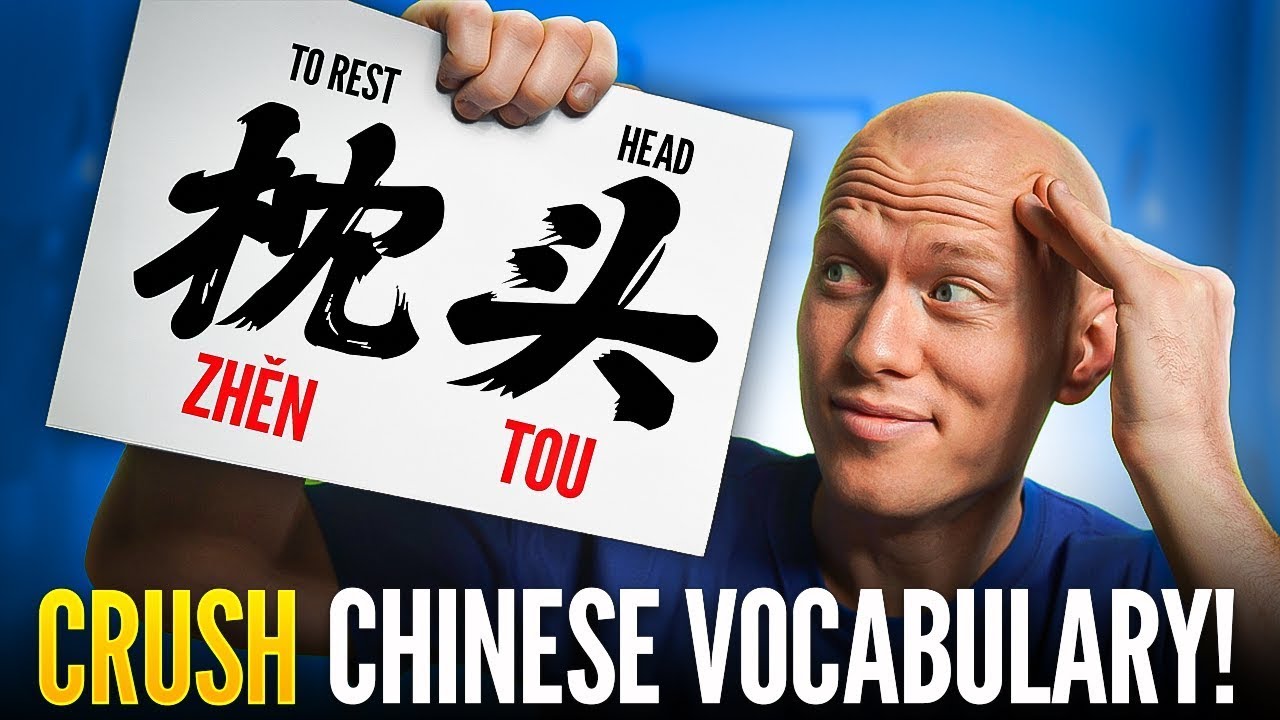
the subtitles it's great watch stuff because that will give you that all the visual cues and the sound as well as the subtitles at the same time which is really handy now you might be watching this thinking okay so just learn 3,000 characters uh you skipped over the part where we actually like you know how do we do that that sounds really tough and with traditional conventional methods it is really tough but you won't be using conventional methods cuz you'll be following my advice and you'll be using memory palaces so we call this the hands-
up movie method it's the method that we teach you in our courses step by step we guide you from zero to the most common 3050 Chinese characters so while you're working towards that 3,000 character goal you'll be spending you know a good portion of your study time each day doing that what I would do is also try to learn holistically that would be my step three recommendation I would not recommend you do what I did and just spend ages learning 3,000 characters every day and that's pretty much all I did and then after I learned
that I started consuming example sentences and you know immersing in Chinese watching Chinese TV that sort of thing and that was cool at the end it was like a big reward but I shouldn't have waited that long I should have done it at the same time even if you do Chinese really well and you learn it in the way that I'm describing it's very easy to become too bottom up that means you're just focusing on the little things like learning characters practicing pronunciation but you're not actually using and seeing the characters and words in context
and trying to use the words in context so you don't want just top down though either you don't want to just paraphrases over and over again without learning the characters without learning the words that will give you the ability to sort of communicate in Chinese but because your pronunciation and your foundation in general is so poor once you stop reviewing you'll just forget everything very quickly and that's a common phenomenon on the other hand if you learn to bottom up you'll just be bored you not be using the language not be seeing it in context
enough so you need a balance and that is holistic learning we actually worked on this issue for many years creating a perfect character order that unlocks compound words all of these compound words come with example sentences made up of stuff you've already learned so what that does is that gives you really early comprehensible input just after 20 or 30 hours of learning you'll start reading Chinese sentences without help from pinion or English translations it's awesome step four immerse as early and as much as possible one of my biggest mistakes was that I put off immersion
way too long just like I did with characters but I tell you what I'll never forget my first afternoon sitting in my little apartment chose a random TV show and I put it on and I could not believe how much I understood I had to follow the subtitles quite strongly because my reading was way better than my listening cuz I hadn't done enough listening at all but it was this magical few hours just sat there just consuming all of these TV shows and I still remember what they were about I still remember very vividly what
they were called one was called Damia humba let's get married and it was kind of cheesy one about u a woman in the city working and her mother's like pushing her to get married and then she has all sorts of like weird terrible dates that go wrong and I remember so many phrases and and words and I learned so much from those few hours because I was emotionally involved in the material and it wasn't just the content itself that was engaging that allowed me to learn these words with barely any need for a review it
was also just the feeling of like I can understand this stuff and I feel awesome because of that all this work that I've put in is actually paying off so I highly recommend that you don't put off immersion like I did buy some books that you'd like to be able to read one day every now and then turn on Peppa Pig or some TV show or even a podcast with no visuals or subtitles whatsoever and you'll be surprised at how much you can understand as long as you've been learning characters and getting some input up
until then so the major benefit you'll get from diving into immersion and not putting it off is that your listening will start to improve now unfortunately there's as far as I know there's not that many hacks to listening you just kind of have to listen a lot and it also helps to use things that are engaging entertaining content that you like as well as stick to the movie/tv show format now with Chinese content they always come with subtitles pretty much without exception so you'll have subtitles there to help you and that will help your listening
and the listening will also help your reading at the same time plus you get the visual cues of the TV show that you're consuming here are some more quick immersion tips for you based on my years of experience with this number one always be researching I love the comic apps I used to read like one punch man all the time but then you get bored of that and you want to switch to something else and it's a really good idea to have several things available the click of a button that you are aware of so
you don't spend time searching for something new and then end up procrastinating and not consuming Chinese in that moment right another point is Beggars can't be choosers as my mother used to say a lot when I was a kid so if you are a lowlevel if you just started out then don't expect to be able to just read Lord of the Rings in Chinese follow along with the dubbed movie Embrace ambiguity and tolerate that feeling of not being able to understand enjoy the feeling of I can understand this if you keep going your brain will
get used to it as long as you are also building your comprehension you've got good pronunciation and you are learning characters and building your base vocabulary of words step five practice speaking when I started learning Chinese I actually went to China to do it right I was learning on my own but I was I had lots of Chinese people around me all the time friends my girlfriend now wife and I naturally spoke Chinese more often than I would have if I was outside China but even still I still put it off just like I did
with characters just like I did with immersion I put it off way too long and yeah I had General chitchat every day I had to like buying chewing gum at the shop or you know ordering food but I never broke through and challenged Myself by deeper conversation regimented Reg regular speaking practice and because of that my Chinese kind of once I got to be too fluency is just kind of stayed there for years and I didn't break through that's also because I wasn't listening enough as well I wasn't immersing enough as for when to start
speaking though I would say it's completely up to you like I started speaking from day one more basic stuff but if you try and speak a lot without first building your comprehension like learning characters pronunciation consuming the language for quite a long time like several hundred hours then you're not really going to be able to produce much I mean how can you produce Chinese if you haven't consumed it right you first need to consume it then produce it otherwise it's a very slow disappointing kind of embarrassing process I mean it's always going to be awkward
no matter how much listening and watching and whatever you do in terms of immersion it's always going to be tough when you start speaking so you have to break through but at least if you're to the point where you can comprehend say a Chinese TV show or at least like Peppa Pig without subtitles or something like that you're not really going to get a huge amount out of your speaking practice in my personal opinion now that's in terms of literal gains but one of the things that you're always going to get out of any interaction
with a real Chinese person and trying to practice Chinese with them is the wonderful feeling of I am actually doing the thing I am achieving my goal right now this is what I've been working towards and even if you're a very low level and you can barely understand anything it's always good to every now and then try out speaking because that's the goal that's what we're trying to do this is for is to connect with Chinese people um at least that's most people's reason for learning Chinese so I would say try out speaking every now
and then when you're a lower level and then once you're able to understand more higher level content like cartoons and things like that and then maybe even TV shows and movies with subtitles or without once you're at that level then you can start hitting speaking a bit harder maybe going once or twice a week maybe even daily speaking to your AI AI chatbot and having him or her talk back to you that's a fantastic way that I found of improving my speaking so on top of using AI chatbots like chat gbt to practice your Chinese
here's another few tips for you try shadowing that's where you just have a piece of audio whether it's a single sentence that you play over and over and over again you try and speak in the same way as the speaker and alongside them as they speak this will significantly improve your fluency and pronunciation it's kind of like doing push-ups or stretching or yoga it's like a way of just sort of keeping your muscle in shape and one more tip there's no real sacrifice for a real human being trying to connect with human Chinese people just
find them on I talkie or something like that and make sure you book that in your calendar once a month ideally once or twice a week but it doesn't matter how good your methods are if you're not going to show up and use them and put the time in every day so let's get into habit and there are five steps to Habit that you need to master now habit is actually the most important thing but I'm talking about it second and here's why once you start learning Chinese you enter what is called called the honeymoon
period and that could last anywhere from a few weeks to a year where you just no matter how rubbish your methods are whether you got good methods or a bad approach you're still going to keep going just like I did in my first year with the language I did not really lose my motivation until very end of the year despite investing like hundreds of hours and eventually over a thousand hours in the language getting very little results in terms of actual ability to produce and understand the language but that's what we call motivation that's not
really habit or discipline what we need need is something to replace that motivation cuz that honeymoon period will end and you know you're still going to have to invest at least a year or two in order to get to your goal of fluency so here's how to develop unbreakable habits find your reasons for learning Chinese to a high level to find something truly meaningful to you best way of doing this is to not think of specific reasons for learning Chinese like I want to make more money have better career prospects I want to be more
attractive or higher status Etc but instead think of this specific experiences you would like to have in the language so I'll give you a few amazing experiences that I've had over the years and you can sort of use that as an inspiration to find your own I've spoken on stages a few different times I got to break out Chinese at my friend's wedding I was the best man I gave a best man speech and he was marrying a Chinese person had all kinds of Chinese family members at the wedding and I halfway through I my
speech I broke into Chinese and the crowd just roared it was just like this amazing response from everyone I was also able to give a speech in Chinese to my father-in-law and my wife's family when we got married and he unfortunately passed away of cancer just a few months later and I was there with him at his deathbed and I was able to say nice things in Chinese along with the rest of his close family so what experiences would you like it doesn't have to be these big experiences that are very deep and meaningful it
could also just be rather subtle one such as making your friends laugh at a table while you're having dinner so think of an experience that you would like to have write them down in as much detail as you can and look at these experiences refer to them when your motivation inevitably dips so if I was going to start from scratch learning Chinese I would write down what experiences and things that I wanted to be able to do in Chinese and at the same time throughout my study I would watch videos of other fluent Chinese Learners
to remind me that it's possible look up someone called Das Shen a guy from Canada who's got the best Chinese I've ever seen so do that and that means you have your why your reason or reasons for learning Chinese then what you want to do is select your identity choose your who so I've been for quite a long time now maybe a couple of years listening to some Chinese or having some interaction in Chinese every single day even if I'm outside of China or living in China doesn't matter I get it done every day and
that's because I have a very strong habit but it's also because that habit is based around my identity who I am as a person I am a Chinese enthusiast I'm a Chinese course creator so if I go even just a few hours or a whole day without consuming some Chinese or doing something in Chinese I feel weird I don't feel like right so I'll do something before I go to bed or I'll do something while I'm uh picking my kid up from school on the way back or I'll find a gap in my day where
I can consume some Chinese so you're not just learning Chinese you are a Chinese learner or a Chinese Enthusiast or a Chinese fanatic whatever you want just choose one title that you want for yourself and then you need to do behaviors that will help you become that identity and the more behaviors that you do that support the identity it's really hard to go back you just become that person this is who I am now I'm a Chinese fanatic so the third step is casting votes for your new identity and there are two key ways for
doing this that I found that are really effective first you become interested in Chinese culture and China itself so I would become interested in the culture by looking up the best Chinese movie documentaries and watch them even with English subtitles just consume them how they act how they behave what's their sense of humor like of course I'd be more into Chinese food I might even book a trip to China in my calendar even if I couldn't afford it right now for now I might go to my nearest Chinatown or Chinese restaurants regularly and try to
chat with people which might be awkward at first but you know it's part of the process just enjoy those experiences as much as you can and try to make them happen often as well as learning to love the good and accept the bad the more you learn about Chinese culture of course it's natural to learn things that you don't particularly like there are things that I don't particularly like about Chinese culture like spitting is too common it's less common these days but it's still pretty darn common bad driving is pretty common as well they don't
really obey the traffic rules as much as we do here in the west but I still love it it's kind of like having a sibling you love them and you always will but there's things that drive you crazy about them they'll always have a very special place in your heart for for them and I have a very special place in my heart for China and Chinese people so once you're working your way through that process and you're starting to immerse yourself not just in the language but in the culture itself you can start working on
the Habit Loop so this is straight out of atomic habits one of my favorite books on habit building if you want to cast votes for your identity it's a really good idea to make it obvious make Chinese learning obvious around you make it attractive make it easy to do less friction to starting and also make it satisfying make you want to do it again next time so if you want to make Chinese obvious in your life put Chinese books around you Chinese posters on your wall again even if you don't understand this stuff it's fine
it's just reminding you this is who you are now you want to make Chinese more attractive make yourself want to learn Chinese more often a good way of doing that is to join a community find somewhere on Facebook find a forum online like Chinese forums go on Reddit or join our community at Mandarin blueprint the MB Community find somewhere you can fit in and stand out and say we are Chinese Learners hey look what I did today and make friends find Study Buddies also find methods that work find methods that you know for sure that
are taking you towards your goal and every minute you spend is worth it you're getting bang for your buck if you want to make Chinese easy you want to reduce that friction to starting a great way of doing that is to prime your environment however you learn Chinese usually on your computer or your phone or your tablet have the apps already open ready to go before you get started so you don't have to open them log in all that sort of stuff any friction during this early part will often cause you to procrastinate and not
get started use the two-minute rule you mark your habit as complete for the day once you've done a very easy version of it so let's say you wanted to learn characters for half an hour and review all your flashcards that's quite a big ask but if your goal instead is my goal is to open my computer and review one flash card that takes probably less than a minute but it's called the two-minute roll because it's small it's an easy version and what usually happens is once you've done that first little bit you'll just keep going
and you'll finish the habit for the day anyway if you want to make Chinese more satisfying a great way of doing this is to get a habit tracker there's an app you can have on your phone or you could have a journal whatever it is you prefer but you tick off your habits at the end of each day or after the habits have been completed it's super addictive and be sure to give yourself rewards for finishing certain habits so you reward yourself with something now ideally this something is actually beneficial to or at least neutral
towards your Chinese progress so don't just yay I finished my flash cars I'll just consume an entire chocolate cake that's going to slow you down it's much better to have a healthy snack or go for a walk the fourth key step in creating strong habit is to have decent Health focused on diet sleep and exercise now I'm not a health expert but when I was learning Chinese I was in pretty bad shape but I was like 24 so I kind of got away with it but if I was going to start learning from scratch right
now at the age of 36 I certainly would not do that I would have to make sure that my health is in order I'm getting enough sleep my diet's okay it's not full of eating sugar and like deep fried foods every single day and I'm actually exercising regularly and then I'll know that I'll get more gains uh when I actually learn Chinese so highly recommend you focus a little bit on that so let's move on to the final step of habit which is enjoy the journey so your motivation will go up and down life itself
will go up and down you'll have struggles and triumphs you know you move house you'll change jobs you'll have kids you'll have financial troubles you have Financial successes but I would constantly remind myself learning Chinese is a marathon not a Sprint I would choose a minimum that I do every single day and once I've done that minimum my habits are complete and everything else is a bonus so I know that no matter what happens I'll be able to do this minimum no matter what but also at the same time I'll be completely fine with taking
breaks when I'm feeling more motivated or my life is smooth I will take that opportunity to raise the amount I learn each day or when life gets in the way it's okay with toning everything down and maybe just doing the minimum on a smaller scale when it comes to what you consume or the courses that you use make sure that you're enjoying yourself you're not just trying to consume a book that you think you should consume even if you don't enjoy it or a particular piece of content that you want to be able to consume
but actually just makes you frustrated and demotivated when you do but you're trying to force yourself through it I did that one once with Harry Potter Phil Co MB co-founder was reading Harry Potter cuz he's into it I don't really care that much about Harry Potter but I was trying to read it just to sort of stay on his level but I didn't really follow along I didn't really enjoy it and it was just not for me but I was trying to force myself to consume it then I switched to something I did enjoy I
was reading comics in Chinese and that was like my thing right for a long period of time so whatever allows you to enjoy the moment that is what you want to choose do what makes you happy in the moment today because there's no end to learning Chinese or any language even Chinese Scholars will always have more Chinese to learn so there's no end and that means it's all about the journey so enjoy the journey so let's move on to the final part of this video tools now a lot has changed since I started learning Chinese
more than 10 years ago tons of new amazing tools available far more accessible content wow like the amount of content that's available at your fingertips these days is just incredible so these are the tools that I would use if I was just starting out with Chinese all over again for the build stage learning pronunciation characters how to read building that initial Foundation I would without the doubt go to Mandarin blueprint now I know I'm a bit biased here to say the least but that is exactly what I would do I would just buy the blueprint
and work my way through it now when it comes to getting comprehensible input we have tons of graded reading and listening material in the blueprint but if I was going to step outside of that I would go for Chinese pod which has just thousands and thousands of really wellone dialogues along with PDF things like that and I would go to dual Chinese for our reading that's the one that's most recommended from our members now there are a bunch of flashcard softwares out there anky is probably the most prevalent we like Traverse at Mandarin blueprint as
well as mocky and Quizlet those are two others that I've heard are really good now in terms of media platforms like places you'll actually get Chinese immersion from I would say youtube/ Netflix would be a great choice there's tons of free content on YouTube and n Flix also has a bunch of Chinese content that you can search by Audio you can search for dubbed or Mandarin audio and you'll get tons of choices pop up and any comic app will also work fine just search MAA which means comic in Chinese into your app store and just
download the one that's the most popular my favorite one is probably 10cent Comics I would get meaku or lingo pie for creating flashcards from my immersion content in terms of activating my language through speaking or writing I would get I talkie and of course a chat bot in terms of habit there's only one thing that I would recommend and that is getting a habit tracking app or journal or calendar and just some final all rounders you'll want to get pleco which is just the best dictionary for Chinese I still use it now as well as
a VPN astr or expressvpn are probably the best in my opinion as of this moment making this video vpns are really useful while you're in China of course because there's things that you can't access like Netflix while you're in China but while you're outside China you'll be able to switch the VP PN to China and be able to access the Chinese internet and download and listen to Chinese podcasts that way and Chinese videos that kind of thing now there are tons more tools that you could get that might be awesome but these are the basics
all you'll need in my opinion to get through all the way to fluency now as promised here's a bonus section exactly how I would spend my study time each day just starting out I would go through our course pronunciation Mastery Mandarin speaking and listening Kickstarter or the phrase Vault now these courses are just packed with lots of real life phrases with hours and hours of audio lessons just listen and repeat in lots of different formats with really wonderful audio so it really works well as a listen repeat resource but you can also check out pimsler
and I believe aimal and gloss is pretty decent too now until at least 1 th000 characters around intermediate level I would spend 80% of my time on building like getting to that 3,000 learning my initial words focusing on pronunciation and 20% on immersion because it will help your listening skill keep up with your reading to at least some degree if you don't do any immersion you'll end up with this big discrepancy in terms of your reading and listening skill as I would work through the blueprint this idea of consciously building chunks of the language will
gradually just disappear to zero and while that's happening I would gradually increase to 80% spent on immersion and the remaining 20% of my time spent on output whether that's shadowing selft talk or just sessions on I talkie with an actual Chinese person all right guys that's it thank you so much for watching this and make sure to comment below if you have any other tips or questions questions about acquiring Chinese happy learning and I'll see you in the next video