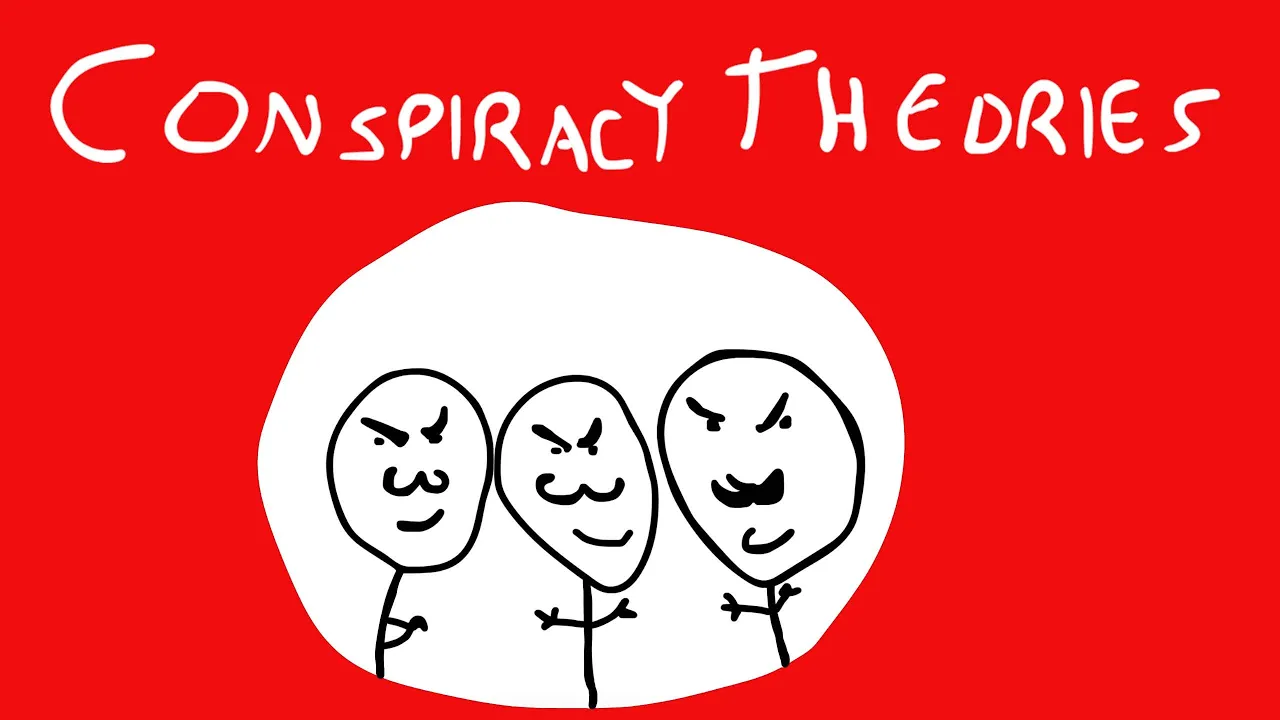
i remember the days when conspiracy theories seemed like apolitical fun whether it was bigfoot elvis or the aliens of roswell there was something kind of magical about secret meetings cryptozoological creatures and a world that could be understood if we only looked harder now with the current pandemic and political instability conspiracies have lost their fun appeal whether it be eroding trust in science and institutions challenging the democratic process or justifying prejudice and racism the cause and effect of conspiracy theories appear to now more than ever be harmful to society as we know it the question remains
that why do we believe them in the first place firstly let's define a conspiracy theory yes it's easy to say that a conspiracy is anything that is untrue or maliciously false however this would be dishonest historically many conspiracies have came true the watergate scandal mk ultra and even the fact that tobacco companies and oil companies knew about the harmful effects of their products decades before they ever publicly acknowledged it we can't brand everything we don't like as a conspiracy so what are they then simply put a conspiracy theory is the belief that a number of
powerful actors joined together in a secret agreement in order to achieve a hidden goal which is perceived to be unlawful or malevolent basically it's when a bunch of bad dudes secretly get together and plan to do something very bad from this definition we can see that conspiracies help us to explain social events and phenomena that may appear unexplainable when we are confronted with uncertainty we tend to very quickly do anything possible to reduce it since an incomprehensible world is also very uncomfortable several studies have actually demonstrated that induced feelings of uncertainty increases the likelihood that
people will believe conspiracy theories specifically they found that people were more willing to endorse political conspiracy theories however it's important to note this wasn't a general endorsement of political conspiracies belief in these conspiracies only went up when the theories centered on an opposing political party uncertainty had no effect on believing conspiracies that involved their own preferred party overall it is not enough to feel uncertain belief in conspiracies appear to require both uncertainty and a distrust of certain powerful groups why do we believe in these theories to reduce uncertainty today's video is sponsored by endl after
five whole years i'm glad to say that i have finally finished university gone are the days of an erratic sleep schedule constant stress deadlines and focusing on too many things all at once right unfortunately i've noticed that the many years of surviving as a college student has given a few bad habits i sleep late i can barely focus and it's pretty hard to relax but thankfully i found endl an app that is backed by neuroscience patented technology that creates personalized soundscapes to get me back on track how does this work exactly endle reacts to inputs
like time of the day weather heart rate and location in order to create a custom soundscape for whatever you're trying to do endle helps you boost productivity by helping you concentrate for longer periods of time relax you through calming your mind to create feelings of comfort and most importantly for me sleep by soothing you into a deep state of rest and relaxation if you're in need of some mental clarity in order to improve your focus then head on over to the link in the description and download endl today the first 100 people to download endl
will get a free week of audio experiences [Music] as the philosopher karl popper argues these theories are a lazy way to explain social phenomena in his conspiracy theory of society he defines conspiracies as a form of theism a belief in gods whose whims and wills rule everything society and the powerful actors within it are seen as highly competent and almost omnipotent puppet masters whose intentions play out with intricate plans some may argue that gas prices are up because of the global elite siphoning money from the poor or because a certain politician is lining their pockets
in an effort to push their agenda however popper takes a hard realist approach and suggests that most plans in general rarely turn out successful and tend to actually have unforeseen consequences society isn't this well-run system but rather a barely held together machine that nobody quite has the power to entirely commandeer instead of rising gas prices being part of some intentional scheme it is much more likely that the phenomenon could be explained by boring economic policy popper suggests that intentional social action is very unpredictable in terms of consequences and that it is the job of the
social sciences to analyze why certain events happen both on a systematic and individual level and how do we end up believing in them in the first place we can look at a few cognitive mechanisms to help explain this firstly there is pattern perception the ability for one to connect the dots and find meaning between elements this is highly useful in basically every interaction we have if we didn't have this the world would appear as a strange space of disparate particles with no apparent relationship with one another however some of us may see patterns and things
far more than others even when no patterns exist in one study they had people look at paintings that were either very intentional in design and alignment versus well jackson pollock's work they found that those who found patterns in the pollock paintings were more likely to believe a number of conspiracy theories but this result did not hold true for those who saw patterns in the other paintings in tandem with increased uncertainty scene order in the chaos may leave one prone to conspiracies another cognitive mechanism is agency detection like pattern perception agency detection is also a highly
important tool in our everyday life as it allows us to recognize the intentions in the actions of others however this too can also lead us into seeing things that aren't actually there studies found that illusory agency detection does in fact relate to greater belief in conspiracies this ties in with popper's views on conspiracies in that they function to explain social phenomena through making up intentions behind certain actions that may actually not be there finally there is the proportionality bias let's say the president suddenly passes away from a virus lots of people die every day from
viral infections aside from access to better health care there's nothing too significantly odd about the president dying nonetheless it is highly likely that the death of a sitting president would generate an insane amount of conspiracy theories was he assassinated did he fake his death this is the proportionality bias where we assume that big consequences must be explained by big causes going back to pauper we instead find that most social phenomena actually appears to be caused by a lack of foresight misplanning or incompetence it makes sense to be conspiratorial it would be pretty scary to live
in a world where nobody really knew what they were doing and the causes behind things were far more incomprehensible and chaotic than we would assume there's something comforting about the fact that the world may be ran by a secret group of elites no matter how nefarious for one it gives us the idea that the world can actually be understood and secondly it frames us as potentially intelligent heroes who rise against the status quo and know what's really going on so we post on forums we go to rallies and maybe sometimes our beliefs lead us to
commit heinous acts personally i think i'll just stick with believing in bigfoot [Music] you