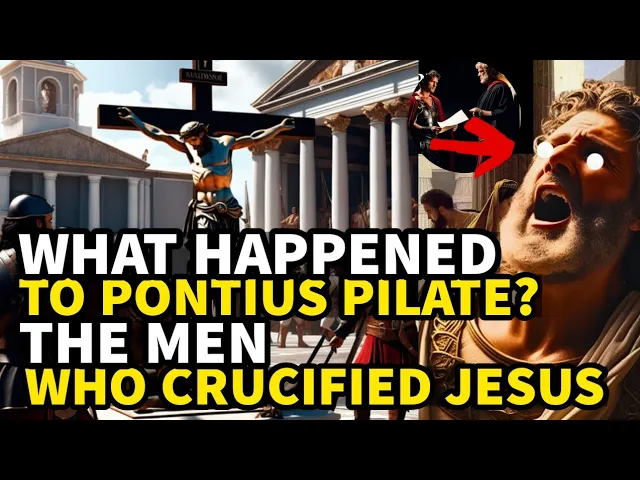
the tale of Pontius Pilate the Roman Governor entangled in the crucifixion of Jesus Christ weaves a narrative that transcends religious significance to become a compelling historical and moral inquiry from the mysterious decisions surrounding barabus and Chris to the haunting imig of pilatti washing his hands his story unfolds against the backdrop of a tumultuous era marked by cultural clashes religious tensions and the weight of political power in this exploration we delve into the life choices and ultimate fate of Pontius Pilate aiming to unravel the Enigma that shrouds this pivotal figure in Biblical history Pontius Pilate is
a name that you will often come across in the accounts of the crucifixion of Jesus Christ in the Bible he was the fifth governor of the Roman province of Judea and served under Emperor Tiberius from 26 ad to 36 lady Pontius Pilate played a crucial role in biblical events mentioned in the New Testament the mystifying decision of Pontius Pilate wherein he permitted the Jews to select the release of barabus a notorious criminal in Judea instead of Jesus whom he knew to be falsely accused left an indelible mark on his legacy shrouded in a mystery That
Remains elus Ive to unravel despite his wife dreaming about Jesus the night before and advising him not to get involved with him pilate ended up handing Christ over to be crucified after the people chose barabus pilate made the gesture of washing his hands indicating that he had nothing to do with that unjust decision yet this could not save him from his fate for that reason in today's video we will discuss the life and tragic death of Pontius Pilate who he was how he rose to power why he washed his hands and allowed Jesus to be
crucified and what were the tragic consequences of the wrong choices he made please stay with me until the end as you will be surprised by the ending of his story but first do me a little favor by hitting the like button to support the channel and also subscribe this will help you also to never miss an update when we upload a new video let's set the ball rolling now to get a broad understanding of this man let's look at it in this way the Roman Empire conquered and occupied the region of Judea in 63 BCE
bringing it under Roman rule this occupation was resented by many Jews who opposed foreign domination and yearned for political Independence the Romans and the Jews had distinct cultural and religious practices the Romans were polytheistic worshiping a Pantheon of gods while the Jews were monotheistic believing in one God this cultural and religious divide led to clashing beliefs and practices the Roman Empire imposed heavy taxes on its provinces including Judea to fund its vast military and administrative expenses the burden of Taxation along with other tributes was a source of discontent among the Jewish population Roman governors and
prefects such as Pontius Pilate were appointed to oversee the provinces their Authority included maintaining order collecting taxes and ensuring loyalty to the Roman Empire the manner in which these officials exercised their power sometimes led to conflict with the local population the Romans sometimes showed cultural insensitivity to Jewish religious practices for example attempts to install Roman emblems or statues in Jerusalem which conflicted with Jewish religious beliefs against graven images provoked outrage and protests there were sporadic uprisings and resistance movements among the Jewish population against Roman rule groups like The Zealot sought to resist Roman Authority through
armed Rebellion contributing to an atmosphere of tension and unrest the religious zeal of the Jews played a significant role they believed in the special Covenant with God and resented any foreign interference in their religious Affairs the Romans in turn often perceived Jewish religious practices as peculiar and were suspicious of potential rebellious sentiments this led to a series of tensions in the region where Pontius pilot oversaw therefore putting him under pressure in his governance the early life of pon pilot is not extensively documented and historical records provide limited information about his background what is known comes
from brief references in historical texts and the accounts of the New Testament in the Bible Pontius Pilate was born around the year 26 BC and came from a family that belonged to the Roman equestrian order a social class below the senatorial class but still considered part of the Roman Elite the exact place of his birth is uncertain but historical records suggest that he was likely born in central Italy family background and early upbringing are not well documented and there is little information about his education or early career he rose to prominence through his association with
influential figures in Roman politics which ultimately led to his appointment to key positions within the Roman Empire Pilot's entry into public public service is often attributed to his connections and relationships with influential individuals in Rome it was not uncommon for individuals from the equestrian class to secure positions within the Roman Administration through familial or political connections Pilot's career in public service progressed and he eventually became the prefect governor of the Roman province of Judea a position he held from approximately 26 to 36 CE pilat shared a limited amount of civil and religious power with the
Jewish Sanhedrin assembly of either 23 or 71 Elders as a prefect of Judea he was responsible for the overall civil administration of the province this included the enforcement of Roman law the maintenance of public order and the administration of justice the prefect had command over the Roman military forces stationed in Judea this Authority allowed him to use military power to maintain order suppress rebellions and address any threats to Roman rule pilot oversaw the collection of taxes and tributes from the population of Judea this was a crucial aspect of Roman governance as the revenue generated from
the provinces helped support the vast Roman Empire pilot served as the highest judicial Authority in Judea he had the power to preside over trials pass judgments and administer punishments his decisions were expected to align with Roman law and he had the power to inflict capital punishment yet in the case of Jesus he didn't want to even in the Gospel of Luke we could read the up and down on jesus' judgment where he will send the responsibility to Herod and still Herod will bring it back to him the Apostle Luke describes pilate as a leader who
didn't want to take responsibility for such an important decision in chapter 23 after finding no guilt in Jesus he tries to pass the responsibility to Herod a prince of Judea who had been responsible for ordering the beheading of the Prophet John the Baptist 3 years earlier as Herod returned the responsibility to pite he handed it over to the Jewish people in the Gospel of John we can see a more arrogant posture from pilate who questions Jesus when he claims to be the king and mocks the Messiah when he says he came into the world to
testify to the truth now returning to the story The Jewish religious leaders pressured pilate to condemn Jesus saying that he represented a threat to public order and Roman power however the real fear of those men was that Christ would foment a Revolt among the Jews in the Book of John the Bible says that pilate had interrogated Christ who stated that his kingdom was not of this world and that he had come to proclaim the truth upon hearing that Pontius Pilate considered Jesus innocent of the charges of rebellion against Rome and Caesar even though he found
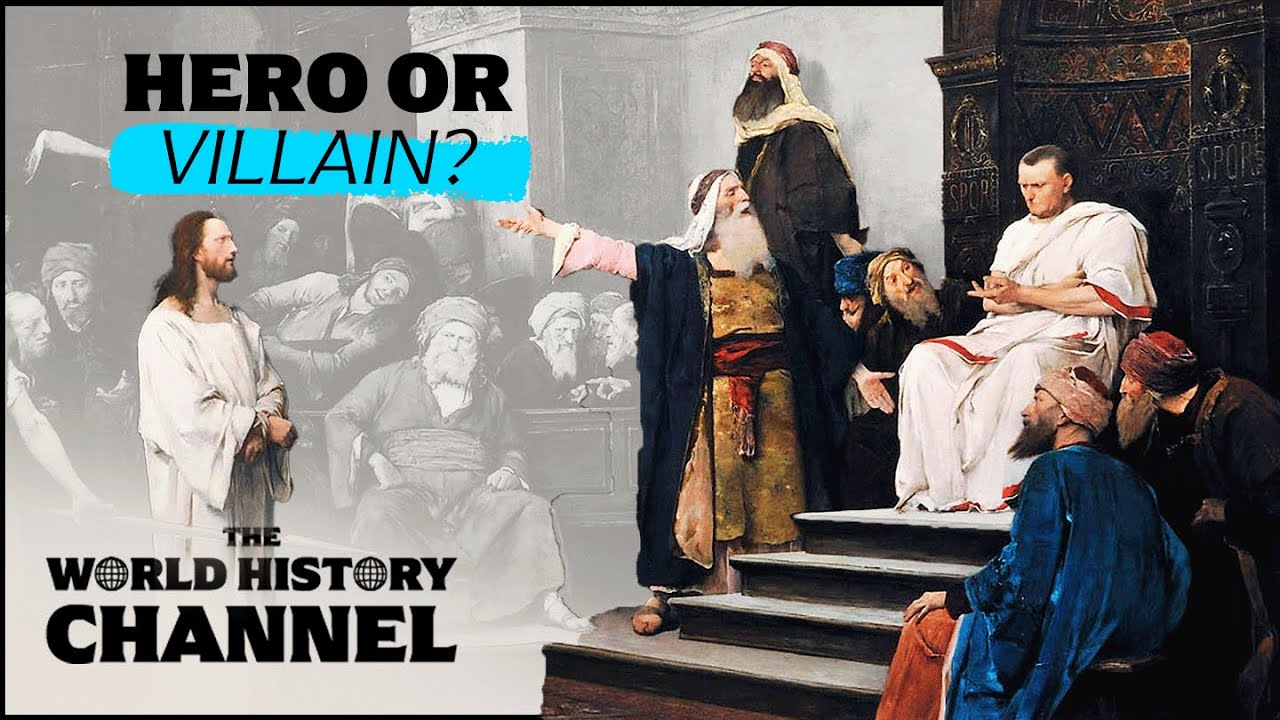
no guilt in that man pilate lacked the courage to stand firm against the Jews who wanted Jesus crucified the situation between Jews and Romans was tense at that time pilate preferred to please those people than to go against what he believed to be right as part of a tradition during Passover he offered to release a prisoner pilate proposed to release Jesus but the crowd asked for the release of barabus a convicted criminal instead of Christ seeing her husband being pressured by the people pilate's wife Claudia warned him about the mistake he was about to make
see what the Bible says while pilate was sitting in the judge's seat his wife sent him this message don't have anything to do with that innocent man for I have suffered a great deal today in a dream because of him look at this Brothers but faced with the insistence of the population and the fear of starting a major popular Revolt pilate publicly washed his hands symbolizing that he had nothing to do with that decision and that the responsibility would fall on the people and the religious leaders then Jesus was crucified on Calvary outside Jerusalem Pontius
pilate's participation in the biblical narrative ended there but his life as the leader of the Roman Empire in Judea continued even after meeting Christ pilate remained the same Wicked Man historical accounts show that 3 years after Jesus death pilate took brutal action ordering the arrest and killing of some galileans who were making sacrifices in the temple pilate reportedly ordered the slaughter of a group of armed Samaritans at a village called Tiana these Samaritans hoped to find artifacts believed to have been buried there by Moses the leader of this movement may have been doso a messiah
likee figure among the Samaritans active around that time the Samaritans claiming not to have been armed filed a complaint with Lucius vus the Elder the governor of Syria from 35 to 39 ad this complaint led to Pilot's recall to Rome to face judgment by Tiberius however Tiberius had died before Pilot's arrival placing the date of Pilot's removal as Governor around 37 ad following Tiberius his death Pilot's fate was set to be determined by the new emperor Caligula one of the most notorious leaders of ancient Rome it is unclear whether any formal hearing took place as
new Emperors often dismissed outstanding legal matters from previous Reigns the only certain outcome was that pilate was not reinstated as governor of Judea the reasons for this are debated whether the hearing went badly or pilate chose not to return yet it was certain that pilate was sent into Exile in the region of Gaul where France is located the early church historian usus writing in the early 4th Century claimed that tradition relates pilot committed suicide afterward due to disgrace usus the early Christian historian provides an account of Pontius pilate's death in his work church history 271
according to usus this information is derived from tradition and he does not offer explicit details or sources the same writer Josephus in the 18th book of the Antiquities says that Herod a gripper who was made King by Claudius killed James the brother of John with the sword and that Peter having first been imprisoned was afterward crucified he says that it is reported in many historical works that pilate fell into such calamities that he was forced to become his own murderer and executioner in this passage uus attributes the information about Pilot's suicide to many historical Works
however he does not specify which works will provide direct references to corroborate this claim the use of the term reported suggests that uus is relaying information that was part of the broader tradition circulating at the time rather than relying on specific documented evidence Scholars have approached eusebius's account with caution due to the lack of independent corroboration and the fact that usus himself acknowledges the information as part of the tradition The Narrative about pilot suicide may have served a theological purpose emphasizing divine retribution for his role in the crucifixion of Jesus rather than being grounded in
concrete historical evidence there has been some argument on this claim though early historians Daniel Schwarz argue against dismissing eusebius's claims lightly notable sources including the second Century philosopher kelsus questioned why if Jesus was God pilate had not been punished Christian apologist origin writing around 248 ad responded suggesting that nothing bad happened to pilate because the responsibility for Jesus's death lay with the Jews not pilate pilate's supposed suicide is not mentioned in the works of Josephus Pho or tacitus Paul Meyer suggests that Pilot's fate likely involved retiring as a govern government official and becoming a pensioned
Roman exm magistrate rather than meeting a more disastrous end Joan Taylor notes that Pho discussed pilot as though he were already dead in the embassy to gas written a few years after Pilot's tenure as Governor Pontius Pilot's Legacy stands as a poignant reminder of the complex interplay between power morality and personal conviction his pivotal role in the crucifixion narrative marked by moments of moral ambiguity and political expediency continues to Captivate Minds across the ages the enigmatic washing of hands The Reluctant choices made under pressure and the ultimate consequences faced by Pilot paint a vivid Tableau
of a leader torn between conflicting forces whether in the realm of Faith or the annals of History the tale of Pontius pilot remains is a Timeless exploration of The Human Condition prompting reflection on the enduring impact of choices made in The Crucible of pivotal moments if you enjoy this episode on this channel share like and comment on what you think about these claims on the death and works of pontious pilate who crucified Jesus thanks for watching