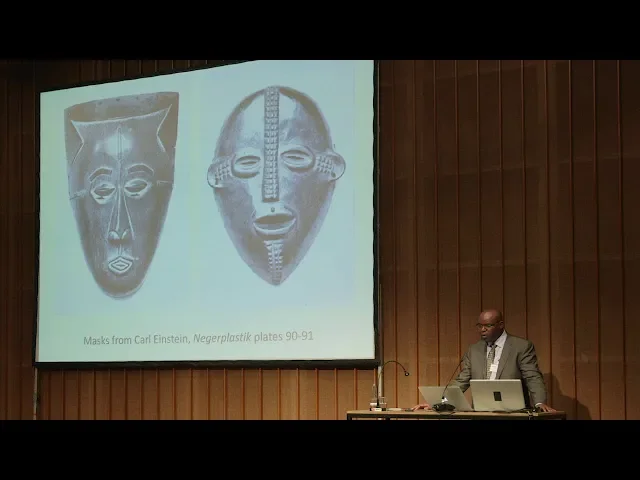
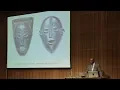
my peppery thinks African artistry by a volunteer now the photo archive and texts of Caroline stylist Naga plastic invented a problematic Colonel of Africa and other possessed stew this day never plastic played an important role in the global reception of African art by bringing it into ongoing conversations about significant form and luminous imagery in the context of modernism as though Estrada notes Einstein literally conjured up the category African art to the systematic presentation of a doctored and highly selective group of images however most of the sculptures illustrated in the publication were actually products of the
colonial encounter which rather than represent in a timeless Africa testify to the vitality of contemporary African art at the turn of the century I frame a region of naga plastic against analysis of the Yoruba artists Halliwell Fisher 1873 to 1938 to show how Einstein failed to account for change in African protocols of visual representation in that era two caveats it is problematic to argue against the text on the basis of what was not included that is always a very difficult thing to do among my people we say you can say this is what somebody said
now this is what they were going to say so in that regard I want to make it very clear that I my primary aim here is to try and understand how the typology that Einstein created for African art has continued to impact the field right up to the present time also in this presentation I am NOT trying to posit a link between Aloha and Einstein because there is known as far as I know the tragedy of colonial archives is not in what they contain a lot of which are audio of it is what they live
out the absences that Arizona faced and entanglements with Africans the idea is to read Aloha tangentially against the formulations of Nagas plastic I argued that the transformation in the lowest what I define as a merchant modernization is what contract access times construct of an African art that he reframed in new and problematic forms so invent in African art in the early early 20th century African art became an important point of reference for European modernists who use the decadent architectonical logic of African masks and sculptures to transform the representation or strategies of modern art Pablo Picasso's
encounter with African at the Trocadero museum of ethnology which is not amusing alone in Perry in 1907 he's really narrated as the or moment of modernity entanglement with African art or what was then called primitive art Patricia lighten argues that this narrative legitimizes a romantic view of Africa held by because on and operation of own gods and minimizes the fact that Africans and African art itself had been visible in Paree since the 1890s Colin Stein's seminal publication Nega plastic instrumental amid the argument for the positive qualities of African art as art in his opening passages
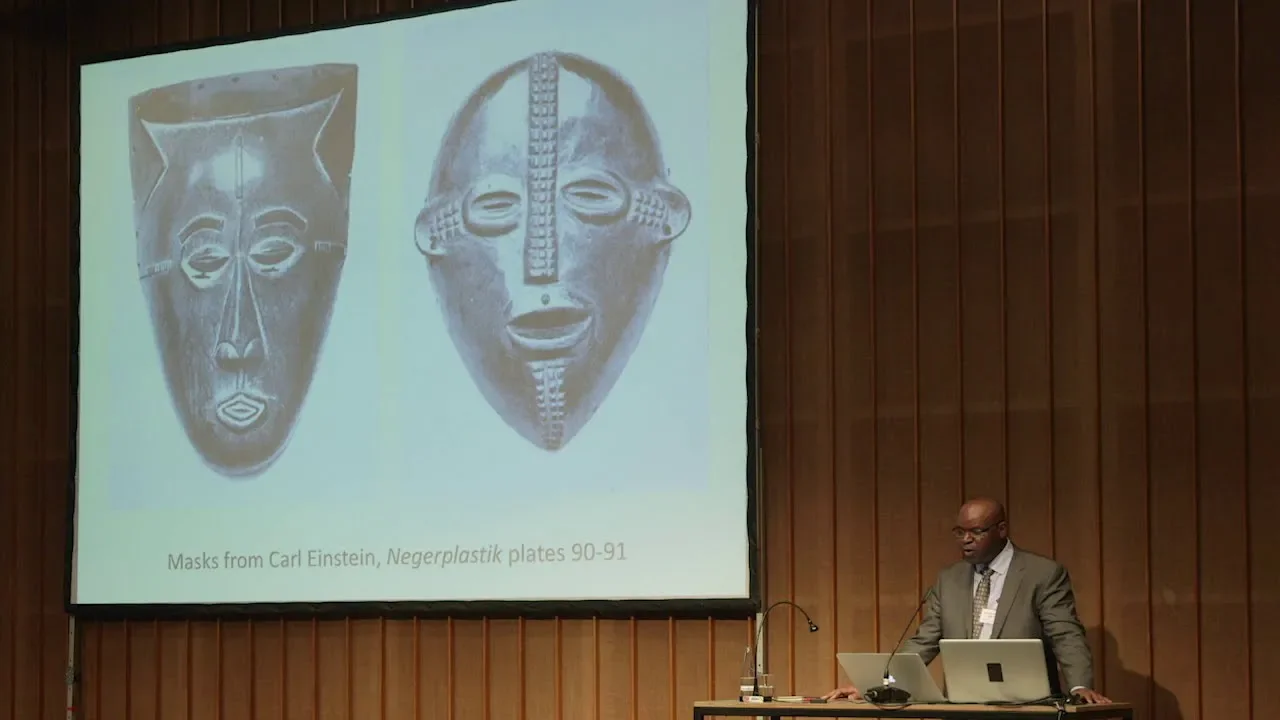
he criticized this slight and imprecise knowledge of African art in Europe and the tendency to deny it is are at all Einstein hope yet notion and ethnocentrism of European reception of African art would be mitigated by NECA plastics theoretical explain the exploration of sculpture ality as a model of object experience in modernity Einstein recognized the important of photography to redefine in cultural objects and his ensemble of images of African sculpture set set the template for how such works will be presented henceforth Nega plastic was published we gon run nineteen black and white photographs illustrating 94
different sculptures from roughly 20 countries it is what dwelling on how these artworks were presented in heist and his book the photographs in mega plastic invited poetic reverie true a variety of technics soft-focus floating objects in space with only occasional whispers of shadow and spotlight into hiding the sheen of patina that's always trotters description of this and so that goes on to say 80% of the objects are presented from a single view frontal or 3/4 the walks were usually presented full figure from a consistent vantage point frequently skilled lighting interprets the sculpture as an interlocking
series of planes the emotional tenor is cool and cerebro and with few exceptions the objects have been stripped down to the wood cabin achieving such presentation meant extracting the blades and clothing from objects such as in kissing conde removing the huts and raffia rostrum masks and toning down brightly colored paints through this process Einstein hope this analysis of nice artworks would bracket out and I'm quoting him now would bracket out subject matter and the contextual associations related to it and instead analyze these objects as formal constructs we should note that Einsteins sourced African sculptures from
French collectors who might have been responsible for stripping them of extraneous accouterments however his pursuit of former purity suggests he was complicit in this transformation which structured an interpretation of Africana that persists to this day despite the very selective nature of naga plastics focus the publication essentially defined a Canon of African art displayed in museums true wooden carvings overwhelmingly sourced from French and Belgian colonies despite this limitation images from the book where galley adopted by scores of artists and the whole spectrum of European primitivism from German Expressionism to French Post cubic black deco there is
no information at least no credible information about who was responsible for the photographs Einstein included in his book shown reporter argues that the art dealer Josef Bruma may have provided most of these images and also financed the book's publication strata notes that European artists consumed the glossy photographs of mega plastic but its text is not fair as well most of these artists did not read German and those who did criticize the text for posting a unified theory of African sculpture reproduction mainly from artworks representing only West African mostly West African cultures however Einsteins creation of
a homogenous archive of images skillfully sequenced for purpose of comparison and contrast constitutes the founding act of African art history inventing modernity in Yoruba indigenous aesthetics the transformation of European modern are truly architectonic logic of African art was reflected in an equal transformation of African art by its engagement with new forms and protocols of art making engendered by European colonization we cut trucks or changes by reflecting on the career of Allah way of fish air we can't truck such changes by reflecting on the career of a glimpse yerba scoped or lower official who sculptures already
mapped a divergent part of African art in the early 20th century colonial culture of great transformations in African art especially in the forms on contents of indigenous art work however a bias for identifying all indigenous artworks that emerge from the colonial era has enduring and timeless examples of African culture has led to major errors in identification and classification Nega plastic criticized the persistent European idea that African artworks emerge from an enduring and timeless past what he defined as a prejudicial perception of Africans as people of an eternal prehistory but he did not pursue the implications
of his criticism however the change in aesthetics and a chronograph e of indigenous art resulting from the colonial encounter suggests African art had always been a dynamic context that constantly adapted to new social political and environmental conditions what happened was that the early on Tripoli gist who went to Africa caught artworks in the middle of this transformation and then fixed them as timeless examples of a very broad range of times I instead know that is foreign is theta that is short study of African art cannot disregard the experience of more recent art especially since what
is effective in history is always a consequence of the immediate presence and that's a quote from America it is not important to stress that like the examples used to illustrate Einstein's book most of the African artworks classified in museums as pre-colonial or traditional art were actually created during the colonial period and their creators considered them examples of an emergent modernity captured in indigenous idioms and visual languages as done picton observed most are traditional African art in museums today was made and subsequently taken abroad during the height of the colonial period from roughly 1880 to 1960
in spite of this fact they are wrongly and constantly described in the literature as evidence of pre-colonial african creativity all of which have produced many sculptures under royal patronage at the turn of the 20th century and these are examples of his works Rosslyn Walker's influential biography of the artist shows or lower worked almost exclusively for various your bar royalty and aristocrats within a 60-mile radius of his hometown of Asia however he came to global attention when his set of his doors this one on the right here when a set of his doors for the palace
of young kaga of Hickory was exhibited at in 1924 British Empire Exhibition in London and was thereafter acquired for the british museum's collection in 1925 the image here shows the artwork in situ gathered by two Colonials auxilary police and you know embedded within a facade of what was considered a traditional African house you should note in this regard the British Museum's reconfiguration of African art in this collection as early as the death of this protest in 1925 the mock palace facade that allows those were placed in is an example of how Sugino architecture mostly found
in north at least a thousand miles away from a Louis location the museum was obviously not interested in veracity give architecture is very impressive it's one of the most impressive systems of Adobe architecture anywhere in the world so you know this is at the world fair so things sort of always got mixed up in these kinds of contexts all always credited with creating several important innovations in Europe a sculptor and to understand what this means you have to know that you're about one of the most significant are producing quarters on the planet in any serious
collection of African artists you know focused mainly on say Western Central Africa Yoruba are talked about quite a very substantial number of what they have in the collection this part is very old we have examples of bronze walks you know naturalistic bronze walk from Yoruba culture dating back to the 9th 12 to 12 century AD you know there are claims of even much older pieces so to understand what Aloha was walking with here I was working with in a tradition that already had centuries of very classical modes of representation almost Egyptian it you know in
that devotion to food front ality and I said in kind of hierarchical structural form Aloha is credited with creating several important innovations in Yoruba sculpture he imparted a suggestion of movement to his figures those deviating considerably from the hierarchical rigid frontality of class Cuba's sculpture he also developed a technique of carving the surfaces of the office door in very high relief with the figures portrayed in almost 6 inches from the door surface which is considerably animated by the shadows that drawn it and you can see a side view of one of those daughter to see
that protrusion what's interesting about that technique is that it was actually used for a very long time in Benin bronze blocks which date from the 15 century and this is issue of of images protruding very seriously from the pictorial surface of the sculptural surface was one of the key elements not made Benny not very well respected when he first started in Europe the degree of craftsmanship needed for casting those kinds of process was astronomical although I did the same thing with this door when you consider that is carving wood enemies taking this kind of process
you know means you have to remove the this object if you notice the pictorial form on his sculptures you will know that he was paying a huge amount of attention to creating you know very specific kinds of narratives beyond built based on the evidence of his surviving sculptures although I painted some of his major artworks with an expanded palette of commercial colors and may have helped popularize polychrome sculptures in Yoruba art beyond the traditional practice of colouring sculptures which subdued a toned pigments he also you know these are two examples particular examples painted a bright
green and yellow and this works were done in the 1920s and 1910s the colors are faded considerably he also invented new forms mainly reflected in his practice of carving a floating head within his sculptures which became a notable facet office of his work so in this sculpture here this is your back area used by diviners to store definitional ritual objects that head is copper within this culture it's not inserted into the sculpture it's carved within it and it's free-floating so that it rose around when you move the top the top image you know shows this
classical style of carving several figures you know linked up together and if you understand carving systems in Africa North Africans carpet and arts which means you know this is a very highly technical and skilled a sculptor there are several examples of this kind of of process in all always walk and he almost always includes this floating head it became a kind of I'm sorry it became a kind of signature that that was the accurate pointer of you know his identity as an artist there have been many people who try to copy his work most popular
Thandi is very successfully another example Suzanne play notes that changing contexts of power reflected in the subordination of African royal authority to British rule let look who rule us to use visual arts to compensate for the diminished Authority allows artwork contained within references to the emergent colonial order in the furniture and encourage of your backings he depicted holloway has been pressed for his mastery of classical Yoruba sculptural forms but there's less commentary on his clay experiments with modernist techniques of representation including is used oh my code is modernized instead of modernist to not create any
kind of confusion including his use of commercial pigments and the high relief he sculptures are known for Anna lowered door from for example an Aloha door from the palace at allow a kitty shows a king on a ceremonial out in accompanied by an anthology of potters and his wives the tour is divided into several registers and if he goes archived in high relief with many of them almost three-dimensional atactic notable in a lowest dose but largely absent from comparable Yoruba carvings of that era Halawa shows the king sitting in an imported folding chair they thought
register from from bottom on top you know does the King Gandhi right sitting in an imported folding chair which was a common item used by colonial officers of that eras they traveled around the country on administrative duties also one register of the door shows the king mounted on a horse whose Horta is decorated with bid walk the complex bid walk found in your bar today includes historical examples that used endogenously produced beads the Yoruba city of affair was a notable bid producing Center in the first millennium centuries before the arrival of Europeans in West Africa
glass from affair has been recognized as a unique form of glass making and this practice dates almost to 300 AD it's now called if a glass as an identifier in in archaeological literature but also you know that historical examples that use indigenously produced beads but also modern industrial beads the adoption of imported industrial bits of uniform sizes significantly expanded bead walking in Yoruba culture and representations of beadwork and Oliver's artist speaks to the worth of imagery and technique made possible by the availability of industrially produced beads which in turn speaks to the impact of an
emergent colonial economy of modernity all always imagereader for documented African Kings and the European colonizers as both jostle for power and authority within the colonial order his famous does in order exhibited in London showed the colonial governments subversion of indigenous authority through its representation of porters carrying a European visitor in a palanquin these were brightly painted with imported commercially produced paint which showed is awareness of new materials and methods and again to return to this earlier image that I'm sorry that is a you know examples of aloha sculptures in the actual context of use they
were designed as courier did you know that supported rooftops are the Palace of yoga there were about 12 of these sculptures you know holding of various roofs in different environments the significant increase in patronage and commissions that allow another sculptors of this era enjoyed was was in part due to colonial economics and the new forms of wealth it made possible which enabled innovative practices that the artists themselves considered modern approaches to representation these artists engaged imagine molarity of the societies and cast a keen eye on local and foreign elements that impacted the modes of visual
representation they also incorporated representations of European colonizers into the visual landscape to indicate colonial transformations of the social order so in a sense these conferences description of the turmoil and transformations going on in Europe where Dean mirrored you know precisely in African context where things were literally or ended in Europe at least the people that were you know the artists affected and the writers and and creative practitioners affected by this turmoil were working within you know traditions that they could rebel against but was fairly you know notable in terms of its longevity and historicity in
Africa a whole you know traditions that in some cases were centuries old were turned upside down you know in one fell swoop of colonial domination my grandfather was in Benin when the British invaded the kingdom in 1897 destroyed the Kingdom bundi palace and made away with almost 9,000 artworks that now little museums VOCA Conde here has quite a very nice collection and opti when he passed away in in 1986 if you asked him what happened on that dais and the world came to an end and that was all he would say about it this was
a culture that had ambassadors in Portugal in 1500 and you know was very much central to the emergence of the contemporary global order as we understand it today in essence we could think about the identification of alavés in Yoruba artists as an overly determined focus on technique identity that prevents us from equally seen him as a modern artist exploring the contours of an emergent global modernity someone suited for inclusion in the expansive notions of world art prevalent in Iceland Sara ideally our looking for lower in mega plastic our argument here is that Einstein produces analysis
of African art through a very limited corpus comprising mostly cultural objects sauce from francophone Africa in doing so he established the protocol the steel frames measurement and discursive representations of Africa and heart although I on the other hand operated within Anglophone Africa which describes regions colonized by pretty and rad and France one could suggest therefore that Einstein was unaware of all away in this regard but this would not rescue the book from its disregard of important publications of that era that will reshape in European underst of African cultural capabilities mega plastics some shots photographic presentation
of African sculpture was predated by the museum Congress 1906 tome notes analytics una collections at no graphics which contained almost 700 photographs published alongside some contextual field photos in his publication in this publication each culture was fully and evenly lit and submitted to the reguar for formal and full frontal and full profile comparisons reproduced with the highest resolution Leofric veneers is under fracas prague was an equally influential publication of the period even though its conclusions were very disturbing published in 1912 to rapturous reviews the book's account of historical objects and antiquities from places such as
europa kingdom of affair established without doubt that Africa had put a history and an art history and that both was changing very significantly under fracas practice the condition of photographs and illustrations drawn by Col Aryans who accompanied the exhibition expedition Suri to illustrate the complex at Frobenius encountered in his journey through Africa so we start a note slab Einstein was only aware of organizes work by the time of plastic absorbing some of his lessons while ignoring his revelations about transformations in Yoruba art and religion and that kind of transformation you can see here in this
well let me just leave that to speak for itself even if Einstein was unaware of important transformations in the forms and visuality of indigenous art in Anglophone Africa the painting sculpture illustrated on page 61 of his book proves otherwise his framing of African art occurred within the same discursive space as that of the German George Schweinfurt 1836 to 1925 whose visit to and depictions of manwë to culture published in Germany in 1871 became for Western among way to artists a catalyst that spawned a wave of new aesthetics in man going to art performance and architecture
nagas plastics reliance on photography to frame his ensemble of africa not resist two important questions the first concerns a stable relationship between photographic imagery and representation the earlier in photographic images of representation that effectively translates African cultural registers into a Eurocentric visual language before they can emerge as subjects of discourse he traces the question of whether the artwork presented in an alluring image the same as the cultural object photographed these are photographs of two objects one by a professional photographer the other one by me I sent this to various colleagues everyone said this one was
fake and no one was authentic Jean Baudrillard knows that the photographic image is not a representation it's a fiction the fictional status of Naga plastics photographic image is clearly enunciated in the protocol described above where sculptors were stripped down to their pure form as wooden objects denuded of all ancillary forms are touched to the original cultural artifact I have contended elsewhere and right arrayed here that the photographic image produces a new cultural object that is related to the original arc an artwork only by Association since both define an appearance in significant ways we could then
rightly ask what on an increasing kundi this object that we see here the new dead of the nails that would activate the sculpture and serve as an archive of its interventions is still a nun kisi considering that the pure form of each wooden amateur humanoid figure the Sons of grants for its temporal transformation is an initial stepped was the iconic form of the object one can charge mega plastic with iconoclasm in its reconfiguration of this African art works the second issue concerns it I'm almost gone please the second issue concerns the temporality of the artworks
as they are presented in mega plastic though Einstein criticized the European perceptions of Africans as a temporal his framing of African art works for pre adjoins Fabian stems a low chronic the practice of denying the order is shared Cohiba contemporaneity in seeking a former purity for the artworks and representing them devoid of contextual matter naga plastic constructed a new category of objects that it subsequently reframed as african art the a temporalities that results not only positive timeless past African artworks it prevented Einstein from grappling with the emergent newness of modern interpretations of a coin each
indigenous forms unlike all always artwork the irony here you know is that most of the sculptures in the Galactic were not as old as Einstein imagined conclusion Oh Lois Maternity exists in the slippage between Einsteins versus I fantasize fetishization of pure form and the crisis of modernity which was reflected as a process of global transformations rather than his soul in European engagement Einstein himself recognized that his story of African art cannot disregard you know the experience of Morris and art and it was important that you know one might ask why he did not recognize that
the crisis in modernism most keenly felt in an Africa under colonial rule were established protocols of indigenous life were overturned and replaced by new protocols imposed by Fiat the loss of social cohesion the solution of the individual and the atomization of society as this conference describes it that circumscribe despair in Europe in the early 20th century where wholly significant issues that engaged African peoples and artists along account of confronted decisions by producing sculptures that were radically different from the iconic forms of classical Yoruba sculpture all forms of African art were undergoing similar transformations and the
artworks and cultural objects documented by early anthropologist in Africa we're usually caught in the throes of such transformations in many ways and were in many cases quite new and contemporary all OS experiments will lead to radical revision of Yoruba sculpture as his tenets and visual language to apply to new objects such as Christian liturgical imagery in oriental workshops a few decades later Einstein deserves praise for Naga plastic since it represented his personal effort to contest what he termed the West's superficial slight and imprecise knowledge about art from Africa the book generated famine opportunities for the
author who in 1960 subsequently secured an appointment with the colonial government in Brussels provided access to major libraries and collections of African art his next book African is plastic was well researched and up-to-date on contemporary scholarship of that period about Africana again its conclusions might be questionable I argue that Aloha similarly deserves praise for his efforts to modernize class Kuya robot sculpture the fact that mega plastic overlooked such effort means that its effort to history science African art was visually and conceptually flawed however it achieved Einsteins intention to bring an historical sequence of African art
into being and in this it remains a very important and credible work thank you [Applause]