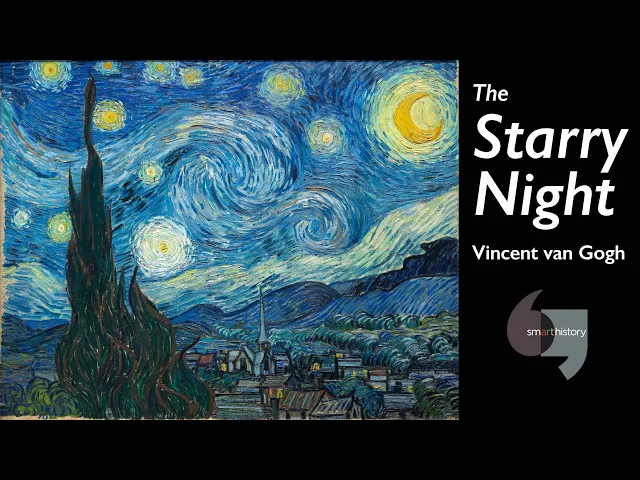
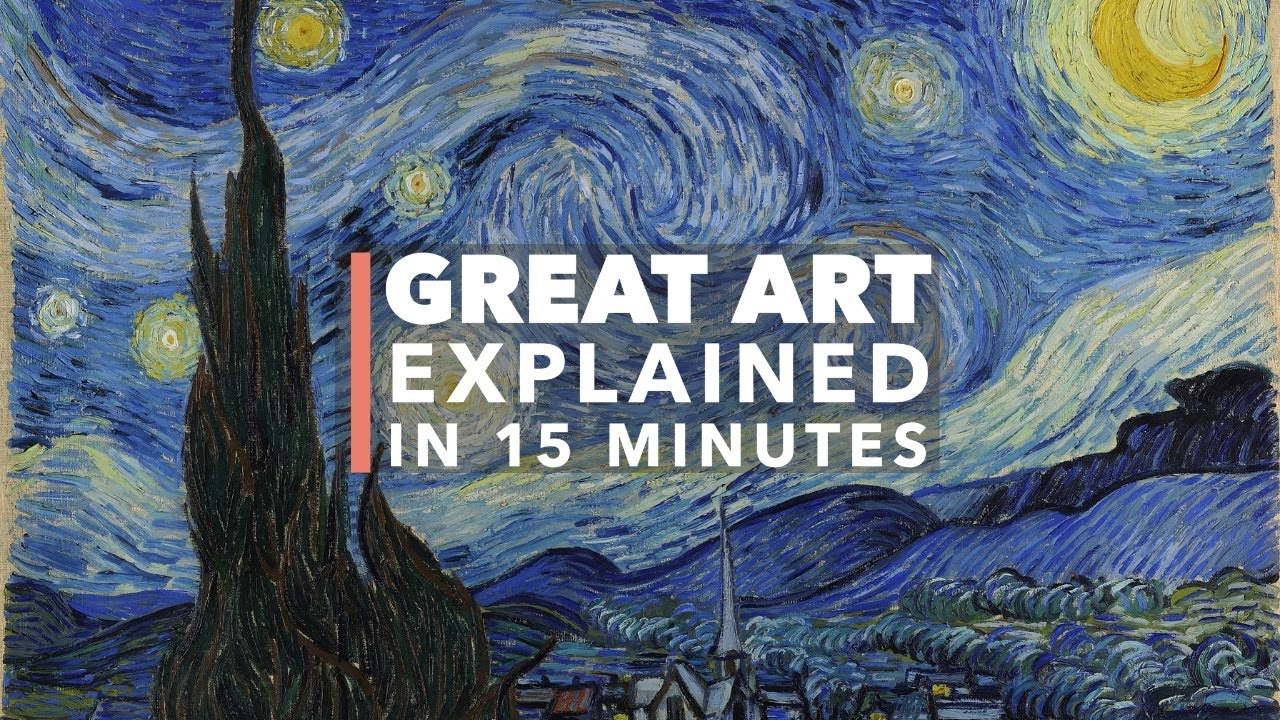
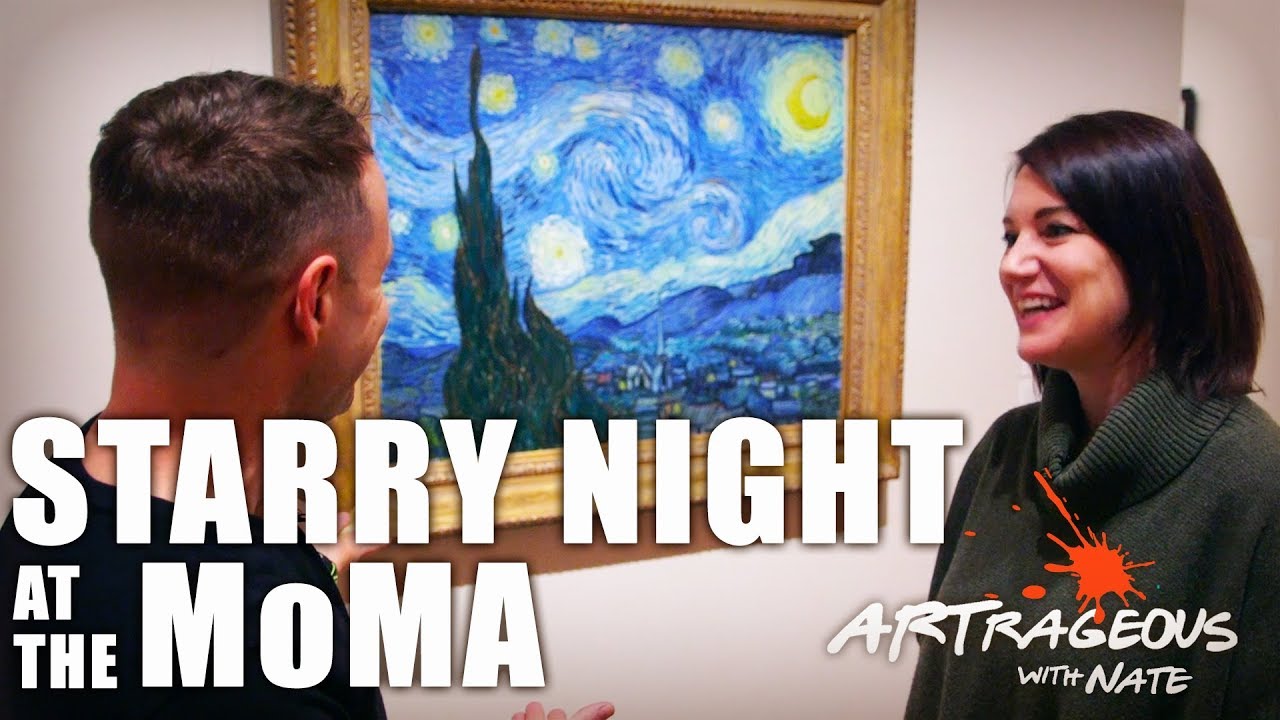
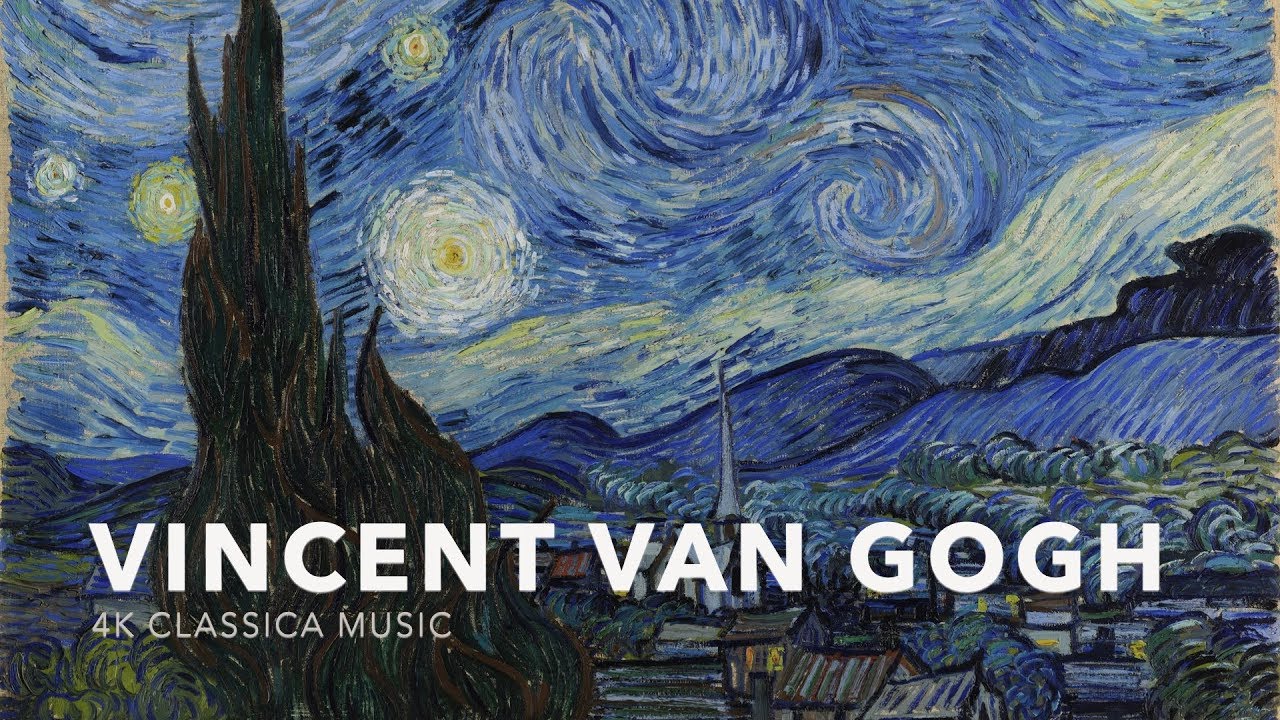
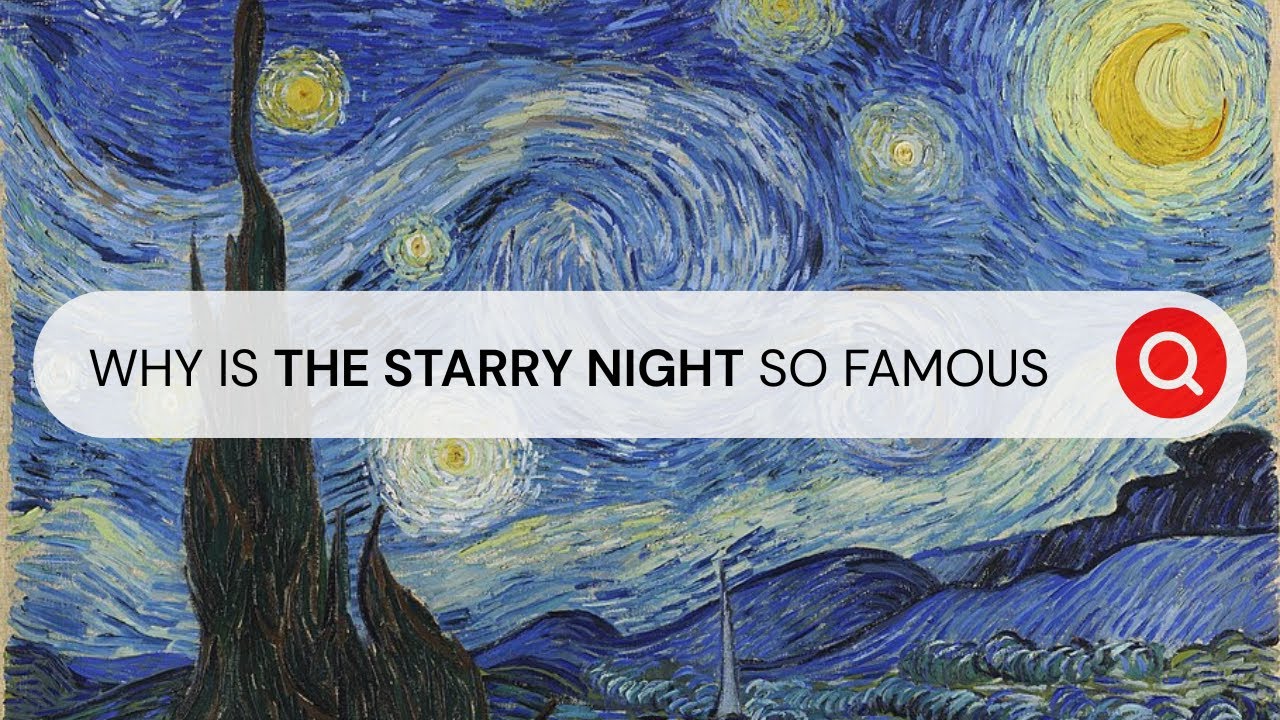
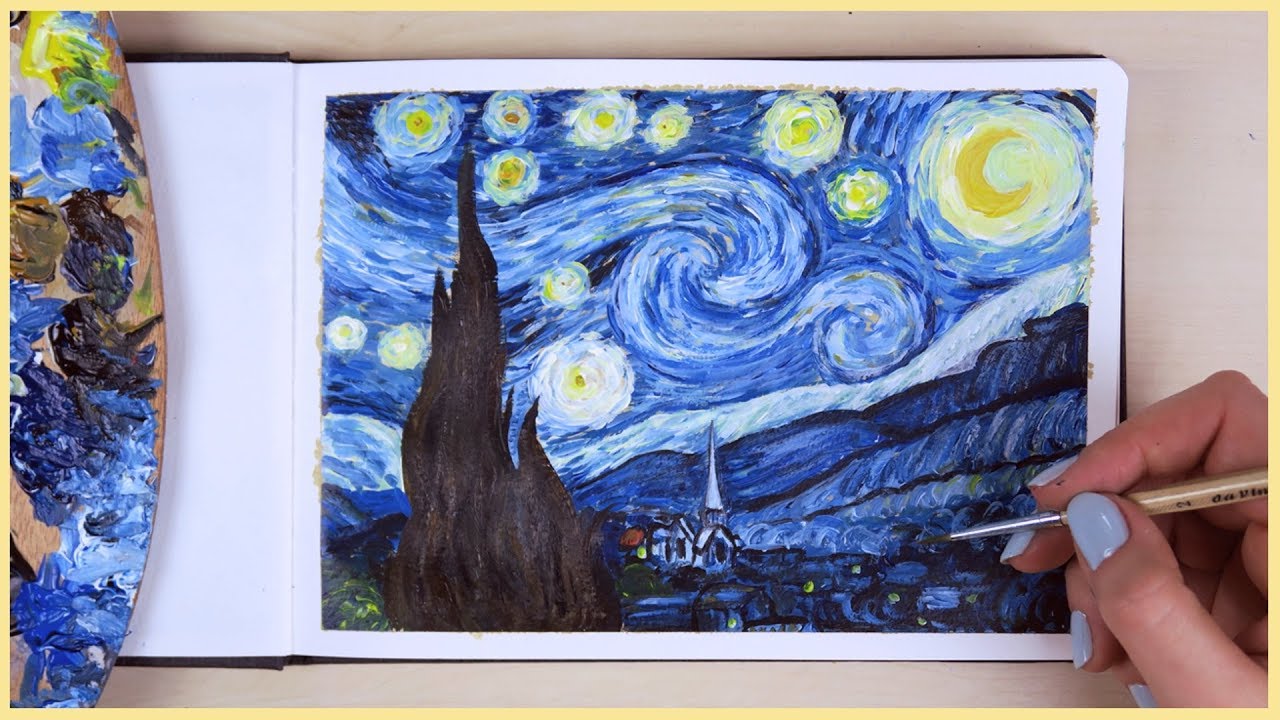
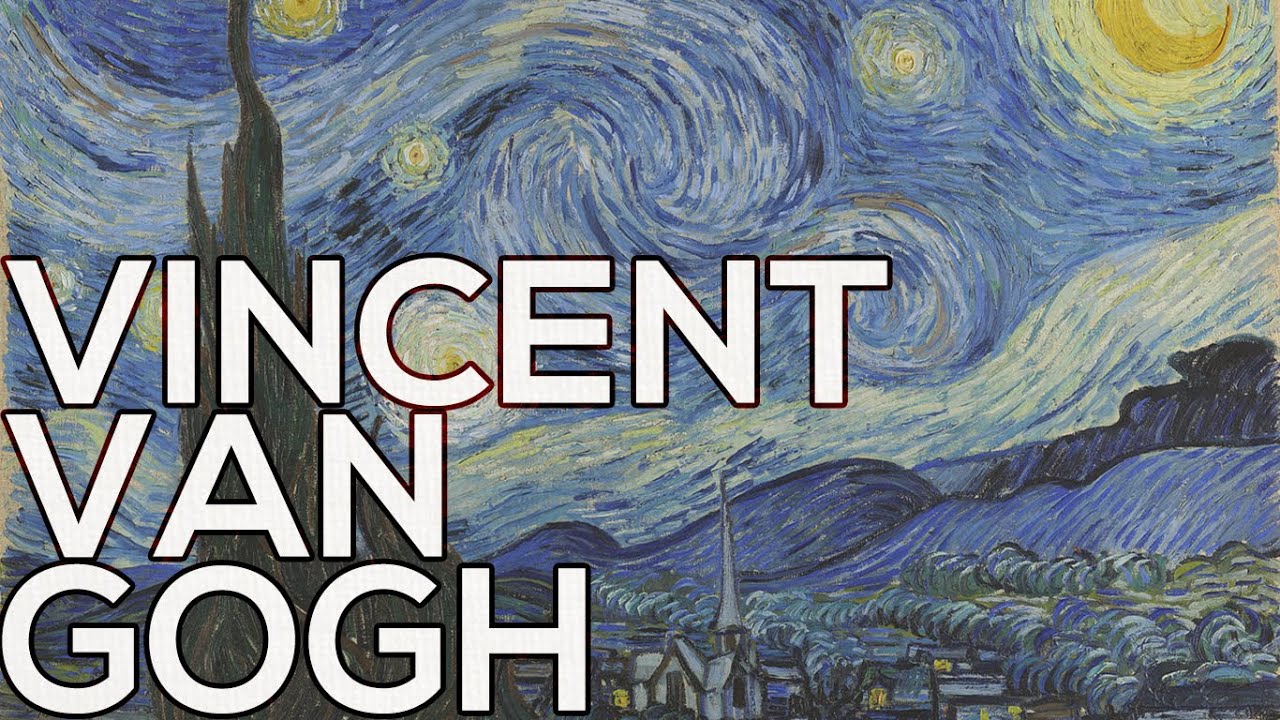
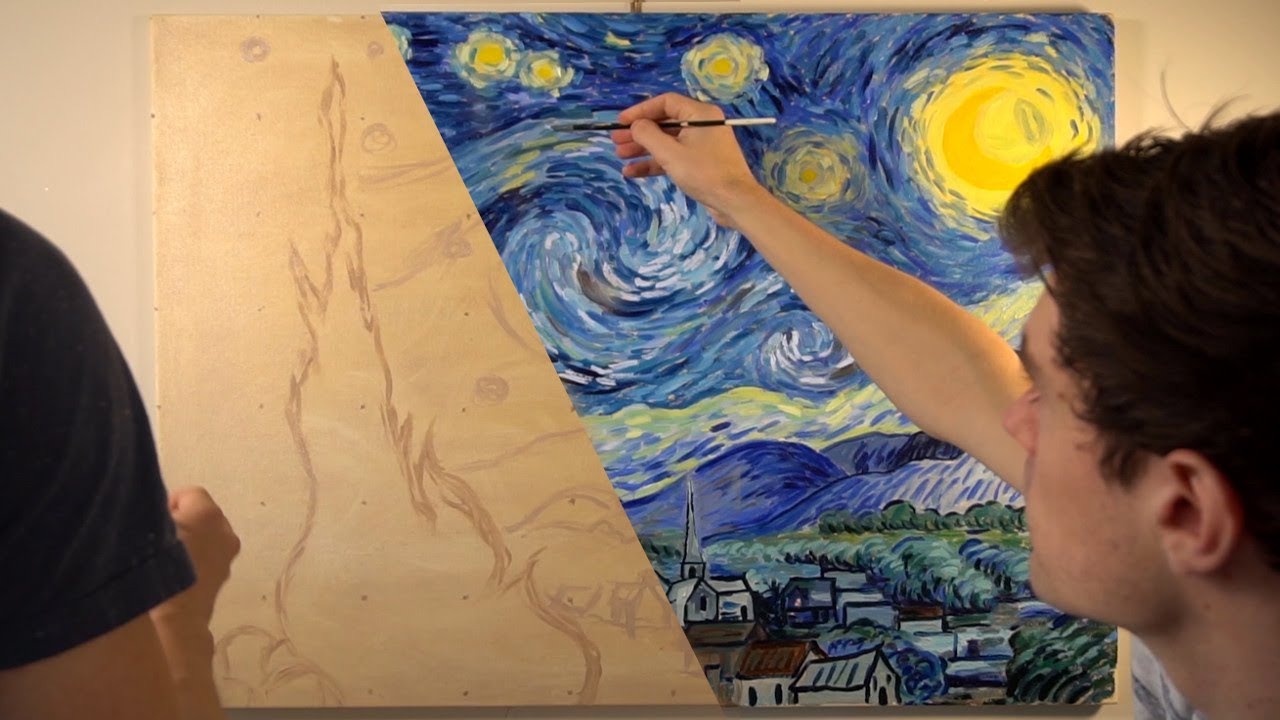
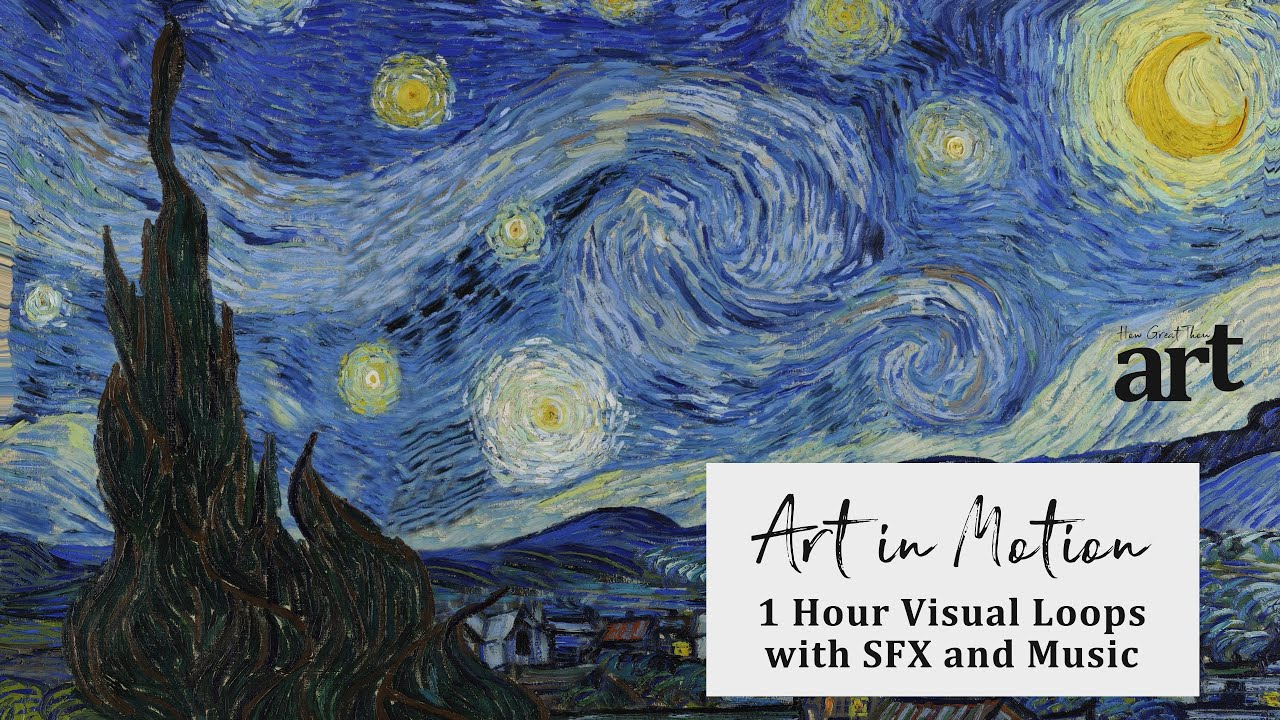
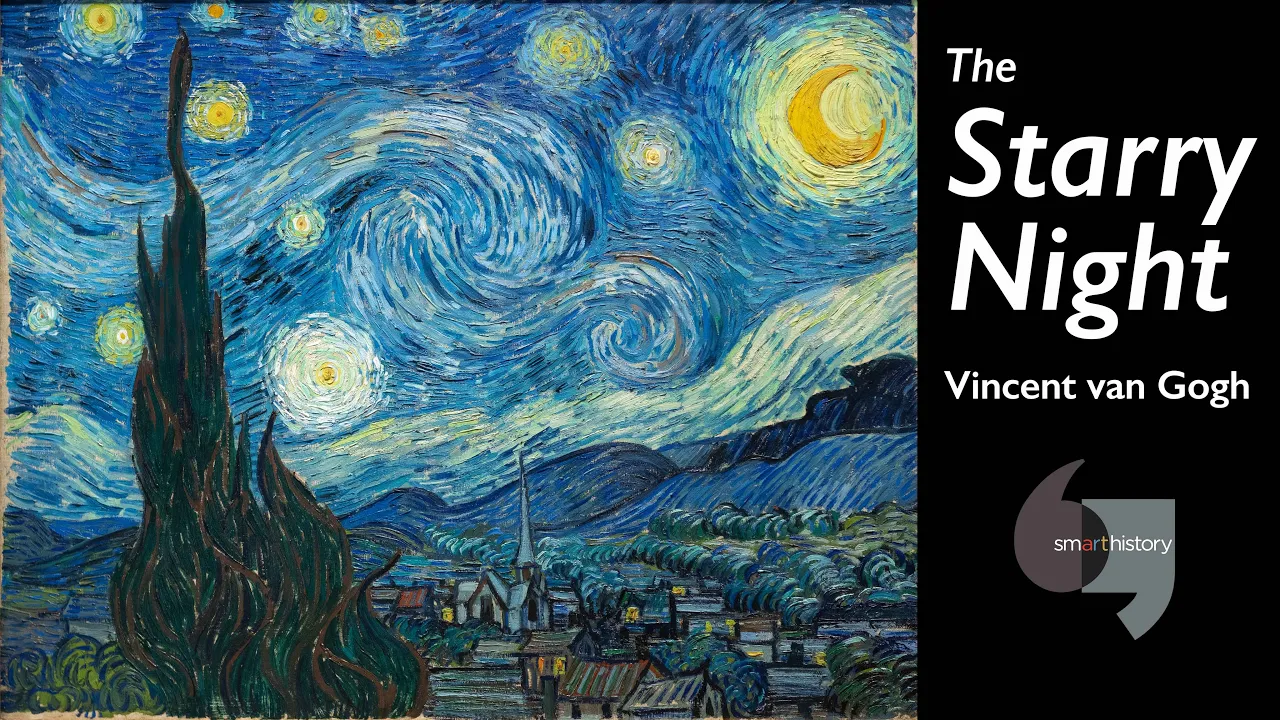
[Music] we're on the fifth floor of the museum of modern art looking at probably their most famous painting vincent van gogh's starry night this is something that van gogh had been interested in before he painted this particular painting he did another version of a night sky which is very different in the foreground we see the giant undulating form of a cypress tree and we don't see the bottom of that cypress tree it's cut off at the bottom edge of the frame and so we get the sense that it must be close to us the sky
takes up almost three quarters of the canvas and it reminds me of the great dutch landscapes of the 17th century of artists like rosedale who was interested in the movements of clouds through the sky and the play of light there but of course this is night the only light is from the moon and from the stars and we're looking down past that cypress into a valley where we see some small cottages and a church very prominently centrally placed with a steeple that just breaks the horizon line formed by those mountains and the village seems very
humble but also embraced by the mountains behind it and that cypress in front there's a band of lighter yellows and blues just above the hills further protecting that landscape below it feels protected to me at the same time that there's all this turmoil in the sky that we see in these circular brush strokes the brushwork has tremendous energy one stroke follows another linking to create these streams of energy through the sky and although the paint is somewhat thick in certain areas we can also see the canvas in certain areas and so it is not that
heavily painted but nevertheless there is a kind of energy and velocity a kind of dynamism as those clouds roll through the sky and i think that dynamism that energy that's in the brush work in the clouds or forms that swirl through the sky the way that the moon emits a pulsing light and even the stars and planets emit that brighter light than they do in reality that for me contrasts with the tranquility of the village below that's nestled in that valley there's a sense of a presence of activity in the sky which we associate with
the heavens and the divine as though those things were alive and somehow protecting the village underneath at least that's one way that i read this painting sometimes and some art historians have looked then at the cyprus a tree that symbolizes death in part because it's often found in cemeteries there's a kind of linking of the earthly and the heavenly with that cyprus that undulates almost like fire and is mimicked by the steeple of the church in the valley so that there's this pairing where the tree and the steeple are both reaching up to the heavens
van gogh like other artists of the 1870s and 80s is thinking about complementary colors he's thinking about blues and yellows and oranges and how colors can intensify one another and work together to communicate ideas and feelings and this is definitely not a landscape that van gogh saw this is something constructed from memory and from his imagination but think about how brave this painting is to do something with brushwork this visible this sketchy this energized i would say this divorced from what he would have seen there's an abstraction of form here that the artist is comfortable
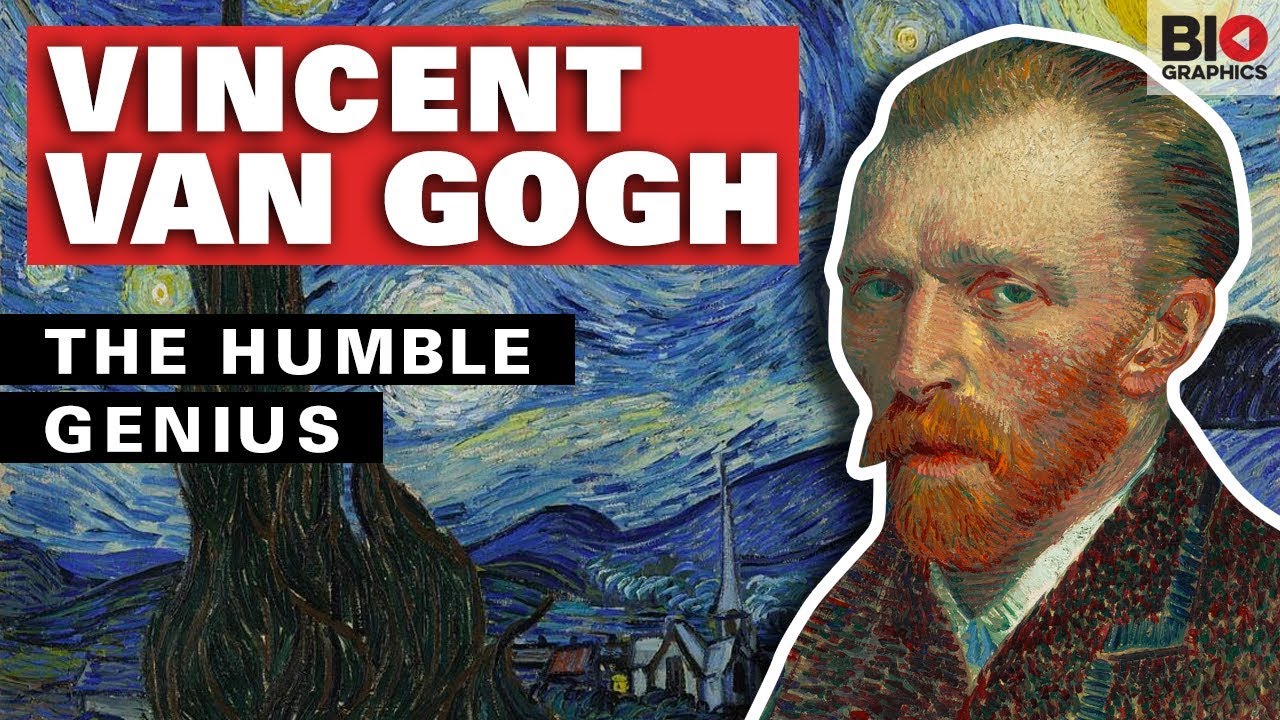
with which is absolutely radical and if you think about so much of his work it is images of what he could see and that he went out specifically to paint but here this incredible bravery to do something based on his emotions his memories his experiences and his imagination in 1889 bengal was in an asylum in san remi in southern france what had once been a monastery and van gogh actually had a view out his window that was relatively close to this but there is no church there there is no village there van gogh is in
this asylum because he suffered a series of breakdowns he suffered from mental illness for much of his life although it got worse after a fight with his fellow painter gauguin when he cut his ear van gogh was encouraged to paint at the asylum and was given a studio space where he had no view at all and where this was likely painted so this was not painted in plein air this was not painted out of doors what a journey this painting has taken from that room in san rami to the fifth floor of the museum of
modern art reproduced around the world recognized by people everywhere it's a fate that i don't think the artist could have ever imagined