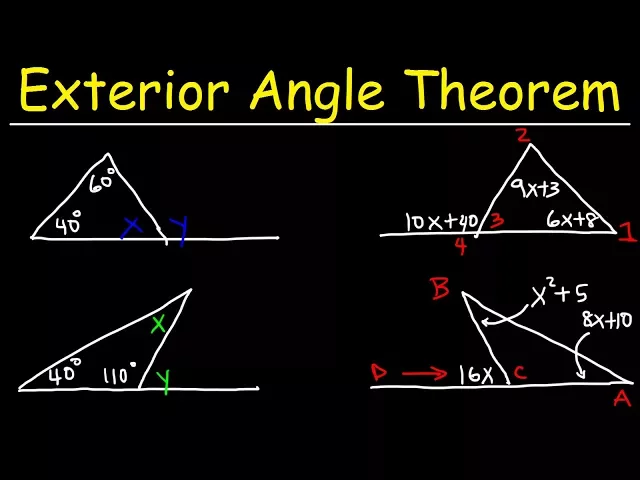
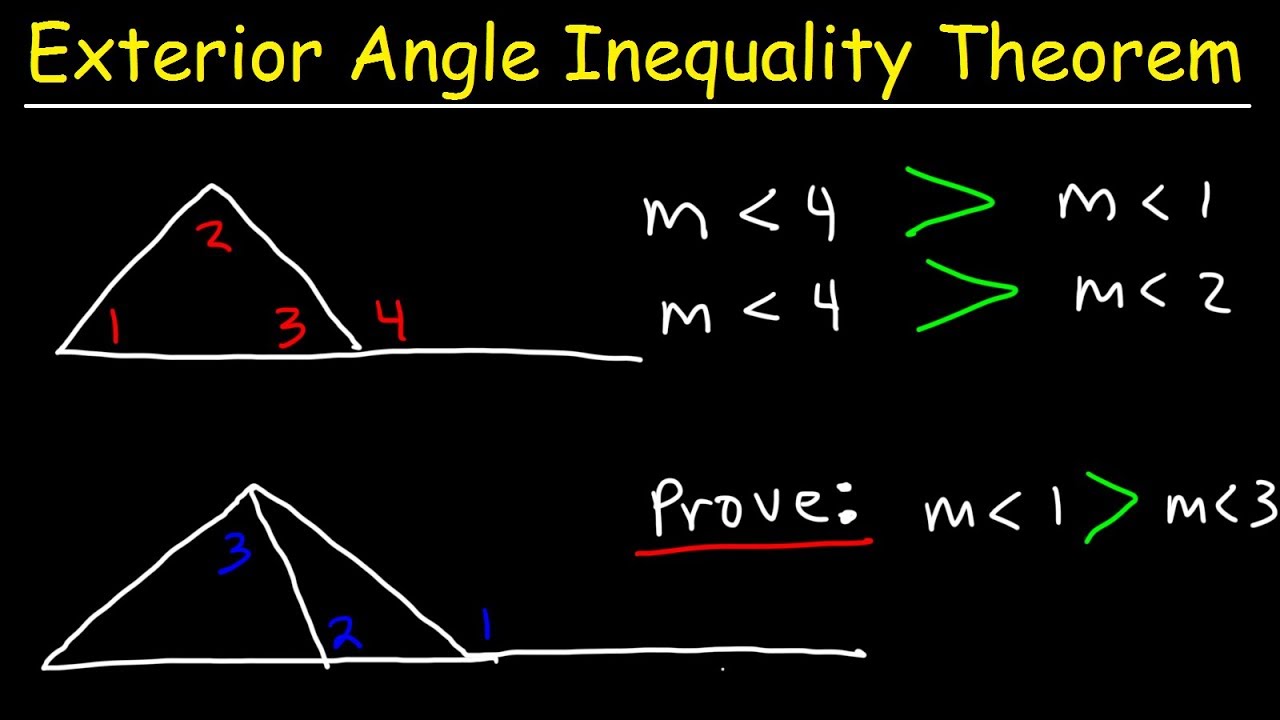
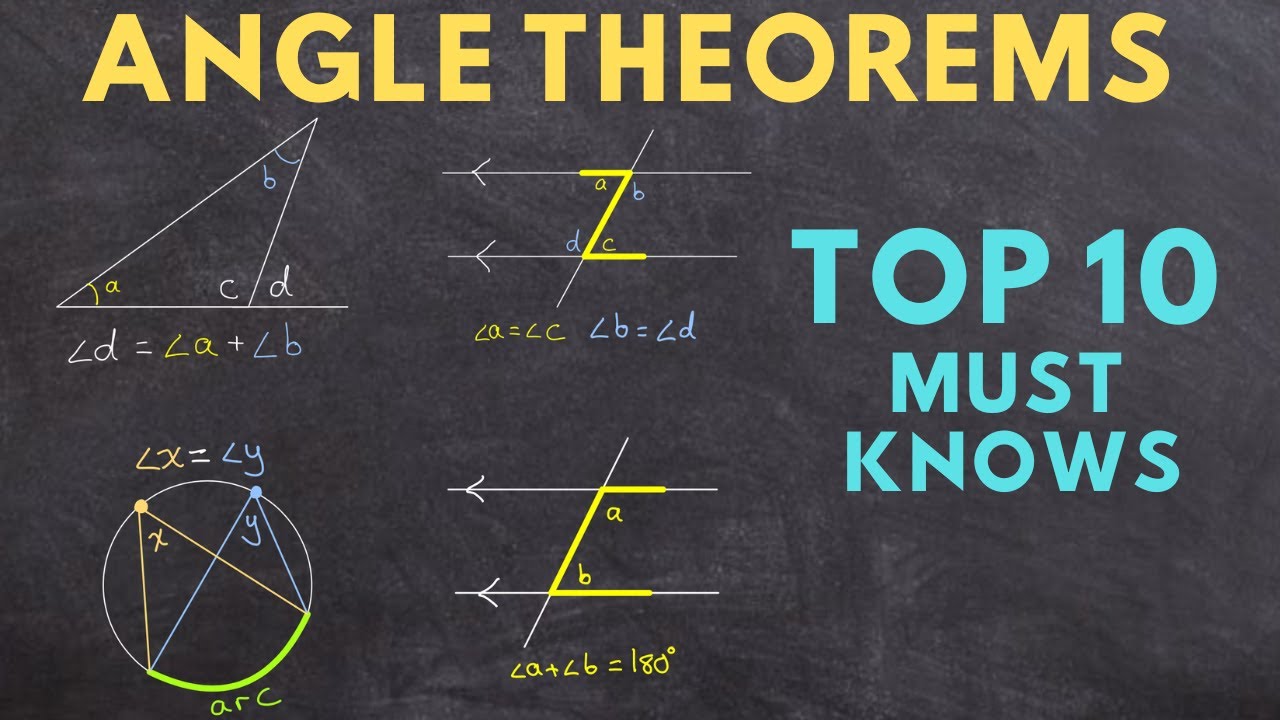
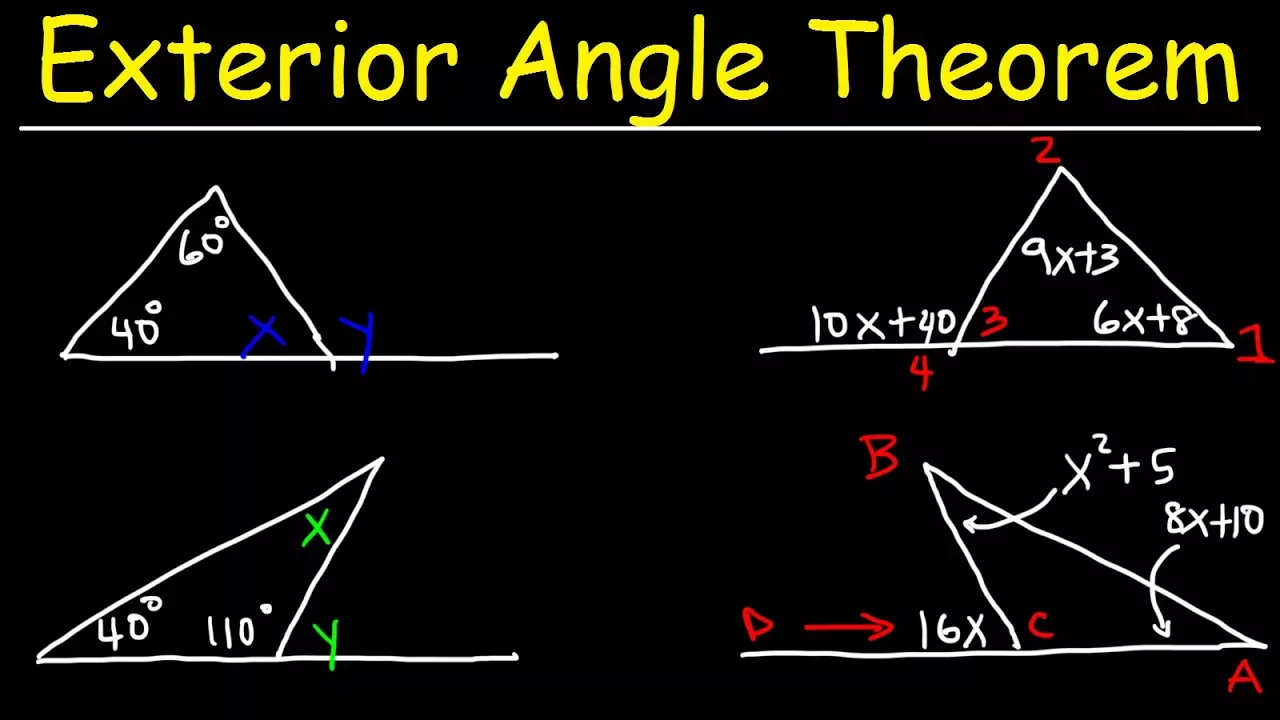
in this lesson we're going to talk about the exterior angle theorem that is the exterior angle of a triangle is the sum of the two remote interior angles so let's use an example to illustrate this so here's a triangle let's do that again and let's say this angle is 40 and this angle is 60. what is the value of this angle now before we find the answer let's call this angle one two three and four angle four is outside of the triangle so it's the exterior angle exterior means it's on the outside angles 1 2 and 3 are the interior angles because they're inside of the triangle however one and two are known as the remote interior angles and three is just an interior angle so the exterior angle number four is the sum of the remote interior angles that's the sum of angle one and two so in this case we could say that y the exterior angle is the sum of these two remote interior angles 40 plus 60. and so y is 100 degrees now we know that the three angles in a triangle must add up to 180.
so if we call this x we can say that x plus 40 plus 60 has to add up to 180 40 plus 60 is a hundred and 180 minus 100 is 80. so x is 80. now notice that these two they form a linear pair so x plus y adds up to 180 80 plus 100 is 180.
anytime you have a linear pair it always adds up to 180 degrees so let's work on some other example problems so let's say if this is 40 this is x and let's say this is 110 and this is why calculate the value of x and y feel free to pause the video so we know that y the exterior angle is the sum of the remote interior angles so we can say that y is 40 plus x and also notice that 1 10 and y they form a linear pair so they add up to 180 so we could easily find the value of y so if we subtract both sides by 110 we can see that y is 180 minus 110 or 70 degrees now with that we could calculate the value of x so 70 minus 40 is 30. so x is equal to 30 degrees let's try another example so let's say this is 10x plus 40. let's say that here we have six x plus eight and this is nine x minus three now let's call this angle one angle two angle three and angle four so what i want you to do in this problem is that i want you to first calculate the value of x and then use that to find the value of each angle so go ahead and pause the video and try this problem now according to the exterior angle theorem the exterior angle is the sum of the remote interior angles so the exterior angle 10x plus 40 is the sum of 9x minus 3 and 6x plus 8.
so now let's solve first let's combine like terms on the right side so 9x plus 6x that's 15x and then negative 3 plus 8 that's positive 5 and on the left we have 10 x plus 40. now let's subtract both sides by 10x and at the same time let's subtract both sides by 5. so we can cancel these forty minus five is thirty five and fifteen x minus ten x is five x so now let's divide both sides by five 35 divided by 5 is 7 and so that is the x value to this problem so now that we have the value of x we can calculate the value of each angle so angle one is six x plus eight so let's replace x with seven and let's calculate the value six times seven is 42 and 42 plus eight is 50 degrees so that's the value of angle one now let's move on to angle two so that's nine x minus three so nine times seven minus three nine times seven is sixty three sixty three minus 3 is 60.
now angle 3 notice that angle 1 plus angle 2 plus angle 3 has to add up to 180 those are the three angles of the triangle so angle three is going to be 180 minus the other two angles minus angle one and minus angle two so that's 180 minus 50 minus 60. so 180 minus 50 is 130. and 130 minus 60 is 70.
so that's the value of angle 3. now angle 4 is 10x plus 40. so that's ten times seven plus forty and ten times seven is seventy seventy plus forty is one ten and so we can see that angle four is the sum of angle one and two 50 plus 60 is 110.
let's work on one more problem so let's say let's call this angle a b let's say this is c and this is d so angle a we're going to say it's 8x plus 10 and b let's say it's x squared plus five now let's say b c d is 16 x what is the measure of angle c go ahead and work on this problem so before we could find the measure of angle c we need to calculate the value of x so using the exterior angle theorem the exterior angle 16x is the sum of the remote interior angles x squared plus five and eight x plus ten so let's combine like terms on the right side we have x squared plus eight x and we can combine 5 and 10 which is 15. now all we need to do at this point is subtract both sides by 16 or 16x rather and we could have a quadratic equation in standard form so 8x minus 16x is negative 8x so how can we solve this quadratic equation in order to solve it we need to factor it what two numbers multiply to the constant term 15 but add to the middle coefficient negative eight so there's two numbers that we need to worry about three and five three times five is fifteen the three plus five is positive eight but we can make them both negative because they still multiply to positive fifteen so to factor it's going to be x minus three times x minus five now at this point you need to set each factor equal to zero so x minus three equals zero and x minus five is equal to zero so if we add three to both sides one possible answer that we could have is x is equal to 3 and if we add 5 to both sides the other possible answer is x can equal 5. so i'm just going to write that over here so let's start with the first possible answer if x is equal to 3 so angle c is going to be 16 times 3 which is 48.
and angle b is going to be three squared plus five three squared is nine plus five that's fourteen angle a is going to be eight times three plus ten eight times three is twenty four twenty four plus ten is thirty four and so and then angle c is basically well angle c and angle the 16x angle um they have to add up to 180 so we can say that angle c is 180 minus 16x or minus uh minus 48. i need to distinguish these two angles so let me adjust their names because they can't both be angle c so this is going to be angle dcb and this is the angle that we're looking for and that is uh angle acb so acb this angle that's 180 minus 48 which is 132. and so one possible answer for the value of c which i specify which c this is meaning b c a or acb is 132 degrees now let's calculate the other possible angle so if x is equal to 5.
so dcb this angle that's going to be 16 times 5 which is 80.