[Music] it is certain that no discipline seems to be a source of Joy at the moment but rather another reason for sadness however later on it produces a peaceful fruit of righteousness and peace in those who have been trained by it Hebrews 12: 11 if you accomplish something good with great effort the work passes quickly but the good endures if you do something shameful in pursuit of pleasure the pleasure passes quickly but the shame endures musonius Rufus imagine for a moment walking the streets of ancient Rome listening to the wise speak about the nature of
suffering and serenity at the same time in a secluded corner of Judea a spiritual leader teaches the masses about the Kingdom of Heaven and the path to Inner Peace both scenarios distant in geography and culture Converge on a profound truth truth our reality is not shaped by the world around us but by the lens through which we see it it is intriguing to note the resonances in their speeches let's explore these Connections in detail but allow me to give you a hint senica reflected asking why do you point out others wounds when you are full
of scars in contrast but with a similar tone Jesus asked why do you see the speck in your brother's eye and not notice the beam in your own of course from a Christian perspective one cannot equate stoic figures with the figure of Jesus Christ and that is not our intention figures like senica Marcus Aurelius or epicus were Mortals with their flaws while Jesus is seen by many as the Divine manifestation on Earth however it is undeniable that both legacies continue to inspire and guide current Generations in this material we will explore the similarities that at
first glance leave us with a question in mind could Jesus have a stoic heart I encourage you to revisit this content several times to assimilate its profound message the connections between stoicism and Christianity are truly revealing as the words of Jesus and senica resonate in our minds as sense of familiarity approaches us although their teachings may have emerged from distinct cultures and seemingly Divergent Traditions both share roots in a universal truth inner perception has the power to transform our external experience don't miss the chance to apply stoic principles to deal with life's adversities grab the
stoic mindset ebook now and discover how to cultivate Serenity in the midst of chaos make wiser decisions and overcome adversity with mental strength click on the link in the first pinned comment and embark on your journey of wisdom I briefly invite you here to join our telegram group we're already nearing 400 members the link is here in the description and in the comments now without further Ado let's get to the video and as usual don't be weak stay till the [Music] end before we delve into the life and teachings of Jesus let's explore the birth
and development of the parallel philosophy that aligns with stoicism in many aspects in the bustling streets of Athens the Cradle of Western philosophy in the 4th Century BC stoicism was born under the guidance of Zeno of citium influenced by the teachings of Socrates and the cynics Zeno founded a school at the painted porch from which the name stoic originated the stoics LED initially by Zeno and later by luminaries such as Sena Marcus aelius and epicus maintained that true happiness is not found in wealth or recognition but in virtue and wisdom for them life is not
about what happens to us but about how we respond to it while the external world is volatile and uncontrollable our internal World our thoughts and actions is within our control here lies the essence of their philosophy to live in harmony with nature to accept what comes and to find inner peace through self-control and virtue one of the most revered Emperors of ancient Rome Marcus Aurelius a devout stoic wrote life is short and the nature of existence is ephemeral live as if on a mountain similar to how Jesus taught his followers not to accumulate Treasures on
Earth Marcus Aurelius reminds us of the transient nature of life and the importance of living with purpose and meaning with these profound Reflections on life death and virtue it is inevitable to question how these stoic teachings align with those of Jesus was the son of a carpenter in the distant corner of Judea familiar with these thoughts or is it possible that independently he arrived at similar conclusions about human nature and the purpose of life as we keep these questions in mind let's now journey to Judea and explore the life and teachings of Jesus himself let's
learn how this spiritual leader who transformed the course of history addressed themes such as wealth life and Truth at the heart of the Roman Empire in a marginalized region called Judea Jesus of Nazareth is born around 4 BC the son of Mary and Joseph he grows up in a world dominated by political and religious forces despite being a revolutionary figure in his time historical records about his life are scarce most of what we know comes from the New Testament gospels the context of Jesus is one of Roman oppression and religious turmoil however instead of leading
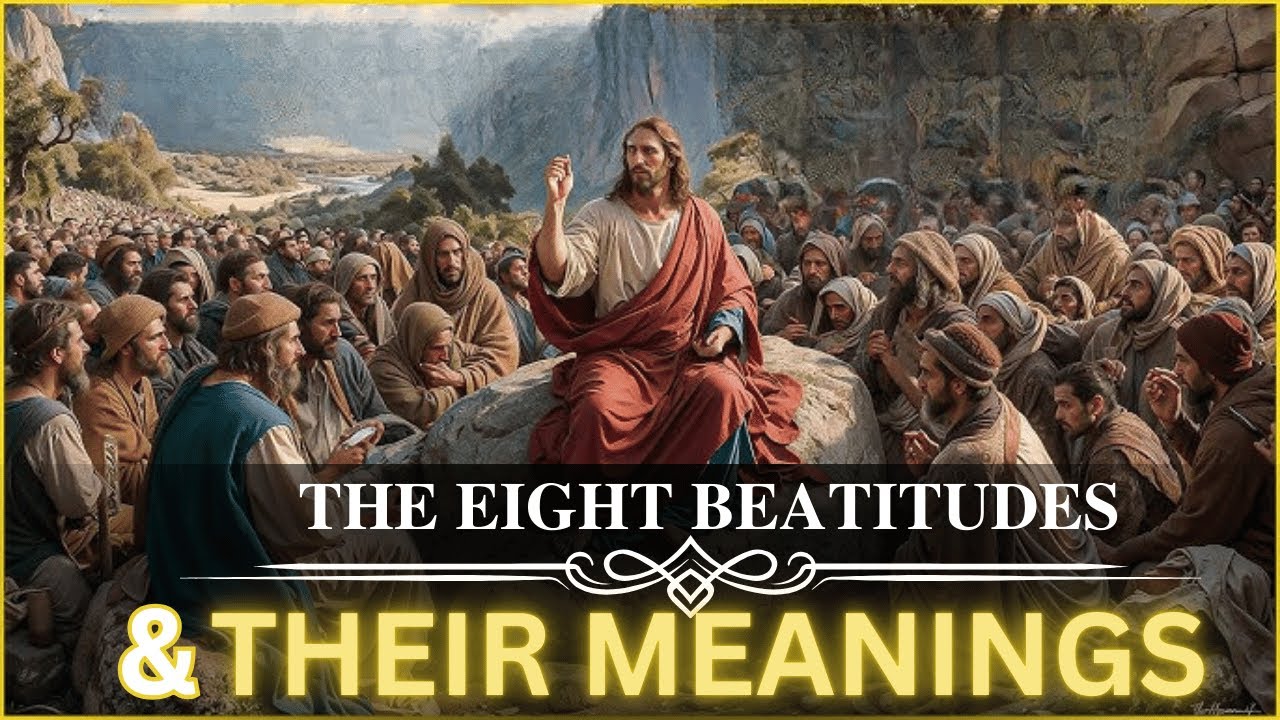
a revolt against the Invaders Jesus proposes an internal revolution of the heart and spirit his teachings deeply rooted in Jewish tradition show surprising parable s with stoic philosophy take for example the Beatitudes from The Sermon on the Mount Jesus says blessed are the poor in spirit for theirs is the Kingdom of Heaven these words reflect a mindset that values humility and Detachment from the snares of ego something the stoics would also appreciate furthermore in The Gospel According to Luke Jesus warns take care and be on your guard against all covetousness for one's life does not
consist in the abundance of his possessions this concept reflects the core of stoic thought that true wealth lies not in material possessions but in the richness of spirit and character Jesus with his temporal wisdom invites his followers to transcend worldly concerns and focus on Eternal truths just like the stoics he acknowledges that while we cannot control everything that happens to us we can control how we respond to it and it is precisely at this intersection of teachings at this Crossing between stoic virtue and Jesus's message that we find surprising similarities Serenity in the face of
adversity self-control in the face of Temptations and the Relentless pursuit of virtue are ideals that both philosophies share with this in mind can we assert that Jesus was a Proto stoic or is it more appropriate to say that both paths though separated by culture and tradition Converge on universal truths as we continue our journey let's delve deeper into these similarities especially regarding virtue and self-control let's observe how Jesus like the great stoic thinkers emphasized the importance of living with purpose integrity and unwavering Serenity in the face of life's [Music] tribulations at the core of stoic
philosophy lies a fundamental idea The Virtuous life is the only one worth living for The stoics Virtue is not merely a set of moral rules but the very core of a good and meaningful life Zeno of citium the founder of stoicism defined virtue as a consistent selective disposition in accordance with reason in essence virtue is to live in harmony with reason and nature let's think about Jesus's Serenity even at the height of his suffering crucified he demonstrates a profound acceptance and understanding of his fate father forgive them for they know not what they do he
said his Serenity in the face of adversity is in many ways comparable to the serenity the stoics aspire to achieve epicus one of the great stoics wrote in his enidan it's not the events that disturb people but their judgments about them it's a call to understand that our reaction to adversity is more determining than the adversities themselves the connection between Jesus and the stoics in the pursuit of virtue and self-control is clear both see the external world as something uncontrollable but firmly believe that the individual has Mastery over their internal response so if Jesus and
the great stoics were together what would they say about our relationship with the material world let's imagine for a moment Jesus conversing with Marcus Aurelius the philosopher Emperor while the former warns about the dangers of wealth and the difficulty of a rich person entering the Kingdom of Heaven Marcus Aurelius reflects on the ephemeral nature of Earthly possessions together they would invite us to detach ourselves from the material and focus on the true Riches of spirit and character but to deepen this imaginary dialogue let's take a closer look at their doctrines on Detachment from the material
world in the next chapter imagine a Serene afternoon in Jerusalem the age-old stones of the temple reflect the Golden Light of dusk in a corner Jesus of Nazareth with his Serene and profound expression meets Marcus aelius the philosopher emperor of Rome though separated by decades and geography an invisible Bond seems to unite their thoughts master of Galilee Marcus begins I see in your teachings a profound wisdom one that would resonate in the streets of Rome you speak of Detachment from riches while I have reflected on the ephemeral nature of Earthly possessions how do you see
the relationship between man and his belongings Jesus looking at the emperor with understanding replies truly I say it is easier for a camel to go through the eye of a needle than for a rich man to enter the kingdom of God the emperor nods acknowledging the depth of the message in my meditations he responds I wrote that very little is needed for a happy life it is all within you in your way of thinking riches often serve as a distraction from this truth both leaders from their different contexts Converge on a common understanding material possessions
themselves are not the problem the challenge lies in the attachment we confer upon them in how we allow them to Define our worth and sense of purpose as this imaginary conversation Fades Into the Night a profound question emerges for all of us what value do we place on material things in our lives do they Define us or are they simply tools we use to contribute to our well-being and that of those around us however we cannot ignore the fundamental variations in their views and essential practices Jesus with his unconditional love for others and call to
service and senica with his emphasis on virtue and the well-being of the community present two complimentary perspectives but what would unfold if both shared a moment together in our next chapter we envision a dialogue between Jesus and Sena exploring their similarities and differences and how each would approach themes such as love society and the purpose of Being Human honor a Terrace overlooking a vast landscape of olive trees and golden Fields Jesus meets Sena The prominent philosopher and adviser of the Roman Empire the shadows of dusk begin to lengthen as they both share Reflections on a
theme that transcends Generations love for one's neighbor and contribution to the common good senica with his firm and thoughtful voice raises the question I have observed master that your doctrines Place great emphasis on love for one's neighbor in Rome we also value the well-being of our society although we often see it through the lens of justice and Duty how do you perceive this love and how can it manifest in concrete actions Jesus reflecting an unfathomable depth in his gaze replies love your neighbor as yourself there is no other commandment greater than this Gospel According to
Mark 12:31 true love seeks not its own benefit but unfolds in actions for for the good of others it is through this Selfless Love that a true sense of community is built senica nods and reflects in our stoic discussions we explore the idea of sympathy the interconnectedness of all beings I see resonances with your words in my writings I have said the well-being of all humanity is interconnected if there is a common benefit then it is connected it seems we are both speaking of a deeper understanding of how each indiv idual action can impact the
very fabric of our [Music] society Jesus Smiles gently and adds every act of kindness however small is like a stone thrown into a lake the ripples expand touching hearts and lives beyond what our eyes can see so it is with the kingdom of God like a seed that though small grows and bears abundant fruit senica with an expression of recognition concludes so though though our paths May differ in their foundations and practices the essence of love and the pursuit of the common good is a thread that binds us each of us has the capacity to
enrich and uplift our society through our daily actions and decisions as the sun sets on the horizon leaving a sky tinged with oranges and purples the conversation between Jesus and Sena Fades but its resonance endures it reminds us of the interal importance of compassion empathy and unconditional love in building a better world and as we reflect on this profound conversation we turn to another exchange of ideas between Jesus and epicus where we will explore their fundamental differences in beliefs and [Music] practices the air becomes dense in a hypothetical room where in one corner Jesus sits
with his compassionate and Serene gaze in in front of him epic tetus with a thoughtful expression The Clash of two great minds who though sharing Universal values about Humanity morality and purpose originated from different foundations of belief master from Nazareth epicus begins throughout my life I have maintained that our will is linked to reason and through it we attain true Freedom what do you think about the nature of human will and its relation to Faith Jesus always thoughtful responds true Freedom comes from knowing the truth and the truth will set you free gospel according to
John he continues faith is the Assurance of what we hope for the conviction of what we do not see letter to the Hebrews epicus nods recognizing the depth of the response in our Reflections we maintain that reason when aligned with nature guides us toward virtue Faith from my perspective requires a suspension of reason and though powerful it can Veer us away from objective truth to this Jesus replies every tree is known by its fruit faith when genuine does not contradict reason but transcends it guiding the heart to deeper and eternal truths epicus quoting one of
his own teachings says we are not disturbed by events but by the interpretation we make of them in this sense our interpretation of the world Guided by reason determines our [Music] well-being the air in the room subtly changes not into tension but into deep contemplation both acknowledge that while they share the desire to guide Humanity towards inner peace and virtue their paths fundamentally diverge in how they perceive and relate to the world these differences prompt us to consider the theological roots of Christianity and the stoic world view while Christianity upholds a theocentric view of the
universe stoicism leans towards a perspective based on nature and reason both philosophies have their merits and offer us different lenses through which to interpret and experience the world with this framework in mind it's essential to delve deeper into these differences and consider how these perspectives can enrich each other in our next segment we will delve into Christian Theology and the stoic view of the world seeking to find a balance between faith and reason the room still imbued with the previous dialogue between Jesus and epicus is filled with a new air of reflection while Christian faith
proposes a personal God who intervenes and cares for Humanity stoicism perceives the cosmos as a rational entity a totality governed by what they called logos or Universal reason Christianity with its Rich theology speaks to us of a loving God who became man in Jesus of Nazareth this Divinity in an incomprehensible Act of love incarnates to redeem Humanity from its flaws it is a religion based on relationship on the interaction between the Divine and the human between the Creator and his creatures on the other hand stoics see the world as a reflection of a logical and
natural order it's not necessarily a personal God who governs but a universal reason a logos that permeates and structures all existence Sena one of the most prominent stoics mentioned in his letters to lucilius God is Not separate from the world he is within it this perspective promotes the idea that living in harmony with nature and its laws is the path to wisdom and virtue despite their differences both views can complement each other the theological focus of Christianity emphasizes the importance of relationship and Grace while stoicism with its emphasis on self-discipline and self-control can provide a
framework for living out that Grace practically in everyday life at the end of this exploration we are faced with an essential question is it possible to combine the depths of Christian theology with the practice and reason of stoicism can Jesus with his revolutionary lessons on love and grace be considered in some way a stoic Messiah Kevin row a renowned New Testament expert at Duke University highlights how stoicism and Christianity share parallels and points of convergence throughout history in the 2 Century tulan referred to senica as cep nosta or often ours and Jerome simply called him
ours Augustine in the city of God also acknowledges senica's influence this intersection between both currents is palpable leading to an intriguing question is it possible to harmonize being a Christian with being a [Music] stoic some attempt to unify these philosophies While others emphasize their differences although full integration may be challenging it is recognized that a Christian can complement their faith with stoic Reflections and vice versa Josephson specializing in biblical studies quotes senica to emphasize the importance of absorbing wisdom from various philosophical sources Dodson comments while Jesus Christ is the way the truth and the life
for me I am convinced that stoicism has enriched my understanding and Christian devotion Kevin Bosch a specialist in Clinical Psychology and author of of between the porch and the cross supports this View and adds during my research I discovered surprising similarities between epic titus' ideas and some modern Christian stances on issues like family and reproductive ethics without labeling the stoics as Christians it is undeniable that they offer enriching perspectives for everyone in both stoic and Christian scriptures we find parallel lessons on number one contentment I do not say this out of Need for I have
learned to be content regardless of my circumstances I know how to live humbly and I know how to abound I am accustomed to any and every situation to being filled and being hungry to having plenty and having need Paul it is the attitude not the circumstance that should be evaluated we must investigate whether the rich man can be content if he falls into poverty and if the poor man can be content if he rises to wealth senica number two about revenge but I tell you do not resist an evil person if anyone slaps you on
the right cheek turn to them the other cheek also Jesus only a small-minded man exacts Revenge senica number three the Golden Rule do to others as you would have them do to you Jesus where a human being is there is an opport Unity for kindness senica four about mortality think about your end at all times and you will never sin sirak 7:36 you could leave life right now let that determine what you do say and think marus Aurelius five about anxiety and worry worry weighs a person down an encouraging word cheers a person up Proverbs
12:25 today I escaped anxiety or no I discarded it because it was Within Me In My Own perceptions not outside Marcus Aurelius six about love above all love each other deeply Peter be free from Passion and Yet full of love Marcus Aurelius seven about discipline no discipline seems Pleasant at the time but painful later on however it produces a harvest of righteousness and peace for those who have been trained by it Hebrews 12:11 if you obtain anything good with labor the labor passes quickly but the good endures if you do something shameful in pursuit of
pleasure the pleasure passes quickly but the shame endures musonius Rufus eight about anger do not be quickly provoked in your spirit for anger resides in the lap of fools Ecclesiastes 7:9 nothing is more deafening than anger nothing more deadly it's a hard master and a treacherous companion if you concede it will take you over completely if you fight it it will make you exhausted senica nine on quietude be still and know that I am God Psalms 46:10 transition from one unselfish action to another with God in mind only there can you find Steady quietude Marcus
Aurelius 10 about examples to follow be imitators of God therefore as dearly loved children and live a life of love just as Christ loved us and gave himself up for us as a fragrant offering and sacrifice to God Paul choose someone whose way of life as well as words and whose very face is mirroring the disposition that lies behind it have won your approval be always pointing him out to yourself either as your guardian or as your model senica 11 on loving enemies but if your enemy is hungry feed him if he is thirsty give
him something to drink in doing this you will Heap burning coals on his head Romans 12:20 goodness is Invincible provided it be genuine not plasted on what could even the malice of a foe do to you if you were still to show him kindness and in case the opportunity offers expose his errors admonish him but quietly not in public it is your business to make a good character but the character of another no one can make Marcus Aurelius this journey we have just witnessed traversing the sands of time and philosophy led us to contemplate the
possibility that Jesus the Messiah of the Christian tradition could have shared similarities with the great stoic thinkers both philosophies though unique in their approaches and perspectives converge on un ival truths about Humanity morality and purpose while Christianity delves into the depths of divine love and personal relationship with God stoicism offers practical tools to live in accordance with nature and find Serenity amidst life storms as we reflect on these teachings we realize that regardless of our religious beliefs there are valuable lessons we can incorporate into our daily lives as mentioned in the Gospel of John you
will know the truth and the truth will set you free so whether you identify with the teachings of Jesus the reflections of Marcus Aurelius or simply seek a deeper understanding of yourself and the world there's an invitation here to live with purpose integrity and a love that transcends all barriers and that concludes our discussion for today but I ask that you don't exit this video just yet listen to what I have to say below you'll find the link to our Channel's exclusive store and other links that you should also check out don't forget to comment
dare me so I know you made it this far remember I read all the comments and I'll see you commenting stay on the screen to watch the next video that will be displayed here it's very much worth it and I guarantee you'll enjoy it and for your attention my heartfelt thanks that was my contribution May everyone be with the [Music] Creator