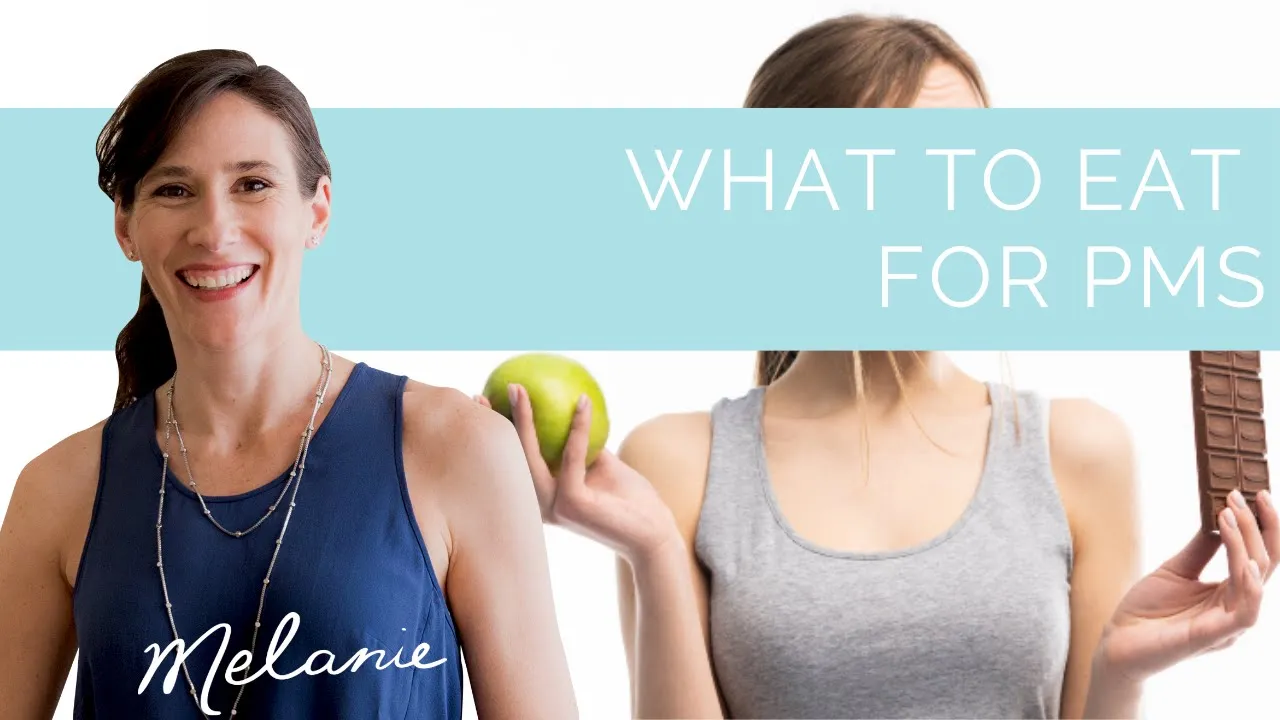
premenstrual syndrome or PMS is a combination of symptoms such as bloating headaches and fatigue that women can get in the lead up to our periods at the time you may feel like chocolate is the answer but deep down you know that it's not so are there any foods that can actually help well the answer is yes I'm Melanie McGrath a dietitian specializing in women's health and today in this episode of nourish I'm going to explain exactly what to eat for PMS stay tuned [Music] women with PMS are hypersensitive to their hormonal fluctuations during their menstrual
cycle it's believed that PMS is caused by increasing levels of the hormone progesterone provoking chemical messages in the brain called neurotransmitters many vitamins minerals and essential fatty acids are involved in this process which is why dietary changes may help so if you have PMS try these five dietary tips number one boost your omega-3 intake omega-3 helps to reduce inflammation and improve our mood so it's not surprising that foods rich in omega-3 such as oily fish flaxseed and chia seeds have been shown to help some women and number two research suggests that low iron or zinc
levels may increase your risk of PMS so get these checked by your doctor shellfish such as oysters and mussels are particularly rich in both so give them a go number three boosting your intake of isoflavones from soy foods may help isoflavones can help to improve your estrogen to progesterone ratio which has been found to improve PMS symptoms for some women number four try magnesium or vitamin b6 supplements although the results are mixed both of these supplements have been found to improve PMS symptoms for some women I'd recommend trying one for three months then if your
symptoms don't improve seaso supplements and try a three-month course of the other and number five when it comes to what to eat for PMS the best evidence is for foods which are rich in calcium so include two to three serves of dairy products such as milk yogurt or cheese each day one systematic review found that women who boosted their calcium intake to 1000 to 1200 milligrams per day experienced a 50% reduction in PMS symptoms compared to women who didn't meet their healthier requirements so if you think there's a chance that you're not meeting your calcium
requirements this is where I would recommend that you now personally I would recommend choosing just one strategy to start with and just changing one thing at a time so that you know what it is that makes a difference for you let me know in the comments box below which one you decide to start with now it's also important to note that it can take three to four months to see an improvement in your symptoms after changing your diet so be patient and although you may crave alcohol sugar and treats before your period research shows that
these foods can actually make PMS worse so try to limit your intake of these now I'd love you to do me a favor please share this video with your girlfriends PMS can be debilitating for many women and imagine if you could give one of your friends the gift of improving her PMS you could change your life so please post it on your social media email it to a group of your friends or publish it in a woman's chat group and if you have any questions you can find my details in the notes below I hope
you found this helpful and I look forward to seeing you in my next video we were and we need the music happening I'm still going