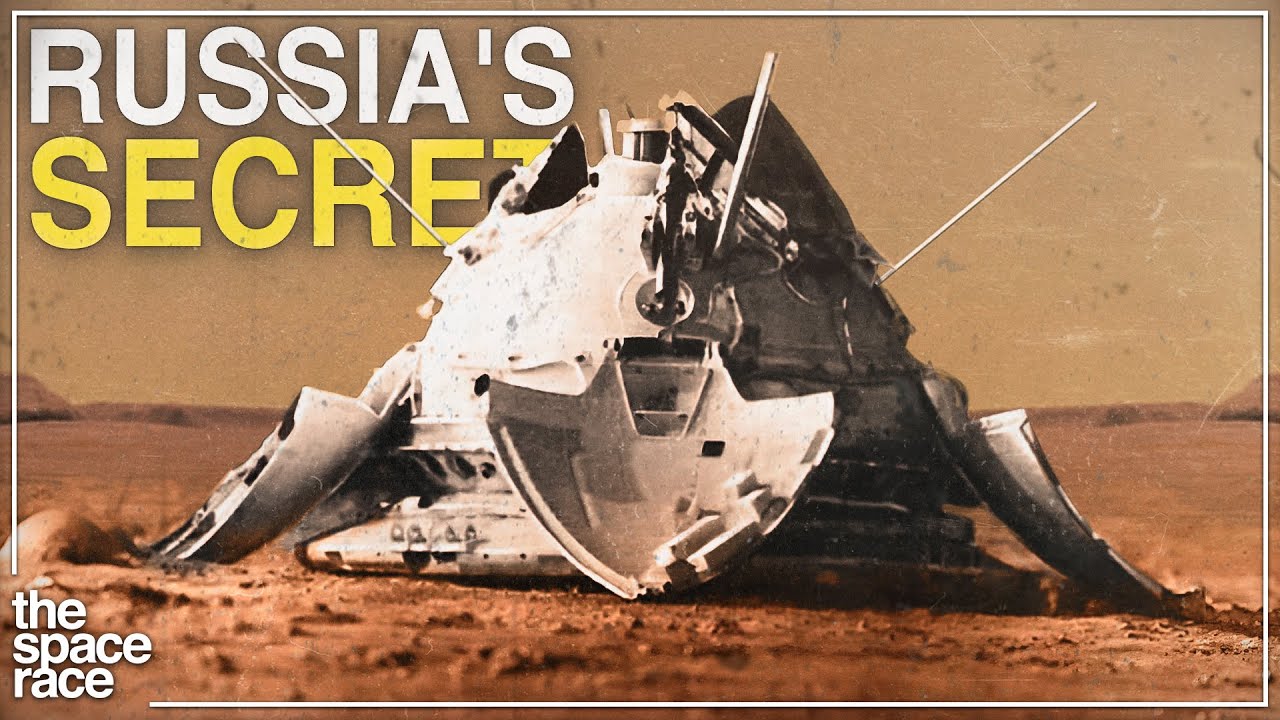
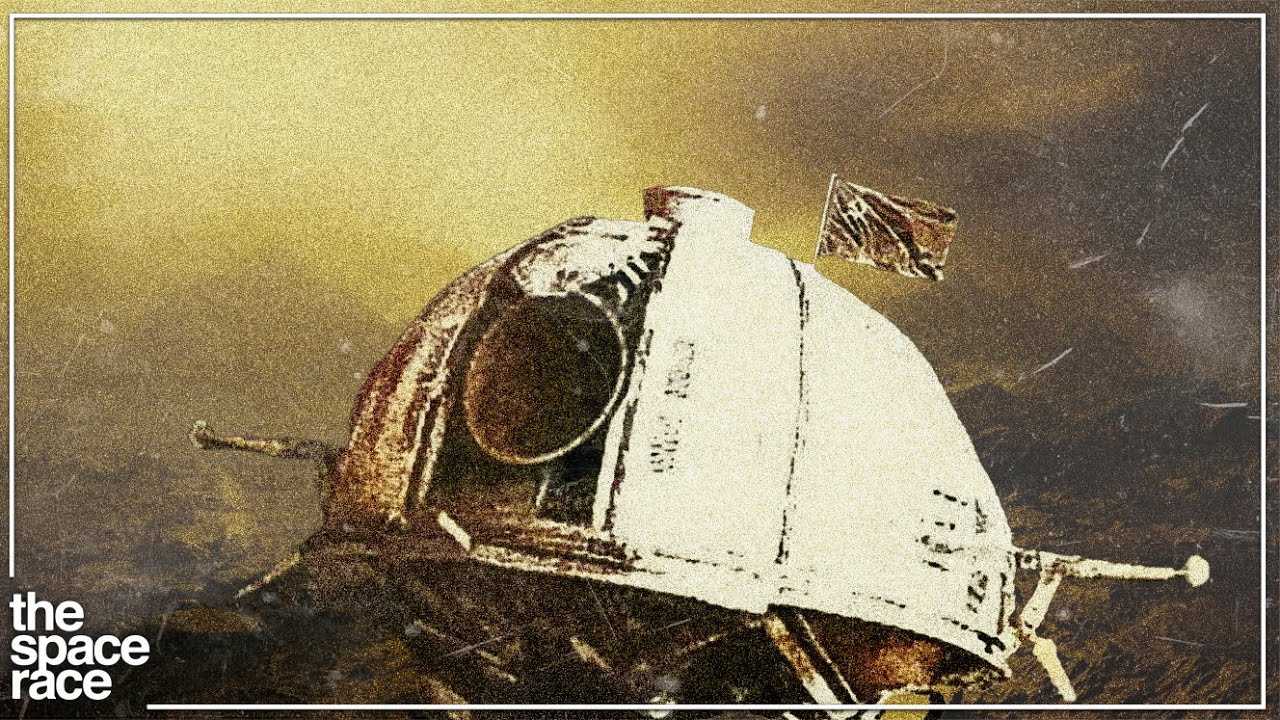
take a look at this spacecraft it Bears a marked resemblance to the Apollo lunar module the one from which Neil Armstrong took one giant leap for mankind but what is this green seasonal paint the truth is this top secret spacecraft has nothing to do with NASA you're looking at the top secret Looney Kel which allowed the USSR to draw dangerously close to the Americans in the space race this spacecraft went to space three times and its ultimate mission was not only to bring a cosmonaut to the moon but also to lay the ground for a
moon Colony the official story is that neither it nor Looney corabel ever existed but documents retrieved from classified archives after the fall of the USSR revealed no less than a covert space program this video will bring you abandoned Soviet Moon base's Eerie sounds recorded on Venus and even lasers for an orbital war against the [Music] US secret projects like this were the usss hope for winning the Space Race how did it come so close to Triumph archived data confirmed that the Soviet Union had every intention of colonizing another planet in 1961 a sci-fi movie called
planet of storms premiered in cinemas it told the story of Brave Soviet explorers who didn't merely land on this planet but even swam in the ocean there it was completely in line with the scientific knowledge of Earth's closest neighbor at the time after all although the 20th century astronomers could discern on Venus was a thick veil of carbon dioxide they assumed it was hiding vast warm oceans similar to soda water but while cinemao were applauding the Sci-Fi picture they couldn't even imagine it was no longer fiction by that time the USSR had launched two covert
flights to Venus the first one took place on February the 4th 1961 and carried the first ever probe for a thorough study of Venus but its engine shut down unexpectedly and the spacecraft never flew higher than low earth orbit hesitant about acknowledging the failure Soviet officials claimed that they were testing some heavy satellite luckily the second launch which followed in a week was a success and it was declared to be humankind's first mission to Venus the vanera 1 interplanetary probe flew close to Earth's neighbor in May of that same year but didn't transmit any data
because its antennas were overheated at least that's what the official version said in 1965 the vanera 2 probe suffered the same fate but its twin vanera 3 safely reached Venus and became the first ever spacecraft to enter the atmosphere of another planet but the infinitely precious measurements were lost again because of overheating but even despite these setbacks Soviet officials continueed the program harboring hopes to find a world to colonize where the ussr's red flag would look especially good the vanera 4 probe breed Venus in October of 1967 it's heat resistant Space Capsule contained all the
equipment required to study the composition and conditions of Venus's atmosphere this time according to official reports the capsule successfully sent lots of useful information to Earth except when it came to what vanera fora the USSR was silent as the dead about it luckily that whole time the probe was in the crosshairs of NASA's first venusian probe Mariner 5 American Engineers saw that the atmospheric entry never happened with the capsule burning up instantly in the upper layers of the atmosphere Instead This made it possible to determine that carbon dioxide made up not just Venus's observable clouds
as it turned out the planet's entire atmosphere was 97% carbon dioxide moreover calculations showed that the pressure on the planet's surface had to be dozens of times higher than on Earth Soviet scientists must have obtained the same data so newer spacecraft vanera 5 and vanera 6 were equipped with sturdy but light light capsules made of magnesium aluminum alloy with breaking parachutes this time Soviet Engineers expected the probe to not just enter the atmosphere but explore the surface of Venus but when they received the First Data from the capsules in May of 1969 they suspected another
failure at first the equipment seemed to have gone mad almost an hour after it entered the atmosphere it reported the outside temperature at 320° C and the pressure at 26 Earth atmospheres combined with sulfuric acid clouds these hellish conditions burned out the insides of both capsules when they were as high as 20 km above ground but because both probes sent the same incredible measurements there could have been no mistake Venus turned out to be no tropical Heaven it was a real acidic hell and although the furtive dreams of Soviet colonies on Venus were shattered reaching
the planet's surface was a point of honor and hence the number one task of the vanera program but it required time and the USSR needed any win in the Space Race as soon as possible intending to land a final blow to America's reputation in the Space Race the USSR embarked on a mission to set up an outpost on the moon in the early 60s the US was falling behind noticeably just a couple of years after the remarkable success of Earth's first satellite Soviet Engineers managed to deliver the Luna 2 probe to the moon in September
of 1959 actually it was their sixth attempt the first five that failed were kept secret in the early 60s Soviet officials made it very clear that they were going to send crude missions to the moon and even start a permanent Colony there the US Department of Defense immediately began to develop the top secret project Horizon focused on constructing a military lunar base convinced of the Soviet Union's upper hand in the race American experts rushed into the decision to deliver nothing more than several cylindric containers to the Moon by December of 1966 they were to become
a home for a Garrison of 12 American soldiers all it would take was 50 launches of the yet to be developed Saturn one rockets and $6 billion in spending not to mention that most of the solutions to maintain such a base weren't even invented yet the task was entrusted to Engineers from the newly formed NASA it was they who realized that project Horizon had no practical Point as early as September 1962 President John Kennedy publicly announced a more modest and achievable goal of sending a human to the Moon by the end of the decade if
only NASA knew that despite their claims the USSR hadn't even started their lunar program yet in the early 60s Serge kev's design Bureau focused solely on designing a new super heavy lift rocket the N1 which was the main thing that offered hope for crude Moon missions while satellites and vanera probes were launched on the molia rocket which had a carrying capacity of Just 2 tons the n would make it possible to deliver up to 232 tons of payload that is 12 times as much Kennedy's announcement clearly spurred on the USSR so the authorities ordered coralv
who hadn't even finished the new rocket to plan the first Soviet lunar Mission the vehicles involved in it were indeed surprisingly similar to Apollo's except they were three times smaller and lighter only allowing one person to land on the moon in instead of two the Soviet lunar module even copied the American vehicle and how it was to lift off from the lunar surface the Soviet authorities were eager to pull it off as early as December of 1967 but its success would have only been an intro to the actual Soviet Triumph in the Space Race up
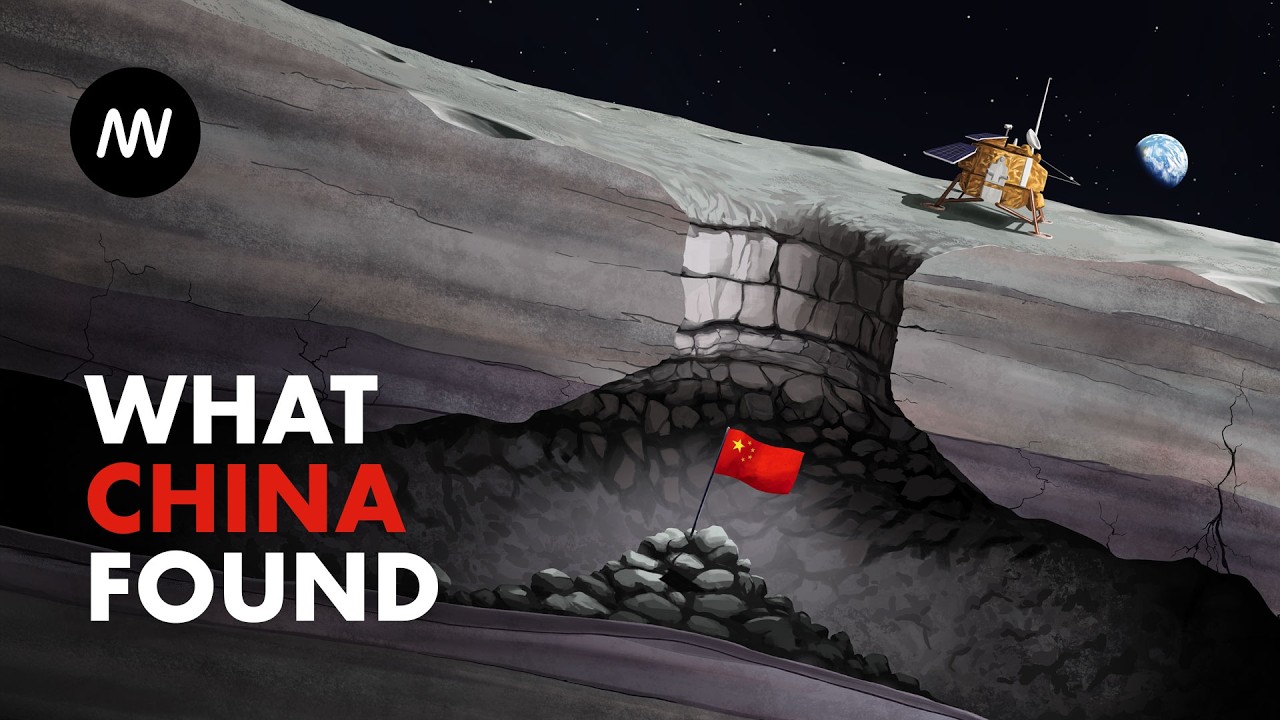
to his neck with work corev was spared and full-fledged lunar-based development was assigned to the KB design Bureau led by Vlad Barman unlike the US military he already had information about radiation on the moon at hand and reasoned that a crew would not survive in the modules scattered on the surface Soviet Engineers calculated that it would be optimal to cover living compartments with a thin layer of lunar soil it would protect them not only from radiation but from meteors too their solution was truly groundbreaking even now some Martian based designers plan to use the same
trick building on their calculations barman's team also intended the lunar soil to be used in green houses just like in the movie The Martian cosmonauts would have cooked the vegetables grown there in a special kitchen compartment and then gone to the gym to keep fit drinking water was supposed to be obtained chemically in the lab compartment outside on the lunar surface itself they only intended to place a nuclear reactor a solar power station an observatory and a garage for Moon Rovers in honor of the chief designer the Soviet base was nicknamed Barman grad meaning barman's
toown if it had ever welcomed any citizens there would have been 4 to 12 people the delivery of all people in cargo was to be ured by 3 years of regular launches of the new N1 rocket after 7 years of development in 1969 barman's draft finally made its way to the table of the Soviet leadership in the top secret folder the thing is the timing couldn't have been worse against all expectations in July of the same year the first people went to the moon as part of the US Apollo Mission meanwhile the Soviet lunar program
stalled due to Serge Carlo's death and his Engineers were only beginning to test the long awaited super heavy left and one rocket after such a kick in the teeth the Soviet Union desperately needed new winds and even though they didn't abandon their Moon exploration plans they decided to focus on extending their lead where the US was weaker that is in the interplanetary race Soviet Engineers were tasked with exploring Venus and obtaining first ever records from the surface of another world at all costs so as early as August the 17th 1970 the USSR launched the vanera
7 Mission which was classified just like its predecessors and was very unlike them in everything else its orbital module was cleared of almost all equipment to protect the capsule from Venus's hellish climate this time it was made of titanium and Ceramics with designers expecting the pressure of 180 atmospheres which is what an underwater vessel is subjected to une earth when it reaches a depth of around 2 km the capsule's thick shell protected only a few critical detectors and a heavyduty acrylic glass fiber parachute that could withstand a temperature of up to 530° C but even
with such elaborate precautions Soviet Engineers weren't sure if the vehicle would win the battle with the infernal planet on December the 15th 1970 the capsule entered the atmosphere as soon as it did things fell flat its heatproof parachute melted so the titanium blank hurdled down from tens of kilometers above ground the engineers braced themselves for yet another classifi failure after all no probe would have survived such a crash if it happened on Earth but oh the irony on Venus the landing was softened by the hellishly thick atmosphere the capsule of vanera 7 crashed into the
planet's surface at a speed of only 60 kmph it was basically an unremarkable traffic accident the capsule became the first terrestrial vehicle to send data from another planet's surface and continued to do so for an entire 23 minutes but even despite the mission's success the Soviet Union kept its results under wraps for a whole month it wasn't until January of 1971 that the world learned Venus's surface had a pressure of 90 atmospheres and a temperature of 475° C it's as hot as the inside of an industrial furnace but the next secret Soviet Mission vanera 8
which took place on July the 22nd 1972 to showed that the venusian furnace had enough light to take a photo moreover the probe discovered a light wind on the planet's surface the sound of which could be recorded Soviet Engineers entered a desperate race with time as NASA declared its intentions to send the Viking missions to Mars in order to take first ever photos of another planet in the summer of 1975 almost simultaneously with the launch of Viking 1 two Soviet interplanetary ships vanera 9 and vanera 10 set out for Venus their capsules had been redesigned
since none of the parachutes had survived the hellish entry before they were equipped with special shock absorbing struts for when they would hit the surface designers also added a liquid cooling system for the equipment and camera lens caps were only supposed to open upon successful Landing eventually the capsules entered Venus's atmosphere 3 days apart and safely reached the surface but there main lens caps never opened however the spare ones worked perfectly well on October the 22nd 1975 vanera 9 sent this black and white and very blurry Panorama of piles of cobblestones under the capsule this
became the first ever picture of another planet's surface on October the 25th vanera 10 sent back a panoramic shot of its Rocky Landing site with the struts clearly visible the US SSR won the interplanetary photo Race by a landslide as the American Viking one sent the first photos of Mars Only in the summer of 1976 but Soviet Engineers didn't stop there they just had to add insult to NASA's injury it took them a whopping seven years and a series of not so successful attempts but in March of 1982 vanera 13 and vanera 14 capsules sent
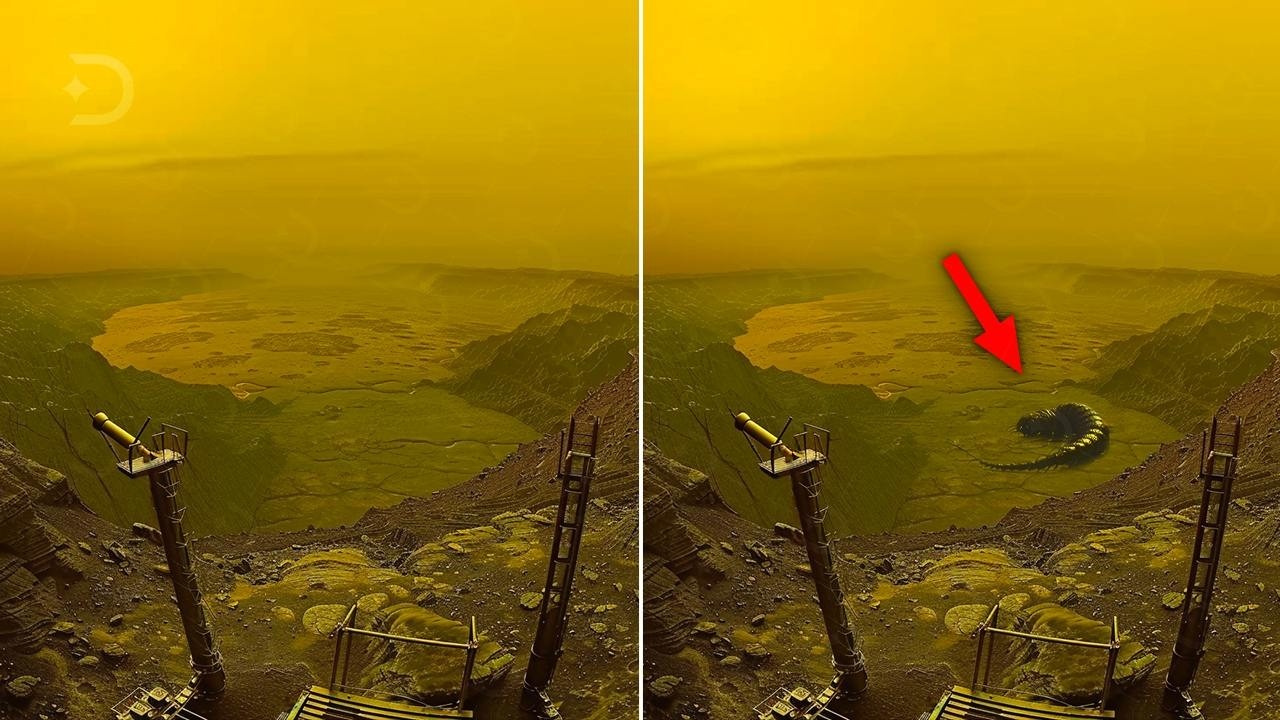
back the first and only panoramas of Venus Sur surface in color those came with a sound recording to ensure full immersion into this Eerie acid yellow landscape listen carefully this is what hell sounds like the rumble you've just heard could have been a distant thunder in sulfuric acid clouds almost half a centur had passed since that very moment when the last two Soviet capsules underwent terrible heat and pressure and no other spacecraft had recorded anything similar on Venus yet but anyway this incredibly successful Venera program was conceived rather as an addition to the main achievement
defeating the United States in the Space Race near Earth what happened to the Soviet lunar base then Declassified documents have revealed incredible facts about the abandoned based vesda and the USSR space weapons in 1982 the same year when the vanera capsules sent color photos and audio recordings to Earth the Soviet Loni Coro lands on the moon in complete secrecy it carries no people yet it opens its doors to release a 3ton moon rover which drives out onto the surface and lowers a mysterious cylinder measuring 3.6 by6 M it also has wheels and soon drives away
from The Landing site the cylinder finds a spot where the lunar soil is the most yieldable and starts spinning its surface with spiral blades turns it into one giant horizontal drill this miracle of Soviet engineering is nothing but a unique self digging habitat after 4 and 1/2 hours of drilling it stops a couple of meters into the ground and is now ready to Lodge three people they arrive on the moon a few months later by 1985 the Soviet lunar base zda comprised as many as nine modules with all the Necessities just like Barman plan solar
panels a nuclear reactor water and oxygen generators and science labs the base crew of six goes on rotation once a year but within a few years the Soviet base vesda with a total weight of 130 tons and a cost of $80 billion is destined to become the most expensive abandoned facility in the history of human kind you see while the design of the lunar base is a success the Soviet Union has enormous problems with the key element of the entire program without which it cannot exist since 1969 the N1 super heavy lift rocket was tested
four times and every single test ended in a catastrophe poorly designed filling pipes caused fuel to spill right onto the red hot first stage at the very start triggering a powerful explosion naturally these failures were kept under wraps and all the attempts to fix N1 failed it all ended with the new chief designer of the Space Program Valentine glushko closing the N1 project in 1974 in its place Engineers started developing a new super heavy lift launch vehicle Vulcan could carry almost twice as much weight as N1 the Vulcan rocket could deliver 43 tons of payload
to the moon at once this meant that only four launches would be needed as part of the vesda base construction according to official data only two of those took place and had completely different tasks Declassified documents only mention the zvezda lunar base project but what if its implementation turned out to be such a failure that it was covered up with extreme thoroughness what if the wed rocket launches left zvezda's inhabitants without sustenance turning it into the first space tomb in history several feet under a thick layer of lunar soil it might well be true given
that the USSR managed to develop a weapon for space wars with the United States and the data about it hasn't been fully Declassified yet back in the early '70s the Soviet Union set another record in the Space Race launching the first ever space stations they were known as salute to the public and their official purpose was peaceful scientific research but classified documents referred to them as Alma's military stations used to study the possibility of orbital Warfare the program reached its high point in July of 1974 with the launch of the salute 3 station which had
a unique identifier in the almma program and carried a special top secret cargo on board it was a 142 mm gun it shared the caliber with some sniper rifles used to destroy light utility vehicles except this monster was a space machine gun that could fire up to 5,000 rounds a minute and unclassified data suggests that on January the 24th 1975 the Space Gun went off it fired a total of 20 rounds at a Target satellite but what happened to the ill-fated victim is still being kept Under Wraps the only thing we know is that the
test itself was carried out remotely in absence of the station's crew and a few hours before it fell into Earth's atmosphere however given the ussr's love for covering up failures it's quite likely that things didn't go smoothly the super space-based weapon might have been deemed impractical because aiming it would involve heaving the entire station and The Recoil could change its trajectory what also speaks for this version of events is that soon after testing the gun Soviet engineers started working on a much more mobile weapon that could fit in the hand of a cosmonaut at the
alas military station this is a real prototype of a laser handgun for destroying enemy satellites according to partially Declassified data it was completed by 1984 it could even be fired without space walking the laser passed through the Illuminator glass and was supposedly capable of blinding the sensitive Optical systems of American spacecraft however the Soviet Miracle gun never reached orbit this project like all the others fell victim to the ussr's Deep crisis the superpower simply overextended itself in the Space Race NASA plans to return people to the Moon as part of project emis no later than
2030 New Missions to Venus are scheduled around the same time give or take and here's what bothers me what if somewhere among the cold learner views and hellish venusian landscap gapes astronauts and probes stumble upon what was left after the most secret of the ussr's failures what or whom will we meet there after 50 years [Music]